How Often Should You Strip Bath Towels?
Bath towels generally do not need to be stripped on a fixed schedule. For most households, stripping them only when there are clear signs of stubborn buildup is more sensible than doing it monthly or seasonally. Towels that remain fresh, soft, and absorbent after ordinary washing should be left alone.
Laundry stripping is an occasional deep-cleaning process intended to loosen accumulated detergent, fabric softener, body oils, and mineral residue. It can revive some towels, but it is not a substitute for good washing habits, and repeated soaking can fade colors or wear fibers sooner.
What towel stripping actually does
Stripping gives washable fabric a long soak in hot or warm water with cleaning agents chosen to loosen residue. The process is most useful when buildup has become embedded in the towel loops and an ordinary wash no longer removes it.
The dramatic-looking water that sometimes appears during stripping is not a reliable dirt meter. Dye release, suspended detergent, minerals, and loosened soil can all affect its color. Judge the result by how the towels smell, feel, and absorb after they have been rinsed and dried.
Stripping also does not repair worn cotton. If the loops have become flat, thin, or permanently rough after years of use, soaking cannot restore missing fibers. Likewise, a persistent odor may come from incomplete drying or a washer that needs cleaning rather than from the towels themselves.
Signs that your bath towels may need stripping
Consider stripping towels when two or more of these symptoms continue after a normal, correctly dosed wash:
- Poor absorbency: Water seems to sit on the surface instead of soaking into the towel.
- A coated or waxy feel: The fabric feels slick, heavy, or unusually stiff when dry.
- Fast-returning odor: Towels smell clean from the dryer but become musty after one use.
- Visible residue: Pale streaks or powdery deposits remain after laundering.
- Heavy softener history: Liquid fabric softener or dryer sheets have been used regularly on the towels.
Before stripping, wash the towels once with the correct amount of detergent, leave enough room for them to move freely, and select an extra rinse if the care label and machine allow it. That simpler correction often removes residue without a prolonged soak.
How often is too often?
Stripping towels every few weeks is usually unnecessary. The combination of extended soaking, alkaline cleaning products, agitation, and warm or hot water can gradually affect color and fiber strength. Decorative borders, embroidery, elastic wraps, and specialty finishes may be more vulnerable than plain cotton terry.
If towels seem to require stripping every month, investigate the routine instead. Common causes include too much detergent, frequent fabric-softener use, an overloaded washer, insufficient rinsing, towels left damp in a hamper, or a washer with residue of its own.
Towel stripping should solve an occasional buildup problem, not become another step in every laundry cycle.
How to strip bath towels carefully
Read every towel’s care label first. Separate whites from colors, and do not include delicate trims, vintage textiles, wool, silk, or items labeled for cold washing only. Dark or richly colored towels may release dye during a long soak, so test questionable items separately.
What to do
- Start with clean towels rather than heavily soiled ones. Wash them normally first if needed.
- Fill a clean bathtub, utility sink, or suitable container with the warmest water permitted by the care labels.
- Add a laundry-stripping mixture or packaged product according to its directions. Dissolve powdered ingredients completely before adding fabric.
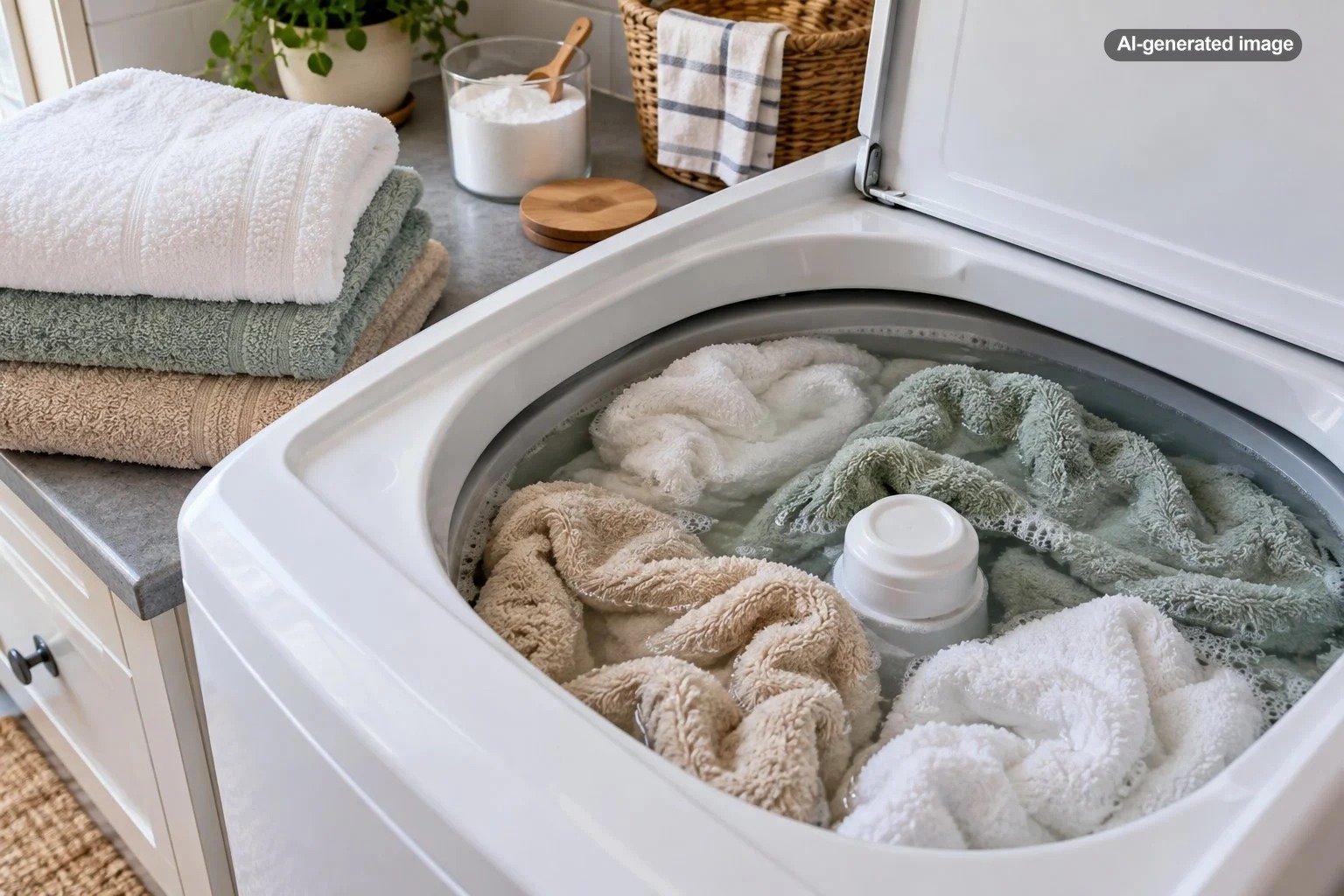
- Submerge similar-colored towels and allow them to soak, turning them occasionally so the solution reaches the entire fabric.
- Drain the water, then rinse thoroughly or run a washer cycle without adding another full dose of detergent.
- Dry the towels completely before judging their smell, texture, and absorbency.
Wear gloves if the chosen products direct you to do so, ventilate the room, and keep cleaning products away from children and pets. Never improvise combinations of household chemicals. In particular, do not mix chlorine bleach with ammonia, acids, vinegar, or products whose ingredients are uncertain.
When not to strip towels
Skip stripping when towels are simply old, physically worn, or damaged. Frayed edges, thinning patches, pulled loops, and loss of loft are signs of fiber wear rather than removable residue. Replacement may be the more practical answer.
Stripping is also a poor first response to mildew-like spotting or an odor affecting all laundry loads. Check whether wet textiles are sitting too long, the washer remains damp between uses, or the machine needs maintenance according to its manual. If a towel has a persistent stain or discoloration, identify the likely cause before exposing it to a strong soak that might set or worsen the mark.
How to prevent towel buildup
A consistent laundry routine can make stripping unnecessary. Measure detergent for the load size, soil level, water hardness, and detergent concentration rather than filling the dispenser automatically. High-efficiency machines should receive detergent labeled for that type of washer.
- Leave enough space in the drum for towels to circulate and rinse.
- Use fabric softener sparingly or omit it when absorbency is the priority.
- Hang towels open after use instead of leaving them bunched on a hook or floor.
- Wash used towels before a persistent odor develops.
- Move washed towels promptly to the dryer or clothesline.
- Dry them fully, but avoid repeatedly overheating them.
- Clean the washer as directed by its manufacturer.
Hard water can contribute mineral residue, while very soft water may allow a smaller detergent dose. If buildup repeatedly returns despite careful washing, reviewing local water conditions and the washer manual may be more productive than increasing the frequency of stripping.
Frequently asked questions
Can you strip towels in a washing machine?
Some machines offer soak functions, but compatibility depends on the model and the products being used. Follow the washer manual and cleaning-product directions. A bathtub or utility sink can provide more control, provided its surface is compatible with the solution and is cleaned afterward.
Should new towels be stripped?
Usually not. Wash new towels according to their care labels before use to remove loose lint or manufacturing residue. Consider further treatment only if they remain noticeably coated or nonabsorbent after several proper washes.
Does vinegar strip bath towels?
Vinegar is sometimes used in laundry routines, but it is not the same as a complete stripping treatment. Its suitability also depends on the fabric, washer, and other products involved. Never combine it with chlorine bleach, and consult the appliance instructions before putting it in a machine.
Will stripping make old towels soft again?
It may improve towels made stiff by removable residue. It cannot replace worn fibers or restore the original loft of a towel that has reached the end of its useful life.
The practical answer
Strip bath towels based on symptoms, not the calendar. If ordinary washing no longer restores absorbency or freshness, one careful stripping session may help. If the towels perform well, continuing a measured, well-rinsed wash routine is gentler, easier, and entirely sufficient.