
Why Do Towels Smell Musty Straight From the Dryer?
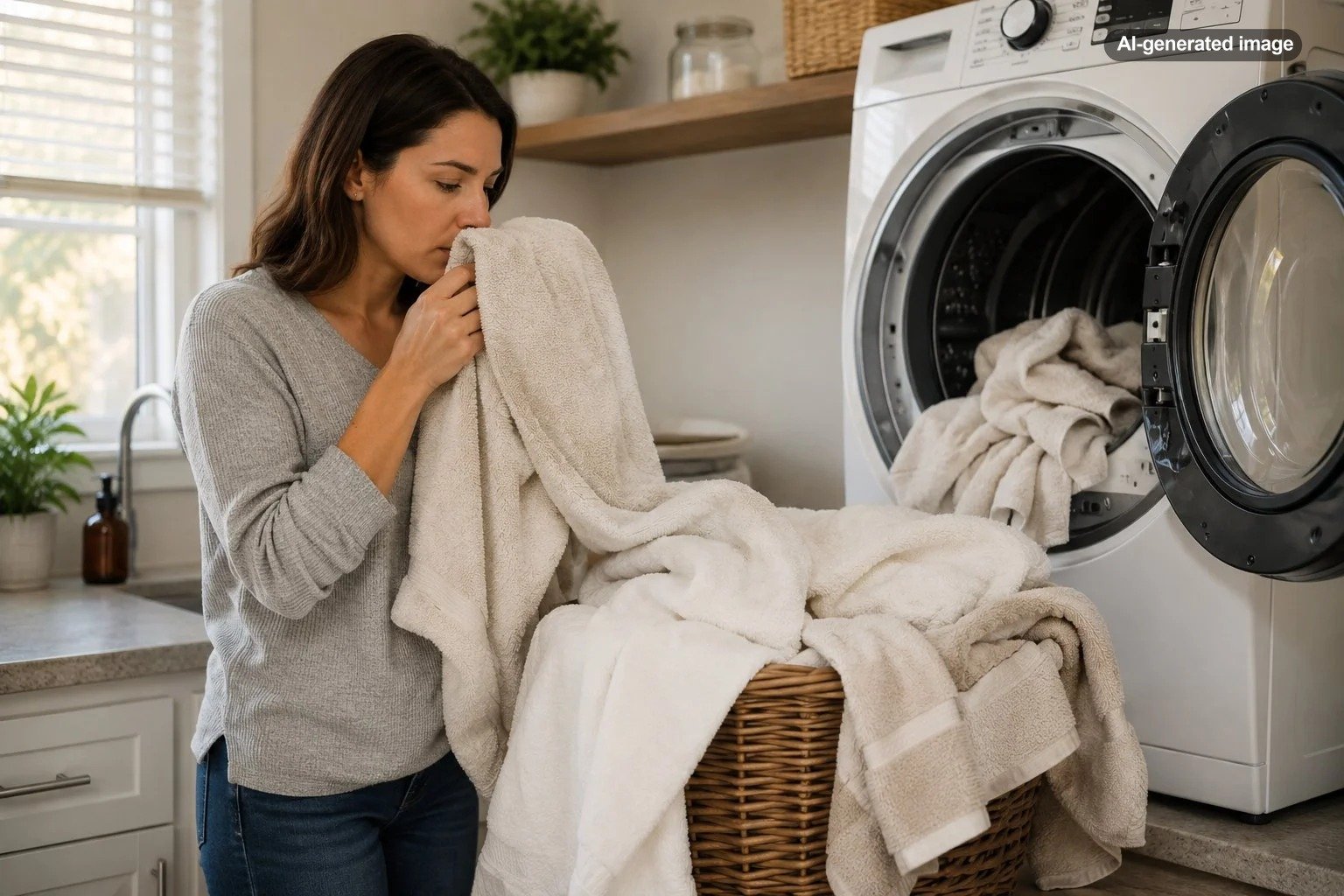
Towels that smell musty straight from the dryer usually were not fully cleaned or fully dried, even if they feel warm. The odor most often comes from trapped moisture, detergent and body-oil buildup, a washer that needs cleaning, an overloaded load, or restricted dryer airflow. Heat can temporarily mask the smell, but once the towels cool or become damp again, the odor returns.
Why the dryer does not always remove the smell
A dryer removes water; it does not reliably remove the residue and microorganisms that can create odor. If a towel enters the dryer with body oils, detergent film, or a stale smell from sitting wet, the drying cycle may only warm that odor. Thick cotton loops can also remain damp deep inside while the surface feels dry.
This is why towels sometimes smell acceptable when they first come out, then turn musty after folding, cooling, or being used once. The remaining moisture and residue become noticeable again as soon as humidity returns.
A warm towel is not necessarily a clean towel, and a dry surface is not necessarily a dry towel.
The most likely causes, in order
1. The towels sat wet too long
A load left in the washer for several hours can develop a stale odor before it ever reaches the dryer. The same problem occurs when damp bath towels are tossed into a hamper, left in a gym bag, or piled on the floor. Repeated cycles of dampness and slow drying make the odor harder to remove.
2. Too much detergent or fabric softener
More detergent does not automatically mean cleaner towels. Excess detergent may not rinse away completely, especially in high-efficiency machines or very full loads. Liquid fabric softener can coat towel fibers, reducing absorbency and helping oils and residue cling to the fabric.
If towels feel slick, unusually heavy, less absorbent, or strongly perfumed but still stale underneath, buildup is a likely part of the problem.
3. The washer is transferring odor
Residue can collect in a washer drum, detergent dispenser, drain area, lid, door gasket, or other damp crevices. If the empty washer smells musty, freshly washed towels can pick up that odor during the cycle. A front-loading gasket deserves particular attention, but top-load machines can also develop stale smells when moisture remains trapped inside.
4. The load is too large
Towels become heavy when wet. Packing the washer too tightly limits movement, rinsing, and spin performance. Packing the dryer too tightly limits tumbling and airflow. The result can be towels that retain soap, soil, and moisture even after a complete cycle.
5. Dryer airflow is restricted
A clogged lint screen, crushed transition duct, blocked exterior vent, or lint buildup in the vent line can extend drying time. If towels need more cycles than they once did, come out unevenly damp, or the laundry room becomes unusually warm and humid, airflow deserves attention.
How to remove the musty smell from towels
What to do
- Separate the towels. Wash them without tightly packed clothing or bedding so they can move and rinse properly.
- Check the care labels. Use the hottest water the towel manufacturer permits. Avoid guessing, especially with decorative trims, dark dyes, or specialty fibers.
- Measure detergent carefully. Follow both the detergent directions and the washer instructions. Use an HE detergent when the machine requires it.
- Skip fabric softener for this load. Do not add more fragrance to cover the odor. The goal is to rinse away residue.
- Choose an adequate cycle. A normal or heavy-duty cycle may be appropriate for sturdy bath towels, depending on the care label and washer manual.
- Move the load promptly. Transfer towels to the dryer as soon as the wash cycle ends.
- Dry completely. Clean the lint screen, avoid overfilling the drum, and separate towels while loading so they are not rolled into dense bundles.
- Cool before folding. Check thick hems and folded edges with your hand. If any area feels cool or damp, continue drying.
If one careful wash does not fix the odor, repeat the process rather than increasing detergent dramatically. Some washer manufacturers provide model-specific cleaning or odor-removal directions, so consult the appliance manual before using bleach, vinegar, washing-machine cleaner, or other additives. Mixing cleaning chemicals can create dangerous fumes and should never be improvised.
Clean the washer before blaming the towels
Smell the empty washer after it has been closed for a while. Check the detergent dispenser, drum, lid or door, and accessible gasket folds. Remove lint, hair, and visible residue according to the manual. Then run the machine’s designated cleaning cycle using only a cleaner approved for that model.
After laundry is finished, allow the washer interior to dry when the manufacturer permits it. Leaving a lid or door open may improve airflow, but households with young children or pets should prevent access to the machine. Wipe wet gasket surfaces and empty dispensers that hold standing water.
Check whether the dryer is actually drying well
Clean the lint screen before or after every load. While the dryer is running, check the exterior vent hood from a safe location. It should open properly and release air; weak airflow can indicate a restriction. Keep the vent opening clear of lint, leaves, nesting material, and other debris.
The flexible connector behind the dryer should not be crushed when the appliance is pushed toward the wall. Vent cleaning and repairs can involve sharp metal, electricity, gas connections, ladders, and concealed duct runs, so use a qualified professional when the route is inaccessible or performance has noticeably declined.
How to keep towels from becoming musty again
- Hang used towels fully open instead of folding them over themselves.
- Let damp towels dry before placing them in a hamper whenever practical.
- Wash towels often enough that they do not remain damp and soiled for days.
- Use only the detergent amount needed for the load and water conditions.
- Limit fabric softener if absorbency or residue is a recurring issue.
- Leave enough room for towels to tumble in both machines.
- Remove clean towels promptly and store them only when completely dry.
- Keep cabinets and linen closets dry and ventilated rather than tightly packing warm towels onto a shelf.
When the smell points beyond the laundry
If towels smell fresh after washing and drying but turn musty only in one cabinet, closet, or bathroom, investigate the storage area. Look for condensation, plumbing leaks, damp walls, poor ventilation, or visible growth. Moisture control matters more than fragrance because recurring dampness will keep bringing the odor back.
Visible mold, an ongoing leak, water damage, or a persistent room-wide musty odor calls for a broader moisture assessment. Fix the source of water first. Large, hidden, or repeatedly returning problems may require professional evaluation rather than repeated surface cleaning.
Frequently asked questions
Can I dry musty towels again instead of rewashing them?
Usually not. Another drying cycle may reduce moisture, but it will not reliably remove detergent film, body oils, or odor already present before drying. Rewash first, then dry completely.
Why do towels smell fine hot but musty after cooling?
Warmth and dryer fragrance can temporarily hide odor. As the towel cools, residual moisture and buildup become easier to smell. Dense seams may also remain damp after the rest of the towel feels dry.
Should I use more detergent on smelly towels?
No. Excess detergent can worsen residue and rinsing problems. Measure the correct amount for the washer, product concentration, load size, and water conditions.
Is the dryer always at fault?
No. The washer, laundry routine, storage area, and towel buildup are often more likely causes. Suspect the dryer or vent when drying times are increasing, towels remain damp, or airflow appears weak.