
How Do You Protect Important Papers From Flood Damage?
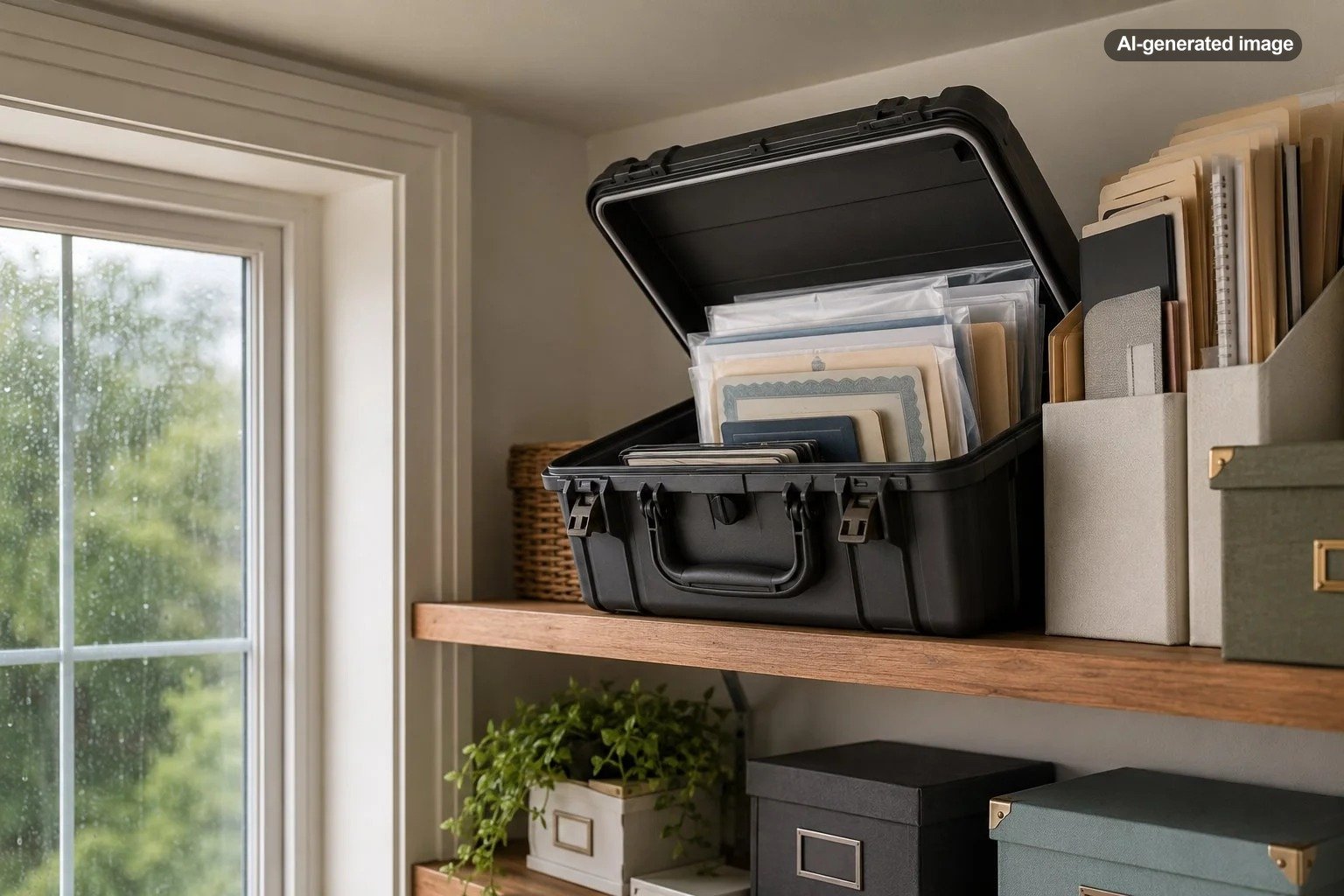
The safest way to protect important papers from flood damage is to use several layers of protection rather than relying on one box, safe, or digital account. Keep essential originals in a properly closed waterproof or water-resistant container, store that container well above any likely flood level, create password-protected digital copies, and keep at least one backup away from your home.
This approach protects against more than a dramatic river flood. A failed water heater, overflowing appliance, roof leak, burst pipe, storm surge, or backed-up drain can soak documents stored in an otherwise tidy closet or basement. The goal is to make sure one leak, one damaged container, or one inaccessible building cannot erase every usable copy.
Start by deciding which papers truly need protection
Not every receipt or household manual deserves space in your emergency document system. Begin with records that would be difficult, slow, expensive, or impossible to replace. This usually includes identity documents, legal records, current insurance information, property records, financial account details, medical information, and sentimental papers.
A practical household file may include:
- Birth, marriage, adoption, citizenship, and death certificates
- Passports, Social Security cards, and copies of driver’s licenses
- Wills, trusts, powers of attorney, and health care directives
- Property deeds, vehicle titles, leases, and mortgage information
- Homeowners, renters, auto, life, and flood insurance policies
- Recent tax returns and important supporting records
- Medical summaries, medication lists, and insurance information
- Household inventories, appraisals, and photographs of valuable belongings
- Military, education, employment, or pension records that may be difficult to reconstruct
- Family letters, photographs, certificates, and other irreplaceable papers
Keep a separate list showing where originals and backups are stored. That list should not expose passwords, account numbers, or other sensitive details. Its purpose is simply to help household members locate the records during an emergency.
Use a container designed for water exposure
A standard filing cabinet, cardboard archive box, plastic tote, or zippered fabric organizer may help with everyday organization, but it should not be treated as reliable flood protection. Water can enter around lids, seams, handles, vents, locks, and damaged gaskets. Containers can also tip, float, crack, or remain submerged longer than expected.
Choose a document container or safe whose manufacturer specifically describes its water resistance or waterproof performance. Confirm that the interior dimensions fit the papers without forcing folds into certificates, legal documents, photographs, or embossed records. Follow the manufacturer’s instructions for closing, locking, inspecting, and maintaining seals.
Place papers inside archival-quality folders or sleeves when appropriate, then add a second protective layer such as a sealed document pouch. A pouch inside a water-resistant safe is not a guarantee, but it reduces dependence on a single seam or gasket.
Elevation matters as much as the container
Even a well-chosen container is better protected when water never reaches it. FEMA guidance recommends keeping important documents in waterproof or water-resistant containers above expected flood levels, preferably on an upper floor when that is practical.
Avoid basements, crawl spaces, garage floors, under-sink cabinets, low utility closets, and bottom dresser drawers. These locations are often the first to encounter rising water, plumbing leaks, appliance failures, or wind-driven rain. A high interior shelf on an upper level is generally more sensible, provided the shelf is sturdy and the container cannot fall or become a hazard.
In a one-story home, place the container as high as reasonably possible in an interior location that can still be reached quickly. Residents in apartments or condos should consider both building flood risk and whether emergency access could be restricted after evacuation.
The best document container is one that remains dry, stays accessible, and is not the only place your records exist.
Create secure digital copies
Scan or clearly photograph both sides of documents when the reverse contains stamps, signatures, instructions, or identifying information. Check every file for legibility before considering the backup complete. Small print, embossed seals, faded ink, and handwritten notes may require a higher-resolution scan.
Use clear filenames that identify the document and, when helpful, its expiration or revision date. Organize the files into a simple folder structure for identity, insurance, property, medical, financial, legal, and household records.
Because these files may contain enough information for identity theft, protect them carefully. Use strong, unique passwords, multifactor authentication where available, device encryption, and reputable encrypted storage. Do not leave unprotected copies in a shared email inbox, an unlocked phone gallery, or an ordinary thumb drive kept beside the originals.
A useful backup arrangement includes one secured local copy and one secured offsite copy. The offsite version might be held in protected cloud storage, a safe deposit box, or another secure location outside the home. Consider whether a trusted household member could access essential records if the primary account holder were injured, unavailable, or unable to remember a password.
Keep selected copies ready for evacuation
A portable emergency file can help when you must leave quickly. It does not need to contain every original. In many households, copies of identification, insurance contacts, medication information, emergency contacts, property records, and a household inventory are sufficient for the evacuation kit.
Store these copies in a sealed waterproof pouch within the emergency bag. Limit the personal information to what is genuinely useful, and keep the bag secure. Carrying unnecessary account data creates a different risk if the kit is lost or stolen.
Do not depend entirely on a safe deposit box
A safe deposit box can provide useful offsite separation, but it is not the right home for every document. Access may be limited by banking hours, closures, identification requirements, account ownership rules, or incapacity. State law and bank procedures may affect who can enter the box after the lessee dies or becomes unable to act.
Before using one, ask the financial institution about access rules, authorized users, water protection, and what happens during a regional disaster. Keep copies of frequently needed information elsewhere, and do not place the only immediately necessary medical or evacuation document in a location you cannot reach at night or during a closure.
Review the system once or twice a year
Document protection is not a one-time filing project. Insurance policies change, passports expire, household members move, medications are updated, and cloud accounts can become inaccessible. Schedule a review before your region’s most likely severe-weather season and after major legal, financial, medical, or household changes.
Before you consider the file complete
- Confirm every important original has been identified.
- Check the container, closure, seal, hinges, and storage shelf.
- Verify that scans are complete, readable, and current.
- Confirm that digital backups can actually be opened.
- Update emergency contacts and insurance information.
- Make sure another trusted person knows the access plan.
- Remove expired copies that no longer serve a purpose.
What should you do if papers get wet?
Do not enter a flooded building until authorities say it is safe. Floodwater may contain sewage, chemicals, sharp debris, or electrical hazards. Personal safety comes before document recovery.
Once the area is safe, act promptly. Handle wet paper gently because it tears easily. Separate loose sheets where possible, avoid aggressive rubbing, and keep inks or image surfaces from touching other materials. Clean, lightly damp documents may sometimes be air-dried on an absorbent surface with good air circulation, but treatment depends on the material, contamination, and degree of saturation.
Do not apply household cleaners, bleach, heat guns, irons, or high heat. Do not peel apart stuck photographs or glossy papers by force. Important photographs, historic documents, vellum, coated papers, books, and items with mold or contaminated floodwater may require advice from a qualified conservator.
Can important documents be replaced after a flood?
Many official records can be replaced, but replacement may take time and require other identification that was stored with them. Government agencies, insurers, banks, employers, schools, attorneys, medical providers, and county recording offices may be able to provide copies or supporting records.
The IRS provides access to tax records and transcripts online or by mail. Banks and credit card companies may also retain account statements that help reconstruct purchases and losses. Replacement options are valuable, but they are not a substitute for protecting originals and maintaining current backups before an emergency.
Frequently asked questions
Are plastic storage totes waterproof enough for documents?
Ordinary totes are useful for organization but should not be assumed waterproof. Lids can flex, seals may be incomplete, and containers can tip or float. Use storage specifically intended for water exposure and add an inner sealed layer for critical papers.
Should documents be laminated?
Lamination is not appropriate for every record and may make some originals unacceptable, difficult to authenticate, or hard to conserve later. Protect official and sentimental papers with suitable sleeves and containers rather than permanently altering them without guidance.
Is cloud storage enough by itself?
No single storage method is ideal. Cloud access may be interrupted by forgotten credentials, account problems, power outages, or internet disruptions. Combine secure digital storage with protected physical originals and another backup.
Where should renters keep important papers?
Renters can use the same layered approach: elevated water-resistant storage, encrypted digital copies, and an offsite backup. Avoid low closets and storage units where flood exposure or emergency access may be a concern.
Which documents belong in a go-bag?
Carry only what may be needed during evacuation, such as identification copies, insurance contacts, medication information, emergency contacts, and essential household details. Keep originals and highly sensitive financial data in more secure storage unless circumstances require taking them.