Why Does My Door Swing Closed by Itself?
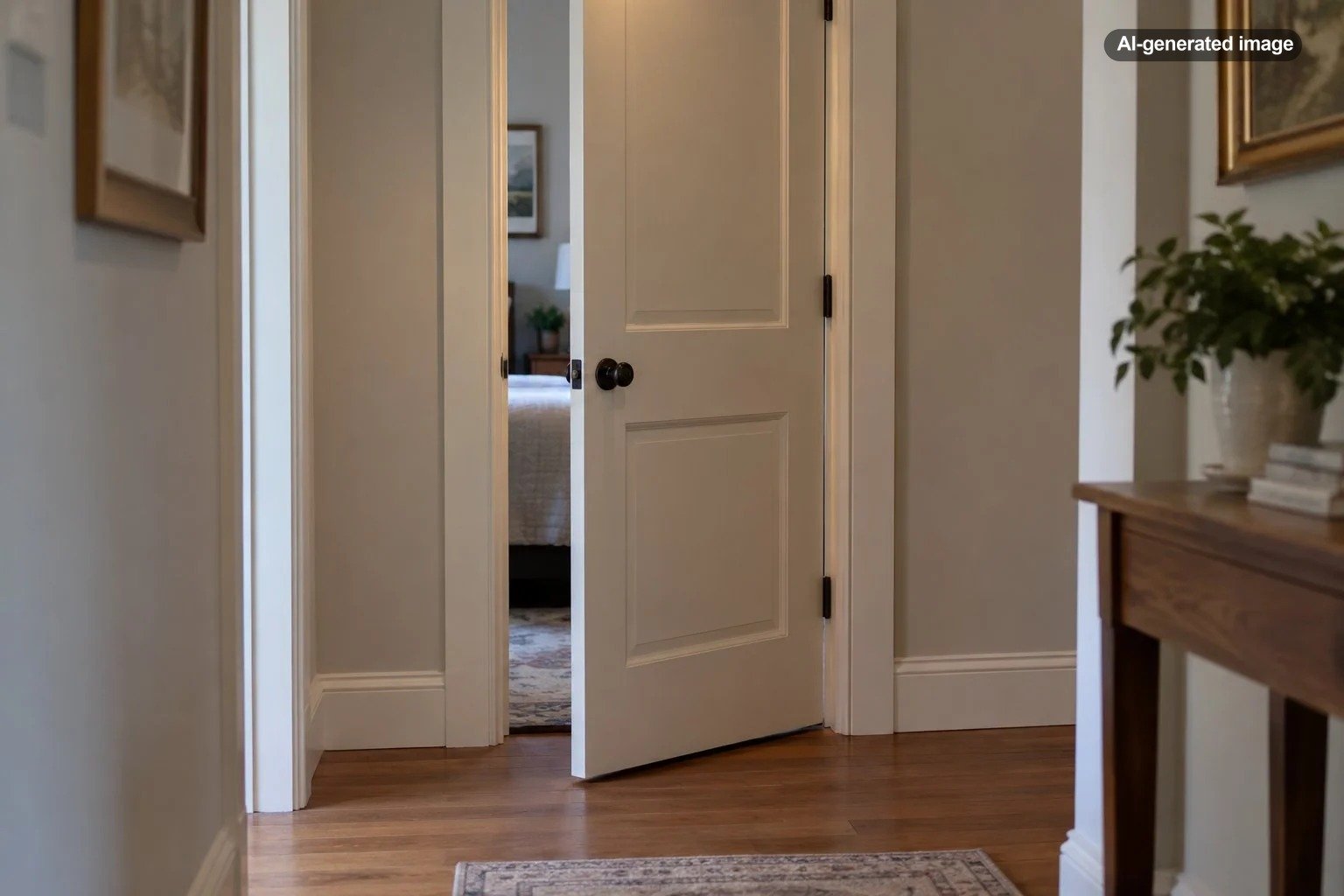
If an interior door swings closed by itself after you leave it partly open, gravity is usually doing the work. The most common reason is that the hinge side of the door frame is slightly out of plumb, causing the weight of the door to pull it toward the closed position. Loose hinge screws, a sagging door, worn hardware, or a frame that shifted over time can contribute to the same behavior.
The good news is that a self-closing bedroom, bathroom, closet, or hallway door does not automatically mean there is a major problem with the house. Start with the hinges and the way the door hangs before considering more involved repairs.
Why a door can close even when nobody touches it
A properly hung conventional door should generally remain reasonably close to the position where you leave it. If it repeatedly travels several inches or swings all the way shut, its weight is being pulled downhill along the hinge axis.
Think of the hinge pins as the axle around which the door rotates. When that axis is vertical, gravity has little reason to move the door in either direction. When the axis leans even slightly, the door may naturally seek the lower position. Depending on which way the frame leans, a door can swing closed or swing open.
This is why the problem can appear even when the door itself looks perfectly normal. A small installation error or gradual change in alignment may be difficult to see from across the room but still be enough to make the door move.
Start by checking for loose hinges
Loose hinge screws are one of the simplest explanations and one of the first things worth checking. Repeated opening and closing can allow hardware to loosen, particularly on heavier doors or doors that have been in place for many years.
Open the door about halfway and gently lift upward at the handle side. Watch the hinges while you do it. The hinge leaves should remain firmly against the door and jamb. Visible movement can indicate loose screws, worn hardware, or screw holes that no longer hold securely.
What to do
- Open the door and inspect all hinge screws on both the door and jamb sides.
- Tighten screws that are clearly loose, without overtightening them and damaging the wood.
- Check whether any screw turns without becoming snug, which can indicate a stripped screw hole.
- Look at the gap around the door to see whether it is noticeably wider on one side or at one corner.
- Open the door to several different positions and observe whether it still moves on its own.
Look at the gaps around the door
The narrow gap between the door and its frame can reveal a surprising amount about how the door is hanging. With the door closed, compare the spacing along the top and both vertical edges. You are looking for consistency rather than trying to diagnose the problem from one tiny variation.
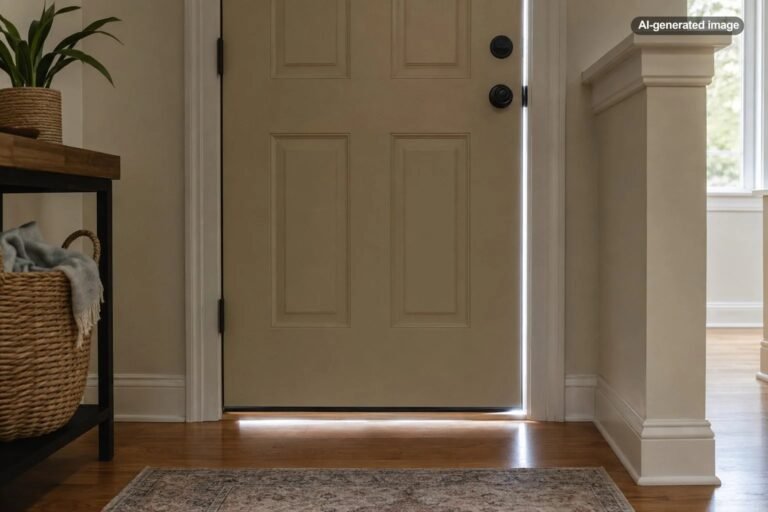
If the top gap becomes noticeably narrower toward the latch side, the door may be sagging. If the gaps look relatively even but the door still swings decisively on its own, the entire hinge jamb may simply be leaning slightly rather than standing perfectly vertical.
Also watch for rubbing. A door that both swings closed and scrapes the frame may have a hinge or alignment problem that is more pronounced than a door that moves freely.
Check whether the hinge side is plumb
If the screws are secure, the next question is whether the hinge jamb is truly vertical. A long level placed against the hinge-side jamb can reveal a lean that is hard to detect visually.
Check the jamb in the direction the door swings as well as from side to side. A frame can appear straight when viewed from the hallway while still leaning toward or away from the room.
An older door may have behaved normally for years before developing this habit. Wood movement, repeated use, loosened fasteners, previous remodeling, or gradual movement of the opening can alter alignment. In a recently installed door, the frame may simply not have been set perfectly plumb from the beginning.
Air pressure can move a door too
Not every moving door is an alignment problem. Airflow can push lightweight interior doors, especially when HVAC equipment starts, another door closes quickly, an exhaust fan operates, or windows are open.
The easiest distinction is consistency. A door that closes from the same partially open position regardless of whether the heating or cooling system is operating points more strongly toward alignment. A door that moves only when air is circulating may be responding to pressure differences instead.
Try testing the door when ceiling fans, exhaust fans, and the HVAC blower are off and nearby windows are closed. If the movement disappears, airflow deserves more attention than the hinges.
What are the practical fixes?
The appropriate repair depends on what you find. Tightening loose hinge screws may be all that is required. A stripped screw hole needs a proper wood repair so the hinge can once again be fastened securely. Damaged or badly worn hinges may need replacement.
If the hinge jamb itself is out of plumb, correcting the underlying alignment is the cleaner solution. That can involve adjusting the jamb and its shims rather than altering the door slab. This becomes more involved because casing or trim may need to be removed to reach the frame attachment points.
Some traditional quick fixes intentionally add a small amount of friction to a hinge pin so the door is less eager to move. That approach can be useful in certain situations, but it treats the movement rather than correcting a substantially misaligned frame. It also should not be used as an excuse to ignore loose or damaged hardware.
A door that moves on its own is often giving you a simple clue about how its hinges and frame are aligned.
When the door should get more than a minor adjustment
A single interior door that slowly closes by itself is commonly a localized door or hinge issue. Several doors suddenly developing alignment problems at the same time deserves more attention, particularly if you are also noticing significant new cracks, windows that have become difficult to operate, floors that seem unusually uneven, or openings that have visibly changed shape.
Those additional symptoms do not prove that there is a structural problem, but they are a good reason to stop treating the issue as merely an annoying door. A qualified professional can determine whether the trouble is limited to the door assembly or reflects movement elsewhere in the opening.
How to keep the problem from returning
Doors do not need complicated maintenance, but occasional inspection helps. If a frequently used door begins sagging, rubbing, rattling, or changing its swing behavior, check the hinges before the movement becomes severe.
Keep screws properly seated, address stripped holes rather than repeatedly tightening screws that no longer grip, and pay attention to changes in the gaps around the door. After painting or remodeling, make sure hinges are seated flat and that layers of paint or improperly installed hardware have not altered their position.
For a new door installation, good alignment at the beginning matters more than trying to tame the door afterward. The hinge jamb should be set plumb and the frame adjusted so the door operates freely without depending on friction to keep it stationary.
Frequently asked questions
Why does my bedroom door keep closing by itself?
The hinge side of the frame is often slightly out of plumb, allowing gravity to pull the door closed. Loose hinges can create similar behavior, so inspect and tighten the hardware first.
Can a house settling cause a door to swing closed?
Changes in an opening can alter door alignment, but one self-closing door by itself does not establish that the house has a structural issue. Look first for loose hardware and local frame alignment problems. Multiple new symptoms throughout the home deserve professional evaluation.
Why did the problem start suddenly?
A hinge screw may have loosened, a stripped hole may have finally stopped holding securely, or seasonal movement may have changed how the door hangs. Airflow is another possibility if the movement occurs mainly when fans or HVAC equipment are running.
Should I sand the door to stop it from closing?
Usually not as a first step. Sanding addresses rubbing or clearance, not the gravitational cause of a door that swings freely but closes on its own. Check the hinges, screws, gaps, and jamb alignment before removing material.
Is a self-closing interior door dangerous?
Usually it is more irritating than dangerous when the door and hardware are otherwise secure. However, visibly loose hinges, damaged framing, rapidly changing alignment, or several doors developing problems at once are sensible reasons to investigate further.