Can Candles Make Indoor Air Quality Worse?
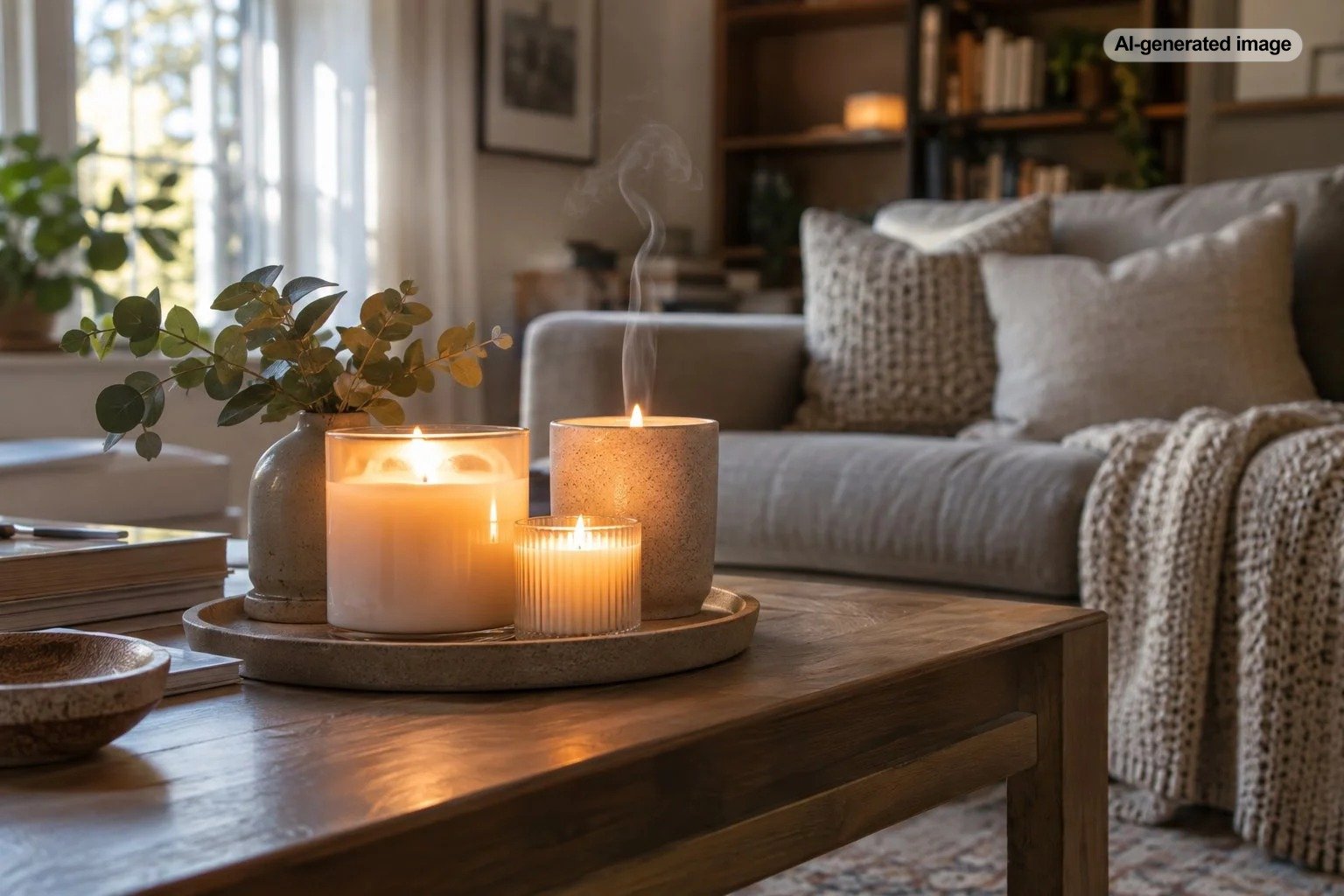
Yes. Burning candles can make indoor air quality worse because a candle flame is a combustion source, and combustion releases particles and gases into the surrounding air. The effect is not identical for every candle or every room, and an occasional candle in a well-ventilated space is a very different situation from burning several candles for hours in a small, closed room.
The useful question is therefore not whether a candle produces anything at all. It does. The more practical question is how much candle burning contributes to the total pollution in your particular home and whether simple changes in frequency, ventilation, placement, and burn behavior can reduce that contribution.
Why a candle changes the air in a room
A burning candle looks modest compared with a fireplace or stove, but the basic process is still combustion. The U.S. Environmental Protection Agency specifically lists burning candles among indoor sources of particulate matter. These airborne particles can remain suspended, spread beyond the immediate area around the flame, and eventually settle on surfaces.
Candle emissions are not limited to particles. Research examining scented and unscented candles has detected a range of gaseous and particulate combustion products. What reaches a person’s breathing zone depends on the candle, the way it burns, the size of the room, the length of the burn, ventilation, and other pollution sources operating at the same time.
A candle does not have to fill a room with visible smoke to affect the air in that room.
Visible soot is a useful warning sign
A steady flame can still produce emissions, but obvious smoking and soot are signs that combustion is not behaving cleanly. A tall or flickering flame, an overly long wick, or strong air currents around the candle can contribute to unstable burning. Black residue around the vessel or nearby surfaces is another clue that soot is being produced.
This is one reason it is worth following the candle manufacturer’s directions for wick care and burn time rather than treating every candle the same. If a candle repeatedly smokes despite proper use, discontinuing it is more sensible than accepting soot as a normal part of the atmosphere.
Does scented versus unscented matter?
Fragrance can add another layer to the indoor-air question, but simple labels do not make good air-quality guarantees. Laboratory research on scented candles has detected both combustion products and compounds associated with fragrance mixtures. At the same time, measured emissions can differ substantially among candle formulations and burning conditions.
That makes broad claims such as one wax type always being clean while another is always dirty difficult to justify. Wax composition, fragrance ingredients, wick design, combustion conditions, and ventilation can all influence what happens in a room. A label such as natural, plant-based, or unscented should not be treated as a substitute for sensible ventilation and careful use.
How much does ventilation matter?
Quite a bit. Indoor pollutants become more concentrated when they are released into a smaller volume of air with limited air exchange. The EPA recommends adequate ventilation when burning candles and incense indoors, which is especially relevant in compact bedrooms, bathrooms, offices, and other rooms that may remain closed for long periods.
Ventilation does not make combustion disappear, but it can help dilute and remove pollutants. Depending on the home and outdoor conditions, that may mean opening a window, using appropriate mechanical ventilation, or simply choosing not to burn candles in a tightly closed room.
A practical way to reduce candle-related pollution
You do not necessarily have to eliminate candles from your home to make a meaningful change. Source reduction is one of the most straightforward ways to improve indoor air, and small adjustments can substantially reduce how much combustion occurs indoors.
What to do
- Burn fewer candles at the same time, particularly in smaller rooms.
- Keep burn sessions reasonably short instead of leaving candles lit for many hours.
- Follow the manufacturer’s instructions for wick trimming and proper use.
- Extinguish a candle that develops persistent smoke, heavy flickering, or visible soot.
- Provide appropriate ventilation while candles are burning and afterward.
- Keep flames away from strong drafts that can disturb combustion.
- If fragrance or smoke bothers someone in the household, switch to a flame-free and, when appropriate, fragrance-free alternative.
What about air purifiers?
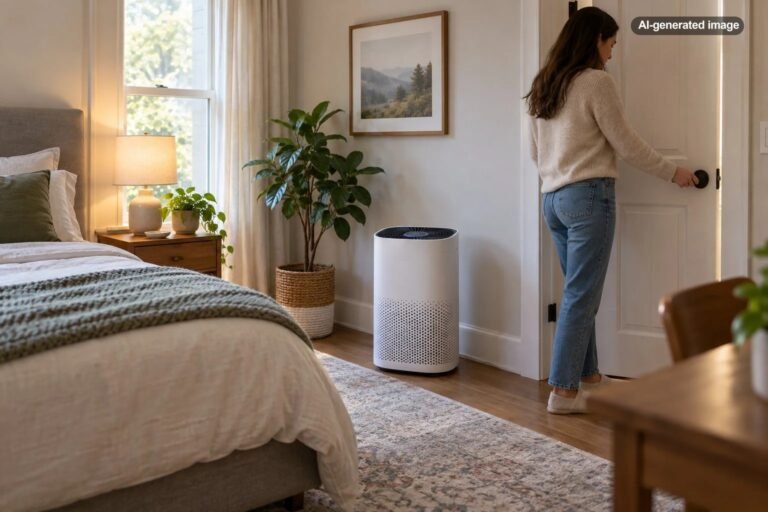
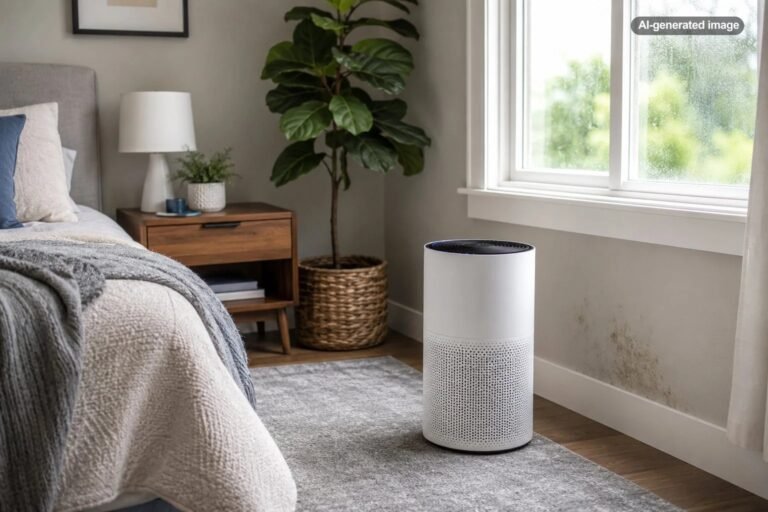
An air cleaner may help reduce some airborne particles when it is appropriately sized and operated, but it is better viewed as a supplement to source control rather than permission to create more pollution. Preventing or reducing an indoor source is generally more direct than releasing pollutants first and trying to capture them afterward.
Air cleaners also differ in what they are designed to remove. A particle filter and a system intended to address gases are not the same thing, so avoid assuming that any device labeled an air purifier neutralizes every candle emission.
Who should be especially cautious?
Reducing unnecessary particulate exposure is reasonable for any household, but extra caution makes sense when people are particularly sensitive to smoke, fragrance, or airborne particles. The EPA notes that people with heart or lung disease, children, and older adults can be at greater risk from particulate matter exposure.
If candle use appears to trigger symptoms or worsen an existing respiratory condition, stop using the suspected source and seek individualized medical guidance when appropriate. An article about indoor air cannot diagnose the cause of symptoms, particularly because cooking, fireplaces, tobacco smoke, outdoor pollution, cleaning activities, and other household sources can affect indoor particulate levels as well.
Are flameless candles automatically better for indoor air?
Battery-operated LED candles eliminate the combustion associated with an open flame, so they are a straightforward option when the goal is candle-like light without burning wax. They can be especially useful for long dinners, bedrooms, shelves, or other settings where the visual effect matters more than having a real flame.
Fragrance is a separate issue. Electrically warmed scented wax and other fragranced products can still release volatile compounds even without combustion. If someone is trying to minimize both combustion products and fragrance-related emissions, an unscented LED candle is the simpler alternative.
The bottom line
Candles can worsen indoor air quality because burning them produces particulate matter and other emissions. That does not mean every brief candle burn creates the same level of concern, nor does it support panic over occasional use. Frequency, number of candles, combustion behavior, room size, ventilation, and household sensitivity all change the practical significance.
If you enjoy candles, use them deliberately rather than continuously. Burn fewer at once, follow proper wick and burn instructions, ventilate the room, and pay attention to smoking or soot. If indoor air quality is already a concern, replacing some or all candle use with unscented flameless lighting removes the combustion source entirely.
Frequently asked questions
Can one candle noticeably affect indoor air?
It can add particles and combustion products, although the resulting concentration depends on the candle, burn conditions, room size, ventilation, and duration. A single brief burn in a well-ventilated room is not equivalent to prolonged use of several candles in a closed space.
Does opening a window make candle burning safe?
Ventilation can reduce pollutant concentrations, but it does not eliminate the emissions produced by combustion. It is one part of a sensible approach that also includes reducing the number of candles, limiting burn time, and avoiding smoky or sooty flames.
Are soy or beeswax candles guaranteed to be cleaner?
No simple wax label guarantees low emissions in every situation. Candle formulation, wick, fragrance, combustion conditions, and ventilation all matter, so broad claims based on wax type alone should be treated cautiously.
Is candle soot the same thing as all candle pollution?
No. Visible soot is only one sign of combustion. Candles can also produce particles too small to see and gaseous compounds, which is why a clean-looking wall does not prove that indoor air is unaffected.
Sources & further reading
- U.S. Environmental Protection Agency: Sources of Indoor Particulate Matter
- U.S. Environmental Protection Agency: Indoor Particulate Matter
- PubMed: Measurement and evaluation of gaseous and particulate emissions from burning scented and unscented candles
- PubMed: Impact of scented candle use on indoor air quality and airborne microbiome