
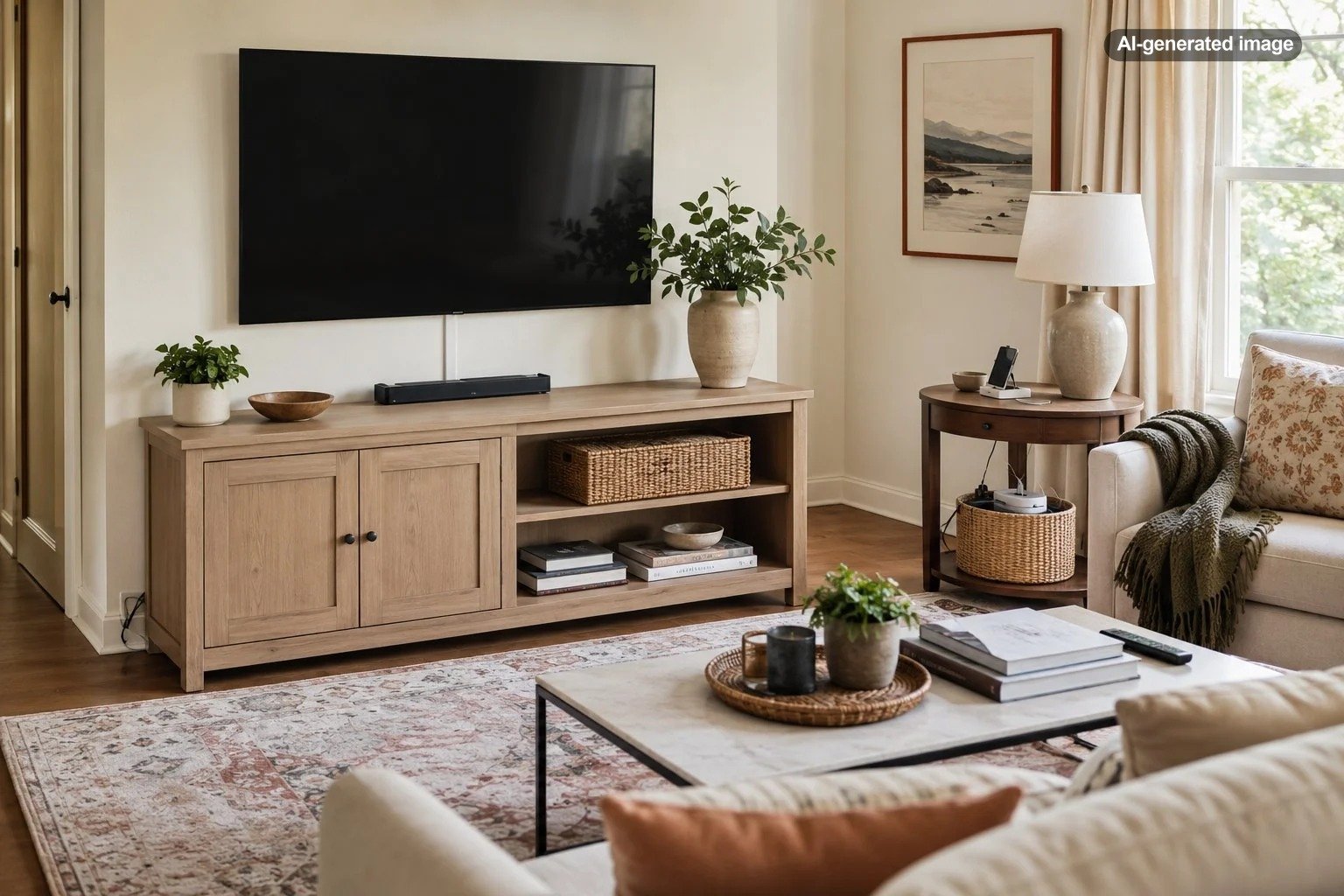
How to Hide Cords in a Beautiful Living Room
A beautiful living room can survive a slightly rumpled pillow or an off-center stack of books. A thicket of black cords wandering across the floor is less forgiving. The best way to hide cords is to plan their route as deliberately as you would place a lamp, arrange a gallery wall, or choose the right rug size. Start by shortening the visible journey between each device and its power source, then use furniture, paintable surface-mounted channels, cord sleeves, and properly placed cable-management accessories to keep the remaining run orderly.
The goal is not to make every wire vanish at any cost. It is to conceal cords without pinching them, creating a trip hazard, blocking ventilation, or treating temporary extension cords as permanent wiring. A tidy room should also be a sensible one.
Begin with the room layout, not the cable box
Before buying clips, sleeves, or covers, unplug what you can and look at the room as a simple map. Mark the outlets, the devices that need continuous power, and the places where people walk. Most cord problems come from one of three layout decisions: a television mounted far from an outlet, a floating sofa with powered lamps or charging tables, or a media cabinet that leaves no concealed path to the wall.
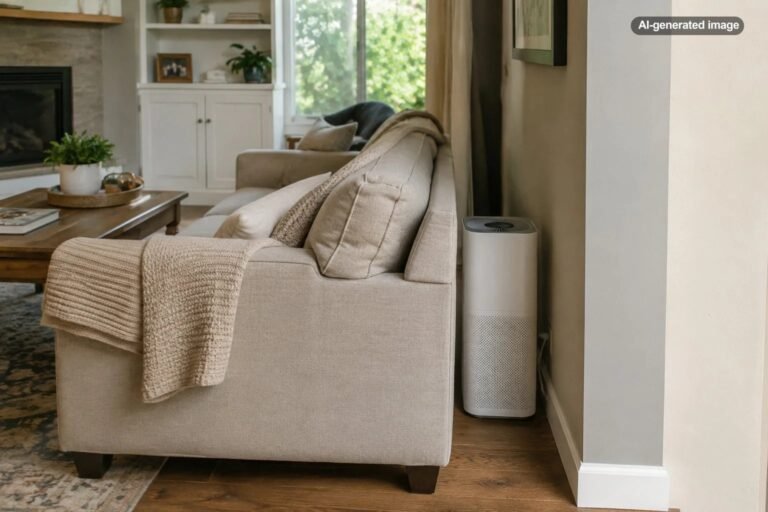
Sometimes the cleanest solution is a small furniture adjustment. Moving a console a few inches can place its back directly in front of an outlet. Shifting a floor lamp to the other side of a chair may let its cord fall behind a curtain or travel along a baseboard instead of crossing open flooring. A narrow table behind a sofa can hold lamps and chargers while also creating a hidden route down one leg.
Plan the cord route
- Identify every device that needs power, data, or both.
- Separate permanent devices from items that are charged only occasionally.
- Choose the shortest route that avoids walkways, doors, heat sources, and moving furniture parts.
- Decide which cords can disappear behind furniture and which need a finished surface treatment.
- Bundle only compatible cords loosely enough that they are not crushed, sharply bent, or difficult to inspect.
Use furniture as part of the concealment plan
Furniture is often the least conspicuous cord-management tool in the room. A media console with a finished back, cable openings, and interior ventilation can hide streaming devices, power adapters, and excess low-voltage cable. A bookcase placed near an outlet can conceal a lamp cord behind its vertical frame. An upholstered chair can screen a cord that travels directly down the wall, provided the cord is not trapped beneath the chair or exposed to pressure from a reclining mechanism.
For a floating sofa, consider placing a slim console behind it rather than trying to stretch a lamp cord across the room. The console can support table lamps, charging accessories, and decorative objects while keeping the wiring contained along the back. In an open-plan room, a professionally installed floor outlet may ultimately be more appropriate than a permanent extension-cord arrangement.
Choose the right treatment for each type of cord
Not every cable needs the same solution. A thin speaker wire, a television power cord, and a bulky collection of adapters behave differently. Matching the method to the cord produces a neater result and makes future changes much easier.
| Situation | Useful approach | What to consider |
|---|---|---|
| TV cables traveling vertically | Paintable surface-mounted cable channel | Choose a channel with enough room for the current cables and modest future changes. |
| Cords behind a media console | Reusable ties, clips, and a ventilated cable box | Label both ends and avoid tight coils around power adapters. |
| Lamp cord along a baseboard | Low-profile cord cover or spaced cable clips | Match the wall or trim color and keep plugs accessible. |
| Several cables traveling together | Flexible cord sleeve | Best where the bundle can remain behind furniture rather than across a walkway. |
| Charging cords used occasionally | Drawer dock, lidded basket, or table-mounted clip | Keep the connection point easy to reach so cables are not left dangling. |
Paintable cable channels
A surface-mounted channel is often the most polished renter-friendly option for wires that must travel across a visible wall. It creates one straight architectural line instead of several loose curves. Paint the cover to match the wall, or align it with existing trim so it reads as part of the room. Follow the product instructions for the types and number of cables the channel is designed to hold.
Cord sleeves and reusable ties
Sleeves are helpful behind televisions, desks, and consoles where several cables share a route. Reusable hook-and-loop ties are usually easier to adjust than permanent plastic ties. Bundle cords by destination, not simply by grabbing everything in sight. A small label near each plug can save a surprising amount of frustration when a device needs to be replaced.
Cable boxes
A cable box can visually contain a power strip and its plugs, but it should not become a sealed drawer full of heat-producing adapters. Use a purpose-made enclosure with openings that allow cords to enter without being crushed, and leave room around power supplies. Do not place a box where spills, pets, or a heating vent create additional concerns.
The most convincing cord concealment follows the room’s existing lines instead of inventing new ones.
Make television wiring look intentional
Wall-mounted televisions often create the room’s most visible cord problem. If the outlet and media connections are already positioned behind the screen, keep short cables loosely organized and avoid stuffing adapters into a cramped mounting space. When the outlet is below the television, a paintable vertical channel offers a cleaner surface solution than loose cords.
Do not assume that every power cord can simply be placed inside a wall. In-wall cable routing involves material ratings, electrical requirements, access, and local rules that vary by installation. A qualified installer or electrician can determine the appropriate approach for concealed power and signal wiring. For many rooms, a well-aligned surface channel is less disruptive and still looks composed.
Handle lamp cords without fighting the furniture
Table lamps are easiest to manage when their cords drop immediately behind the table and follow the nearest furniture edge. A small adhesive clip beneath the tabletop can guide the cord toward the back leg, keeping the visible portion straight. Leave enough slack for the plug and lamp to move without pulling on either connection.
For floor lamps, place the base near a wall outlet when the layout allows. If the cord must follow a baseboard, use a purpose-made low-profile cover rather than household tape. Tape tends to collect dust, damage finishes, and look temporary because it is temporary.
Rugs may seem like a convenient hiding place, but extension cords should not be run beneath carpets, through doorways, or under furniture where they can overheat or suffer physical damage. If a room arrangement repeatedly requires a cord to cross open flooring, reconsider the layout or discuss a properly installed outlet with a qualified electrician.
Reduce the number of cords you need to manage
Concealment becomes much easier when the room contains fewer cables. Remove outdated devices, duplicate chargers, and accessories that no longer serve a clear purpose. Replace unnecessarily long data cables with correctly sized versions, and move rarely used chargers to a drawer or dedicated charging station.
A power strip can consolidate plugs for appropriate low-power electronics, but it does not create additional electrical capacity. Use one that is suitable for the connected equipment, keep it accessible, and plug it directly into a mounted receptacle rather than connecting multiple strips or extension cords together. Devices with substantial power demands should be used according to their manufacturer instructions and connected to an appropriate outlet.
Before you decide
- Can the furniture move closer to an existing outlet?
- Will the chosen cover accommodate every cable without compression?
- Can plugs, adapters, and power strips remain accessible for inspection?
- Is the route clear of doors, recliners, casters, heat, water, pets, and foot traffic?
- Would a new professionally installed outlet solve the problem more cleanly?
- Can the system be opened later without damaging the wall or furniture?
Design details that help cord covers disappear
Color matching matters, but placement matters more. Run channels along baseboards, vertical furniture edges, window trim, or other strong lines already present in the architecture. Avoid diagonal routes and wandering curves. When a cord must remain visible, keep it straight and use one finish consistently rather than combining several unrelated clips and covers.
In pale rooms, white or paint-matched covers tend to recede. Against dark millwork, a black or deep brown sleeve may be less noticeable. Natural woven baskets can hold spare charging cables, but they should not be used to hide energized power strips or adapters in a way that traps heat or makes them difficult to inspect.
Allow a little breathing room in the design. A cabinet packed tightly with cables, routers, streaming devices, and power supplies may look tidy from the sofa while becoming difficult to maintain. Good cord management makes connections orderly, accessible, and easy to understand.
Frequently asked questions
How can I hide cords without drilling into the wall?
Use paintable adhesive cable channels, removable clips, furniture-backed routes, cord sleeves, and a media console with cable openings. Test removable adhesives in an inconspicuous spot because some products can affect delicate paint or wallpaper.
What is the best way to hide cords behind a floating sofa?
A narrow console behind the sofa can carry lamps and chargers while concealing the cable route. When no suitable outlet is nearby, ask a qualified electrician whether a properly installed floor or wall outlet is practical.
Can I place an extension cord under a rug?
No. The U.S. Consumer Product Safety Commission advises against running extension cords under carpets, through doorways, or under furniture. These locations can expose the cord to heat buildup and physical damage.
How do I hide cords from pets?
Route cords behind stable furniture or inside a purpose-made rigid cover that blocks access. Keep loose loops off the floor, inspect frequently for chewing, and unplug or remove damaged cords immediately.
When should I add another outlet?
Consider professional outlet installation when extension cords are being used continuously, furniture placement depends on cords crossing the room, or the existing receptacles cannot serve the devices without repeated workarounds. An electrician can evaluate the circuit, placement, and local requirements.