
How to Set Up a Safer, Smarter Entryway
A safer, smarter entryway is easy to navigate, bright enough to reveal obstacles, and organized around the actions that actually happen there. It gives people room to enter, close the door, remove shoes, set down packages, and find keys without stepping around a decorative obstacle course.
The best setup is not necessarily the largest or most elaborate. A narrow apartment landing, a busy family mudroom, and a formal foyer can all work well when the walking path stays clear, storage is placed within easy reach, and loose items are prevented from migrating onto the floor.
Begin with a clear path through the door
Stand outside your entry with a bag in one hand and imagine coming home in the rain. Then repeat the exercise from inside while carrying groceries or helping a child, guest, or pet through the doorway. Anything that forces an awkward sidestep deserves a second look.
Keep furniture, baskets, planters, umbrellas, packages, and shoe piles outside the door’s swing. A slim console may look appropriately scaled against the wall but still create a bottleneck when two people enter together. In a small entryway, an uninterrupted path is usually more valuable than another surface.
Households planning for mobility needs should pay particular attention to doorway width, thresholds, and maneuvering room. The federal ADA standards apply to covered public and commercial facilities rather than automatically governing every private residence, but their measurements can still provide useful planning references. Accessible door openings are generally designed to provide at least 32 inches of clear width with the door open 90 degrees, and accessible thresholds are generally limited to 1/2 inch in height.
Use lighting that works before you enter
An entry light is most useful when it illuminates the lock, threshold, steps, and immediate walking surface rather than merely washing the wall with a pleasant glow. Outside, check for shadows around changes in level, uneven pavers, porch edges, and house numbers. Inside, make sure the first few steps are visible as soon as the door opens.
Place switches where they can be reached without crossing a dark room. Motion-activated or dusk-to-dawn lighting can be helpful when people often arrive with full hands, although sensors should be positioned and adjusted so the lights activate before someone reaches a step or obstruction.
Glare deserves attention too. A bare bulb, highly reflective tile, or fixture aimed directly toward eye level can make edges harder to distinguish. Diffused fixtures and layered light from more than one direction are often easier on the eyes than a single intense source.
Make the floor predictable
The transition from outdoors to indoors commonly combines water, grit, shoes, thresholds, and different flooring materials. That makes the entry a sensible place to be conservative about anything loose, curled, or unstable.
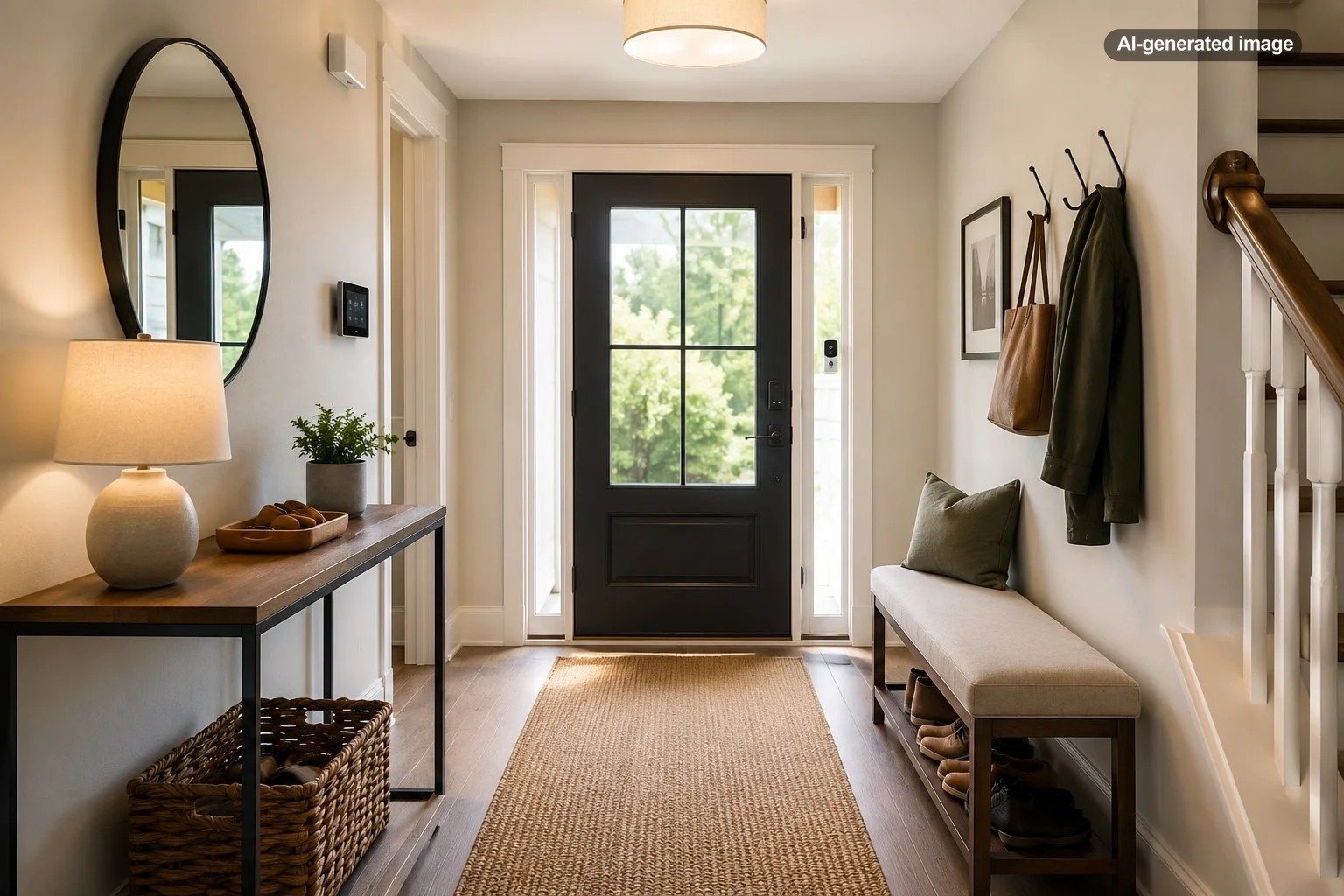
If you use a mat or rug, choose one that lies flat, has edges that do not curl, and does not slide when someone pivots on it. Confirm that its thickness allows the door to open freely. A rug that bunches under the door or shifts across smooth flooring can create more trouble than the dirt it catches.
Consider how the surface behaves when wet. Smooth stone, polished tile, and glossy finishes may become slippery near an exterior door. Wipe up tracked-in water promptly, keep an absorbent mat where it will actually catch moisture, and investigate recurring water intrusion rather than treating a permanent puddle as a housekeeping issue.
Give everyday objects a defined landing place
Entryway clutter is usually evidence of a missing decision. Shoes collect by the door because there is no convenient shoe zone. Mail spreads across a bench because no container is assigned to incoming paper. Keys disappear because the designated hook is too far from the natural path into the home.
Build storage around habits instead of expecting habits to reorganize themselves. Place the most frequently used items between the door and the next room, within comfortable reach and without projecting into the walkway.
| Entryway item | Practical placement | Common mistake |
|---|---|---|
| Keys | Hook, tray, or small drawer near the lock | Leaving them on an open surface beneath coats and bags |
| Shoes | Low rack, divided shelf, or contained floor zone | Allowing pairs to spread into the walking path |
| Small sorter for action, recycling, and filing | Using a large basket that becomes an unsorted archive | |
| Bags | Strong hooks mounted away from head and shoulder level | Overloading a freestanding rack that can tip |
| Umbrellas | Stable holder with a water-catching base | Leaning wet umbrellas against a wall or across the floor |
Closed storage can reduce visual noise, but it should not make frequently used items harder to retrieve. Open hooks and trays are often more practical for daily essentials, while cabinets are better for seasonal accessories, pet supplies, extra shoes, and backup items.
Add a stable place to pause
A bench can make an entryway more comfortable for putting on shoes, sorting bags, or waiting while another person unlocks the door. It is especially useful for older adults, children, people managing pain or fatigue, and anyone who prefers not to balance on one foot.
Choose a seat that feels stable when weight is placed near the edge. Leave enough room in front of it for feet and mobility aids without blocking the route. A small stool tucked beneath a console may save space, but it is less helpful if pulling it out requires moving shoes, baskets, or furniture first.
A wall-mounted handhold or properly installed rail may improve support in some homes, particularly near steps. Decorative towel bars, coat hooks, and freestanding furniture are not substitutes for a support feature designed and anchored for that purpose.
Choose door hardware everyone can manage
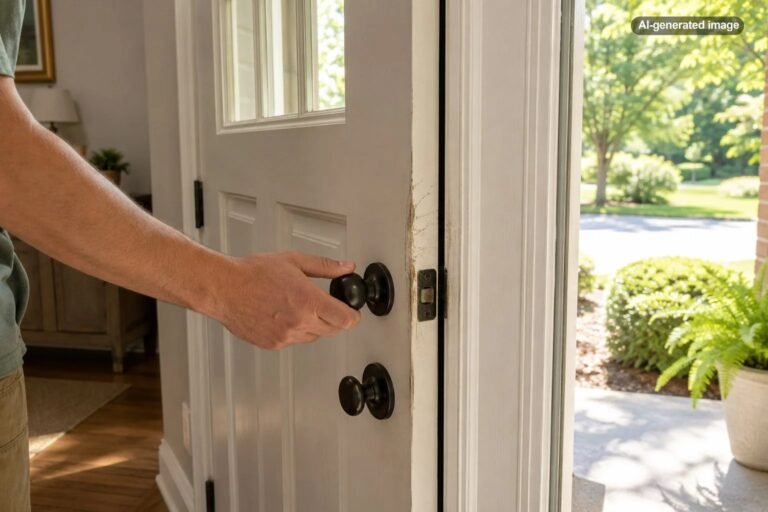
Locks and handles should be secure without being unnecessarily difficult to operate. Test them while carrying something, wearing gloves, and using only one hand. Hardware that requires strong pinching, repeated twisting, or an awkward wrist angle may frustrate children, visitors, or people with arthritis and limited hand strength.
Lever-style handles can be easier for many people to operate than round knobs. Smart locks may reduce the need to search for keys, but they introduce batteries, software, access permissions, and backup-entry considerations. Whatever system you use, household members should know how to enter during a battery failure, connectivity problem, or power outage.
Keep security controls distinct from convenience clutter. Do not hide spare keys in obvious exterior locations, and avoid displaying alarm codes, personal schedules, or labeled keys where they can be seen through a window.
Check the exterior approach
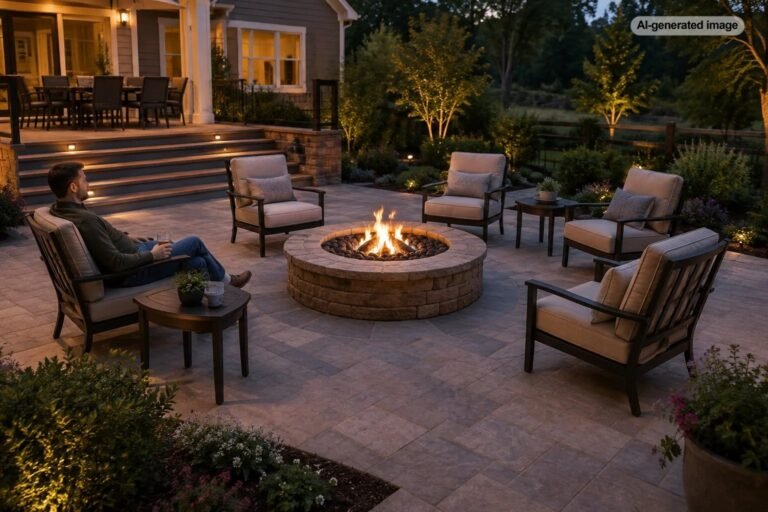
The entryway begins before the front door. Walk the route from the driveway, sidewalk, garage, or shared corridor during daylight and after dark. Look for uneven surfaces, overgrown plants, poor drainage, unstable handrails, packages blocking the landing, and steps that visually blend into one another.
Trim vegetation that narrows the path or obscures lighting and house numbers. Redirect irrigation and downspouts that regularly wet the walking surface. In regions where ice is possible, make snow and ice removal part of the entry routine rather than waiting until the path becomes difficult to use.
Renters and condo residents may not control exterior lighting, railings, thresholds, or common hallways. Document hazards and report them through the appropriate landlord, property manager, or association process rather than attempting unauthorized alterations.
Keep style in service of the room
A functional entry does not have to look clinical. The visual goal is simply to prevent decor from interfering with movement, visibility, and storage. One well-scaled mirror, durable runner, attractive light fixture, or piece of artwork can provide more impact than several small objects competing for limited space.
Use contrast thoughtfully. A door, threshold, step edge, or piece of furniture that is visually distinct from the surrounding surfaces may be easier to perceive than a completely tone-on-tone arrangement. Avoid placing fragile objects where coats, bags, canes, or opening doors can strike them.
A successful entryway makes the safest route feel like the most natural route.
Before you decide
- Can the door open fully without striking furniture or storage?
- Is the route clear enough for two people, a stroller, or a mobility aid?
- Can you see the lock, threshold, steps, and floor after dark?
- Do rugs and mats lie flat without sliding or catching the door?
- Are shoes, bags, umbrellas, and packages contained outside the walkway?
- Is seating stable and easy to reach?
- Can household members operate the lock and handle with one hand?
- Are exterior steps, railings, drainage, and walking surfaces in sound condition?
A simple entryway reset
What to do
- Remove everything from the floor except essential furniture and a securely placed mat.
- Open the door completely and mark the area needed for its swing.
- Walk the route while carrying bags and note where movement feels cramped.
- Improve lighting at the lock, threshold, steps, and interior landing.
- Assign one practical storage location to keys, shoes, mail, bags, and umbrellas.
- Test the rug, seating, hardware, railings, and exterior path for movement or instability.
- Return only the decor that does not reduce clearance or visibility.
Revisit the setup as household needs change. A new pet, stroller, mobility aid, school routine, or package-delivery habit can alter how the space functions. A five-minute seasonal check is often enough to catch creeping shoe piles, burned-out bulbs, shifting rugs, and storage that no longer matches daily life.
Frequently asked questions
Should an entryway rug be avoided completely?
Not necessarily. A flat, secure mat can help contain moisture and dirt. Remove or replace it if it slides, curls, bunches under the door, or creates an abrupt level change.
How much furniture belongs in a small foyer?
Use only what supports a real task without narrowing the walking route. In many small foyers, hooks, a narrow shelf, and a compact shoe solution work better than a full console and bench.
Are motion-sensor lights a good entryway choice?
They can be useful when people arrive with full hands or when a switch is inconveniently located. Position and test the sensor so the light comes on before someone reaches a step, threshold, or obstacle.
What is the first improvement for aging in place?
Begin by removing trip hazards and improving illumination. Then evaluate the doorway, threshold, steps, handrails, seating, hardware, and maneuvering room based on the person’s specific mobility and vision needs.
When should a professional inspect the entrance?
Seek qualified help for loose stairs or railings, significant floor movement, recurring leaks, damaged structural elements, electrical changes, major threshold alterations, or accessibility modifications that may involve local construction requirements.