How Do You Know if an AC Drain Line Is Clogged?
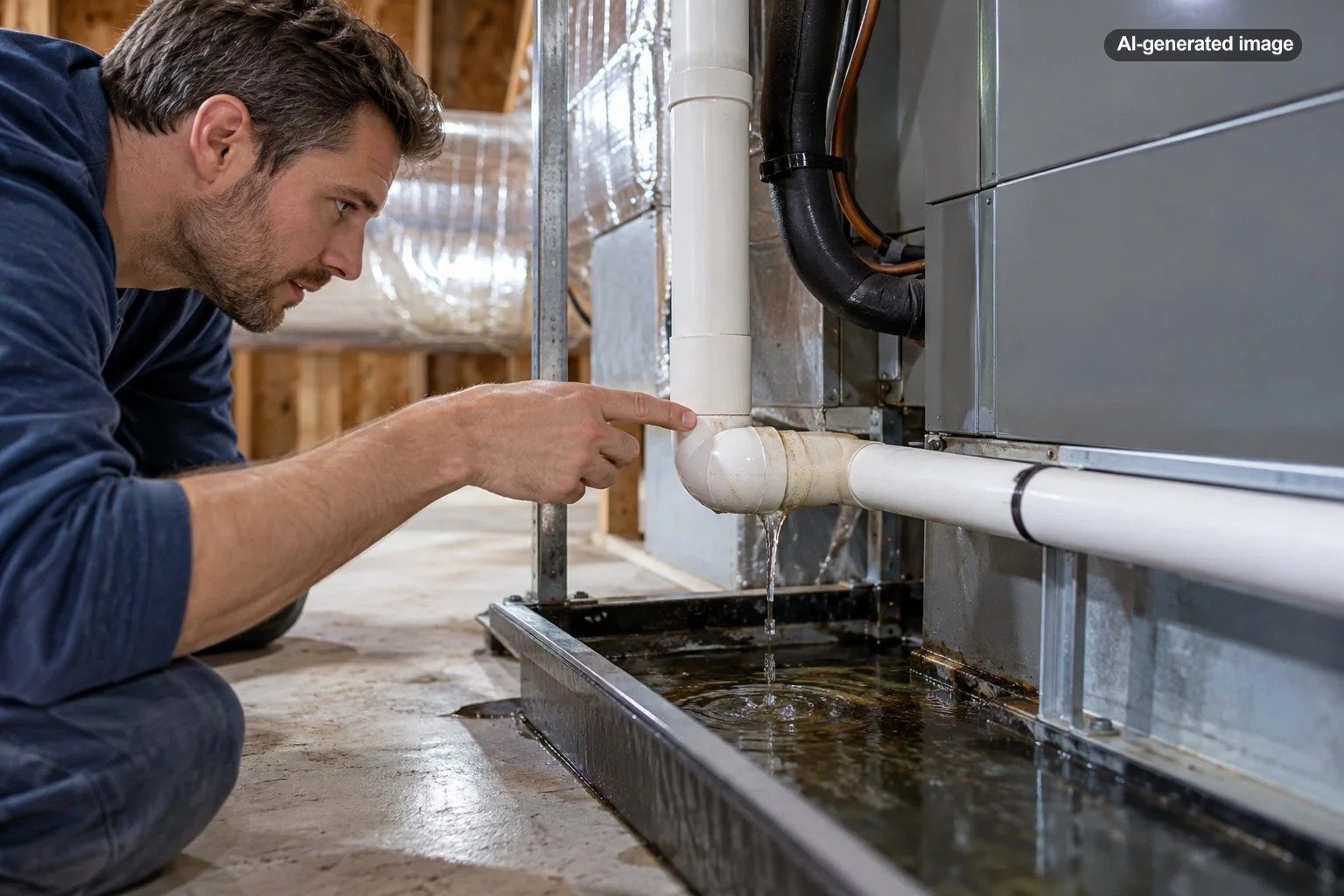
A clogged air conditioner drain line often announces itself through water where it should not be. You might notice a puddle near the indoor AC unit, moisture collecting in a secondary drain pan, or an air conditioner that suddenly stops cooling even though the thermostat is calling for it. These are some of the clearest warning signs that condensation is not draining properly.
Other clues are less obvious. A musty smell, unusual drainage from an emergency outlet, or water stains near an attic-mounted air handler can also point toward a drainage problem. None of these symptoms proves the line is clogged, but they provide useful places to begin checking.
The important distinction is between recognizing a likely blockage and attempting a repair. Homeowners can often identify the warning signs without dismantling equipment, while clearing the obstruction may require professional service.
What Does an AC Drain Line Actually Do?
When an air conditioner cools your home, its indoor evaporator coil also removes moisture from the air. That moisture condenses into water, falls into a collection pan, and moves through a condensate drain line toward an approved discharge location.
In many central air conditioning systems, the drain line is a narrow PVC pipe connected to the indoor air handler. Some systems use gravity to move water away. Others rely on a condensate pump, particularly when the water must travel upward before reaching a suitable drain.
Over time, dust, biological buildup, and other debris can collect inside the drain line. When the passage becomes restricted, water may drain slowly or stop moving altogether.
Because the AC can produce additional condensation while running, a blockage may eventually cause water to collect in the drain pan or escape into the surrounding area.
Where the water appears depends partly on the installation. An air handler in a garage or utility closet may leave a visible puddle. Equipment above a finished ceiling can allow moisture to affect insulation, drywall, or flooring before anyone discovers the problem.
The Most Common Signs of a Clogged AC Drain Line
Water pooling around the indoor AC unit
One of the most recognizable symptoms is unexpected water near the indoor air handler. Look around the base of the cabinet, nearby flooring, and any accessible condensate collection area.
A small amount of condensation inside a properly designed drain pan is not necessarily abnormal. Water escaping the pan, spreading across a floor, or repeatedly accumulating where it does not belong is different.
However, a clogged drain line is not the only possible explanation. A cracked drain pan, disconnected pipe, frozen evaporator coil, or failed condensate pump may create similar conditions.
Water collecting in the secondary drain pan
Some indoor systems, especially those installed above finished living spaces, have an auxiliary drain pan beneath the equipment. Its purpose is to provide another layer of protection if water escapes the normal drainage system.
If that secondary pan contains standing water, investigate promptly. It may indicate that the primary drain has become blocked or that another part of the condensate system is leaking.
Do not assume the secondary pan is intended to hold water continuously. A functioning backup pan is a warning and protective measure, not a substitute for correcting the primary problem.
The air conditioner turns off unexpectedly
Many HVAC installations include a condensate overflow safety switch, commonly called a float switch. When water rises beyond an acceptable level, the switch interrupts operation to help prevent flooding.
That can create a confusing situation: the thermostat indicates that cooling is needed, but the system will not start or stops before reaching the desired temperature.
A triggered float switch is one possible explanation, particularly when water is visible in a drain pan. Electrical problems, thermostat faults, and other mechanical issues can also prevent operation.
Never bypass the switch to restore cooling. Doing so defeats a protective feature and may allow water damage to continue.
Water dripping from an emergency drain outlet
Some homes have a secondary condensate drain that empties at a noticeable exterior location. Depending on the installation, this outlet may be positioned above a window, doorway, or another spot where dripping water is easy to notice.
If water begins flowing from an emergency outlet that is normally dry, it may mean the primary drainage route is obstructed or otherwise failing.
Not every exterior drain pipe serves the same purpose, and not every system has a separate emergency outlet. If you are unsure which pipe you are seeing, avoid assuming it identifies the source of the problem.
A musty smell near the cooling equipment
Water that remains in a drain pan or other damp components can contribute to unpleasant odors. A musty smell may accompany restricted condensate drainage, particularly when debris and moisture have accumulated.
Nevertheless, odors are not a reliable standalone diagnosis. Dirty coils, damp insulation, ductwork problems, and other moisture sources may produce similar smells.
Persistent odors deserve attention, especially when accompanied by visible moisture. Do not assume that a clogged drain is the only possible cause or that a smell alone confirms mold growth.
How to Check Whether Your AC Drain Line Is Clogged
A useful inspection begins with visible clues rather than opening the equipment or introducing cleaning solutions. The goal is to determine whether water is backing up and whether another issue could explain the symptoms.
A simple inspection sequence
- Turn off cooling if you see a leak. Set the thermostat to off. If water is near electrical equipment or the system appears unsafe, keep clear and contact a qualified professional.
- Locate the indoor air handler. It may be in a closet, attic, basement, garage, or mechanical room. Inspect only areas you can reach safely.
- Look for standing water. Check the surrounding floor and any readily visible secondary drain pan. Do not remove electrical panels or reach inside the unit.
- Identify the condensate drain if possible. Look for a drain pipe leading away from the indoor equipment. Avoid disconnecting or opening unfamiliar plumbing.
- Check an accessible discharge outlet. If you know where the condensate line normally drains, look for unusual backups, debris, or unexpected water from a secondary outlet.
- Consider other symptoms. Note whether the AC has shut down, whether cooling has weakened, or whether a condensate pump appears to be malfunctioning.
- Stop if water is accumulating or the cause remains uncertain. A technician can test drainage, inspect the pan and safety devices, and distinguish a blockage from other equipment problems.
For attic installations, do not climb into an unsafe or unfinished area simply to inspect a suspected clog. A professional can access equipment where footing, lighting, or electrical clearances make homeowner inspection impractical.
Does No Water Coming Out of the AC Drain Pipe Mean It Is Clogged?
Not necessarily. A condensate drain does not have to drip constantly for the system to be functioning properly.
The amount of water produced depends on indoor humidity, operating conditions, and how long the air conditioner has been running. On a relatively dry day, there may be little visible discharge. In humid weather, the same system may produce considerably more condensation.
A pipe that remains dry is more suspicious when the system has operated for an extended period in humid conditions and other evidence suggests water is collecting inside the unit.
It also matters whether you are looking at the correct outlet. A secondary emergency drain is ordinarily expected to remain dry, while a primary discharge may be routed into plumbing rather than outside.
What Else Can Look Like a Clogged AC Drain Line?
Several AC problems produce water or interrupted cooling without a simple obstruction in the drain pipe.
| Possible problem | Typical clue | What distinguishes it |
|---|---|---|
| Clogged drain line | Water backs up or the overflow switch trips | Restricted condensate drainage |
| Frozen evaporator coil | Weak airflow, ice, or water after thawing | Cooling or airflow problem rather than a drain blockage alone |
| Damaged drain pan | Water leaks despite an open drain | Crack, corrosion, or another pan defect |
| Failed condensate pump | Water collects in a pump reservoir | Pump or discharge problem |
| Disconnected drain fitting | Water escapes near a pipe connection | Physical separation or leakage |
For example, a frozen evaporator coil may create a substantial water leak as the ice melts. The resulting puddle can resemble a drain blockage, but the underlying cause may involve restricted airflow or a refrigeration issue.
Similarly, if a condensate pump has stopped working, water may accumulate even when the pipe leading from the unit is clear.
These distinctions matter because removing sludge from a drain line will not repair a leaking pan, faulty pump, or frozen coil.
What Should You Do if the Drain Line Appears Clogged?
Start by preventing additional water damage. If the pan is overflowing, water is escaping the equipment, or an overflow switch has shut the system down, leave cooling off until the drainage problem is resolved.
If water has reached nearby flooring, dry accessible surfaces when it is safe to do so. Avoid disturbing wet electrical equipment, concealed wiring, or contaminated materials.
Some manufacturer guidance describes clearing an accessible condensate outlet with a wet/dry vacuum. Certain systems also have service ports designed for flushing or cleaning. However, the appropriate method depends on the drain configuration, traps, pumps, and manufacturer instructions.
For that reason, do not automatically pour vinegar, bleach, household drain cleaner, or another chemical into the nearest PVC opening. An unfamiliar opening could be a vent, and an unsuitable cleaning method may affect components or introduce chemicals into the wrong location.
Likewise, avoid forcing wires, rods, or high-pressure air through the line. These methods can damage fittings, dislodge piping, or create leaks.
Homeowners who understand their specific system and have explicit manufacturer-approved cleaning instructions may be able to perform limited routine maintenance. Anyone uncertain about the layout or dealing with an active backup is better served by a qualified HVAC technician.
What will an HVAC technician check?
A service visit may involve inspecting the primary and secondary pans, confirming the drainage path, clearing accumulated debris, and testing whether condensation can flow freely.
The technician may also inspect a condensate pump, verify the overflow safety switch, and look for conditions contributing to repeated blockages.
When the system has leaked, the surrounding area may also need attention. Clearing the pipe does not automatically dry damaged insulation, drywall, or other materials.
How to Prevent Another AC Drain Line Clog
The most practical prevention strategy is to include condensate drainage in routine air conditioning maintenance rather than treating it as an unrelated plumbing issue.
The U.S. Environmental Protection Agency recommends inspecting condensate drains as part of heating and cooling maintenance. Standing water and accumulated debris in condensate collection areas are signs that require attention.
A sensible maintenance plan includes keeping air filters in good condition, arranging periodic inspection of the condensate line and pan, checking any installed condensate pump, and confirming that overflow protection functions properly.
Filter maintenance matters because dust and debris entering the equipment can contribute to buildup. However, replacing the filter does not directly remove an existing drain obstruction.
Homes in humid climates may benefit from more frequent drainage checks because cooling systems can remove substantial moisture during long operating seasons. The actual schedule should reflect the equipment instructions, operating conditions, and history of previous clogs.
Can a water leak alarm help?
For equipment located in a utility closet or another accessible area, a separate water leak alarm may provide additional warning if water reaches the surrounding floor.
A basic audible alarm is different from a condensate float switch. The alarm alerts nearby occupants when its sensor detects water; it does not necessarily interrupt AC operation or prevent a leak.
Placement is important. The sensor should sit where an escaping leak would reach it without interfering with the HVAC equipment, service access, or electrical components. A floor-mounted alarm also cannot reliably warn about water confined to an attic pan above the living space.
Affiliate disclosure: CraneManor.com may earn a commission when you purchase through links on this page. This does not affect the price you pay. Learn more.
For accessible indoor locations, a five-pack of leak detectors offers a way to place local audible water alarms in several leak-prone areas. These are sound-based alarms rather than Wi-Fi devices that send phone notifications. They supplement regular inspection but do not replace the AC’s built-in overflow protection.
When Should You Call an HVAC Professional?
Professional evaluation is appropriate when the unit is actively leaking, a safety switch has stopped cooling, water repeatedly returns after drainage maintenance, or the cause cannot be identified from a basic visual inspection.
Call promptly if water is reaching a finished ceiling, electrical equipment, or concealed building materials. A suspected leak above occupied rooms deserves particular attention because damage may spread before it becomes visible.
It is also worth scheduling service when the drain has clogged repeatedly. Persistent blockages may reflect more than ordinary buildup, including an incorrectly configured drain, a trap problem, or another issue affecting water flow.
The goal is not simply to restart the air conditioner. It is to restore reliable drainage and determine whether any water-related damage or equipment problem remains.
Frequently Asked Questions
Can a clogged AC drain line cause the air conditioner to stop cooling?
Yes. If the system has a condensate overflow safety switch, rising water may trigger a shutdown. The cooling system can appear unresponsive even though the thermostat is requesting cooling. Other faults can produce the same symptom, so the drain system should be inspected before assuming it is the cause.
Can an AC drain line be partially clogged?
Yes. Debris can restrict water flow without blocking it completely. The line may drain slowly during mild conditions but struggle to handle greater condensation during extended operation. Repeated water accumulation or intermittent overflow can justify inspection even if some water still exits the pipe.
Is it normal for an AC drain pan to have water in it?
Condensation normally passes through the primary collection pan and drains away. A little transient moisture in that primary pan may be expected, depending on the system. Persistent standing water, overflow, or water in an auxiliary emergency pan should not be ignored.
Will a clogged drain line always produce a puddle?
No. An operating float switch may shut down cooling before water escapes. A secondary drain may carry some excess water away, or moisture may collect in a concealed area. That is why unexplained shutdowns and emergency-drain discharge can be useful warning signs.
Can you keep running the AC with a suspected drain clog?
If there is active leakage, a filling auxiliary pan, or an overflow-switch shutdown, do not continue running cooling to see whether the problem clears. Additional condensation can worsen the backup. Have the drainage issue addressed and the system checked before returning it to normal operation.
The Bottom Line
A clogged AC drain line is most likely when water is collecting where it should be draining away. Puddles near the indoor unit, water in a secondary pan, discharge from an emergency outlet, and shutdowns involving a float switch are more meaningful clues than a dry exterior pipe alone.
Begin with a safe visual inspection, stop cooling when water is accumulating, and avoid improvised cleaning methods on unfamiliar equipment. A properly functioning condensate drain may be easy to overlook, but keeping it clear is an important part of protecting both the air conditioning system and the home around it.
Sources & Further Reading
- Carrier: How to Clean an AC Drain Line – Manufacturer guidance on drain blockages, warning signs, safety switches, and maintenance.
- Carrier: Why Is My AC Leaking Water? – Explains drainage clogs and other common causes of indoor air conditioner water leaks.
- U.S. Environmental Protection Agency: Should You Have the Air Ducts in Your Home Cleaned? – Includes guidance on cooling-coil moisture, condensate pan drainage, and water-related warning signs.
- U.S. Environmental Protection Agency: Guide to Energy-Efficient Heating and Cooling – HVAC maintenance checklist covering condensate drain inspection and associated moisture concerns.