
Why Does My House Make Loud Cracking Sounds at Night?
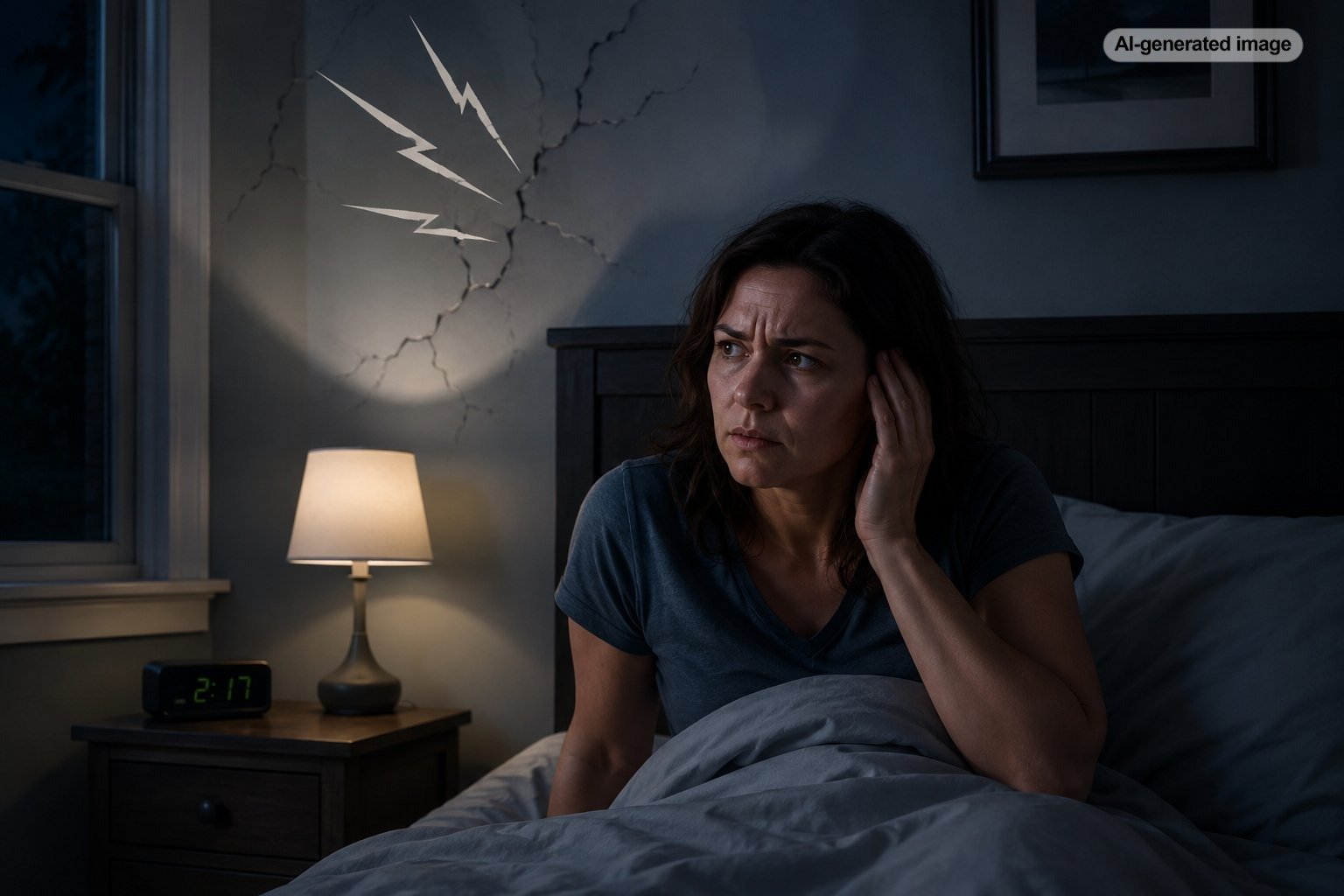
A house that makes sharp cracking, popping, or snapping sounds after dark is usually reacting to changes in temperature and moisture rather than suddenly coming apart. Roof framing, siding, ductwork, plumbing, flooring, and other materials expand when warm and contract as they cool. Because outdoor temperatures often fall quickly after sunset, that movement can be more noticeable at night.
Most isolated noises are harmless, especially when they happen during seasonal temperature swings and are not accompanied by visible damage. Still, repeated sounds from one location, newly appearing cracks, sagging surfaces, water intrusion, or doors that suddenly stop fitting deserve closer attention.
The most common reason: your house is cooling down
Homes are assembled from materials that respond differently to heat. Wood, metal, vinyl, drywall, masonry, glass, and plastic do not expand and contract at identical rates. They are also fastened together with nails, screws, clips, adhesives, and framing connectors.
During the day, sunlight may warm the roof and exterior walls well above the indoor temperature. After sunset, those surfaces begin cooling. A framing member, metal flashing panel, duct section, or siding piece may resist movement briefly because of friction or a tight connection. When it finally shifts, the stored tension releases as a sudden pop or crack.
This is why the sound can seem surprisingly loud. Framing cavities can act like resonating chambers, carrying a small movement through a ceiling, wall, or floor assembly. The noise may appear to come from the room even when its source is several feet away.
Roof framing and attic movement
The roof is one of the most temperature-sensitive parts of a house. Roofing materials can heat rapidly in direct sun and cool rapidly after dark. The wood framing beneath them also responds to changing humidity.
Possible attic-related sources include rafters, engineered roof trusses, sheathing, metal connector plates, roof decking, flashing, gutters, and fasteners. A sharp sound near the ceiling after a hot afternoon may simply be one component slipping slightly as the assembly contracts.
Seasonal moisture differences can also affect roof trusses. The top portions of a truss may experience colder, damper attic conditions while the bottom chord sits near the warmer ceiling. Uneven shrinkage can create movement where ceilings meet interior partitions. This may contribute to cracking at ceiling corners or separations that appear during one season and partly close during another.
Metal ductwork can pop as the HVAC system cycles
Sheet-metal ductwork expands when heated and contracts when it cools. Broad, flat duct panels may flex inward or outward with a distinct pop, especially when air pressure changes as the blower starts or stops.
Listen for a connection between the sound and the heating or cooling cycle. If the cracking occurs shortly after the system turns on, just after it shuts off, or when a zone damper changes position, duct movement may be responsible.
A few occasional pops do not necessarily indicate a defect. More persistent banging, rattling, whistling, or oil-canning sounds may point to loose duct sections, inadequate support, restrictive airflow, dirty filters, closed registers, or pressure imbalances. An HVAC professional can inspect the system without opening finished walls unnecessarily.
Pipes may shift inside walls and floors
Hot-water pipes lengthen slightly as they warm and contract as they cool. If a pipe passes tightly through a framing hole or rubs against a metal strap, it may stick and then release with a tick, knock, or cracking sound.
This pattern is often connected to showers, dishwashers, washing machines, or late-evening hot-water use. The sound may repeat several times as the pipe warms, then return as it cools.
Plumbing sounds deserve faster attention when they are accompanied by dripping, staining, damp drywall, a musty smell, reduced water pressure, or unexplained water use. Do not open a wall or alter pipe supports unless you understand what is behind the surface.
Wood floors, subfloors, and stairs can release tension
Wood absorbs and releases moisture as indoor humidity changes. Hardwood boards may swell during humid periods and shrink during dry ones. Subfloor panels and stair components can also move slightly against nails, screws, joists, trim, or adjacent materials.
Floor-related cracking is often more noticeable when the house cools, when heating dries the indoor air, or after a major weather change. A single snap is usually different from a floor that feels soft, bouncy, newly sloped, or unstable underfoot.
Exterior materials can make interior-sounding noises
Vinyl siding, metal roofing, gutters, downspouts, window frames, soffits, fascia, and flashing all move with temperature. Wind can add vibration or pressure, particularly when a component is tightly installed, loosely fastened, or rubbing against another surface.
Because these materials attach directly to the building shell, their sounds can travel indoors. A pop beside a bedroom window may come from exterior cladding rather than the wall framing itself.
Inspect from the ground for loose trim, displaced siding, detached gutters, missing roofing, or obvious gaps. Avoid climbing onto a roof at night or in poor weather. Roof and high-exterior inspections are better handled by a qualified professional.
Normal settling versus continuing structural movement
The phrase house settling is often used loosely. Newer homes can experience minor drying shrinkage and small adjustments as building materials acclimate. Older houses also move slightly with seasonal soil moisture, humidity, and temperature.
Noise alone cannot determine whether movement is structural. The more useful question is whether other conditions are changing at the same time. A stable hairline drywall crack is different from a widening diagonal crack. One sticky bathroom door during humid weather is different from several doors and windows becoming misaligned over a short period.
| Observation | More often routine | More concerning |
|---|---|---|
| Timing | Occurs during temperature changes or HVAC cycles | Occurs suddenly without a clear pattern and increases |
| Frequency | Occasional isolated pops | Repeated cracking from one area |
| Visible condition | No new damage | Widening, diagonal, horizontal, or stair-step cracks |
| Doors and windows | Minor seasonal sticking | Several openings suddenly misalign |
| Floors and walls | Feel firm and appear unchanged | Sagging, bowing, bulging, or increasing slope |
| Moisture | No stains, dampness, or odor | Leaks, wet materials, musty odor, or rot |
How to narrow down the source
You do not need to diagnose the entire building from one noise. Start by documenting when and where it happens, then look for patterns.
What to do
- Record the time and weather. Note outdoor temperature, sun exposure, wind, rain, and whether the day was unusually hot or cold.
- Check the HVAC cycle. Write down whether the system had just started, stopped, or changed modes.
- Consider water use. Note recent showers, laundry, dishwashing, or other hot-water activity.
- Locate the general area. Identify whether the sound seems closest to the roof, an exterior wall, a plumbing wall, a floor, or ductwork.
- Inspect visible surfaces in daylight. Look for new cracks, gaps, stains, loose trim, sagging, or displaced materials.
- Monitor change. Photograph cracks with a ruler in view and record dates rather than relying on memory.
A short phone recording may help a contractor understand the character and timing of an intermittent sound. Avoid destructive investigation until simpler explanations have been considered.
When to call a professional
Arrange an evaluation when the sound is accompanied by evidence of ongoing movement or another building-system problem. The appropriate professional depends on the symptoms: a structural engineer for suspected framing or foundation movement, an HVAC contractor for duct or equipment noise, a plumber for pipe movement or leaks, an electrician for electrical symptoms, and a roofing contractor for roof or flashing concerns.
Cracks that run diagonally from door or window corners, horizontal foundation-wall cracks, stair-step masonry cracks, gaps that are increasing, or several newly sticking doors may justify structural assessment. These signs do not prove a foundation failure, but they are more informative than noise alone.
What not to do
- Do not assume every loud noise is harmless simply because the house is old.
- Do not assume every pop means the foundation is failing.
- Do not cover an active crack before documenting whether it is changing.
- Do not drill, cut, or open walls where electrical wiring, plumbing, gas lines, or structural components may be present.
- Do not climb onto the roof to investigate a nighttime sound.
- Do not repeatedly close registers in an attempt to silence ductwork without considering airflow and system pressure.
The pattern around a noise usually matters more than the volume of one dramatic crack.
Can nighttime cracking be reduced?
Some routine movement is part of owning a house and cannot be eliminated completely. However, abrupt indoor temperature swings, very dry winter air, poorly supported pipes, loose ducts, tight exterior components, and deferred maintenance can make noise more noticeable.
Maintain the HVAC system, replace filters as recommended for the equipment and household, keep supply and return openings unobstructed, address roof and gutter problems, repair active leaks, and manage indoor humidity within a range appropriate for the home and climate. A professional can determine whether a noisy component needs additional support, clearance, fastening, or isolation.
For most homes, a few sharp nighttime pops are simply the building adjusting to a cooler environment. Pay attention, document the pattern, and inspect for accompanying changes. When the house sounds dramatic but looks and performs exactly as it did before, ordinary material movement is the leading explanation. When the sound arrives with visible movement, moisture, electrical symptoms, or rapidly changing cracks, let a qualified professional investigate.
Frequently asked questions
Why is the cracking louder at night?
Outdoor surfaces often cool quickly after sunset, causing roofing, framing, siding, ducts, and other materials to contract. Lower nighttime background noise can also make ordinary movement seem louder.
Can a house make cracking sounds because of cold weather?
Yes. Falling temperatures and dry indoor air can cause wood, metal, and finish materials to contract. The resulting movement may produce pops, ticks, or cracks.
Do cracking sounds mean my foundation is failing?
Not by themselves. Foundation concerns are more likely when noises are paired with widening cracks, sloping floors, bowing walls, masonry displacement, or multiple doors and windows becoming misaligned.
Why does my ceiling crack after the heat turns off?
Cooling ductwork, pipes, ceiling framing, or finish materials may contract after the heating cycle ends. Tracking whether the sound consistently follows HVAC operation can help identify the source.
Should I record the sound for a contractor?
Yes. A recording, along with notes about time, weather, HVAC operation, and water use, can help a contractor recognize an intermittent pattern that may not occur during an appointment.