Why Does My Ice Taste Like Plastic?
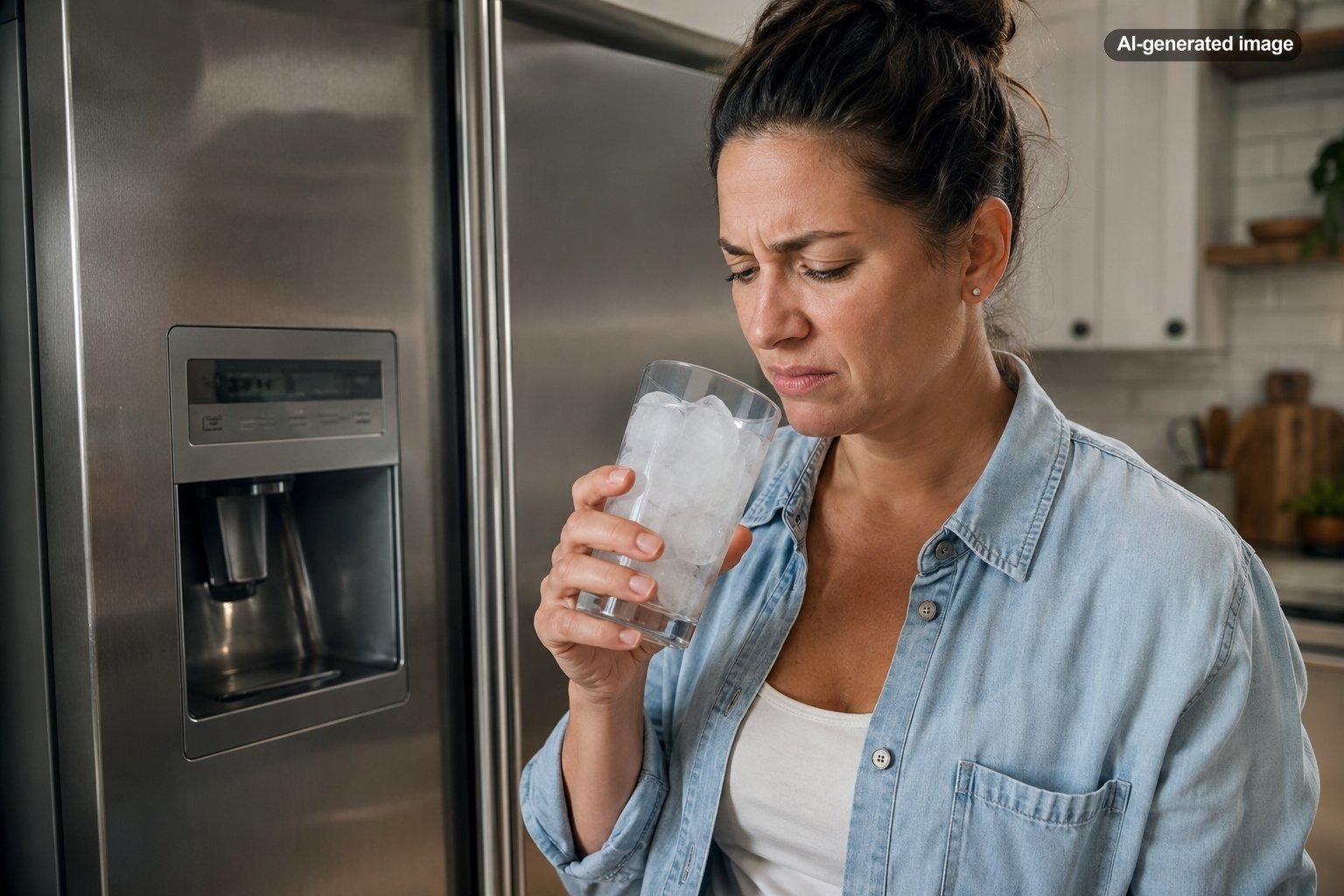
If your ice tastes like plastic, the most likely causes are a new or recently replaced water line, a refrigerator filter that was not fully flushed, stale ice, or odors circulating inside the freezer. The taste is often temporary and appliance-related, especially after a refrigerator installation or filter change.
Do not assume every unusual taste is harmless, however. First compare the ice with water from the refrigerator dispenser and the kitchen faucet. That simple test can reveal whether the problem begins inside the refrigerator or is present in the household water supply.
Start by finding out where the taste begins
Before replacing parts or scrubbing the entire freezer, perform a small comparison test. Taste plain cold water from three places: the kitchen faucet, the refrigerator dispenser, and a glass containing freshly melted ice.
| What tastes unusual? | Most likely area to investigate |
|---|---|
| Only the ice | Ice bin, stale cubes, freezer odors, or the ice maker |
| Ice and refrigerator water | Refrigerator filter, internal tubing, or supply line |
| Kitchen faucet, refrigerator water, and ice | Household plumbing or the incoming water supply |
| Only the first few batches after installation | New tubing, a new filter, or manufacturing and packaging odors |
Use clean glasses for the comparison, and rinse them thoroughly without strongly scented detergent. A silicone cup, plastic tumbler, or fragranced dishwasher residue can create a taste that seems to come from the ice.
A new water line may need more flushing
A plastic-like flavor commonly appears after a new refrigerator, ice maker, or supply line is installed. Water sitting in new tubing can pick up a noticeable odor or taste, particularly when the line has not yet carried much water.
Run the refrigerator dispenser and flush the system exactly as directed in the appliance manual. Flushing amounts and procedures vary, so use the instructions for your model rather than relying on a universal number. Then discard the first batches of ice until the flavor clears.
Check the supply line behind the refrigerator while the appliance is pulled forward only if it can be moved safely. The tubing should be intended for potable water and should not be kinked, crushed, resting against a heat source, or contaminated by household chemicals. If the installer used unidentified tubing or the taste remains strong, ask the installer or a qualified appliance technician to verify the material and connection.
The refrigerator filter may be new, old, or incorrect
A newly installed filter may release harmless carbon fines or contribute a temporary taste if it was not prepared and flushed according to the manufacturer’s directions. Remove and reinstall it carefully, confirming that it is fully seated and that protective caps or packaging have been removed.
An overdue filter can also allow unpleasant tastes and odors to become more noticeable. Replacement timing varies by model, water use, and local water conditions. Follow the refrigerator manual or filter indicator rather than assuming one interval fits every appliance.
Compatibility matters as well. A filter that physically fits is not necessarily the correct filter for the refrigerator. Check the exact refrigerator model and approved filter type. Avoid forcing a cartridge into place or modifying the housing.
Old ice readily absorbs freezer odors
Ice is surprisingly good at collecting nearby aromas. Open food, spilled sauces, onions, seafood, strongly scented packaging, and an overdue freezer cleaning can all affect its flavor. The result may be described as plastic, chemical, stale, or simply odd.
Empty the ice bin and wash it according to the refrigerator manufacturer’s instructions. Use a mild, unscented cleaning method, rinse thoroughly, and let the bin dry before reinstalling it. Avoid leaving concentrated cleaner or fragrance residue on surfaces that contact ice.
Inspect the freezer for loosely wrapped food, leaking packages, and old ice lodged around the bin or dispenser chute. Store aromatic food in sealed containers and replace open boxes or bags that have absorbed freezer odors.
Fresh water cannot produce fresh-tasting ice when the freezer air and ice bin smell like last month’s leftovers.
The ice may simply be stale
Ice that sits unused gradually changes in quality. Cubes can shrink, fuse together, and absorb odors from circulating freezer air. This is especially common in a second refrigerator, vacation home, seasonal residence, or household that rarely uses the ice maker.
Discard old cubes and allow the appliance to produce a completely fresh batch. If the refrigerator was turned off, stored, or disconnected from water for an extended period, follow the manufacturer’s restart and flushing procedure before using the water or ice.
Clean the areas that actually touch the ice
The bin is not the only contact point. Inspect the dispenser chute, ice scoop, removable trays, and accessible surfaces around the ice maker. Sticky residue and dust can affect flavor even when the freezer looks generally clean.
What to do
- Turn off the ice maker before removing the bin if the manual instructs you to do so.
- Discard all existing ice rather than mixing old and new cubes.
- Wash removable parts using the method approved for the appliance.
- Rinse thoroughly so no soap or cleaning fragrance remains.
- Dry the bin completely and reinstall it correctly.
- Flush the water system according to the manual and discard the next batches of ice.
- Retest the flavor using a clean glass.
Do not pour bleach, vinegar, deodorizer, or another cleaner into internal water tubing unless the refrigerator manufacturer specifically provides that procedure. Improvised cleaning methods can damage components, leave residue, or create a larger taste problem.
Check whether the household water tastes different
If cold water from the kitchen faucet has the same plastic or chemical flavor, the refrigerator may not be the source. Changes in municipal treatment, plumbing work, a recently installed household filter, private-well conditions, or new plumbing materials can alter taste and odor.
Taste and odor alone cannot confirm whether water is safe. The U.S. Environmental Protection Agency separates health-based drinking-water requirements from secondary guidance involving aesthetic qualities such as taste and odor. Contact your public water utility when an unexplained change affects multiple faucets, and review any current utility notices or water-quality reports.
Private-well owners should use an accredited laboratory and follow state or local health department guidance when testing is warranted. A refrigerator filter is not a substitute for investigating a broader water-quality concern.
When to call an appliance technician
Professional evaluation is sensible when the plastic taste remains after the filter and water system have been handled according to the manual, the ice bin has been cleaned, and several fresh batches have been discarded. Persistent taste may involve internal tubing, a filter housing, a damaged supply connection, or another component that is not practical to inspect from outside the appliance.
Also arrange service if the dispenser flow has slowed noticeably, the filter will not seat correctly, water is leaking, the supply line is damaged, or the ice maker has developed another performance problem. Provide the technician with the refrigerator model number, filter type, installation date, and the point at which the taste first appeared.
How to prevent plastic-tasting ice
- Use the correct refrigerator filter and follow the model-specific flushing instructions.
- Replace filters on the schedule specified for the appliance and household conditions.
- Discard ice that has been sitting unused for a long period.
- Keep strongly scented foods sealed and clean spills promptly.
- Wash the ice bin with a mild, unscented method and rinse it thoroughly.
- Use only potable-water supply tubing appropriate for the installation.
- After plumbing work or a long shutdown, flush the system before using the ice.
Frequently asked questions
Is plastic-tasting ice normal in a new refrigerator?
A temporary taste can occur while a new filter and water pathway are being flushed. Follow the refrigerator’s installation instructions, discard the first batches, and investigate further if the taste does not improve.
Can silicone ice trays make ice taste like plastic?
They can contribute an odor or flavor, especially when new, strongly scented, or washed with fragranced detergent. Clean them according to the manufacturer’s directions and compare tray-made ice with ice frozen in a clean glass or stainless-steel container.
Will changing the refrigerator filter fix the taste?
It may help when the filter is overdue, incorrect, poorly seated, or insufficiently flushed. It will not solve odors from stale ice, open food, a dirty bin, unsuitable tubing, or a problem in the incoming water.
Why does the water taste fine but the ice tastes bad?
The ice may be old or absorbing freezer odors. The bin, dispenser chute, ice maker surfaces, or stored food are more likely suspects when refrigerator water tastes normal.
Should I test the water?
Consider testing or contacting the water supplier when the taste is present at multiple faucets, persists after appliance troubleshooting, appears after plumbing work, or occurs with another warning sign. Use an accredited laboratory and testing guidance appropriate to your water source.