
Why Do Towels Leave Lint Everywhere?
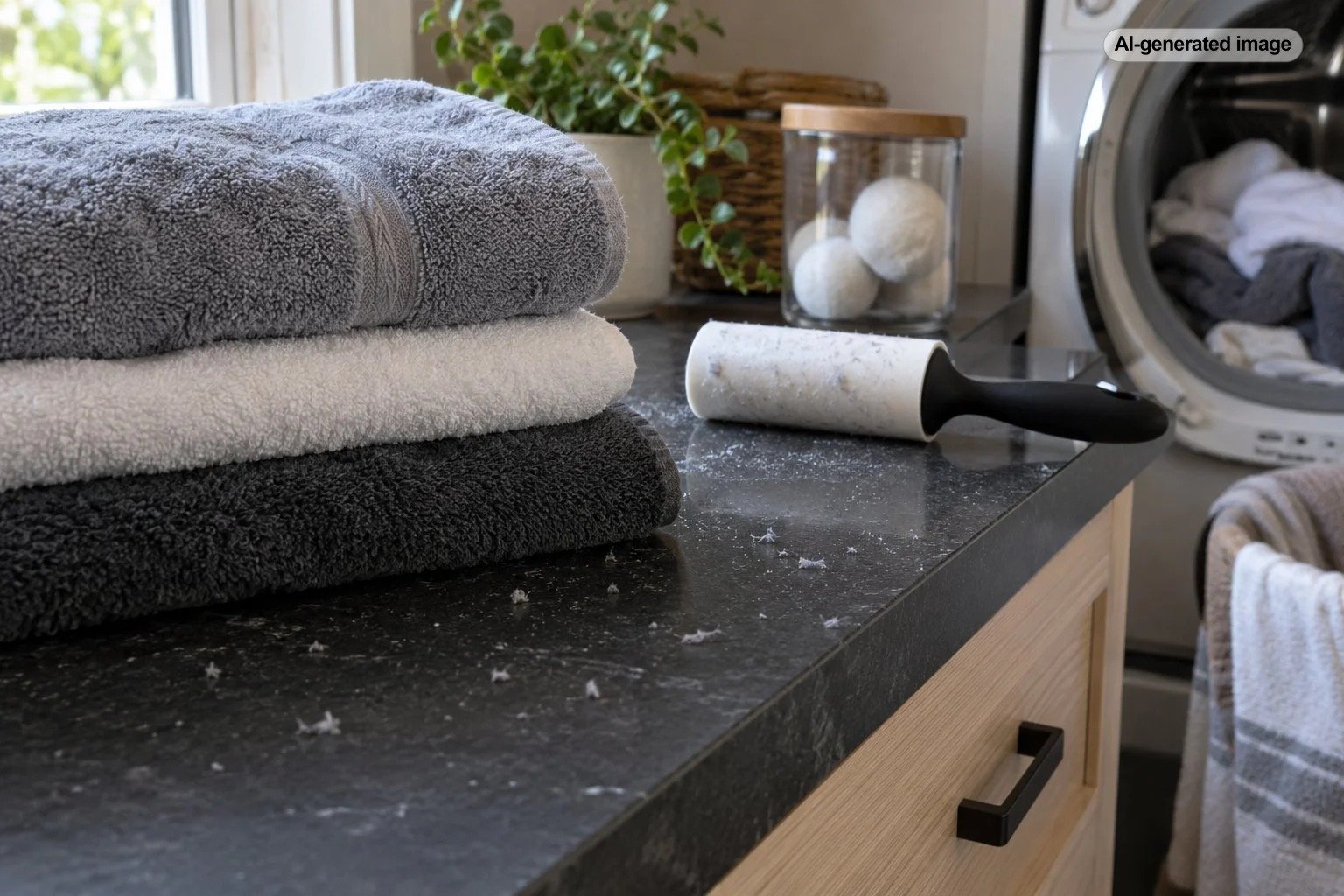
Towels leave lint everywhere because small fibers work loose from the surface of the fabric during washing, drying, and everyday use. Some shedding is particularly common with new cotton towels, when loose fibers left in the pile gradually separate during the first several laundry cycles. If the shedding steadily decreases, the towel still looks full, and its loops remain intact, the fuzz is usually more nuisance than mystery.
Persistent lint is different. Towels that keep coating your skin, bathroom floor, washer, dryer, or other laundry with fibers may be experiencing excess friction, overly aggressive laundering, damaged loops, or gradual fabric deterioration. The useful question is not simply whether a towel sheds, but how much it sheds, for how long, and what the towel itself looks like afterward.
Why new towels can shed so much
Most bath towels rely on a raised pile of loops to create softness, surface area, and absorbency. Those loops are made from yarn containing many individual fibers. Manufacturing, finishing, packaging, and handling can leave some short or loose fibers resting within that pile rather than firmly anchored in the towel.
The first few trips through the washer and dryer dislodge many of those fibers. That is why a brand-new towel may produce an impressive amount of dryer lint even though it does not appear visibly damaged.
Plush towels can make the effect especially noticeable because they simply have more surface pile available to release loose fuzz. Initial shedding therefore does not automatically mean that a towel is inexpensive or poorly made. What matters more is whether the amount of shedding settles down as the towel is laundered.
Friction can turn ordinary shedding into a bigger problem
Every laundry cycle subjects fabric to movement and rubbing. Towels are sturdy household textiles, but their raised loops are more exposed than the flat surface of a tightly woven sheet or shirt.
Mixing towels with garments containing zippers, hooks, rough fasteners, or other abrasive details can increase friction and snagging. A very crowded washer can also make matters worse because textiles rub against one another without enough room to circulate freely through the water.
This is one reason towel-only loads are useful. They reduce lint transfer onto clothing while also limiting contact with hardware and fabrics that may pull at the towel pile.
Too much heat can accelerate wear
The dryer is very good at revealing lint because its airflow carries loose fibers toward the lint screen. Seeing fuzz in the filter therefore does not mean the dryer created all of it. Much of that material may simply have been released during washing and then collected during drying.
Still, consistently using more heat or drying time than the towel requires can be hard on fibers over the long term. Check the care label rather than assuming the hottest setting is best. Removing towels when they are dry instead of repeatedly running extended cycles also reduces unnecessary tumbling and friction.
A lint screen that suddenly fills much faster than usual deserves attention. Compare the amount with previous loads and look at the towels themselves for thinning or surface damage.
Laundry habits can make lint seem worse than it is
Sometimes the towel is shedding normally, but the laundry routine spreads the evidence everywhere. A new dark towel washed with light clothing can leave visible fuzz on every pale garment in the load. A light towel can do the reverse on black clothing.
Overloading creates another problem: loose fibers may not rinse away efficiently. Towels need enough space for water to move through the load. Using more detergent than needed does not solve shedding and can leave unwanted residue behind, so follow the detergent instructions for your machine, load size, and water conditions.
Fabric softener also deserves restraint. Softeners can leave coatings on textile fibers, and excessive use can work against the absorbency people expect from bath towels. If softness is the goal, good washing, thorough rinsing, and appropriate drying are usually better places to start than continually increasing the amount of laundry additives.
What to do
- Wash a new towel before its first use, following its care label.
- Launder towels with other towels rather than lint-sensitive clothing.
- Do not pack the washer tightly; leave room for the load to move.
- Use the recommended amount of detergent rather than adding extra.
- Dry according to the care instructions and avoid unnecessary prolonged heat.
- Clean the dryer lint screen after each load and notice whether shedding decreases over successive washes.
When towel lint is no longer just a new-towel issue
A towel that has been in regular rotation for months or years can also start producing more lint. At that stage, the likely explanation is ordinary textile wear rather than loose manufacturing fibers.
Look closely at high-contact areas. If the pile is becoming sparse, the surface looks patchy, hems are fraying, or the fabric is noticeably thinner than it once was, the lint may be material that the towel is gradually losing. No laundry trick can permanently restore fibers that have physically worn away.
Older towels do not necessarily need to go straight into the trash. Depending on their condition, they can often be reassigned to pet cleanup, household cleaning, muddy entryways, or other jobs where appearance and plushness matter less.
The important distinction is whether your towel is shedding loose surface fibers or slowly shedding the towel itself.
Does better towel quality always mean less lint?
Not necessarily, especially when the towel is new. A soft, densely piled cotton towel may initially release noticeable loose fibers simply because there is a substantial amount of pile on the surface. A thin towel can shed less at first yet still wear out more quickly.
Instead of using initial lint as the sole quality test, consider how the towel behaves after repeated laundering. Does shedding diminish? Does the fabric remain substantial? Are the hems secure? Do the loops stay intact? Does the towel continue to absorb water effectively?
Those observations tell you more about long-term performance than one unusually fuzzy first dryer load.
Why towels sometimes leave lint on your skin
If lint appears on damp skin after a shower, loose fibers are being transferred directly from the towel pile. This is particularly noticeable with new towels because moisture helps small fibers cling to the body.
Giving new towels a few separate wash-and-dry cycles generally removes many of the easiest-to-dislodge fibers. If a towel continues to leave substantial fuzz on your skin after repeated laundering, inspect its surface for deterioration rather than endlessly trying harsher washing methods.
Can you make towels completely lint-free?
Probably not in the literal sense. Textiles naturally experience some fiber loss over time, and dryers make that loss easy to see because the lint filter collects it in one place.
The realistic goal is to prevent excessive shedding. Gentle, sensible laundering; properly sized loads; separation from abrasive clothing; appropriate drying; and prompt attention to snags can all help towels remain useful for longer.
If a towel keeps shedding heavily despite careful laundering, replacing it may eventually be simpler than fighting the fabric every week. At that point, the issue is not a secret laundry formula waiting to be discovered. The towel may simply be reaching the end of its comfortable bathroom life.
Frequently asked questions
How many washes does it take for new towels to stop shedding?
There is no universal number because towel construction, fiber type, pile density, and laundering conditions vary. The more useful sign is a noticeable decline in shedding over successive washes.
Should new towels be washed before you use them?
Yes. Washing new towels before first use helps remove loose surface fibers and residues from manufacturing, storage, and handling. Always follow the care label.
Why do my towels leave lint on my clothes?
Towels release fibers that can cling to other fabrics in the same load. Washing towels separately from ordinary clothing is one of the simplest ways to prevent visible lint transfer.
Does a full lint trap mean my towels are ruined?
Not necessarily. New towels can produce substantial lint at first. Concern is more appropriate when heavy lint continues indefinitely or appears alongside thinning, fraying, damaged hems, or significant loss of pile.
Should I replace a towel that keeps shedding?
If the towel is older, visibly thinning, repeatedly snagged, or continuing to shed heavily after normal care, replacement may be reasonable. A newer towel that sheds less with each wash is usually following a much more ordinary break-in pattern.