Why Does My Bathroom Stay Humid Long After a Shower?
A bathroom that stays humid long after a shower usually has a moisture-removal problem rather than an unusually steamy shower. The room may not be exhausting damp air quickly enough, replacement air may not be entering easily, wet surfaces may be releasing moisture back into the room, or the rest of the home may already be humid.
A little lingering moisture is normal. Persistent fogged mirrors, damp walls, beads of condensation, or a room that still feels clammy well after bathing deserve a closer look because repeated high humidity can be hard on paint, caulk, cabinetry, drywall, and other bathroom finishes.
Why shower humidity can linger
A hot shower puts a substantial amount of water vapor into a small space. That vapor has only a few places to go: outdoors through mechanical ventilation, into adjoining rooms, or onto cooler surfaces as condensation. If removal is slower than moisture production, the bathroom remains humid after the water is turned off.
The U.S. Environmental Protection Agency recommends keeping indoor relative humidity below 60 percent when possible and ideally in the 30 to 50 percent range. The EPA also identifies bathroom exhaust ventilation as an important way to control moisture generated by showers.
That does not mean every brief humidity spike is a problem. Bathrooms are expected to become more humid while bathing. The more useful question is whether the room dries reasonably afterward or remains noticeably damp for an extended period.
1. The exhaust fan may not be removing enough air
A fan can make plenty of noise without moving much air. Dust accumulation, a clogged grille, a restrictive duct, excessive duct length, sharp bends, a stuck exterior damper, or a poorly performing fan can all reduce actual airflow.
Start with the easy checks. With the fan running, hold a lightweight tissue near the grille without allowing it to be pulled into the opening. You should notice clear suction. Also look at the grille for visible dust buildup that may be restricting airflow.
If airflow seems weak despite a clean grille, the problem may be farther along the ventilation path. Bathroom exhaust should discharge outdoors rather than into an attic or another enclosed part of the house. Investigating hidden ductwork or electrical fan problems is a sensible point to involve a qualified professional rather than dismantling equipment blindly.
2. You may be turning the fan off too soon
Ventilation has work to do after the shower ends. Water remains on tile, glass, grout, fixtures, curtains, bath mats, and towels, and evaporation from those surfaces continues adding moisture to the air.
ENERGY STAR advises running bathroom ventilation during bathing and for 15 minutes afterward to help control moisture. In a bathroom that dries slowly, the fan may need to run longer depending on room size, shower duration, ventilation performance, and the home’s overall humidity.
A timer switch can make this easier because nobody has to remember to return later and turn the fan off. Humidity-sensing controls are another option when compatible with the ventilation setup, though the right solution depends on the existing fan and electrical system.
3. The fan may not have enough replacement air
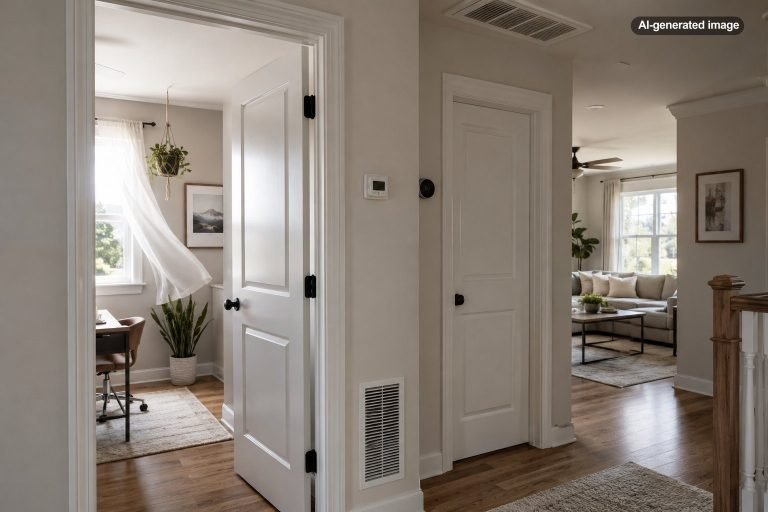
An exhaust fan cannot remove air efficiently unless other air can enter the bathroom to replace it. A very tight door with almost no undercut can restrict that replacement airflow, especially when the bathroom is otherwise closed off.
As a simple test, compare how the room behaves with the bathroom door fully closed versus slightly open after a shower. If humidity clears dramatically faster with the door cracked, restricted replacement airflow may be contributing to the problem.
This does not automatically mean you should alter the door. Ventilation design can interact with other systems in a house, so permanent changes should be considered in the context of the home’s overall ventilation and HVAC setup.
4. Wet towels and surfaces can keep adding moisture
Sometimes the shower has stopped but the bathroom has not stopped producing humidity. A soaked bath mat, several wet towels bunched together, a fabric shower curtain, and water left across tile or glass can continue evaporating into the room.
Spread towels out so air can circulate around them. Hang the bath mat if it remains saturated. After especially steamy showers, removing standing water from large glass or tile surfaces with a squeegee can reduce how much moisture must evaporate into the room.
The faster water leaves both the air and the surfaces, the faster a bathroom returns to normal.
5. The whole house may already be humid
A bathroom cannot dry efficiently when the air replacing its humid air is already moisture-laden. This is especially noticeable during muggy weather or in homes where indoor humidity is elevated for other reasons.
If several rooms feel clammy, windows frequently collect condensation, or textiles throughout the home seem slow to dry, check humidity beyond the bathroom rather than treating the bathroom as an isolated problem. A basic humidity meter can help distinguish a bathroom-specific ventilation problem from broader indoor humidity.
Air conditioning can remove moisture while operating, but humidity control depends on the home’s equipment, operating conditions, building envelope, ventilation, and moisture sources. A consistently humid house may warrant evaluation of the overall HVAC or ventilation system.
6. Cooler surfaces can make the problem look worse
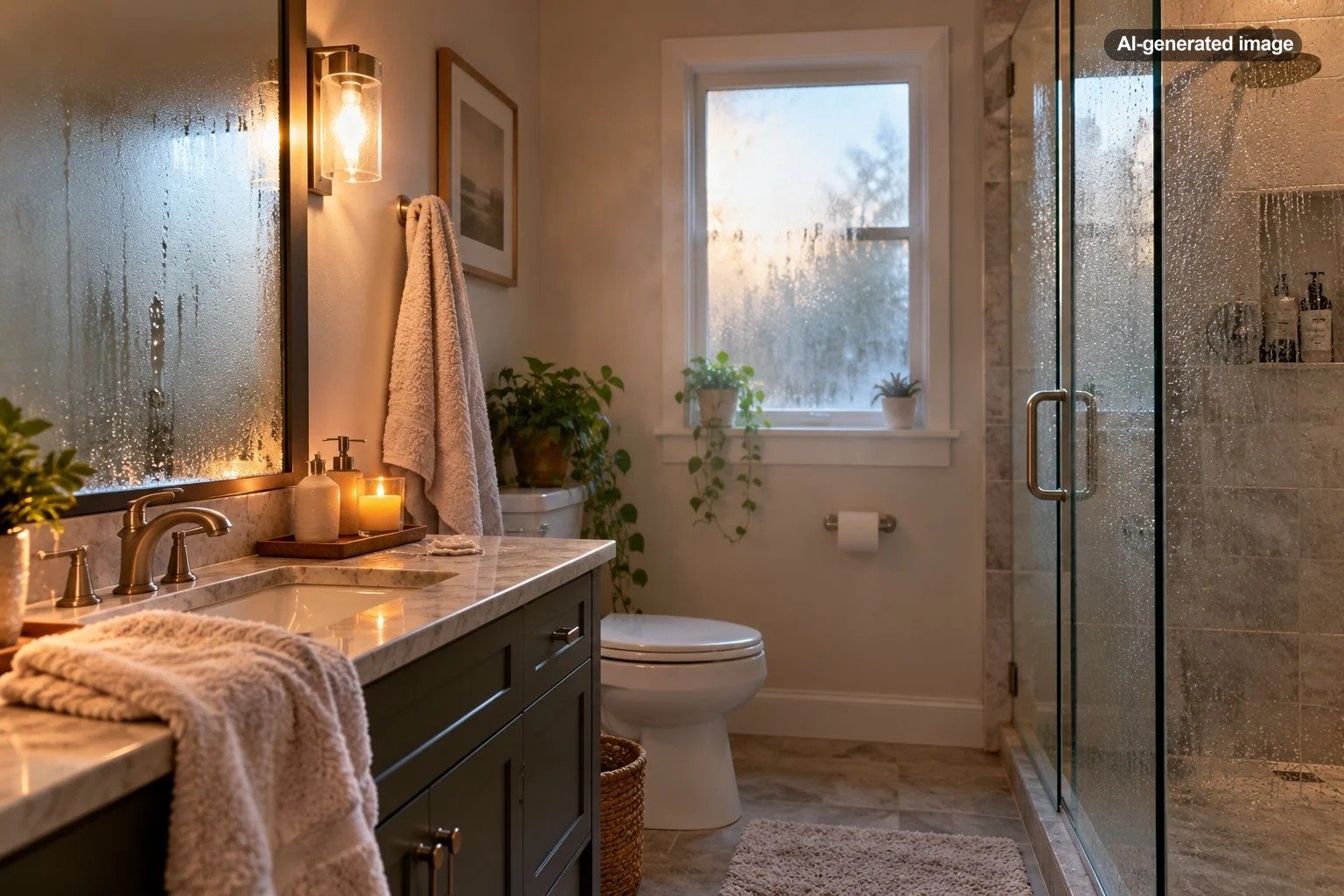
Warm, moisture-heavy air condenses when it encounters sufficiently cool surfaces. Mirrors, windows, exterior walls, metal fixtures, toilet tanks, and cold-water pipes can therefore become visibly wet even when other surfaces look dry.
Condensation does not necessarily mean there is a leak. It can simply indicate that the surface temperature is low enough for water vapor in the room to condense. Persistent condensation, however, is useful evidence that moisture is lingering and humidity control deserves attention.
A simple way to narrow down the cause
What to do
- Run the exhaust fan throughout the shower and for at least 15 minutes afterward.
- Clean visible dust from the fan grille according to the fan manufacturer’s instructions.
- Check for noticeable suction at the grille while the fan is operating.
- Try leaving the bathroom door slightly open after bathing and see whether drying improves.
- Spread out wet towels, hang damp bath mats, and remove standing water from shower surfaces.
- Check relative humidity in the bathroom and elsewhere in the home to see whether the problem is local or house-wide.
- If the room still stays unusually damp, have the exhaust system and any broader ventilation or HVAC concerns evaluated.
When persistent humidity deserves more attention
Humidity becomes more concerning when it is accompanied by repeated peeling paint, deteriorating drywall, swollen woodwork, persistent musty odors, recurring visible growth, or moisture appearing where shower steam does not reasonably explain it.
If visible mold repeatedly returns despite normal cleaning and better ventilation, focus on finding and controlling the moisture source rather than repeatedly covering the affected area. The EPA emphasizes moisture control as the central principle of mold prevention.
How to make the bathroom dry faster every day
The most effective routine is usually uncomplicated: use the exhaust fan every time you shower, keep it operating afterward, give replacement air a path into the room, and help wet fabrics and surfaces dry quickly.
For bathrooms that consistently struggle, improvements may involve servicing or upgrading the exhaust fan, correcting restrictive ductwork, improving controls, or addressing high humidity elsewhere in the house. The right fix depends on whether the bottleneck is moisture production, exhaust airflow, replacement air, or whole-home humidity.
A bathroom does not have to become bone-dry the moment the shower stops. What you want is a clear drying trend: the mirror begins clearing, surfaces stop collecting condensation, towels dry normally, and the room gradually returns to the humidity level of the rest of the home.
Frequently asked questions
How long should I run the bathroom fan after a shower?
ENERGY STAR recommends operating the ventilating fan during showers and baths and for 15 minutes afterward. A room that remains damp may need additional run time, particularly if the shower was long or the surrounding indoor air is humid.
Should I leave the bathroom door open after showering?
Opening the door can help moisture disperse and can provide replacement air for an exhaust fan. It is most useful as part of proper ventilation rather than as a substitute for an exhaust fan that vents outdoors.
Why does my mirror stay foggy even with the fan running?
The fan may have weak airflow, the duct may be restrictive, replacement air may be limited, or the mirror may simply be cool enough for condensation to persist. Check whether the overall room is drying rather than judging ventilation only by the mirror.
Does high bathroom humidity mean I have mold?
No. High humidity is a moisture condition that can encourage mold growth, but humidity alone does not establish that mold is present. Persistent moisture, musty odors, recurring visible growth, or damaged materials deserve closer investigation.