Why Does My Bathroom Fan Smell Musty When It Runs?
A bathroom fan that smells musty when it runs is usually moving air past something damp, dusty, or moisture-damaged. The odor may come from dust and residue inside the fan housing, moisture lingering in the exhaust duct, condensation around the vent, or mold or mildew growing somewhere along the air path. The important clue is that the smell becomes noticeable when the fan starts, which helps narrow the search to the fan, duct, termination point, and nearby ceiling area rather than the bathroom in general.
Most cases are not solved by masking the odor. The useful approach is to find out why moisture or odor-producing material is present, correct that condition, and then clean or repair what has been affected.
Why a bathroom exhaust fan can smell musty
Bathroom exhaust systems deal with some of the dampest air in the house. Showers and baths add substantial moisture to the room, and the fan is supposed to carry that humid air outside. The U.S. Environmental Protection Agency recommends using bathroom exhaust fans to remove moisture and specifically notes that bathroom exhaust should discharge outdoors rather than into an attic or another enclosed area.
That means a musty odor can develop whenever moisture is being produced faster than it is being removed, when moist air is condensing inside the system, or when the exhaust route is not working as intended.
Dust and residue inside the fan
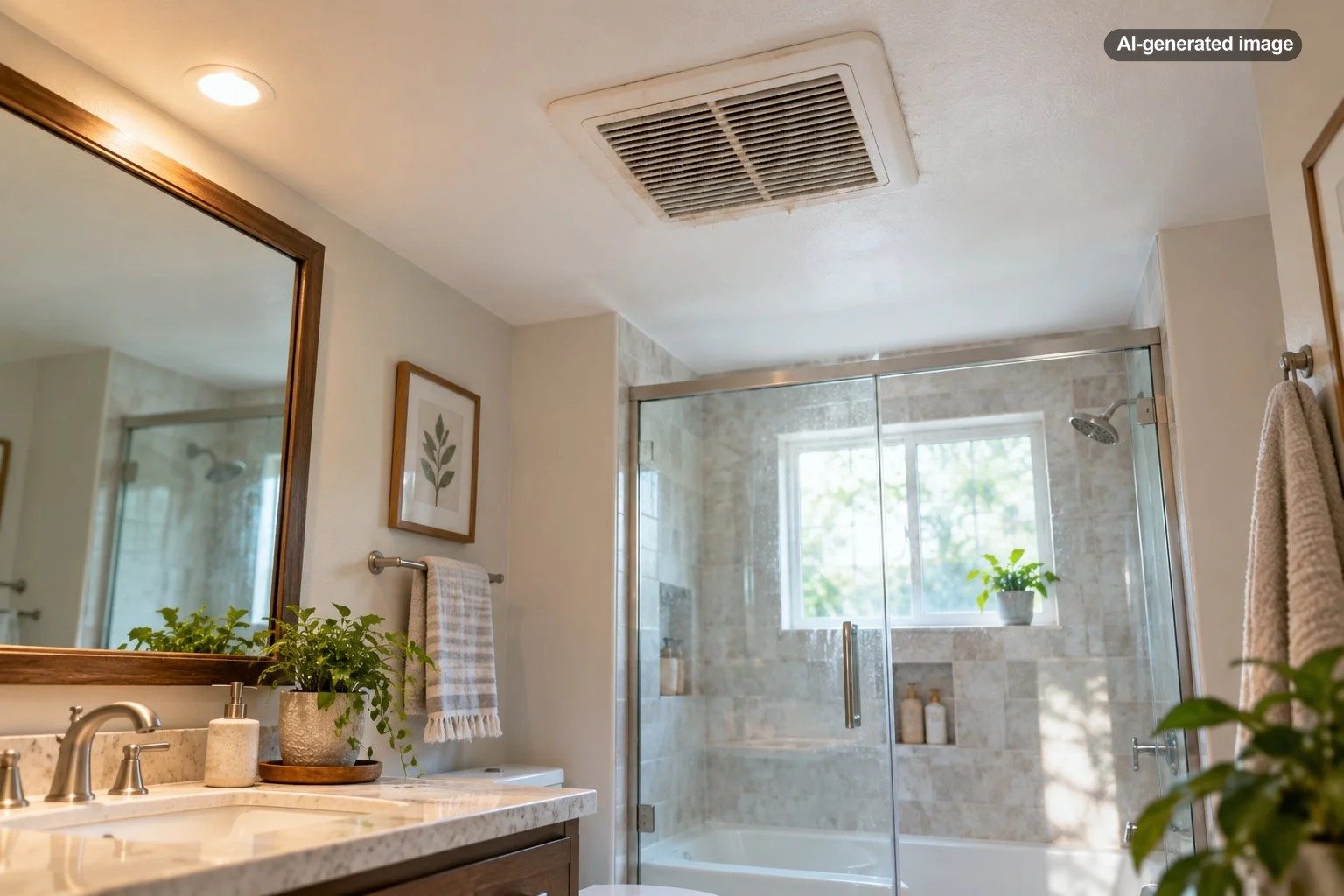
A fan grille and housing naturally collect dust and lint. In a humid bathroom, that material can become slightly damp and hold odors. When the fan starts, air passing through the buildup can make an otherwise faint smell suddenly noticeable.
This is one of the simpler possibilities to investigate because the visible grille can usually be inspected without disturbing the ductwork. A heavily coated grille also restricts airflow, making it harder for the fan to remove bathroom humidity efficiently.
Condensation inside the exhaust duct
Warm, humid bathroom air can cool as it travels through a duct, especially where the duct passes through a colder attic or other unconditioned space. If condensation repeatedly forms and does not dry promptly, the surrounding dust, insulation, wood, or other materials may develop a musty odor.
This possibility becomes more interesting when the smell is seasonal, appears after long showers, or seems stronger during periods when the attic or outdoor temperature differs substantially from the bathroom temperature.
A duct that does not actually vent outdoors
A functioning motor does not necessarily mean the ventilation system is functioning correctly. The EPA advises that bathroom exhaust air should be discharged directly outside rather than into an attic or another enclosed part of the house. Moist bathroom air released into an attic can contribute to damp building materials and moisture problems.
If you cannot determine where the duct terminates, or if there are stains, damp insulation, deteriorated materials, or persistent odor near the duct route, this is a good reason to have the installation inspected rather than opening concealed building materials yourself.
Moisture or mold near the fan opening
A musty smell can also originate in the ceiling cavity rather than inside the fan itself. A roof leak, plumbing leak, condensation, or chronic bathroom humidity can dampen drywall, insulation, framing, or accumulated debris near the housing.
Mold cannot be diagnosed by smell alone. A musty odor tells you that moisture deserves investigation; it does not tell you exactly what organism or material is producing the odor.
How to narrow down the source
A sensible inspection starts with the easiest visible areas and stops before electrical components, concealed ductwork, or potentially significant mold or water damage require specialized work.
What to do
- Compare the odor with the fan off and on. If the bathroom smells normal until the fan starts, the exhaust path becomes the primary area to investigate.
- Inspect the grille. Look for obvious dust buildup, discoloration, or dampness. Follow the fan manufacturer’s instructions before removing or cleaning components.
- Look around the ceiling. Check for water stains, peeling paint, softened drywall, persistent discoloration, or visible growth near the fan.
- Check whether the fan seems to draw air. Weak airflow can indicate that the system needs cleaning, repair, or inspection. Avoid dismantling concealed ductwork simply to diagnose airflow.
- Inspect the outdoor termination if it can be reached safely from the ground or another normal access point. The outlet should not be obviously obstructed. Do not climb onto a roof or use unsafe access methods for this check.
- Consider when the smell occurs. Note whether it follows showers, wet weather, cold weather, long periods without fan use, or another repeatable condition.
What the timing of the odor can tell you
| When you notice it | What may deserve inspection |
|---|---|
| Immediately when the fan starts | Dusty housing, residue, duct odor, or odor entering from the exhaust path |
| Mostly after showers | Persistent humidity, condensation, weak airflow, or damp material |
| During cold weather | Condensation along a duct passing through a colder space |
| After rain | Possible water intrusion near the roof, wall, exterior termination, or duct route |
| All the time, fan or no fan | A broader bathroom moisture or plumbing issue rather than the fan alone |
These patterns are clues rather than diagnoses. More than one issue can occur at the same time. For example, a dusty fan with weak airflow can leave the bathroom humid longer, while a separate duct problem allows condensation elsewhere in the system.
Cleaning the visible fan area
If the only obvious problem is ordinary dust on an accessible grille, routine cleaning may help. Follow the manufacturer’s directions for your particular fan, turn off power as directed before working around electrical components, and avoid spraying cleaner or water into the motor, wiring, duct, or ceiling cavity.
Do not treat a fragrance spray as a repair. Covering a musty odor makes it harder to tell whether the underlying moisture condition has actually improved.
If visible material appears to be mold, the appropriate response depends on how much material is affected, what surface it is growing on, and where the moisture is coming from. The EPA’s guidance emphasizes correcting the moisture source as part of mold control rather than cleaning the visible growth while leaving the damp condition unchanged.
Why ventilation matters beyond the smell
Bathrooms routinely generate moisture, so effective ventilation protects more than comfort. The EPA recommends controlling moisture by using exhaust fans in bathrooms and venting that moisture outdoors. Recurrent condensation, damp surfaces, or mold growth is a sign that moisture control deserves attention.
If your bathroom remains steamy for a long time, mirrors and walls stay wet well after bathing, or condensation repeatedly forms on nearby surfaces, the room may need a closer look at airflow and moisture management even if the fan motor appears to operate normally.
A bathroom fan’s job is not merely to make noise above the shower; it has to move moist air all the way out of the house.
When to stop troubleshooting and call a professional
Some clues move the problem beyond simple grille cleaning. Water intrusion, concealed mold concerns, electrical issues, inaccessible ducts, and ventilation systems that discharge into enclosed building spaces are better evaluated by someone qualified for the particular problem.
A ventilation professional or qualified HVAC contractor can evaluate airflow and duct routing. An electrician may be appropriate when the fan has electrical symptoms. Plumbing or roofing professionals may be needed when the moisture source is a leak rather than bathroom humidity. Significant or concealed mold and water damage may require specialized assessment or remediation.
How to keep the smell from returning
Once the source has been corrected, prevention is mostly about keeping moisture from lingering. Use the exhaust fan during moisture-producing bathroom activities, keep accessible grilles reasonably clean, and pay attention to changes in airflow, sound, ceiling condition, or drying time.
Also avoid assuming that opening the bathroom door solves an exhaust problem. Moving humid air into the rest of the house is different from exhausting it outdoors. If the fan cannot remove moisture effectively, correcting the ventilation path is more useful than simply redistributing the humidity.
Frequently asked questions
Does a musty bathroom fan always mean mold?
No. Dust, damp debris, condensation, and odors from nearby materials can all smell musty. Mold is one possibility, particularly where moisture persists, but odor alone cannot identify the cause.
Can dust make a bathroom exhaust fan smell?
Yes. Dust and lint can accumulate on the grille and inside accessible portions of the housing. Humidity may make that buildup hold odors, and heavy accumulation can also interfere with airflow.
Why does the fan smell worse after a shower?
A shower raises bathroom humidity and sends warm, moist air through the exhaust system. If the duct, fan housing, ceiling cavity, or nearby material remains damp, the increased airflow can make an existing musty odor more noticeable.
Should a bathroom fan vent into the attic?
No. EPA moisture-control guidance recommends that bathroom exhaust fans remove moisture to the outdoors, not into an attic or another enclosed space.
Can I just clean the fan and see if the smell goes away?
Cleaning an ordinarily dusty, accessible grille is a reasonable first step when there are no signs of water damage or electrical trouble. If the odor returns quickly, airflow is weak, or you find evidence of moisture, investigate the underlying ventilation or water source rather than repeatedly cleaning the surface.