
What Is the Best Patio Furniture for a Windy Balcony?
The best patio furniture for a windy balcony is generally low-profile, relatively heavy, compact, and easy to secure or bring indoors when stronger winds are expected. Solid metal pieces, substantial wood furniture, and carefully chosen woven furniture can all work, but stability matters more than any single material.
Think beyond whether a chair feels heavy when you lift it. Wind interacts with shape, surface area, height, cushions, covers, and even the position of the furniture on the balcony. A squat chair with an open frame may behave better in regular breezes than a taller, broad-backed piece that catches air like a sail.
Start with weight, but do not judge by weight alone
Weight is an obvious advantage on an exposed balcony. A substantial dining chair, lounge chair, or side table is usually less likely to shift in an ordinary breeze than an ultralight piece designed primarily for portability. That does not mean the heaviest furniture available is automatically the best choice, however.
Balconies have practical constraints. Furniture still needs to fit through doors, leave comfortable walking space, and comply with any building, lease, condo, or property-management requirements that apply to your home. If you expect to move furniture indoors before severe weather, pieces that are impossibly cumbersome can create a different problem.
The better goal is useful stability: enough mass and a sufficiently planted shape for the conditions you normally experience, combined with a realistic plan for unusually strong winds.
Look for low profiles and stable proportions
Shape is one of the most overlooked factors when shopping for balcony furniture. Taller pieces, broad chair backs, large umbrellas, lightweight privacy screens, and expansive vertical surfaces can catch more moving air than compact furniture tucked closer to the floor.
Low lounge chairs, compact benches, modest coffee tables, and small dining sets often make more sense on an exposed balcony than tall bar-height configurations. A wide base can also feel more planted than narrow legs supporting a top-heavy form.
On a windy balcony, the smartest furniture is not simply heavy; it is difficult for the wind to get leverage on.
Compare materials by stability, maintenance, and exposure
No outdoor furniture material wins in every climate or balcony configuration. The useful question is how the material combines with the design of the finished piece.
| Furniture type | Why it can work | What to consider |
|---|---|---|
| Steel or iron | Often substantial and available in compact, open-frame designs | Finish condition and exposure to moisture matter; very heavy pieces can be awkward to relocate |
| Aluminum | Weather-friendly, easy to move, and widely available | Many pieces are quite light, so shape and secure storage become especially important |
| Solid wood | Can provide useful weight and a warm residential look | Outdoor exposure requires appropriate care, and bulkier pieces may be inconvenient in small spaces |
| Woven furniture | Comfortable and visually light, with many balcony-friendly sizes | Weight varies dramatically; lightweight frames and loose cushions may need extra attention |
| Plastic or resin | Affordable, portable, and easy to clean | Very lightweight pieces may be a poor match for exposed balconies unless they can be stored promptly |
Instead of shopping by material label alone, examine the entire piece. Two chairs described as aluminum, for example, can have very different proportions, weights, and reactions to wind. The same is true of wood, steel, resin, and woven designs.
Loose cushions deserve their own plan
A sturdy chair can stay exactly where you put it while its seat cushion heads in another direction. On a windy balcony, removable textiles often require more management than the furniture frames themselves.
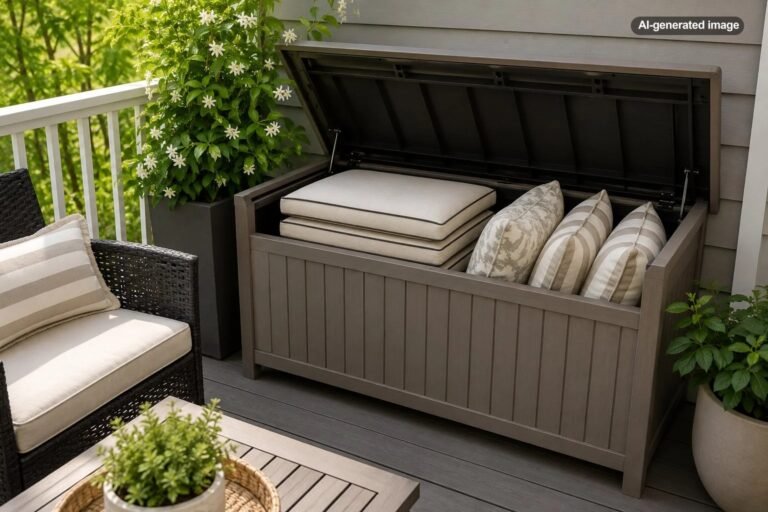
Consider cushions with secure ties, attachment points, or a snug fit. For a particularly exposed space, furniture that remains comfortable without loose cushions can simplify daily life. Decorative pillows, throws, lightweight table linens, and small outdoor rugs also deserve scrutiny because every unattached accessory becomes another item to collect when the weather changes.
Choose tables that do not behave like sails
Balcony tables can be surprisingly vulnerable because a broad tabletop presents a large surface to moving air. Lightweight bistro tables with narrow bases may be convenient in sheltered settings but less reassuring in exposed locations.
For frequent breezes, look for a stable base, sensible proportions, and enough weight to remain planted during normal use. Open or slatted surfaces can sometimes reduce the broad uninterrupted area presented to the wind, although the complete design still matters.
Glass-topped furniture deserves additional thought on exposed balconies. The key issue is not simply the material itself but whether the top is properly retained by the furniture design and whether the entire table is suitable for the conditions in which it will be used. Follow the furniture manufacturer’s assembly and use instructions rather than improvising modifications.
Do not rely on an umbrella as permanent balcony furniture
An umbrella adds considerable surface area above the balcony floor. Even a substantial base should not be treated as permission to leave an umbrella open during strong or unpredictable winds. If shade is important, choose a setup that can be closed and secured quickly, and follow the manufacturer’s wind and operating instructions for the specific product.
Renters and condo owners should also check applicable building rules before attaching shades, screens, furniture, or hardware to railings, walls, floors, or other exterior surfaces. Rules vary, so there is no universal balcony anchoring method that is appropriate for every property.
Arrange the balcony around its most protected areas
Furniture placement can improve comfort even before you replace anything. Observe where regular breezes enter the balcony and where the building itself provides some shelter. A chair pushed against an exposed outer edge may experience different conditions from the same chair positioned closer to a solid wall.
Keep pathways and doors clear, especially if furniture needs to be moved inside promptly. Avoid configurations that depend on stacks of small tables, lightweight stools, freestanding decor, or other easy-to-topple pieces merely to make the balcony feel furnished.
Have a stronger-wind plan before you need one
Furniture that behaves well in routine breezes should not be assumed safe during a severe storm or high-wind event. The National Weather Service advises securing outdoor items such as patio furniture when high winds threaten, and FEMA guidance for apartment dwellers specifically recommends bringing outdoor furniture, planters, and other balcony items inside before hurricanes.
What to do when stronger winds are expected
- Bring small, lightweight, and loose objects indoors first.
- Remove cushions, pillows, table linens, planters, and decor that could become airborne.
- Close and store umbrellas and other large fabric shade elements according to their instructions.
- Move furniture indoors when conditions or official guidance warrant it.
- Follow building-management instructions and local weather alerts rather than relying on the furniture’s everyday stability.
Official severe-wind guidance consistently emphasizes securing or bringing in outdoor objects because loose furniture and household items can be moved by strong winds and cause damage or injury.
What should you buy for different balcony situations?
For a small apartment balcony, start with two low chairs and a compact table rather than filling every available inch. Fewer pieces make storage and storm preparation easier.
For a frequently breezy but reasonably sheltered balcony, a substantial metal or wood set with a planted footprint can balance everyday stability with attractive design. Cushions should attach securely or be simple to store.
For a highly exposed upper-floor balcony, prioritize simple forms, minimal loose textiles, easy indoor storage, and compliance with building rules. Everyday furniture choices should never substitute for bringing items inside when serious wind is expected.
For a rental, avoid assuming you may drill, bolt, clamp, or permanently attach furniture to the structure. Ask the landlord or property manager before making modifications.
Before you decide
- Is the furniture low and difficult for wind to catch?
- Does it have a stable footprint rather than a top-heavy shape?
- Can loose cushions and accessories be stored quickly?
- Can the furniture be moved indoors when necessary?
- Will the set leave a clear, comfortable path across the balcony?
- Does the arrangement comply with your lease, condo, HOA, or building requirements?
Frequently asked questions
Is metal furniture always best for a windy balcony?
No. Some metal furniture is substantial, while other metal furniture is deliberately lightweight. Judge the finished piece by its weight, proportions, footprint, and ease of storage rather than the material name alone.
Is heavy furniture safe to leave outside during a storm?
Do not assume so. Severe winds can move or damage outdoor objects that seem stable in ordinary weather. Follow official weather guidance and your building’s instructions, and bring outdoor items inside when conditions warrant it.
Are balcony furniture covers useful in windy weather?
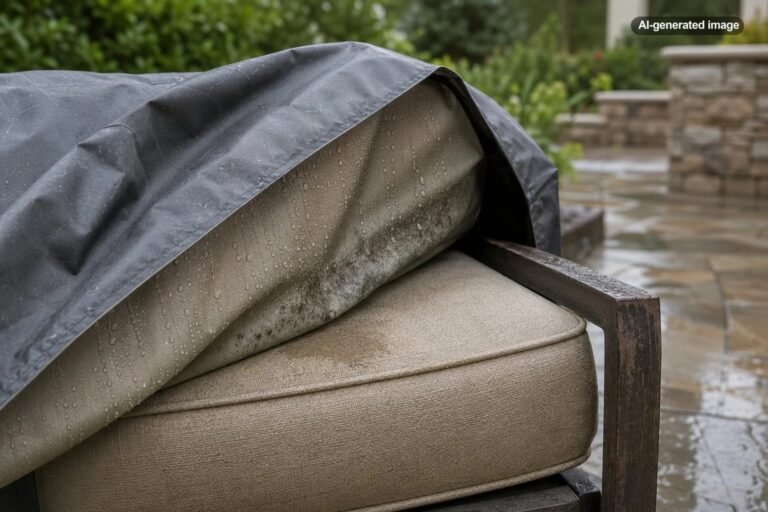
They can protect compatible furniture between uses, but a cover must fit and secure properly. A loose cover can catch wind, and moisture should not be trapped beneath it. Follow the cover manufacturer’s instructions.
What furniture should I avoid on a very windy balcony?
Be cautious with extremely lightweight chairs, tall narrow pieces, broad freestanding screens, unsecured umbrellas, loose cushions, lightweight rugs, and small decor that is difficult to secure or store.
Sources & further reading
- National Weather Service: Wind safety and loose outdoor items
- FEMA: Hurricane preparedness for apartment dwellers
- FEMA: Protect your property from severe winds
The best patio furniture for a windy balcony is therefore not one particular material or style. It is furniture whose weight, profile, footprint, accessories, placement, and storage plan all suit an exposed space. Choose fewer, steadier pieces, keep loose items manageable, and plan for serious weather separately from everyday breezes.