How to Prepare an Outdoor Living Space for Heavy Rain and Wind
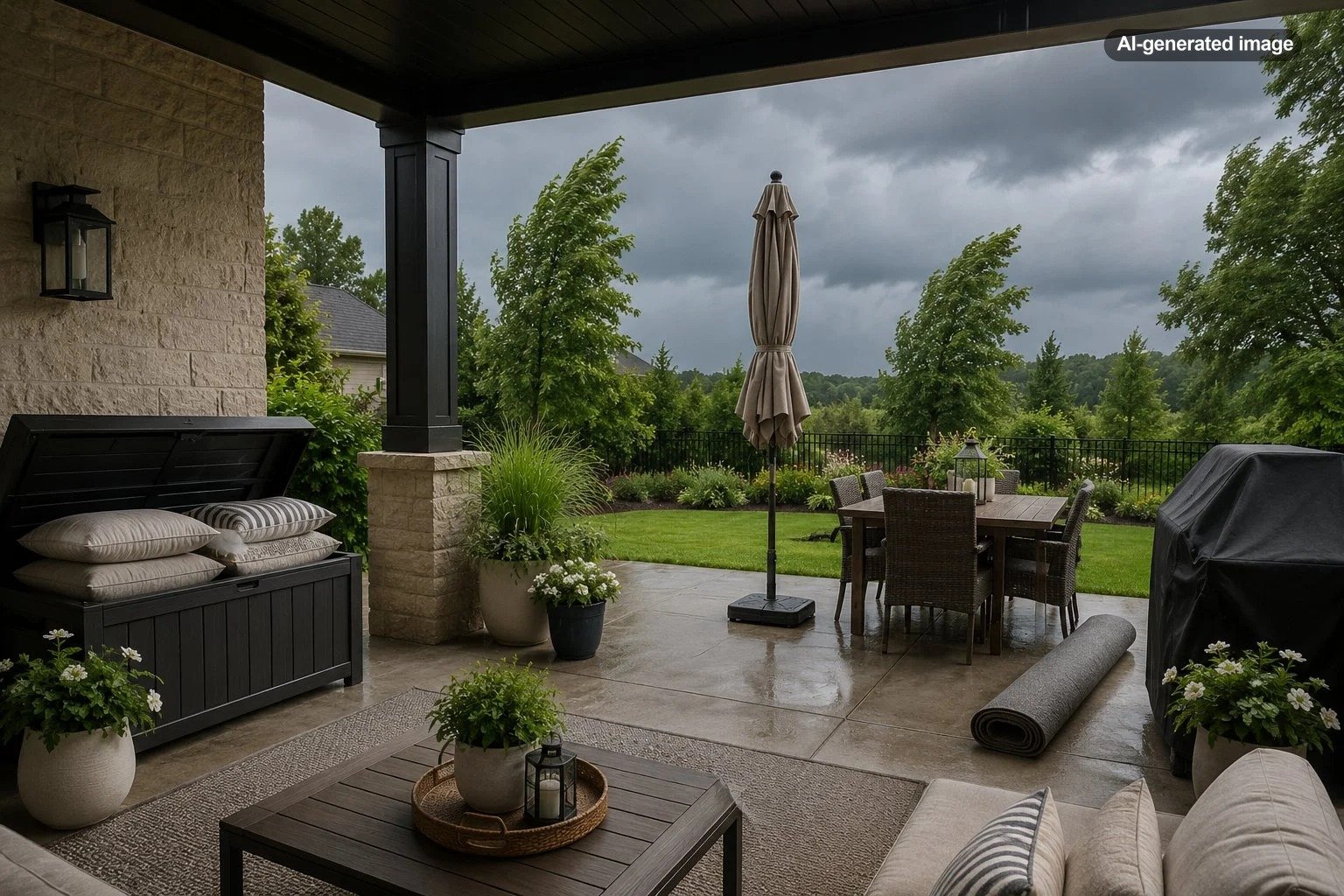
Preparing an outdoor living space for heavy rain and wind is less about making the patio look tidy and more about removing anything that could trap water, become airborne, block drainage, or suffer avoidable damage. Start by moving lightweight objects indoors, securing larger pieces, clearing water paths, and protecting materials that do not tolerate prolonged moisture. The best time to do this is while severe weather is still a possibility, not when the first hard gust is already rattling the furniture.
Start With the Objects Most Likely to Move
Wind does not need to carry a full dining table across the yard to cause trouble. A shifted chair can scratch decking, a loose cushion can clog a drain, and a lightweight planter can tip into a glass door. Begin with the smallest and lightest objects because they are usually the easiest to overlook and the quickest to become airborne.
- Bring in cushions, pillows, throws, table linens, candles, lanterns, serving pieces, toys, gardening tools, and pet supplies.
- Remove hanging decor, lightweight wall art, wind chimes, and unsecured string lights.
- Empty portable trash cans, recycling containers, and lightweight storage baskets, then move them into a garage or secured enclosure.
- Take down temporary shade panels, fabric canopies, and removable privacy screens unless their manufacturer specifically provides a severe-weather procedure.
Do not rely on an object’s everyday stability. A planter or side table that has remained in place through ordinary breezes may behave very differently when exposed to a strong gust, especially after saturated soil or standing water has changed its balance.
Close Umbrellas and Retractable Shade Features
Patio umbrellas should be closed, tied, removed from their bases when practical, and stored in a protected location. Leaving an umbrella closed but standing upright still gives the wind a tall lever to work against. A heavy base can reduce everyday movement, but it does not turn the umbrella into a storm-rated structure.
Retractable awnings, motorized shades, pergola curtains, and louvered roof systems should be placed in the storm position described by their manufacturers. That position is not necessarily the same for every product. Some awnings should be fully retracted, while specialized systems may have different instructions for wind, rain, or power loss.
Secure Furniture Without Creating a New Hazard
Large outdoor furniture can often remain outside during ordinary storms, but its weight, shape, exposure, and construction all matter. Low, solid pieces generally catch less wind than tall bar stools, folding chairs, lightweight aluminum frames, or furniture with broad backs.
| Outdoor item | Preferred preparation | Common mistake |
|---|---|---|
| Light chairs and stools | Move indoors or into a secure enclosed space | Stacking them without securing the stack |
| Heavy sofas and tables | Relocate to a sheltered position or secure appropriately | Assuming weight alone prevents movement |
| Folding furniture | Fold and store indoors | Leaning it loosely against a wall |
| Benches and storage boxes | Close, empty if needed, and secure according to design | Leaving lids or doors able to lift |
| Gas grills | Follow manufacturer guidance and keep cylinders upright | Moving a grill into an occupied indoor room |
If furniture must stay outside, group compatible pieces in a protected area away from windows, doors, pool edges, and drainage channels. Use tie-down points only when they are designed for the load and attached to a suitable structure. Wrapping furniture together may limit movement in modest conditions, but a large cluster can also catch wind as a single bulky object.
Furniture covers are useful for routine weather exposure, but they need a secure fit and enough ventilation to avoid trapping moisture. A loose cover can inflate, flap violently, tear, or pull a chair across the patio.
Affiliate disclosure: CraneManor.com may earn a commission when you purchase through links on this page. This does not affect the price you pay. Learn more.
For a compatible lounge chair that will remain outdoors between storms, a water-resistant patio chair cover can help limit routine exposure to dirt and weather. Measure the furniture carefully, fasten the cover as directed, and remember that water-resistant fabric is not guaranteed to keep furniture dry in every wind-driven downpour.
Give Heavy Rain Somewhere to Go
A beautiful patio can still perform poorly in a storm when leaves, mulch, furniture, or outdoor rugs block its drainage paths. Before heavy rain, sweep the surface and clear visible drains, scuppers, channels, downspout outlets, and low points where water normally exits.
What to do
- Remove leaves, seed pods, soil, and loose mulch from the patio or deck.
- Lift or roll up outdoor rugs that hold water or cover a drain.
- Confirm that downspouts discharge away from foundations and walking areas.
- Move furniture legs, planters, and storage boxes out of established drainage paths.
- Look for sagging fabric covers or cushions that could collect large pockets of water.
On an elevated deck or balcony, avoid pushing debris over the edge or directing runoff toward neighboring property. Condo and apartment residents should follow building rules and report blocked shared drains rather than attempting structural modifications.
Repeated pooling, water flowing toward the home, or runoff entering beneath doors deserves more than a quick sweep. Those patterns may indicate grading, drainage, waterproofing, or building-envelope concerns that should be evaluated before the next major storm.
Prepare Plants and Containers
Container gardens are particularly vulnerable because a plant can act like a sail while wet soil shifts inside the pot. Move small pots indoors or place them low in a sheltered location. Relocate tall, narrow, top-heavy, or wheeled planters away from doors, railings, stairs, and glass.
Do not line every planter tightly against the house if that blocks weep holes, vents, doors, or drainage. Grouping pots can improve stability, but each container still needs a sound base and a clear path for excess water. Empty decorative cachepots and saucers that lack adequate drainage before the storm.
Inspect hanging baskets, trellises, plant stands, and decorative obelisks. Remove them when possible rather than depending on a hook or stake intended only for normal weather. Newly planted trees and shrubs may need appropriate staking, but overly rigid or improvised restraints can damage plants. When in doubt, consult a qualified local landscape professional.
Handle Outdoor Electricity Carefully
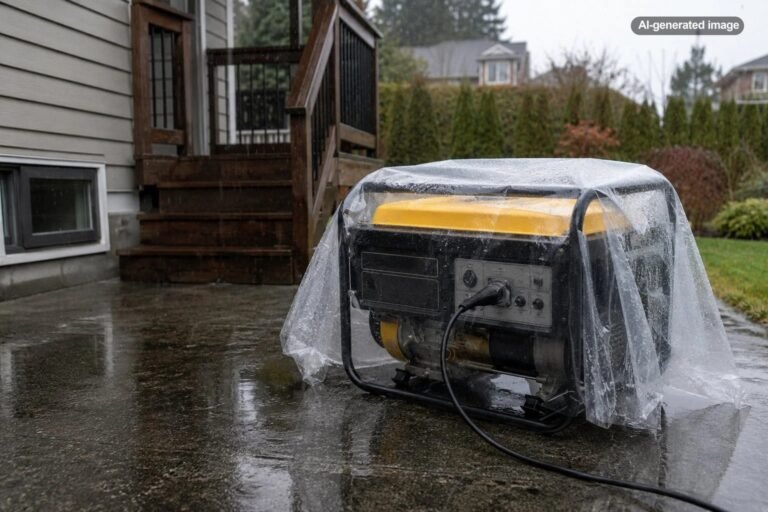
Unplug portable lamps, speakers, fans, extension cords, chargers, fountains, and other movable electrical devices while conditions are dry and safe. Bring portable equipment indoors and keep plugs and connections away from standing water. Outdoor-rated does not mean suitable for submersion, damaged receptacles, or improvised connections.
Do not touch electrical equipment while standing in water, and stay away from fallen power lines or anything they may be contacting. If fixed outdoor lighting, receptacles, pool equipment, or landscape wiring shows damage after the storm, leave it alone until it can be assessed safely.
Solar lights are generally simple to relocate because they do not depend on low-voltage wiring. Moving them indoors or laying them securely in a protected location can prevent stakes and fixtures from becoming loose. For calmer periods, solar lights for a garden path can help define suitable walkway edges, although their brightness and runtime depend on sun exposure, placement, weather, battery condition, and season. They should not be treated as emergency or code-compliant safety lighting.
Protect Grills, Fire Features, and Outdoor Kitchens
Close grill lids, secure removable shelves, remove loose tools, and follow the appliance manufacturer’s storm and storage instructions. Propane cylinders should remain upright and should not be moved into basements, living areas, or other occupied indoor spaces. Do not use grills, smokers, or open-flame fire features in garages, enclosed patios, or near doors and windows.
Shut off fire tables and outdoor kitchen appliances as directed. Remove lightweight covers and accessories if they cannot be secured. If the area uses natural gas, built-in electricity, or permanently installed equipment, avoid making unfamiliar shutoff or connection changes during rushed storm preparation.
The safest storm-ready patio is not the one with the most straps and covers; it is the one with the fewest loose objects left exposed.
Inspect the Space From the Windward Side
After the obvious items are handled, stand back and look at the space from the direction the weather is expected to arrive. Broad chair backs, privacy panels, fabric screens, umbrellas, decorative signs, and grill covers can catch wind differently depending on their orientation.
Also look upward. Dead branches, loose gutters, damaged soffits, unstable shutters, and items stored on an upper balcony can threaten the area below. Tree trimming, roof repairs, and structural work should be completed well before severe weather and handled by qualified professionals when access or falling hazards are involved.
Know When Preparation Is Finished
Once a severe thunderstorm warning, high wind warning, lightning, or damaging gusts affect the area, move indoors to a sturdy building and stay away from windows. Do not go outside to retrieve one more cushion or tighten one more strap. Sheds, open pergolas, covered patios, and temporary enclosures are not reliable shelter from severe thunderstorms.
After the storm, wait for hazardous conditions to pass before inspecting the space. Watch for broken glass, unstable branches, displaced furniture, slick surfaces, exposed fasteners, damaged wiring, standing water, and weakened railings. Photograph meaningful damage before moving items when documentation may be needed, but keep personal safety ahead of cleanup.
A Practical Pre-Storm Checklist
Before you decide the patio is ready
- Small and lightweight objects are indoors.
- Umbrellas, shades, and fabric panels are retracted or stored.
- Furniture is relocated or secured without blocking exits or drains.
- Covers are fitted, ventilated, and fastened.
- Planters are stable and away from exposed edges.
- Drains, gutters, and runoff paths are clear.
- Portable electrical items are unplugged and protected.
- Grills and fire features are shut down according to manufacturer guidance.
- Pets have been brought inside.
- Everyone knows where to shelter and how to receive weather alerts.
Frequently Asked Questions
Should patio furniture be covered before heavy rain?
Covering compatible furniture can reduce routine exposure, but the cover must fit securely and allow ventilation. During strong wind, moving furniture to a protected enclosed location is usually better than depending on a loose cover.
Is stacking patio chairs enough for strong wind?
Not necessarily. A tall stack can become unstable or catch more wind. Lightweight chairs are safer when moved indoors or into a secure enclosed space.
Should outdoor rugs stay on the patio during a storm?
Outdoor rugs that cover drains, retain large amounts of water, or are not securely held should be rolled up and stored dry. A saturated rug can become extremely heavy and may slow drainage.
Can patio umbrellas stay closed in their bases?
A closed umbrella may still create substantial leverage in strong wind. Removing it from the base and storing it in a protected location is the more cautious approach when severe weather is expected.
When should I stop preparing and go inside?
Stop when thunder, lightning, damaging wind, or a warning affects your location. Last-minute outdoor work is not worth exposure to flying debris, falling branches, lightning, or slippery surfaces.