
Why Does My Air Conditioner Smell Like Dirty Socks?
If your air conditioner smells like a gym bag every time it starts, the most likely explanation is moisture interacting with dust, organic debris, and microbial growth somewhere around the cooling coil or condensate system. HVAC professionals often call this pattern dirty sock syndrome.
The odor may be strongest during startup, after the system has been idle, or when the weather shifts between heating and cooling. It is unpleasant, but it does not automatically mean your entire duct system is full of mold. The useful next step is to identify where moisture is lingering and why.
Why an air conditioner can smell like dirty socks
Your indoor cooling coil becomes cold enough to pull moisture from warm household air. That moisture normally condenses on the coil, falls into a drain pan, and exits through a condensate line. The process is ordinary and necessary for dehumidification.
Trouble begins when part of the system stays damp for too long. Dust, pollen, pet dander, and other material can collect on the coil or nearby surfaces. In the presence of moisture, microorganisms may grow and produce musty or sour-smelling compounds. The U.S. Environmental Protection Agency notes that microbial volatile organic compounds can create the familiar odor associated with mold growth.
The smell may appear only when the blower starts because moving air carries the odor from the air handler into the rooms. A system that remains off for hours can also allow odors to concentrate before the next cycle.
The most likely sources of the odor
A damp or dirty evaporator coil
The evaporator coil is a frequent suspect because it is both cool and wet during normal operation. A thin layer of dust can cling to its fins, especially when the system has operated with a poorly fitted, missing, or heavily loaded filter. If the coil is not drying properly between cycles, odor-producing growth may develop on accumulated debris.
The coil is delicate. Its fins bend easily, and the cabinet may contain electrical components, refrigerant tubing, and sharp metal edges. This is not a good place for improvised scrubbing or household spray cleaners.
Standing water or debris in the condensate pan
The pan beneath the coil should collect condensation and direct it toward the drain. A clogged line, damaged pan, poor slope, or buildup of sludge can leave standing water behind. The EPA identifies substantial standing water or debris in a condensate pan as a condition requiring prompt attention.
You may also notice water around the air handler, a frequently triggered float switch, ceiling staining beneath an attic unit, or cooling that stops unexpectedly. Those signs deserve more urgency than odor alone because overflowing condensate can damage ceilings, walls, flooring, and insulation.
A wet filter or nearby insulation
An air filter can smell stale when it becomes damp from condensation, a leak, or excessive humidity. Wet internal insulation can also hold odors. Fibrous material that remains wet or becomes visibly contaminated may not be reasonably cleanable and may need professional replacement.
Moisture entering ducts or the air handler
Condensation can form when cold ductwork passes through a hot, humid attic, crawl space, garage, or other unconditioned area. Damaged insulation, air leaks, disconnected ducts, or poor vapor control can allow moisture to reach surfaces that should remain dry.
In humid climates, an oversized air conditioner can contribute to the problem by cooling the home quickly and shutting off before it removes enough moisture. That does not prove your equipment is oversized, but persistent clamminess, brief cycles, and recurring odor are useful clues for an HVAC technician.
What you can check without opening the equipment
What to do
- Notice when the smell appears. Record whether it occurs only at startup, during cooling, after rain, or when switching from heat to air conditioning.
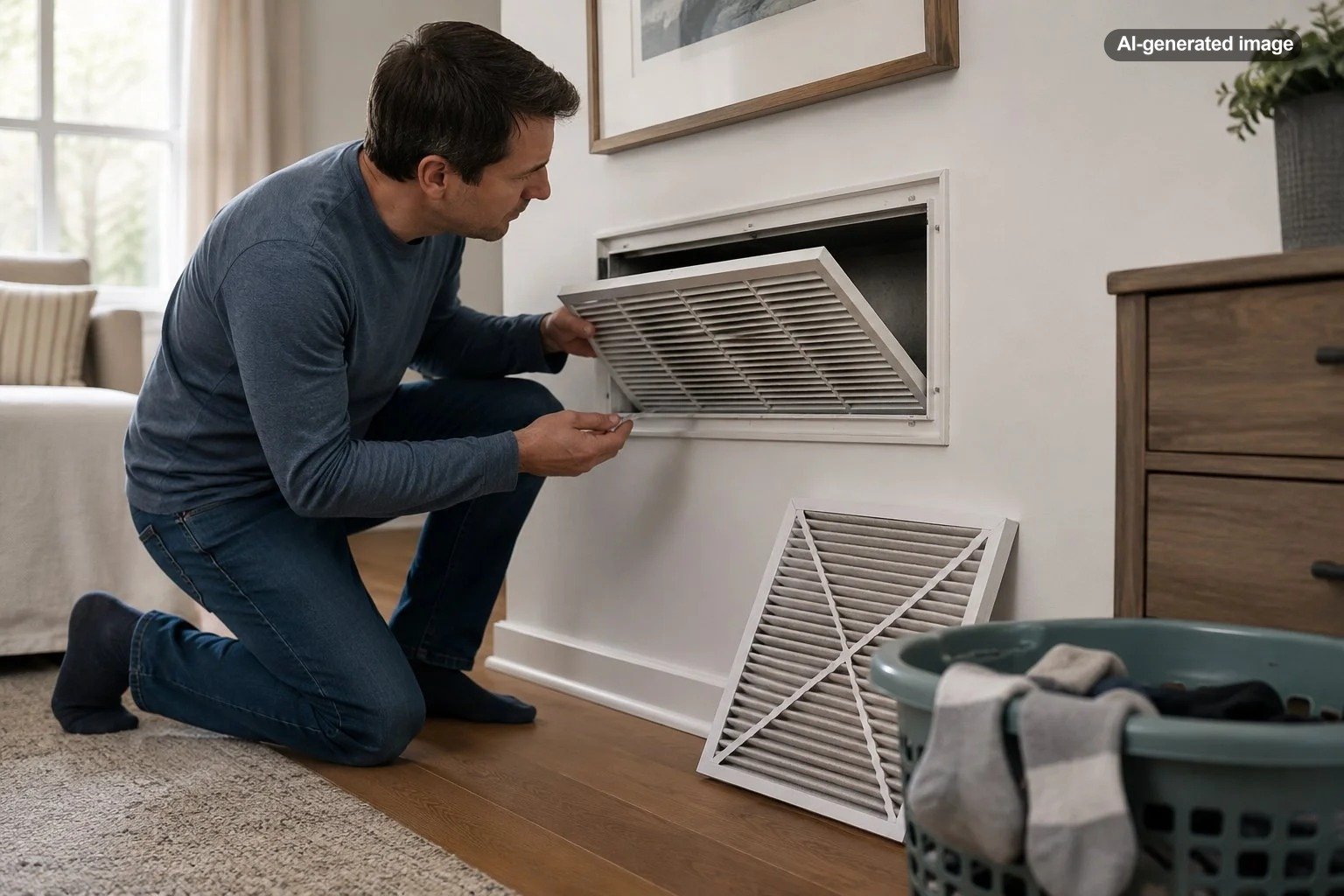
- Inspect the filter. Turn the system off at the thermostat, remove the filter according to the equipment instructions, and replace it if it is dirty, damp, damaged, or incorrectly fitted.
- Look around the air handler. Without removing service panels, check for standing water, rust trails, wet flooring, ceiling stains, or damp insulation.
- Check accessible supply registers. Look for condensation, debris, or odor concentrated at one register. Do not push tools or cleaning products into the duct.
- Check indoor humidity. A basic hygrometer can reveal whether the home regularly remains humid. The Centers for Disease Control and Prevention recommends keeping indoor humidity no higher than 50 percent when possible.
- Schedule service if the odor persists. Ask the technician to inspect the evaporator coil, condensate pan, drain line, blower compartment, nearby insulation, duct leakage, and system operation.
These observations help narrow the cause without exposing you to electrical components or accidentally damaging the equipment. They also give a service technician more useful information than simply saying the air smells bad.
What not to do
Do not spray fragrance, disinfectant, bleach, vinegar, essential oils, or general household cleaner into supply registers, return grilles, the filter slot, or the air handler. A pleasant fragrance may briefly cover the odor while leaving the moisture problem untouched. Some chemicals can damage coil coatings, react with other cleaners, irritate occupants, or be distributed through the home.
Avoid pouring chemicals into a condensate line unless the equipment manufacturer or a qualified professional has confirmed the method and product are appropriate for your system. Drain layouts vary, and an incorrect approach can create leaks or push debris deeper into the line.
Do not assume whole-house duct cleaning is the automatic cure. The odor may come from the coil, pan, blower compartment, wet insulation, or a drainage problem rather than from widespread duct contamination. The EPA recommends correcting the source of moisture before cleaning because contamination can return when the underlying condition remains.
What an HVAC professional may inspect
A qualified technician can safely open the equipment and determine whether the odor is associated with the coil, drain system, blower, cabinet, insulation, or ductwork. A useful inspection may include:
- The evaporator coil and its upstream and downstream surfaces
- The condensate pan, trap, drain line, float switch, and drainage slope
- The filter size, condition, fit, and airflow restriction
- The blower wheel and accessible cabinet surfaces
- Wet, deteriorated, or contaminated internal insulation
- Duct leakage or condensation near unconditioned spaces
- Airflow, refrigerant operation, cycle length, and humidity removal
Cleaning should address the relevant components rather than one convenient surface. Cleaning a visible register while leaving a contaminated coil or wet pan untouched is unlikely to solve the problem. Likewise, cleaning the coil without correcting drainage, filtration, or humidity trouble can allow the odor to return.
The lasting fix is not stronger fragrance; it is removing contamination and correcting the moisture condition that allowed it to develop.
How to reduce the chance of the smell returning
Use the correct filter size and install it in the proper airflow direction. Check it regularly and replace it according to its condition and the equipment manufacturer’s guidance. Homes with pets, renovation dust, heavy cooking particles, or frequent open-window use may load filters faster than expected.
Keep supply registers and return grilles unobstructed. Furniture, curtains, rugs, and stored items can interfere with airflow, while a blocked return may place unnecessary strain on the system. Avoid choosing a highly restrictive filter without confirming that the HVAC system can accommodate it.
Have recurring condensate problems corrected rather than repeatedly clearing symptoms. The pan should drain effectively, the line should remain open, and nearby insulation should stay dry. In attics and crawl spaces, damaged duct insulation or air leakage may also need repair.
Pay attention to whole-home humidity. Use bathroom and kitchen exhaust fans that vent outdoors, repair plumbing or building leaks, and discuss persistent humidity with an HVAC professional. Longer, properly controlled cooling cycles generally remove moisture more effectively than rapid on-and-off cycling.
Before you decide
- Ask whether the service includes inspection of the coil and condensate system, not only the ducts.
- Request photographs of inaccessible contamination before approving extensive cleaning.
- Ask what moisture source or operating problem caused the odor.
- Confirm how the proposed work will prevent recurrence.
- Be cautious of immediate claims that every duct must be treated without an inspection.
Frequently asked questions
Can a dirty air filter cause a sock-like smell?
A dirty filter can contribute by restricting airflow and allowing more debris to reach system components. A damp filter can also hold odor directly. Replacing it is a sensible first step, but a recurring smell usually warrants inspection of the coil and condensate system.
Will the odor go away on its own?
It may fade after the system runs, but that does not mean the source is gone. Odors that repeatedly return at startup suggest that dampness or residue remains somewhere in the air path.
Does dirty sock syndrome mean there is mold in every duct?
No. The source may be localized near the evaporator coil, drain pan, blower compartment, filter, or wet insulation. Duct cleaning should be based on actual conditions rather than the odor alone.
Is the smell dangerous?
An odor by itself cannot establish the type or concentration of biological material present. However, dampness and visible microbial growth should be addressed. People with asthma, mold allergies, chronic lung disease, or weakened immune systems may need additional medical guidance if symptoms occur.
How quickly should I call for service?
Arrange service soon if the smell persists through multiple cycles or repeatedly returns. Treat visible leakage, standing water, wet building materials, electrical symptoms, or extensive suspected contamination as more urgent conditions.