Why Are Tiny Flies Coming From My Bathroom Sink?
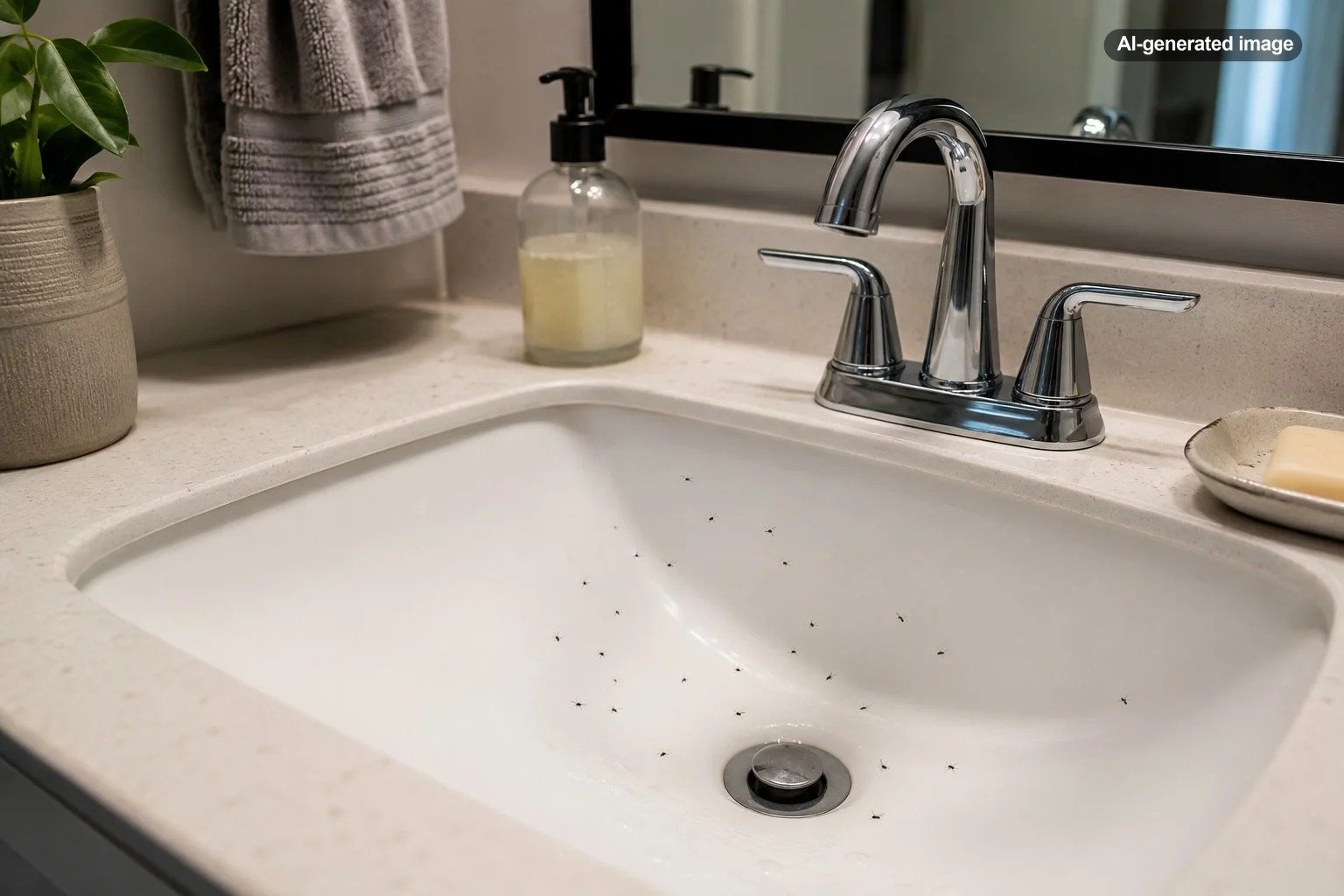
Tiny flies gathering around a bathroom sink are usually there because something damp and organic is providing food and a place to breed. The most common culprit is the drain fly, also called a moth fly, but fruit flies, fungus gnats, and phorid flies can create a similar scene. The useful clue is not simply where the adults are resting. It is where their larvae are developing.
In many bathrooms, the breeding site is the soft film inside a drain, overflow channel, trap, or rarely used plumbing fixture. Killing the visible adults may make the room look better for an evening, but the flies will keep returning until that film or another moisture source is removed.
The Most Likely Explanation: Drain Flies
Drain flies are very small, usually dark gray or tan, with hairy bodies and wings that give them a miniature mothlike appearance. Rather than darting quickly through the room, they often make short, weak flights and rest on walls, mirrors, tile, or the basin near a drain.
The adults lay eggs in wet, decomposing organic material. Inside bathroom plumbing, that material may appear as a gelatinous film containing soap residue, skin oils, hair, toothpaste, bacteria, and other debris. Larvae feed within the film before emerging as adults.
A bathroom sink that looks clean from above can still contain buildup below the stopper, around the drain lip, inside the overflow passage, or along the upper portion of the trap. That hidden layer is why repeatedly rinsing the basin may have little effect.
Make Sure the Flies Are Actually Coming From the Sink
Flies seen beside a sink are not automatically breeding inside it. Adults may be drawn to light, moisture, or a convenient resting surface after emerging elsewhere. Before dismantling or treating anything, narrow down the source.
How to check the drain
- Dry the sink, counter, and surrounding floor before bed.
- Place an inverted clear cup or jar over the drain opening, leaving the faucet unused overnight.
- Cover or test the overflow opening separately, since flies can breed inside that passage.
- Check the container the next morning for flies that emerged from below.
- Repeat the test on the tub, shower, floor drain, and any second sink if the first drain is clear.
Do not seal a drain in a way that creates a plumbing hazard or prevents a fixture from being used when needed. The goal is simply to identify where adults are emerging. In a shared household, label the test so no one runs the faucet unexpectedly.
Other Tiny Flies That Resemble Drain Flies
Correct identification matters because not every small fly responds to drain cleaning alone.
| Possible pest | Typical appearance | Likely source |
|---|---|---|
| Drain fly | Fuzzy, mothlike wings; weak flight | Organic film in drains, traps, overflows, or sewage-contaminated moisture |
| Fruit fly | Small, smooth-bodied, often tan or brown; quick flight | Fermenting residue, trash, recycling, forgotten produce, or dirty containers |
| Fungus gnat | Slender, dark, mosquito-like body with long legs | Persistently damp potting soil or decaying plant material |
| Phorid fly | Humpbacked profile; often runs across surfaces | Decaying organic matter, plumbing leaks, damaged waste lines, or contaminated soil |
If the insects cluster around a houseplant rather than the drain, allow the soil surface to dry appropriately for the plant and check the saucer for standing water. If they gather around a trash can, recycling bin, mop, or damp cleaning cloth, clean and dry that source before focusing on the plumbing.
How to Clean a Drain Fly Breeding Site
The most dependable approach is physical removal. Pouring liquid into a drain may wet or deodorize the surface without scraping away the film attached to the pipe walls.
- Remove accessible debris. Lift the stopper if its design permits, then remove trapped hair and sludge while wearing household cleaning gloves.
- Scrub the interior. Use a narrow, appropriately sized drain brush to clean the drain walls, the underside of the stopper, and the area just below the opening. Avoid forcing a tool so deeply that it becomes lodged or damages plumbing components.
- Clean the overflow passage. Follow the fixture manufacturer’s care guidance where available. A flexible brush may help, but concealed channels can be awkward to reach.
- Flush away loosened material. Rinse with hot tap water after scrubbing. Do not use boiling water on fixtures or piping that may be damaged by extreme heat.
- Repeat as needed. Established buildup may require several rounds of mechanical cleaning over multiple days.
Enzyme- or bacteria-based drain maintenance products can help break down organic residue when they are labeled for that purpose, but they work best as a complement to cleaning rather than a substitute for it. Follow the product label, protect children and pets, and never combine drain products or household chemicals. Mixing cleaners can create dangerous fumes or reactions.
The lasting fix is not catching more adult flies; it is removing the damp material that allows the next generation to develop.
What Usually Does Not Solve the Problem
A cup of vinegar may trap certain fruit flies, but it does not remove drain fly larvae embedded in plumbing film. Likewise, spraying adults provides only temporary relief when the breeding source remains intact.
Avoid pouring insecticide into a sink unless the product label expressly allows that use. The U.S. Environmental Protection Agency advises against pouring unwanted pesticides into sinks, toilets, sewers, or street drains. Using more pesticide than directed is not a shortcut and can create unnecessary risks for people, pets, plumbing, and wastewater systems.
Bleach may disinfect some exposed surfaces, but a quick pour does not reliably scrape away the attached organic layer. Never mix bleach with vinegar, ammonia, drain opener, or another cleaner.
Look Beyond the Drain If They Keep Returning
If thorough cleaning produces no meaningful improvement, inspect the surrounding area for moisture. Check the supply valves, faucet base, drain connections, cabinet floor, wall penetrations, and nearby toilet for drips or dampness. A wet sponge, mop head, bath mat, or trash liner can also support small flies.
Infrequently used fixtures deserve attention as well. Water held in a P-trap blocks sewer gases and insects from entering through the waste line. When a trap dries out, flies may enter from farther within the plumbing system. Running water periodically can refill a normal, intact trap, but repeated drying or unexplained sewer odors should be assessed rather than masked.
How Long Should It Take for the Flies to Disappear?
Do not expect every adult to vanish immediately after cleaning. Flies that have already matured may remain in the room for a while, and some developing insects may continue to emerge. The important sign is a steady decline after the breeding material has been removed.
Continue wiping the sink dry, removing visible adults, and checking the tested drain. If the population stays the same or increases, either the original drain was not cleaned thoroughly or another source remains active.
How to Keep Bathroom Sink Flies From Returning
- Remove hair and residue before it forms a thick layer beneath the stopper.
- Clean the drain lip and overflow opening as part of regular bathroom care.
- Repair dripping faucets and under-sink leaks promptly.
- Dry cleaning cloths, sponges, bath mats, and mop heads between uses.
- Run water in seldom-used sinks, tubs, showers, and floor drains often enough to maintain their traps.
- Keep bathroom trash covered or emptied, especially when it contains damp wipes or organic waste.
- Investigate recurring sewer odors rather than covering them with fragrance.
Frequently Asked Questions
Can drain flies come through a clean sink?
Yes. The visible basin may be spotless while residue remains beneath the stopper, inside the overflow, farther down the drain, or within the trap. They may also be emerging from a nearby fixture and merely resting beside the sink.
Are drain flies a sign that the bathroom is dirty?
Not necessarily. Ordinary soap residue, hair, moisture, and an infrequently used drain can create a breeding site. Their presence is a maintenance clue, not a reason for embarrassment.
Will fixing a leak get rid of them?
Fixing the leak removes an important moisture source, but any wet organic material left behind must also be cleaned and allowed to dry. Water-damaged cabinetry, drywall, or concealed spaces may require professional evaluation.
Should I call a plumber or pest control company?
Choose a plumber when there are leaks, sewer odors, slow drains, backups, or concern about a damaged waste line. A pest professional can help identify the insect and locate difficult breeding sites. Some situations benefit from both trades.