
How Long Should You Open Windows to Air Out a House?
For routine stale air, lingering cooking smells, or a house that simply feels stuffy, opening the windows for about 10 to 30 minutes is a useful starting point when outdoor conditions are good. The more important factor, however, is not the clock. It is how effectively outdoor air can move through the house.
A breezy 15 minutes with windows open on opposite sides of the home can accomplish far more than an hour with one barely cracked window on a still day. The source of the odor or indoor pollutant matters, too. Fresh air can dilute what is already indoors, but it cannot fix a damp carpet, dirty trash can, smoking appliance, persistent plumbing odor, or another source that keeps producing the problem.
There is no single correct airing time
Homes exchange air at very different rates. Window size, wind, indoor and outdoor temperature, floor plan, ceiling height, window placement, and whether interior doors are open all affect how quickly fresh air moves through a space.
This is why a rigid rule such as opening every window for exactly 20 minutes is less useful than watching what happens. If the room quickly feels fresher and the odor fades, you may be finished. If the air still feels stagnant, create a better path for airflow or continue ventilating while outdoor conditions remain favorable.
| Situation | Practical starting point | What matters most |
|---|---|---|
| Routine stale air | About 10 to 30 minutes | Openings on more than one side of the home |
| Cooking odors | Ventilate until the odor noticeably clears | Use the kitchen exhaust fan if it vents outdoors |
| Closed guest room or spare room | Start with 20 to 30 minutes | Open the room door and create crossflow |
| Strong cleaning or project odors | Often longer than routine airing | Remove the source and follow product ventilation directions |
| Humid, smoky, or polluted conditions outdoors | Wait for better conditions | Do not trade one indoor-air problem for another |
Cross ventilation matters more than opening every window
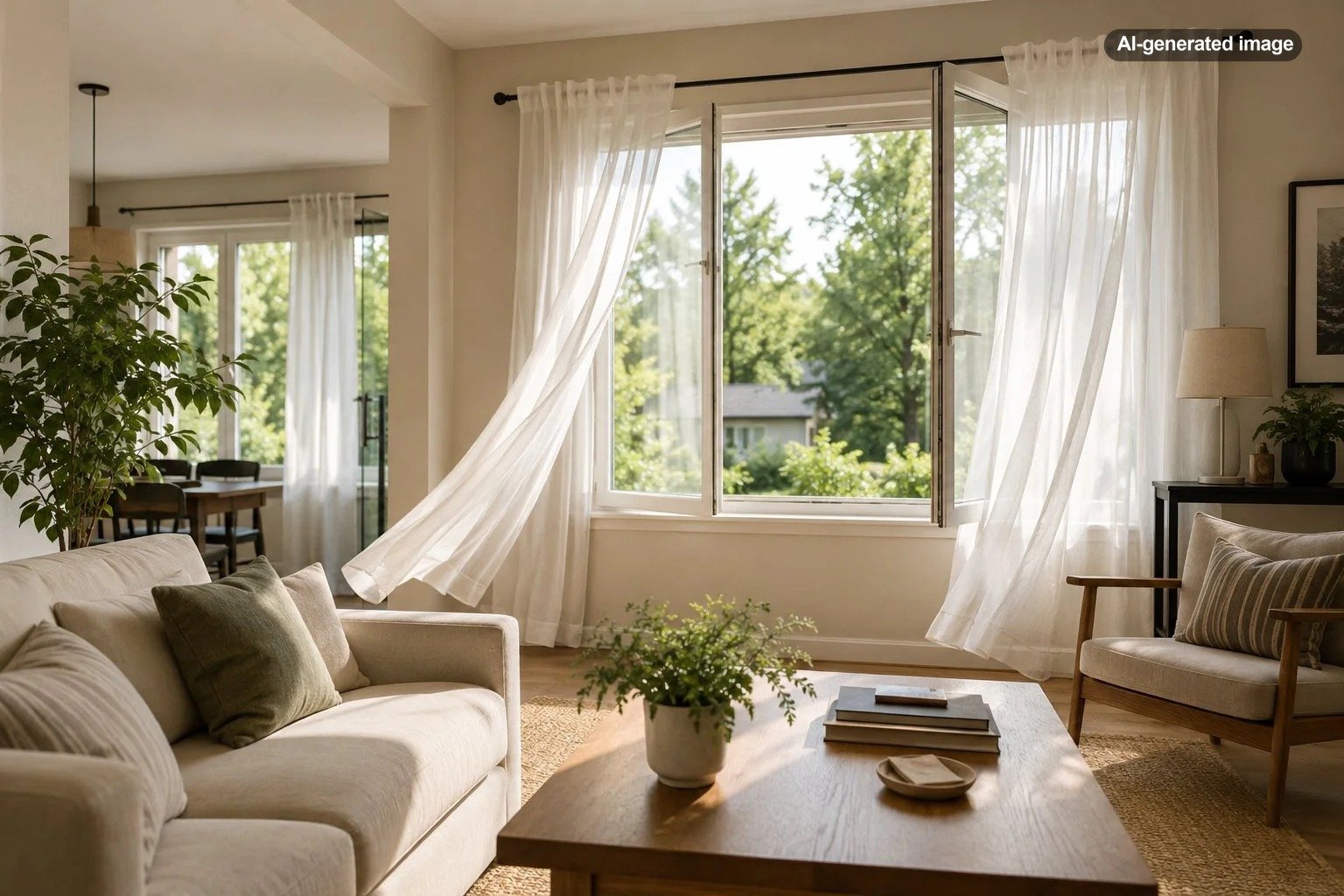
The simplest way to make a short airing session more productive is to give air both an entrance and an exit. Open windows or doors on opposite sides of the house when practical. Keeping interior doors open can help air move between rooms rather than circulating around a single window.
In a multistory home, openings on different levels can also encourage air movement. Even two strategically chosen windows may work better than several windows clustered along the same wall.
A window fan can increase airflow when natural breezes are weak. Depending on the layout, one fan can exhaust indoor air while another opening allows outdoor air to enter. Kitchen and bathroom exhaust fans that actually vent outdoors are also useful because they remove moisture and contaminants closer to where they originate.
Air out the house by creating a path for air, not simply by counting open windows.
Match the airing time to what you are trying to remove
A house that feels stuffy after being closed overnight is different from a kitchen after frying food or a room after a home-improvement project. The stronger and more persistent the source, the less useful a short burst of ventilation may be.
For everyday stuffiness
A short period of cross ventilation is usually the sensible first move. Open two or more windows, give the air 10 to 30 minutes to circulate, and reassess the room. There is little reason to leave the entire house open for hours if it already feels fresh and comfortable.
For cooking odors
Start ventilation while cooking when possible rather than waiting until the smell has spread throughout the home. Run an exhaust hood that vents outdoors, open nearby windows if conditions are suitable, and continue until the odor has substantially dissipated.
For cleaning, painting, or other projects
Ventilation may need to continue longer because some products release odors or airborne compounds while they are being used and while they dry. Follow the product manufacturer’s ventilation and safety instructions rather than relying on a general household timing rule.
For a room that has been closed for weeks
Open the room itself as well as a second window or door elsewhere to create airflow. If a musty or unusual smell returns quickly after airing, investigate the source instead of repeatedly trying to cover the problem with fresh air.
What to do
- Check outdoor weather and air quality before opening windows.
- Remove or control an obvious odor source first, such as trash, spoiled food, dirty textiles, or a smoking pan.
- Open windows on opposite sides of the home when possible.
- Open interior doors so air can move between rooms.
- Use outdoor-venting kitchen or bathroom fans where appropriate.
- After 10 to 30 minutes, reassess instead of automatically leaving every window open for hours.
When should you leave the windows closed?
Fresh outdoor air is useful only when the outdoor air is actually suitable to bring inside. During wildfire smoke, heavy outdoor pollution, unusually high pollen, or other poor-air-quality events, opening windows can make indoor conditions worse.
Weather matters as well. On extremely hot, cold, or humid days, prolonged window ventilation can work against your heating, cooling, or moisture-control efforts. In humid climates especially, leaving windows open for long periods can introduce more moisture than you intended.
Safety also comes first. Do not leave accessible windows open where they create a fall risk for children or pets, compromise security, or allow wind-driven rain into the house.
Do not use open windows to hide a recurring household problem
If the same smell returns shortly after the windows close, the house probably needs more than another airing session. Look for the source. Common possibilities include damp fabrics, wet building materials, dirty drains, pet areas, trash, spoiled food, neglected appliances, or moisture trapped somewhere it should not be.
Persistent burning, electrical, gas-like, sewage, or strong chemical odors deserve particular attention. Do not rely on ventilation alone when an odor could indicate a malfunction, leak, combustion problem, or another condition that requires qualified evaluation.
Likewise, if visible moisture damage, repeated condensation, or a persistent musty smell develops, address the moisture source rather than trying to solve it by keeping windows open indefinitely.
A better routine for keeping a house from feeling stale
You do not need to turn the house into a wind tunnel every morning. A practical routine is to use short, deliberate ventilation sessions when outdoor conditions are favorable, especially after activities that create moisture or odors.
Use source control first: run an outdoor-venting range hood while cooking, use bathroom exhaust during and after showers, empty odor-producing trash, dry wet textiles promptly, and maintain household systems according to their instructions. Then use windows to provide fresh-air exchange rather than expecting them to solve every indoor-air issue.
For many homes, 10 to 30 minutes is a sensible starting point for ordinary airing. Increase the time when the source is stronger or airflow is weak, and shorten it when cross ventilation is brisk. The goal is not to hit an exact number of minutes. It is to replace stale indoor air efficiently without bringing in excessive heat, humidity, smoke, pollution, or rain.
Frequently asked questions
Is 10 minutes enough to air out a house?
It can be when there is strong cross ventilation and you are dealing with ordinary stuffiness. With little wind, a closed floor plan, or a stronger odor source, more time may be useful.
Should you open every window?
Usually not. A few well-positioned windows that create an inlet and outlet can be more effective than opening many windows without a clear airflow path.
Should interior doors stay open while airing out the house?
Generally, yes, when you want fresh air to move through multiple rooms. Closing doors can isolate spaces and reduce whole-house crossflow.
Can you air out a house when the air conditioner is running?
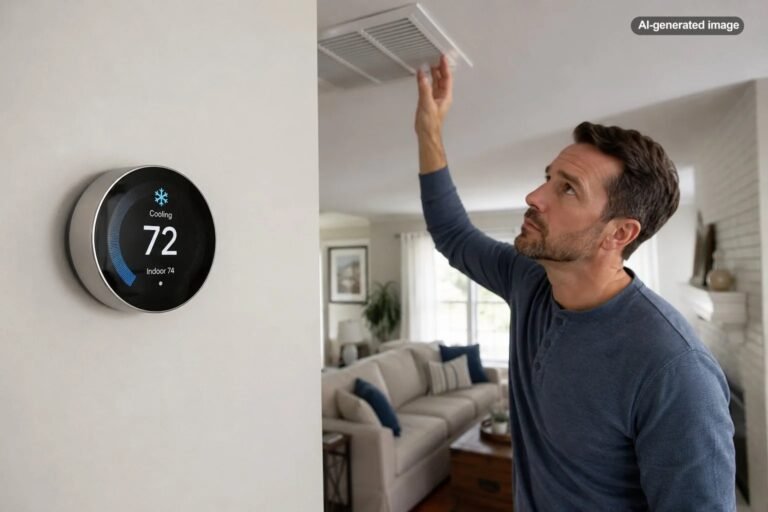
You can, but prolonged open-window ventilation can make the cooling system work against incoming heat and humidity. For routine airing, a short session followed by closing the windows is usually more sensible than leaving them open for hours while actively cooling the house.
Why does the house smell stale again after the windows close?
A returning odor suggests that its source remains indoors. Investigate moisture, drains, fabrics, appliances, trash, stored items, pet areas, and other likely sources rather than repeatedly masking the issue with ventilation.