
The Best Ways to Protect a Mattress in a Guest Room
A guest-room mattress may be used only occasionally, but that does not mean it is protected from wear. Long stretches of disuse can allow dust and stale odors to accumulate, while a single spilled drink, damp towel, pet visit, or leaky toiletry can leave a lasting mark. The best protection is a layered system: a washable waterproof protector, clean breathable bedding, sensible guest-room rules, prompt stain treatment, and regular airing between visits.
The goal is not to wrap the bed in stiff, noisy plastic. A well-chosen protector should preserve the mattress without making guests feel as though they have been assigned a hospital cot.
Start with a washable waterproof mattress protector
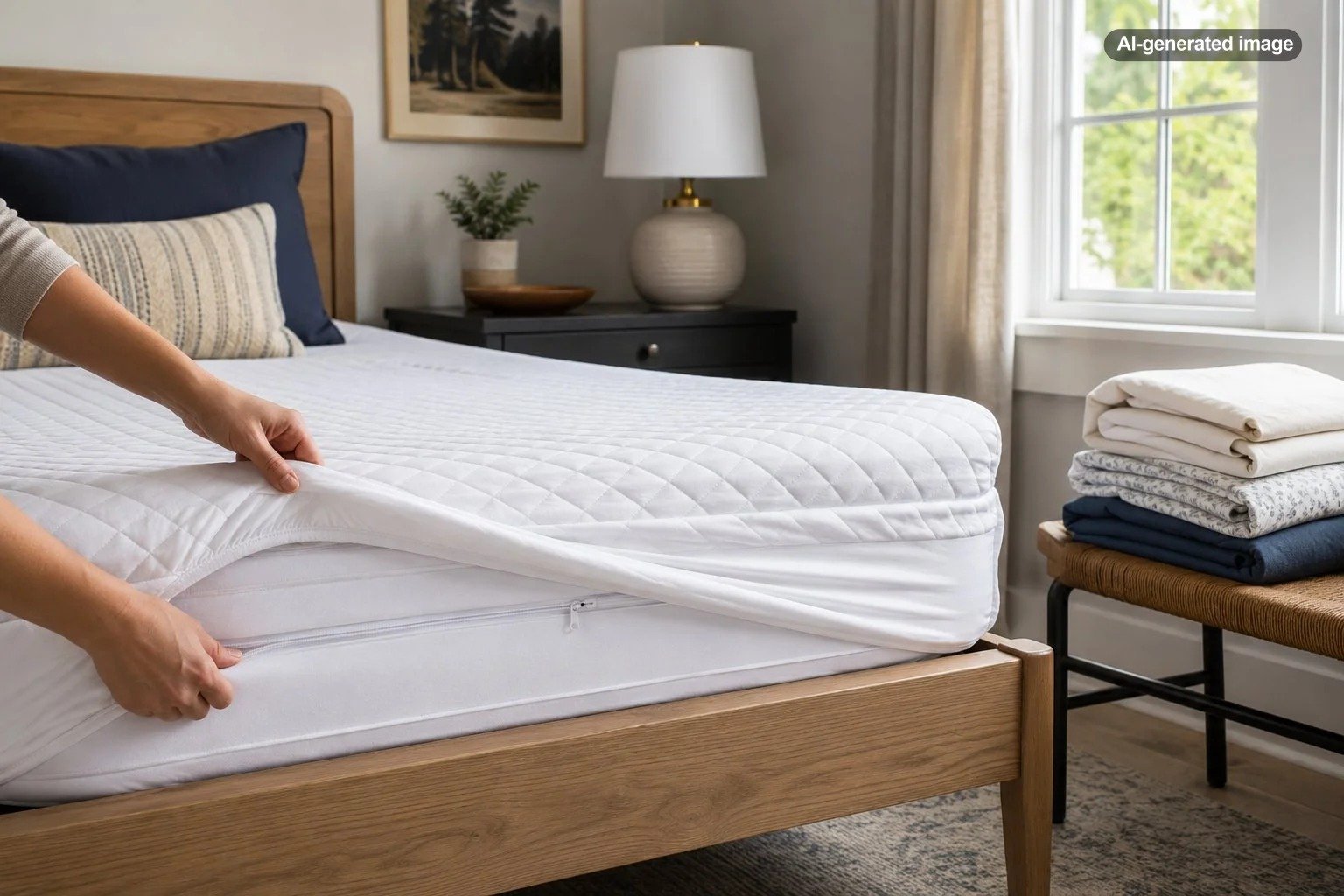
A fitted waterproof protector is the most practical first layer for most guest rooms. It sits directly over the mattress and beneath the fitted sheet, creating a removable barrier against perspiration, drinks, cosmetics, and other everyday mishaps.
Look for a protector that fits the actual depth of the mattress, including any topper. A shallow pocket can creep upward at the corners, while an excessively loose protector may wrinkle beneath the sheet. Measure from the bottom edge of the mattress to the top of the sleep surface rather than relying only on labels such as standard or deep pocket.
Breathability matters, especially in a room that may already feel warmer because it stays closed between visits. Thin laminated protectors are generally less bulky than padded models. Pay attention to the care label as well. A protector that requires elaborate cleaning is less useful than one you can wash and dry with ordinary guest linens.
Know when a full mattress encasement makes sense
A fitted protector covers the top and sides of the mattress. A full encasement surrounds all six sides and usually closes with a zipper. The latter provides more complete coverage, but it also takes more effort to install and remove.
| Option | Best for | Main tradeoff |
|---|---|---|
| Fitted waterproof protector | Routine spills, sweat, and easy laundering | Bottom of mattress remains uncovered |
| Six-sided encasement | Long vacancies, storage concerns, or more complete coverage | Harder to remove and reinstall |
| Padded mattress pad | Adding a modest comfort layer | May not be waterproof |
| Mattress topper | Changing surface feel | Needs its own protection and changes total bed depth |
For a frequently used guest room, the fitted style is usually easier to maintain. An encasement may be worthwhile when the room sits empty for months, when pets have access to the bed, or when you want the mattress protected on every side. Some households use both: an encasement as the long-term base layer and a washable fitted protector above it.
Protect the mattress from luggage, food, and damp items
Many guest-room stains do not happen while anyone is sleeping. They begin when a suitcase is placed on the bed, a beverage is balanced on the nightstand, or a damp bath towel is dropped onto the comforter.
A folding luggage rack gives visitors an obvious place for their suitcase and keeps wheels, dirt, and toiletry leaks away from the bedding. A bench can serve the same purpose if it is deep and sturdy enough. Include a hamper, basket, or clearly visible towel hook so damp linens do not end up on the mattress by default.
Use coasters on the nightstand and leave enough clear surface area for a glass of water, phone, and small personal items. Guests are more likely to use the furniture provided when it is not crowded with decorative objects.
The easiest way to protect a guest bed is to give every potentially messy item a more convenient place to go.
Choose bedding that is easy to remove and wash
Beautiful guest bedding should still be practical. Use a fitted sheet, flat sheet, washable pillow protectors, and a duvet cover or coverlet that can be cleaned without dismantling an elaborate arrangement.
Pillow protectors are particularly useful because pillows encounter hair products, facial oils, and cosmetics more directly than the mattress. Washable covers also make it easier to freshen the room after a short visit when the decorative bedding itself does not need cleaning.
Avoid piling the bed with layers that are difficult to launder or store. Decorative shams and throws are reasonable, but they should not become obstacles that encourage guests to place extra bedding on the floor or compress everything against a wall.
Clean spills before they spread into the mattress
If a spill reaches the bedding, remove the wet layers immediately. Blot rather than rub, since aggressive scrubbing can spread liquid and push it deeper. Follow the mattress manufacturer’s cleaning instructions and use as little moisture as practical. Mattresses dry slowly, and soaking the surface can create a larger problem than the original mark.
What to do
- Remove sheets, pads, and the protector without dragging the wet area across the mattress.
- Blot surface moisture with a clean, absorbent cloth.
- Check the manufacturer’s care guidance before applying any cleaner.
- Let the mattress dry completely with good air circulation.
- Launder the protector according to its label and confirm that its waterproof backing is intact before reuse.
Do not remake a mattress that still feels cool or damp. Keep the room ventilated and use a fan when appropriate. Avoid high heat unless the manufacturer specifically permits it, since heat can affect foams, adhesives, fabrics, and waterproof membranes.
Air and inspect the bed between guests
A closed guest room can become stale even when it looks immaculate. After visitors leave, strip the bed and let the mattress breathe for several hours. Open the curtains, run the ceiling fan, or improve room ventilation when weather and household conditions allow.
Vacuum around the bed frame, under the bed, and along baseboards rather than waiting for a deep-cleaning day. Dust that settles beneath the bed can circulate when linens are changed. Inspect the mattress seams, protector corners, slats, and foundation for discoloration, moisture, damaged fabric, or a loose fit.
Rotate the mattress only when the manufacturer recommends it. Many mattresses can be rotated head to foot, but not every model should be flipped. The same caution applies to foundations and adjustable bases: use only compatible components and follow the care information supplied with the mattress.
Do not leave bare mattresses exposed during long vacancies
If the guest room will be unused for an extended period, keep the mattress covered rather than stripping it down to a bare surface. A clean protector and fitted sheet provide a washable barrier against ordinary dust. For very long periods, a breathable storage cover may be appropriate, but avoid trapping moisture inside nonbreathable wrapping.
Keep boxes, heavy decorations, and folded furniture off the mattress. Long-term weight can compress the surface unevenly, and cardboard can transfer dust or moisture. The bed should remain a bed, not become the household’s most convenient storage shelf.
Create a simple reset routine after every visit
Consistency protects a mattress better than an occasional intensive cleaning session. A short reset after each guest makes problems visible while they are still manageable.
Before you remake the room
- Strip and wash all guest-used linens.
- Inspect the protector for stains, tears, or delamination.
- Check the mattress surface and seams.
- Air the bed until every layer is completely dry.
- Vacuum around and beneath the frame.
- Return the luggage rack, hamper, and coasters to convenient positions.
- Store spare linens clean and fully dry.
Keep one spare mattress protector in the linen closet if the room receives regular visitors. That allows you to remake the bed while the first protector is being washed and gives you an immediate replacement if its waterproof layer becomes damaged.
Frequently asked questions
Is a mattress pad the same as a mattress protector?
No. A mattress pad primarily adds a light layer of cushioning, although some include water-resistant or waterproof backing. A protector is designed mainly to shield the mattress. Check the label rather than assuming a padded product blocks liquid.
Should a guest-room mattress protector be waterproof or water-resistant?
Waterproof protection offers a stronger barrier against spills and accidents. Water-resistant products may slow moisture but are not intended to block every spill. Choose based on the level of protection needed and the mattress manufacturer’s recommendations.
How often should a guest-room protector be washed?
Wash it after a spill and whenever it becomes soiled. For routine care, follow the product label and coordinate washing with guest use. Avoid excessive heat or bleach unless expressly permitted, because improper laundering can damage waterproof backing.
Can I place a protector over a mattress topper?
Usually, provided the protector is deep enough to fit over both layers without pulling or bunching. Measure the combined depth first. A protector that is too tight can affect comfort and may repeatedly slip from the corners.
Should the bed stay made when the room is unused?
Yes, after all layers are clean and dry. A fitted sheet over a clean protector keeps ordinary dust off the sleep surface. Periodically air the room and inspect the bed rather than leaving it untouched indefinitely.