
How High Should Curtains Hang Above a Window?
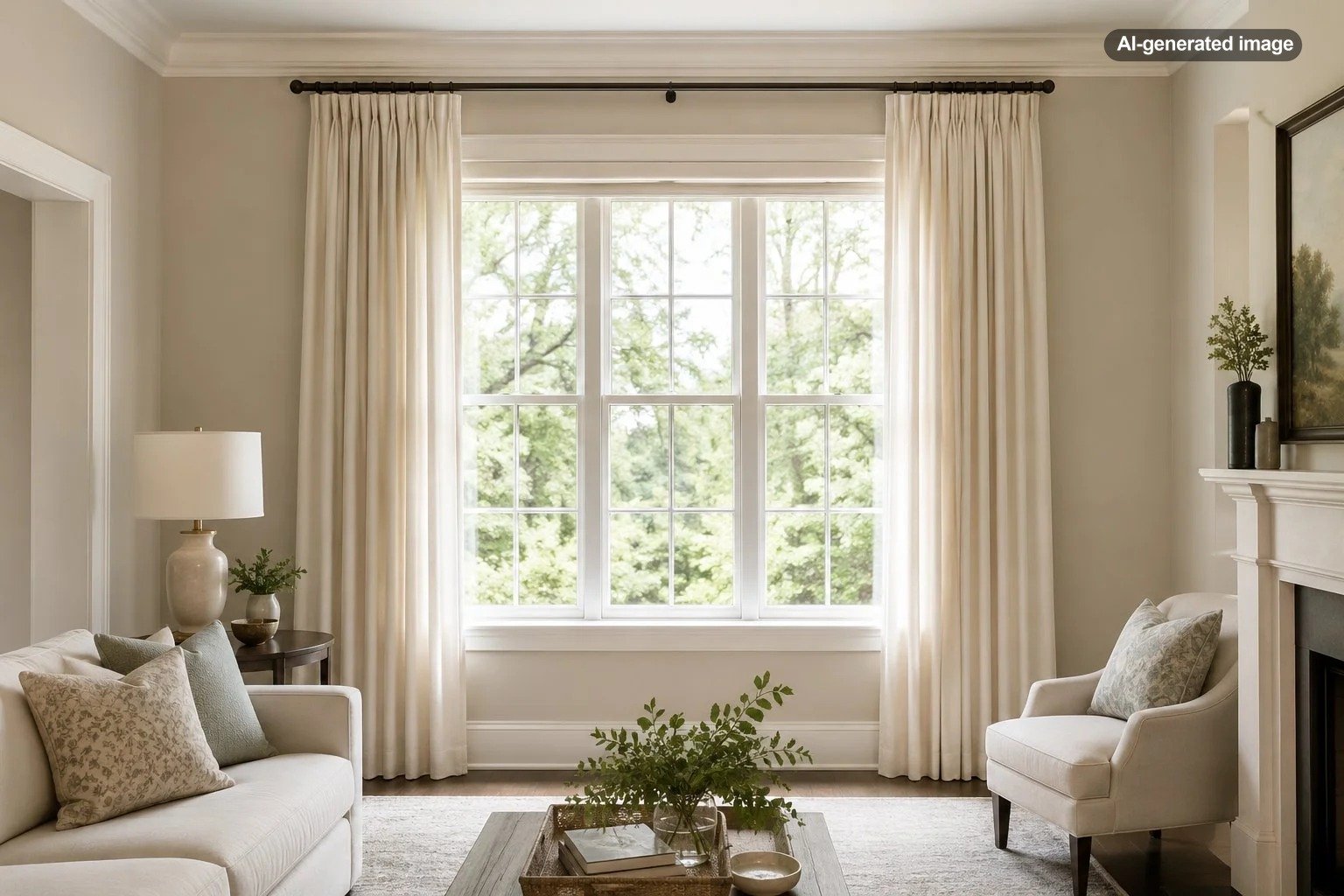
In most rooms, hang the curtain rod 4 to 6 inches above the top of the window frame. When the window sits close to the ceiling, place the rod roughly halfway between the upper trim and the ceiling, or mount it just below the crown molding. The goal is to create height without making the curtains look disconnected from the window.
That measurement is a reliable starting point rather than an inflexible rule. Ceiling height, window proportions, curtain length, molding, and the type of heading all affect where the rod should go. A thoughtful placement can make an ordinary window appear taller and more generous; a rod installed directly against the trim can make the same window seem smaller.
The best curtain height for most rooms
A rod positioned 4 to 6 inches above the window casing usually creates a balanced relationship between the window, wall, and ceiling. It raises the visual starting point of the curtains while leaving enough wall above the rod for the treatment to feel intentional.
If the window has no decorative casing, measure from the top edge of the window opening. If the curtain will hang from rings, remember that the fabric begins below the rod. The finished curtain height should be judged from the top of the visible fabric, not merely from the rod itself.
Rooms with substantial crown molding require another decision. Curtains generally look better ending below the molding rather than covering part of it. Leave a small, consistent gap so the architectural detail remains visible and the rod does not appear squeezed into place.
The right curtain height is the point where the window looks taller, the ceiling feels higher, and the fabric still belongs to the architecture.
Should curtains go all the way to the ceiling?
They can, especially in rooms with low ceilings, narrow windows, or minimal trim. Mounting the rod near the ceiling draws the eye upward and creates a longer vertical line. This approach is particularly effective when several windows of different heights need to look more consistent.
Ceiling-height curtains are not automatically better, however. A large gap between the top of a short window and an extremely high rod can look awkward when the wall remains visible through sheer fabric or beside narrow panels. In rooms with very tall ceilings, placing the rod several feet above the window may exaggerate the empty wall rather than improve the proportions.
Consider a near-ceiling installation when:
- The ceiling is approximately 8 feet high and you want the room to feel taller.
- The window is short or visually undersized for the wall.
- You are using full-length panels with enough fabric to create substantial folds.
- Several nearby windows should share one consistent rod line.
- The room has simple trim that will not compete with the elevated rod.
Stay closer to the 4-to-6-inch guideline when the ceilings are unusually high, the window has prominent architectural trim, or the curtain length is limited.
How ceiling height changes the measurement
| Room condition | Practical rod placement | Why it works |
|---|---|---|
| Standard 8-foot ceiling | About 4 to 6 inches above the trim | Adds height while keeping the window visually grounded |
| Small gap above the window | Centered in the available space or just below molding | Avoids crowding the ceiling or trim |
| Low or compact room | Near the ceiling | Creates a longer vertical line |
| Very high ceiling | Above the trim, but not necessarily at ceiling height | Prevents a large, disconnected gap above the window |
| Multiple windows | Use one consistent rod height when practical | Produces a calmer architectural rhythm |
Consistency usually matters more than following a measurement to the exact inch. If two windows share a wall but their trim heights differ slightly, aligning the rods may look more deliberate than measuring 5 inches above each individual frame.
Rod width matters as much as rod height
A beautifully elevated rod can still look wrong if it ends at the outside edges of the window. Extending the rod beyond the frame gives the curtain panels somewhere to rest when open, exposing more glass and making the window appear wider.
As a useful starting point, extend the rod 6 to 10 inches beyond each side. Large windows, thick fabrics, and full pleated panels may require more space because the stacked fabric occupies greater width. A narrow wall return, nearby cabinet, corner, or light switch may require less.
Wider placement also helps reduce the amount of glass covered by open curtains. That can improve daylight and preserve the view while maintaining the softness and privacy benefits of fabric panels.
Measure for curtain length before installing the rod
Do not install the rod first and hope a standard curtain length will fit. Curtain length, heading style, rings, and rod height work as one system. Decide where the fabric should end, determine how it attaches to the rod, and calculate upward from there.
What to do
- Choose the intended hem position: just touching the floor, breaking slightly, or deliberately pooling.
- Confirm whether the panels use a rod pocket, grommets, back tabs, clips, or drapery rings.
- Measure from the intended hem position to the point where the fabric begins beneath the hardware.
- Mark the proposed rod height with removable tape.
- Check the appearance from the doorway and the main seating area before drilling.
- Use a level and verify that the brackets can be secured appropriately for the wall and curtain weight.
For a clean, practical finish, the hem can lightly kiss the floor or sit just above it. A small break creates a softer effect. Intentional pooling can suit formal or romantic rooms, but it collects more dust and may be inconvenient around pets, children, radiators, floor vents, or frequently opened doors.
What if standard curtain lengths do not fit?
Ready-made panels commonly come in a limited range of lengths, so the ideal rod position may fall between available options. In that situation, prioritize a polished hem rather than forcing the rod into an awkward location.
Long panels can be hemmed, secured temporarily with removable hemming tape, or adjusted through the placement of rings and hooks. Panels that are too short are harder to disguise. Hanging the rod unusually low to make short curtains reach the floor can compress the window and undermine the reason for using full-length drapery.
Special situations that may change the placement
Arched or unusually shaped windows
Determine whether the curtains are meant to emphasize the shape or visually simplify it. A rod placed above the highest point can create a conventional rectangular frame, while hardware positioned around the architecture may preserve the distinctive outline.
Windows beneath sloped ceilings
Use the longest practical vertical line without forcing the rod into the slope. The rod should remain level unless the treatment is specifically designed for an angled installation.
Windows near built-ins or corners
Available stacking space may determine the rod width. Keep finials, brackets, and fabric clear of cabinet doors, shelves, and nearby wall-mounted fixtures.
Apartments and rentals
When drilling is restricted, tension systems, compression rods, or approved removable mounting products may be useful. Their load limits and compatibility vary, so lightweight panels are generally easier to manage than lined or heavily pleated curtains. A rod installed inside the window recess will not create the same height-enhancing effect, but it can still provide privacy without permanent alterations.
Radiators, baseboard heaters, and floor vents
Do not let decorative proportions override safe operation or airflow. Curtains should not rest on heat-producing equipment, obstruct vents, or interfere with controls. Follow the equipment manufacturer’s clearance guidance and choose shorter curtains, shades, or another window treatment when full-length panels would create a conflict.
Common curtain-hanging mistakes
- Mounting the rod directly on the trim: This often makes the window look shorter and leaves little visual breathing room.
- Choosing panels before planning the rod: The available length can force the hardware into an undesirable position.
- Using too little fabric: Panels that barely span the window look flat when closed. Fuller curtains create better folds and a more finished frame.
- Ignoring the curtain heading: Rings, tabs, grommets, and rod pockets place the top of the fabric at different heights.
- Ending the rod at the window edges: Open panels then cover more glass and make the opening appear narrower.
- Measuring only once: Floors and ceilings are not always perfectly level, particularly in older homes. Check several points.
- Installing weak anchors: Wide rods and lined panels can be heavier than they appear. Match the fasteners to the wall construction and expected load.
Before you decide
- Is the proposed rod at least a few inches above the trim?
- Does its height relate comfortably to the ceiling and molding?
- Will the fabric reach the intended hem position?
- Can the open panels stack beyond the glass?
- Are vents, heaters, doors, and furniture clear?
- Can the brackets be mounted securely?
- Does the placement look balanced from across the room?
Frequently asked questions
Is 2 inches above a window high enough for curtains?
It can work when space is tight, but 4 to 6 inches usually creates a stronger sense of height. A 2-inch gap may be appropriate when crown molding, a low ceiling, or another architectural feature limits the available wall space.
Should curtains touch the ceiling?
Not necessarily. Curtains can begin just below the ceiling or crown molding, but a small gap often looks cleaner and provides room for brackets and finials. The hardware should not appear jammed against the ceiling.
Should every curtain rod in a room be the same height?
When the windows are close together or visible in the same sightline, consistent rod heights generally create a more orderly look. Adjustments may be needed for doors, unusually shaped windows, or major differences in trim height.
How far should a curtain rod extend past the window?
Start with approximately 6 to 10 inches on each side. Increase the extension for thick, wide, or pleated panels that require more stacking room, provided the surrounding wall has enough space.
Should short curtains hang above the floor?
Full-length curtains usually look most deliberate when they reach the floor. Shorter curtains can be practical above a kitchen counter, radiator, desk, or built-in seat, but the shortened length should relate clearly to the obstruction rather than appearing accidental.
The final measurement
For most windows, a rod installed 4 to 6 inches above the frame is the dependable answer. From there, adjust for ceiling height, molding, curtain hardware, available panel lengths, and the architecture around the window.
Before making holes, use painter’s tape to outline the rod and the outer edges of the proposed curtain panels. Stand back, compare the proportions, and make small adjustments. That simple preview is often more revealing than any universal formula.