
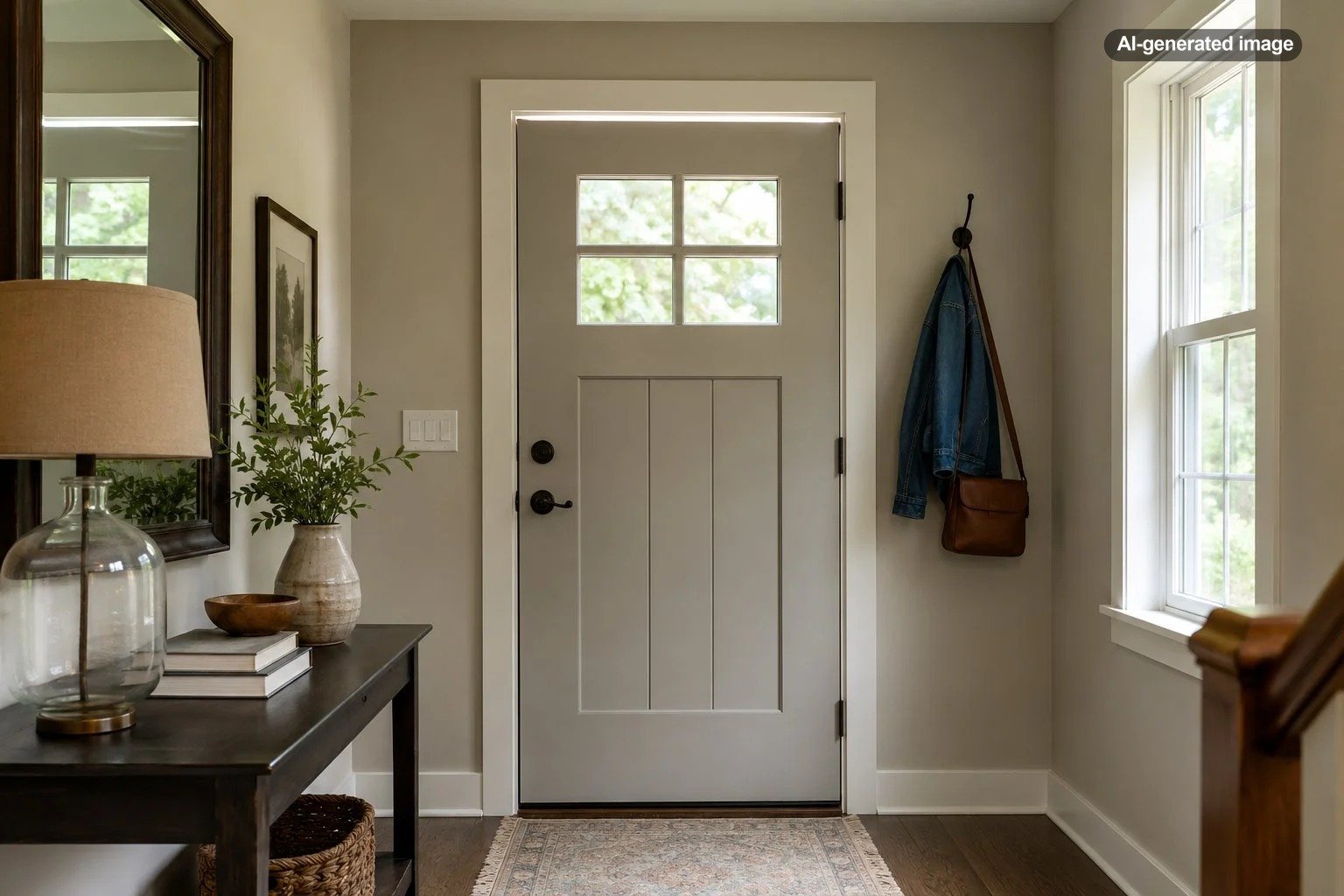
Why Is There a Gap at the Top of My Front Door?
A small, even clearance around a front door is normal. A noticeable gap at the top, however, usually means the door is no longer meeting the frame or weatherstripping evenly. Common causes include compressed or missing weatherstripping, loose hinges, a sagging door slab, or a frame that is slightly out of square.
The pattern of the gap matters. If it is fairly uniform across the entire top, weatherstripping may be the main issue. If the gap grows wider toward one corner, door alignment deserves a closer look. The useful first step is not to fill the opening immediately, but to determine whether the problem is the seal, the door, or the frame.
Start by looking at the shape of the gap
A front door provides several clues before you ever pick up a tool. Stand inside with the door closed and compare the clearance above the slab with the clearance along both vertical edges. You are looking for consistency rather than one universal measurement, because door systems and weather seals differ.
If the space above the door appears similar from the hinge side to the latch side, inspect the weatherstripping next. If the gap starts narrow and becomes noticeably wider as it crosses the top of the door, the slab may have shifted relative to the frame. A door that also rubs, sticks, or requires lifting or pushing to latch provides another reason to investigate alignment.
Also look at the exterior side of the closed door. The flexible weather seal should make reasonably consistent contact rather than touching firmly in one area and missing the door entirely in another.
What to check first
- Close and latch the door normally without forcing it.
- Compare the gap along the top, hinge side, and latch side.
- Inspect the weatherstripping for flattened, torn, loose, painted-over, or missing sections.
- Open the door and check whether the hinges or screws appear loose.
- Close the door again and note whether it rubs the frame, moves after latching, or requires unusual pressure to close.
Worn weatherstripping is one of the simpler explanations
Exterior-door weatherstripping is designed to close the small space between a movable door and its frame. The U.S. Department of Energy recommends weatherstripping exterior doors as part of reducing air infiltration, while ENERGY STAR identifies doors and windows as common locations for unwanted air leakage.
Over time, a seal can compress, pull away, tear, become brittle, or simply stop contacting the door consistently. If the door itself appears square in the opening and operates normally, but light or moving air is noticeable along the top, the seal may be the most straightforward place to start.
Replacement weatherstripping should match the way the existing door frame is designed to accept a seal. Some frames use weatherstripping that presses into a narrow kerf, while other systems use adhesive-backed or mechanically fastened material. Avoid assuming that the thickest available seal will work best. An oversized seal can make a properly aligned door difficult to latch and may create a new problem while trying to solve the first one.
Loose hinges can let the door sag
A door places continuous leverage on its hinges. If hinge screws loosen or lose their grip, the slab can shift slightly within the opening. That change may be enough to make the reveal uneven even though nothing looks dramatically broken.
Look closely at the top hinge in particular. Check whether its leaves sit flat against the door and jamb and whether any screws are visibly loose. If a screw turns without tightening, the problem may involve the screw hole or surrounding wood rather than simply needing another turn.
Do not keep tightening a screw that is spinning freely, and avoid indiscriminately installing longer screws without understanding what is behind the jamb. Door assemblies, sidelights, framing conditions, and concealed wiring can vary. Straightforward loose hardware may be manageable for an experienced homeowner, but recurring movement or damaged mounting material can justify having a carpenter or qualified door professional evaluate the assembly.
The door or frame may be out of square
If the reveal changes substantially from one corner to another, the issue may extend beyond weatherstripping. The door slab can sag, the frame can be installed out of square, or an older opening can move enough over time to affect how the door fits.
One useful distinction is whether the problem is new. A door that has always shown a modest but consistent gap may reflect its installation or the design of the door system. A gap that has recently become larger, especially when accompanied by sticking or latching changes, deserves more investigation.
Frame alignment can also become more obvious after other work has been performed around an entry. Replacing trim, adjusting a threshold, changing hinges, or removing and reinstalling a door can alter how the slab sits in the opening. The correct remedy depends on what moved; simply adding sealant to the visible gap does not correct the underlying geometry.
A door gap is easier to solve when you treat the pattern as a clue rather than the opening as something to fill.
Test whether the gap is actually leaking air
Not every visible line around a door represents a significant air leak because the weatherstripping sits behind the visible edge of many door systems. What matters is whether the seal makes contact when the door is closed.
ENERGY STAR recommends simple inspection methods for finding leakage around doors and windows, including a paper test. Close the door on a strip of paper in the area you want to evaluate. If the paper slides out with very little resistance compared with other areas around the same door, the seal may not be making equivalent contact there.
You can repeat the comparison at several places along the top and sides. The goal is not laboratory precision; it is to identify a meaningful difference from one part of the door perimeter to another.
If you feel a draft, remember that the leak may also occur between the door frame and the surrounding rough opening rather than directly between the door slab and its weatherstripping. Department of Energy building-science guidance notes that gaps between window or door units and rough framing can become paths for uncontrolled air leakage. Problems behind finished trim are usually less obvious and may require removal of trim or professional evaluation.
Do not overlook the latch and closing behavior
A door can appear nearly normal while giving away an alignment problem through the way it latches. Notice whether the latch enters the strike cleanly, whether you need to push or pull the door while turning the handle, and whether the slab shifts noticeably after it is latched.
If the door needs pressure in one direction to latch, that information can help distinguish a sealing issue from a positioning issue. Replacing weatherstripping may improve a draft but will not correct a latch that no longer lines up because the slab has moved.
Security is another reason not to ignore significant alignment problems. An exterior door should close and latch as its hardware is intended to operate. If the latch or deadbolt does not engage normally, focus on correcting the door and frame relationship rather than forcing the lock into position or modifying components without understanding the cause.
What not to do with a top-of-door gap
A few quick fixes can create more trouble than they solve. Avoid filling the operating clearance between the door and jamb with rigid caulk, expanding foam, wood filler, or another material that prevents normal movement. Those products can be appropriate in concealed stationary gaps around a frame when used correctly, but they are not substitutes for weatherstripping where the door itself opens and closes.
Likewise, do not automatically plane, sand, or cut the door simply because one area is tight. If loose hinges are allowing the slab to sag, removing material from the door can make the final gap larger after the alignment problem is corrected.
And resist solving every draft with progressively thicker weatherstripping. Too much compression can make the door difficult to close, place unnecessary pressure on the latch, and hide the fact that the door is sitting unevenly.
When a DIY adjustment makes sense
If the door is otherwise sound, the frame appears stable, and the problem is clearly limited to deteriorated weatherstripping or an obviously loose screw that still tightens correctly, the remedy may be relatively simple. Replacing like-for-like weatherstripping and maintaining existing hardware are common home-maintenance tasks.
A more complicated fit problem deserves more restraint. A heavy entry door, multipoint locking system, large glass panel, sidelight assembly, damaged jamb, recurring sag, or significantly out-of-square opening can make seemingly small adjustments consequential. A qualified door installer or carpenter can evaluate the entire assembly rather than chasing the gap one adjustment at a time.
Before you decide
- Is the top gap even or noticeably diagonal?
- Does the existing weatherstripping contact the door?
- Are the hinges secure and sitting flat?
- Does the door open, close, and latch without unusual force?
- Is the problem stable, or has it recently become worse?
- Are there signs of moisture, decay, frame movement, or damage?
How to keep the problem from returning
Make the entry part of routine home maintenance. Check weatherstripping when seasons change, particularly if the door receives strong sun, wind, or frequent use. Pay attention to small changes in how the door closes; catching a loose hinge or deteriorating seal early is easier than correcting a badly misaligned assembly later.
Keep painted surfaces and seals separate where the manufacturer or door system requires it, and avoid coating flexible weatherstripping with paint. When replacing a seal, confirm that the door can still latch normally without excessive pressure.
Most importantly, diagnose before modifying. A visible gap can come from several different places, but the shape of the reveal, condition of the weatherstripping, hinge stability, and latching behavior usually provide enough information to determine a sensible next step.
FAQ
Is a small gap above a front door normal?
Some clearance between a door slab and its frame is necessary for the door to operate, and the weatherstripping normally creates the functional seal. A visible clearance is therefore not automatically a defect. Concern is more appropriate when the gap is unusually large, uneven, drafty, or associated with poor operation.
Why is the gap bigger on one side of the top of my door?
An uneven top gap can indicate that the door is sitting out of square relative to the frame. Loose hinges, door sag, frame alignment, or movement in the opening are possibilities. Inspect the hardware and overall reveal before adding thicker weatherstripping.
Can I simply add weatherstripping to close the gap?
If the door operates correctly and the existing seal is worn or no longer making contact, replacement weatherstripping may be appropriate. If the gap is strongly uneven or the door sticks or latches poorly, correct the alignment issue first.
Why can I feel air even though the weatherstripping looks fine?
Air can leak between the slab and seal, but it can also travel through gaps between the door frame and the surrounding wall opening. If perimeter seals appear effective yet a significant draft remains, further air-leak investigation may be needed.
When should I call a professional?
Professional evaluation is sensible when the door will not latch securely, the frame or jamb is damaged, the opening appears significantly out of square, the problem repeatedly returns, or you see moisture damage, decay, or other signs that the issue extends beyond normal door maintenance.