
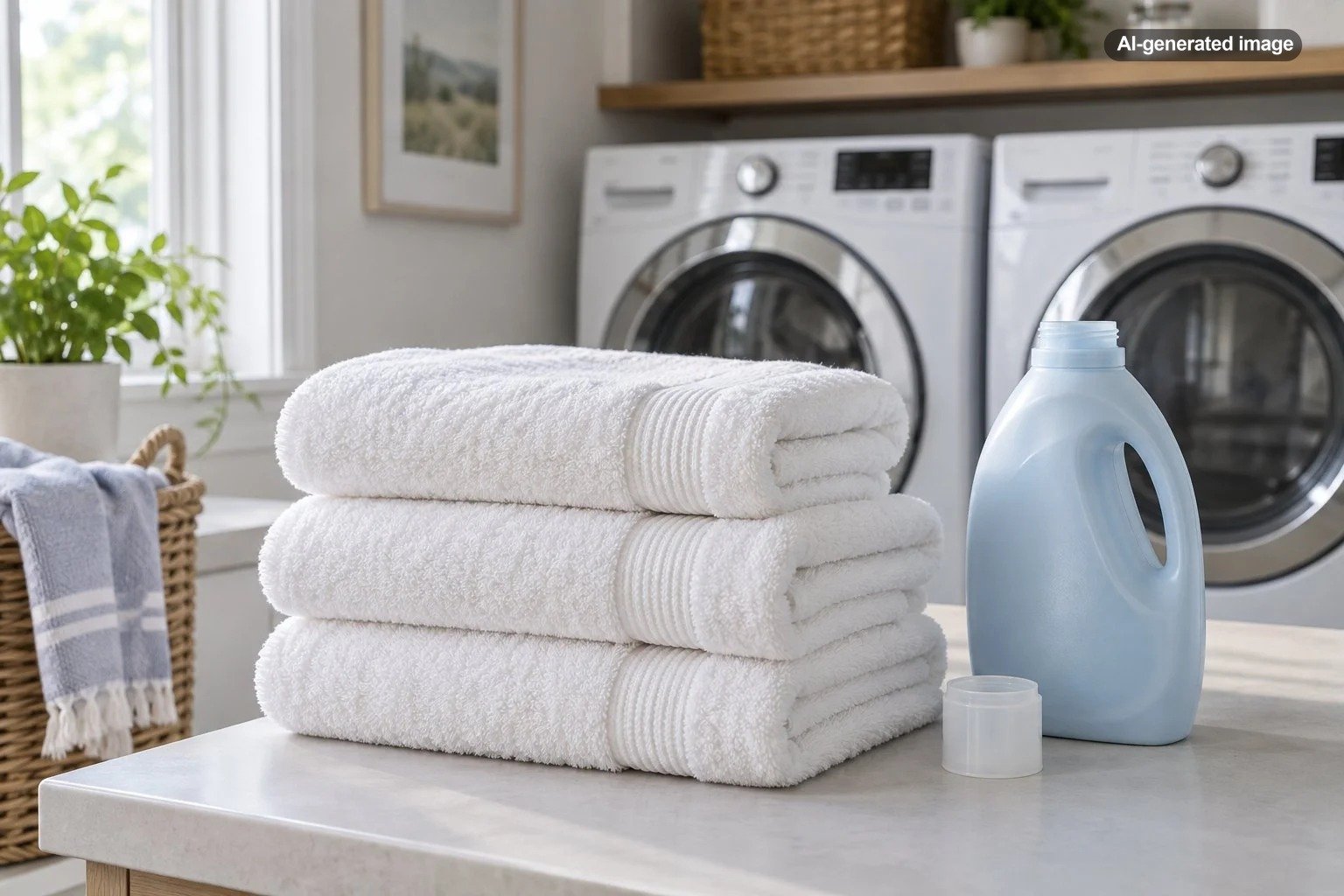
Should You Use Fabric Softener on Towels?
Fabric softener can make towels feel smoother and smell freshly laundered, but it comes with a tradeoff: repeated use may reduce the very quality towels need most – absorbency. For everyday bath towels, skipping liquid fabric softener most of the time is usually the better approach, especially if you value quick drying and efficient water absorption.
That does not mean one accidental dose will ruin a good towel. The issue is more about repeated buildup. Fabric softeners work by conditioning and coating fibers, and over time that coating can make cotton loops less eager to take up water.
Why Fabric Softener Can Be a Problem for Towels
Most bath towels rely on thousands of tiny loops of cotton or another absorbent fiber to pull moisture away from your skin. Fabric softener is designed to make fibers feel smoother and more supple. That can be pleasant on shirts and sheets, but towels have a different job.
The conditioning ingredients in softener can leave a light film on fibers. With repeated use, that film may interfere with the towel’s ability to soak up water efficiently. A towel can therefore feel wonderfully silky in your hand while performing less impressively after a shower.
This is why laundry guidance often treats towels differently from ordinary cotton clothing. Softness is useful, but absorbency is functional.
The softest-feeling towel is not always the towel that dries you best.
Does Fabric Softener Ruin Towels?
No. Using fabric softener once or occasionally does not normally mean the towels are permanently damaged. The concern is gradual residue buildup, not instant destruction.
If towels have begun to feel oddly slick, less absorbent, heavy, or slow to dry, laundering them several times without softener may help remove some accumulated residue. It is also worth reviewing how much detergent you use. Excess detergent can remain in towel fibers too, contributing to stiffness and reduced freshness.
When Occasional Fabric Softener Can Make Sense
There is a real comfort tradeoff here. Some households care more about a plush hand feel and fragrance than maximum absorbency. In that case, occasional fabric softener use can be a reasonable choice.
The key word is occasional. Rather than adding softener automatically to every towel load, consider using it only when the towels begin to feel particularly rough or when you want the fragrance. Follow the product directions rather than assuming more softener will produce better results.
Always check the care label as well. Specialty towels, microfiber towels, performance fabrics, and towels with unusual finishes may have different laundering requirements.
Advantages
- Can make towels feel smoother and more pliable.
- May reduce static in mixed laundry loads.
- Can add fragrance for households that enjoy scented linens.
Tradeoffs
- Repeated use may reduce towel absorbency.
- Residue can accumulate on fibers over time.
- Fragrance may be unnecessary or undesirable for some households.
How to Keep Towels Soft Without Relying on Fabric Softener
Towels do not need to feel board-stiff simply because you skip softener. Laundry technique has a major effect on texture.
What to do
- Use the correct amount of detergent. More detergent does not necessarily mean cleaner towels. Excess product can be difficult to rinse from dense terry cloth.
- Do not pack the washer too tightly. Towels need room to move so water and detergent can circulate through the fibers.
- Use the towel’s recommended wash temperature. Follow the care label rather than defaulting every load to the hottest setting.
- Make sure the load rinses thoroughly. If your washer offers an extra-rinse option and towels routinely emerge with residue, it may be worth trying.
- Give towels room in the dryer. Tumbling helps lift and separate the loops that give terry towels their fluffy feel.
- Dry them fully before storing. Folding towels while they are still damp can encourage stale or musty odors.
What About Dryer Sheets?
Dryer sheets deserve similar consideration because many work by depositing conditioning agents onto fabrics during drying. If absorbency is your priority, routinely using dryer sheets on bath towels may work against that goal.
For households mainly trying to make towels feel less stiff, dryer balls are another option. Their mechanical tumbling action can help separate fabrics in the dryer without intentionally coating the towel fibers. They will not necessarily reproduce the silky feel or fragrance of a conventional softener, but that may be precisely the point.
Why Do Towels Sometimes Feel Rough Without Softener?
Roughness can have several causes, and fabric softener may simply mask them temporarily. Using too much detergent is one common culprit. If detergent remains trapped in the loops after rinsing, towels can become stiff rather than fluffy.
Hard water is another possibility. Minerals present in the wash water can accumulate in fabrics and change their texture. Overdrying may also leave some towels feeling harsher than necessary, particularly after repeated high-heat cycles.
Finally, towels themselves change with age. Fibers gradually wear, loops flatten, and plushness declines. Laundry products cannot fully reverse ordinary textile wear.
How Often Should You Wash Bath Towels?
There is no single schedule that suits every household because towel use and drying conditions vary. A towel used once and hung in a well-ventilated bathroom behaves differently from one that stays damp in a humid room or is shared by several people.
Instead of focusing only on a rigid count, make sure towels dry thoroughly between uses and wash them promptly when they develop an odor, visible soil, or a noticeably less-fresh feel. Good drying between showers is one of the simplest ways to keep a towel pleasant for longer.
Should You Use Fabric Softener on New Towels?
Usually there is little reason to begin with fabric softener. New towels may already feel plush, and washing them according to the care label without additional coating gives their absorbent fibers a chance to do their job.
Some new towels also release lint during their first several wash-and-dry cycles. That is generally a separate issue from softness and does not necessarily mean they need fabric softener.
The Best Approach for Most Households
If you want towels that dry skin efficiently, skip fabric softener during routine washes and focus on sensible detergent dosing, adequate rinsing, and thorough drying. If you prefer a softer, more fragranced towel and are willing to accept a possible reduction in absorbency, occasional softener use can be a reasonable compromise.
The useful distinction is between soft to the touch and soft while still absorbent. A good laundry routine aims for the second. Towels should feel comfortable, but they should also still behave like towels.