
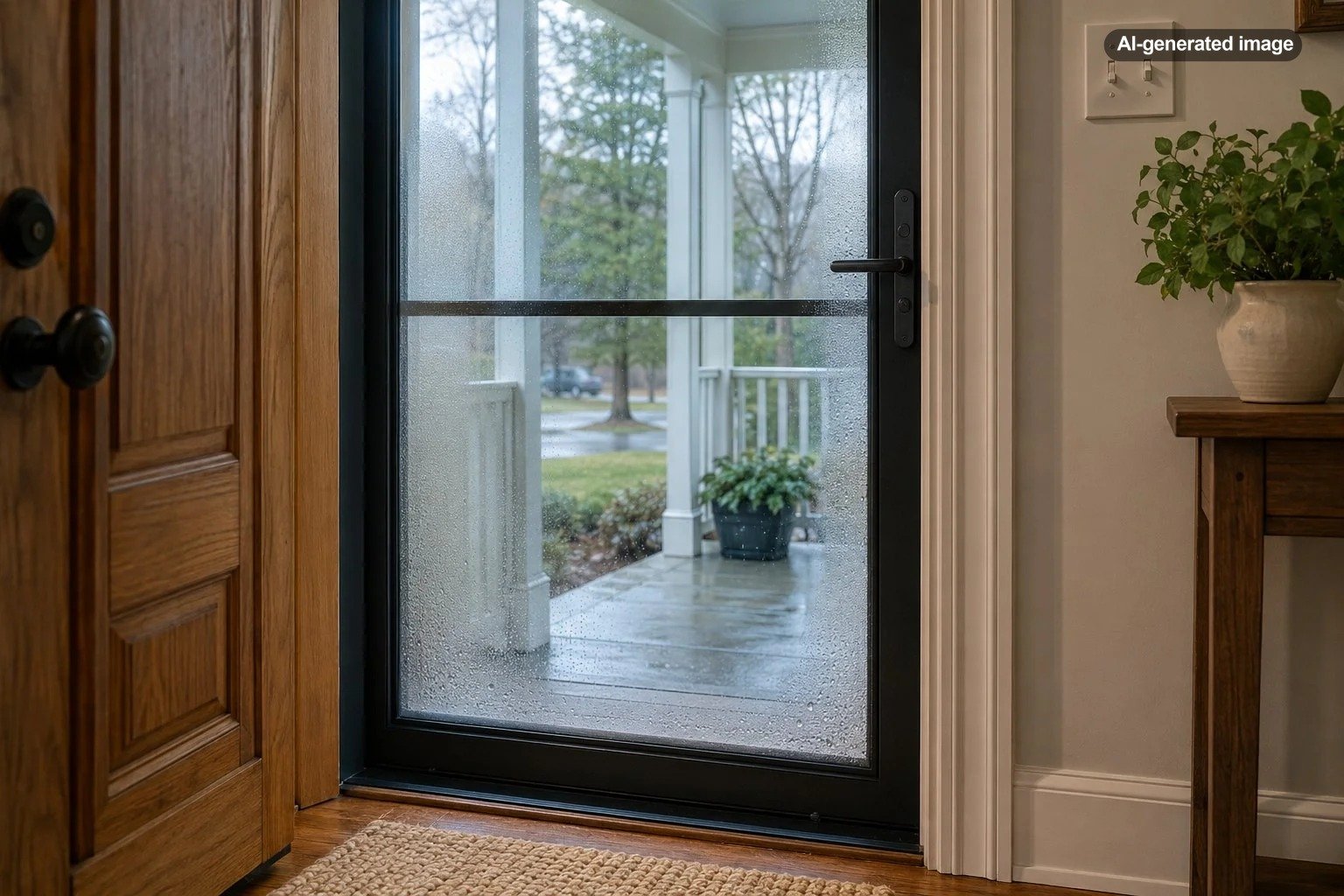
Why Does My Storm Door Collect Condensation?
Condensation collects on a storm door when moist air touches glass or metal that is colder than the air’s dew point. A little temporary fogging during a sharp temperature change can be normal. Persistent droplets, pooled water, frost, or damp trim deserve attention because they can point to excess humidity, trapped moisture, air leakage, or rain entering the door assembly.
The location of the moisture is the most useful clue. Condensation on the room-facing side usually involves indoor humidity. Moisture in the space between the entry door and storm door often means warm indoor air is leaking outward and becoming trapped. Water on the exterior may simply be dew, while water that appears after rain is more likely a drainage, flashing, caulk, or weatherstripping problem.
Why condensation forms on a storm door
Condensation is a temperature-and-moisture problem. Air can hold less water vapor as it cools. When humid air reaches a sufficiently cold door panel, handle, frame, or pane of glass, some of that vapor changes into liquid water.
A storm door creates a small chamber in front of the main entry door. That chamber can improve weather protection, but it also changes airflow and surface temperatures. If warm household air escapes around the main door, it may cool inside this chamber and leave moisture on the storm door. A tightly sealed storm door can make that trapped-air effect more noticeable.
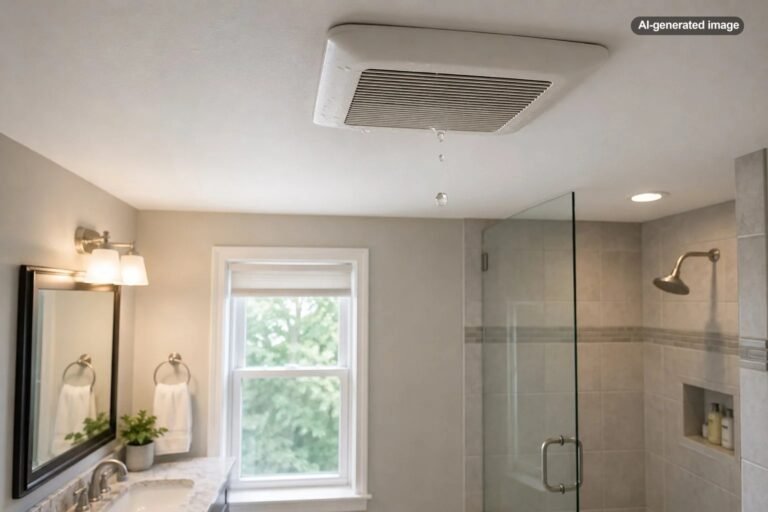
Common sources of indoor moisture include showers, cooking, dishwashing, humidifiers, drying laundry, numerous houseplants, and damp basements or crawl spaces. Indoor humidity that feels comfortable in mild weather may still produce condensation when outdoor temperatures fall and the door surface becomes much colder.
Use the moisture location to narrow down the cause
| Where it appears | Likely explanation | What to check |
|---|---|---|
| Room-facing surface | Humid indoor air meeting a cold surface | Indoor humidity, ventilation, nearby curtains, and airflow |
| Between the two doors | Indoor air leaking through the entry door or moisture trapped in the cavity | Entry-door weatherstripping, sweep, latch alignment, and storm-door drainage |
| Outside surface | Outdoor dew or humid air meeting cooler glass | Whether it clears naturally as conditions change |
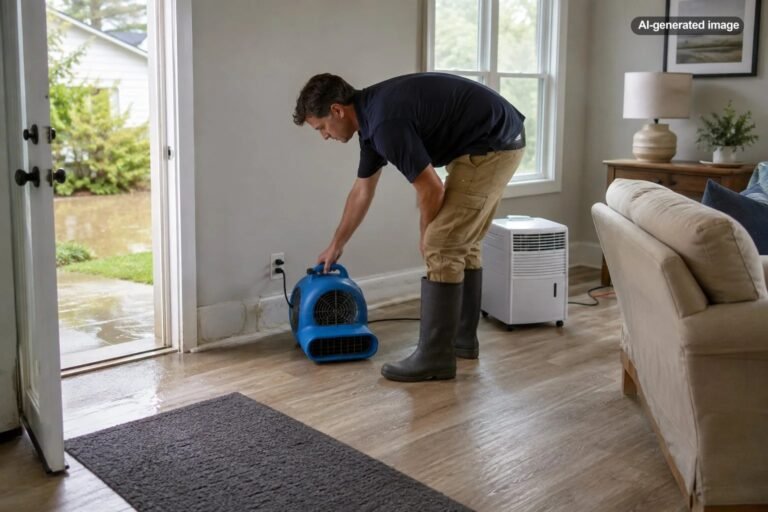
| Edges or bottom after rain | Rain entry or poor drainage rather than condensation alone | Caulk joints, frame corners, sweep, drip cap, weep openings, and installation |
| Inside an insulated glass unit | Possible failure of the sealed glass assembly | Manufacturer guidance or professional evaluation |
Timing matters as much as location. Moisture that appears on cold mornings and fades later usually follows a condensation pattern. Water that develops during wind-driven rain, stains only one corner, or continues during dry weather suggests a different source.
A practical troubleshooting sequence
What to do
- Dry everything and observe. Wipe the glass, frame, threshold, and surrounding trim. Note exactly where water returns and what the weather was doing.
- Measure indoor humidity. Check several times, including after cooking or showering. A reading is more useful than judging humidity by feel.
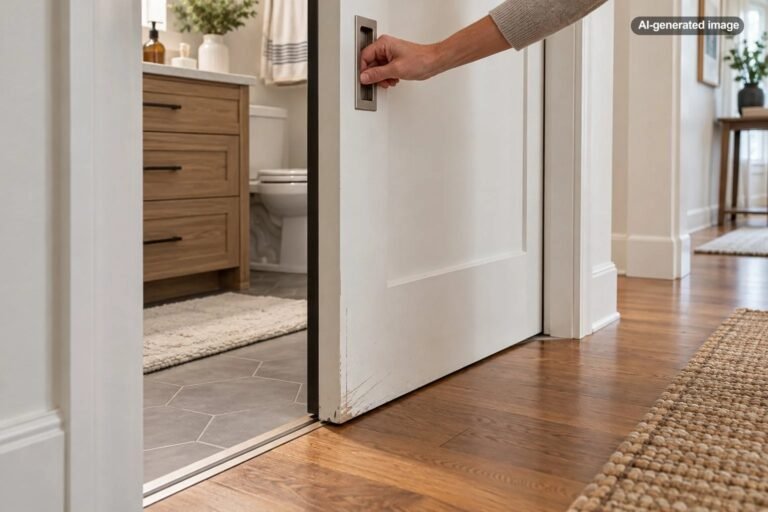
- Inspect the main entry door. Look for compressed, loose, cracked, or missing weatherstripping. Check whether the door closes evenly and whether the sweep contacts the threshold without preventing operation.
- Check the storm door’s drainage path. Dirt, paint, sealant, or debris can block designed openings along the lower frame. Consult the door manufacturer’s instructions before altering or drilling anything.
- Separate condensation from rain entry. Compare what happens on a cold dry day with what happens during rain. Inspect exterior joints and the top of the frame for gaps or deterioration.
- Monitor the result. After correcting an obvious humidity, airflow, or maintenance issue, watch the door through several comparable weather cycles.
How to reduce condensation
If indoor humidity is elevated, use bathroom and kitchen exhaust fans that discharge outdoors, reduce unnecessary humidifier use, and address damp areas or leaks. Air conditioning or a dehumidifier may help during warm, humid conditions. The appropriate indoor humidity varies with outdoor temperature and the building, so the goal is not one rigid setting; it is a level that avoids persistent condensation while remaining comfortable.
Keep heated indoor air from reaching the storm-door cavity by maintaining the primary door’s weatherstripping and alignment. If the latch does not pull the door evenly against its seals, replacing weatherstripping alone may not solve the leak. Damaged thresholds, warped doors, loose hinges, and uneven frames can also create gaps.
Make sure furniture, heavy curtains, or stored items are not preventing air from circulating near the interior side of the entry. Better circulation can raise the surface temperature enough to reduce localized condensation, although it will not correct a leak or seriously excessive humidity.
Clean drainage openings gently and only according to the door’s design. Do not indiscriminately caulk every opening around the lower frame. Some gaps are intended to release water, and sealing them can leave moisture with nowhere to go.
What not to do
Do not drill new ventilation or drainage holes without confirming the manufacturer’s requirements. An improvised opening can admit rain, damage the finish, interfere with the door’s structure, or affect product coverage. Likewise, do not seal suspected weep paths simply because they look like unfinished gaps.
Avoid painting or caulking over damp or visibly affected material. The underlying moisture source must be corrected and the area dried first. Repeatedly wiping the glass may protect nearby finishes in the short term, but it does not resolve the conditions producing the water.
When the condensation may be normal
Brief exterior dew or light fogging during a sudden weather shift is often a surface event rather than a defect. It is less concerning when it clears on its own, leaves no pooled water, and causes no deterioration. The pattern matters: occasional moisture is different from a wet threshold every morning.
In a cold climate, a small amount of condensation during an unusually cold spell may indicate that the door surface reached the dew point even though the home has no broader moisture problem. In a hot, humid climate, exterior condensation can form when cooled glass meets moist outdoor air. These situations still merit observation, but they do not automatically require replacing the door.
Frequently asked questions
Why is condensation trapped between my storm door and front door?
Warm, humid indoor air may be escaping around the front door and cooling in the cavity. Check the primary door’s seals and alignment, then confirm that the storm door’s intended drainage openings are unobstructed.
Should a storm door be airtight?
It should close and operate as designed, but it is not necessarily meant to be an airtight indoor boundary. The main entry door generally performs that role. Follow the storm door manufacturer’s installation and maintenance guidance rather than adding sealant everywhere.
Can condensation damage the door?
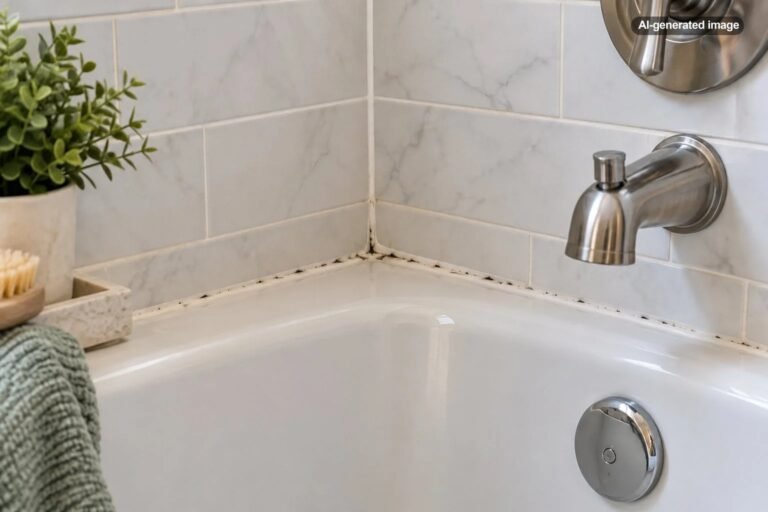
Occasional light moisture may leave no lasting harm, but repeated wetting can damage finishes, swell wood components, stain trim, and promote corrosion or unwanted growth. Dry wet surfaces and correct the moisture source promptly.
Does condensation mean I need a new storm door?
Not necessarily. Indoor humidity, leakage around the entry door, blocked drainage, or installation details may be responsible. Replacement becomes more relevant when the frame or glass assembly is damaged, the door cannot close securely, or repairs cannot restore proper performance.