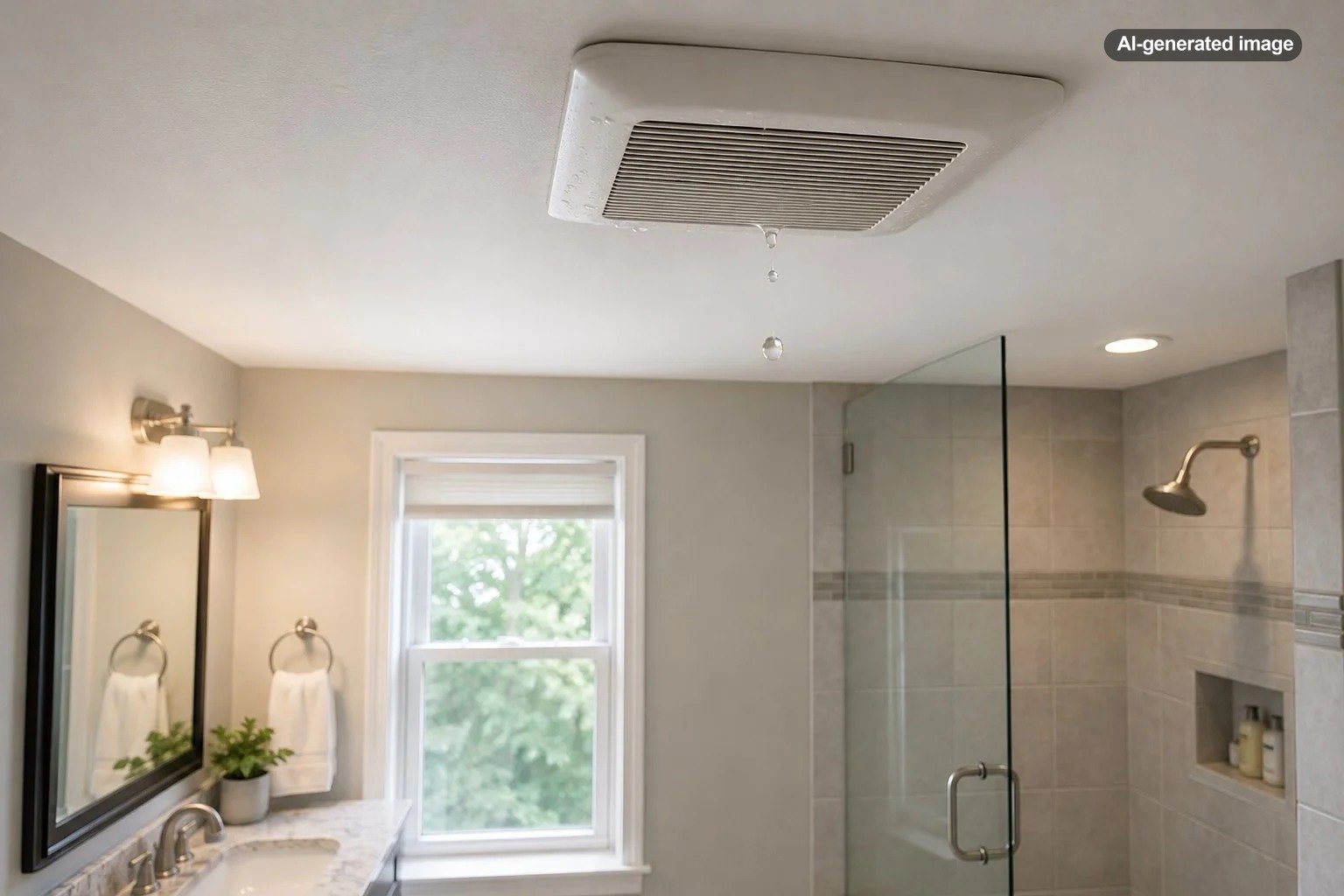
Why Does My Bathroom Exhaust Fan Drip Water?
A bathroom exhaust fan usually drips water because warm, moisture-heavy bathroom air is condensing inside a cold exhaust duct. The collected water then runs backward toward the fan instead of leaving through the exterior vent.
Condensation is the most common explanation, particularly during cold weather, but it is not the only possibility. A poorly routed duct, missing insulation, clogged exterior hood, damaged roof cap, or roof leak can produce a very similar drip. The timing of the water is often the best clue.
Why condensation forms inside a bathroom exhaust duct
A shower fills the bathroom with warm, humid air. The exhaust fan pulls that air into a duct that may pass through a cold attic, garage, soffit, wall cavity, or roof assembly. As the warm air contacts the colder duct surface, some of its water vapor turns into liquid.
A small amount of condensation may evaporate or travel outside with the airflow. Persistent dripping begins when too much water forms, the duct remains cold, or the installation allows water to collect and flow back toward the fan.
This is especially common with uninsulated metal ductwork in a cold attic. Long duct runs, unnecessary bends, crushed flexible duct, and weak airflow keep damp air inside the duct longer, giving it more time to cool and condense.
Use the timing of the drip to narrow down the cause
| When water appears | More likely cause | What to inspect |
|---|---|---|
| During or soon after showers | Condensation | Duct insulation, airflow, routing, and fan runtime |
| On very cold days | Cold duct surfaces | Attic insulation and exposed duct sections |
| During wind-driven rain | Exterior vent or flashing leak | Roof cap, wall hood, damper, sealant, and flashing |
| Hours after the fan stops | Water trapped in a low spot | Sagging flexible duct or improper slope |
| Even when the bathroom is unused | Roof, plumbing, or building-envelope leak | Area above and around the fan housing |
Common causes of water dripping from a bathroom fan
An uninsulated duct in an unconditioned space
When a duct passes through a cold attic or another unheated area without adequate insulation, its interior surface can become cold enough to condense moisture rapidly. Insulating the entire duct run helps keep the exhaust air warmer until it reaches the outdoors.
Gaps matter. A mostly insulated duct with several exposed metal joints can still develop localized condensation at those cold sections.
A sagging or poorly sloped duct
Flexible duct can droop between supports, creating pockets where water collects. Once the pocket fills, water may spill toward the fan. A duct should take a short, direct route outdoors and should not contain deep dips that act like accidental reservoirs.
Where the installation allows it, the duct should be arranged so incidental moisture moves toward the exterior termination rather than toward the bathroom. The correct routing depends on the fan, duct material, building configuration, and local requirements, so significant changes are best handled by a qualified installer.
A blocked or restricted exterior vent
The roof cap or wall hood should open freely when the fan runs. Lint, dust, insect nests, debris, frost, or a stuck damper can restrict the outlet. Reduced airflow leaves humid air in the duct longer and increases condensation.
An exterior hood should also prevent normal rain from entering while allowing exhaust air to escape. Broken louvers, damaged dampers, and poorly fitted caps can admit water directly.
A dirty grille or underperforming fan
Dust on the grille and fan components can reduce airflow. Cleaning the removable grille may help, provided the manufacturer’s instructions are followed and power is switched off first. If the fan remains weak, noisy, slow to start, or unable to clear steam, it may need service or replacement.
A fan also needs replacement air. If the bathroom door seals tightly against the floor, the fan may struggle to pull enough air into the room. Opening the door slightly while testing can reveal whether restricted makeup air is contributing to poor performance.
A leaking roof cap, wall hood, or flashing
Water that appears only during rain may be entering around the exterior termination rather than forming inside the duct. Roof vents depend on intact flashing and proper integration with the roofing. Wall hoods need sound seals and a weather-resistant installation.
Do not assume that applying more caulk from inside the bathroom will solve an exterior leak. It may hide the visible symptom while water continues wetting the roof deck, insulation, drywall, or framing.
A separate plumbing or roof leak
The fan opening is a convenient low point in the ceiling, so water from elsewhere can travel along framing, ductwork, wiring, or the top of the drywall and emerge through the fan. A bathroom above, nearby plumbing line, roof penetration, or HVAC component may be the true source.
If dripping occurs when nobody has showered and the weather is dry, broaden the investigation beyond the exhaust system.
What to do when the fan starts dripping
What to do
- Stop using the fan if water is reaching electrical parts. Turn off the circuit at the electrical panel if it is safe to do so. Do not handle a wet fan, switch, bulb, or grille while power remains on.
- Dry the bathroom surfaces. Wipe up standing water and place a container beneath an active drip without touching the fan assembly.
- Note the conditions. Record whether the drip followed a shower, freezing weather, heavy rain, or strong wind.
- Check the accessible grille. With power off, look for heavy dust, staining, rust, or obvious moisture. Do not reach into concealed wiring or dismantle the motor assembly unless the manufacturer’s instructions authorize it.
- Observe exterior airflow. From a safe ground-level location, see whether the exterior damper opens when the fan operates. Never climb onto a wet, steep, or icy roof for this check.
- Arrange an attic or duct inspection. A qualified contractor can check insulation, joints, slope, sagging, duct length, exterior termination, and signs of a separate roof or plumbing leak.
When the problem may be manageable and when to call a professional
A dusty removable grille or a fan that simply needs to run longer may be manageable maintenance. Cleaning accessible surfaces, shortening excessively steamy showers, and running the fan during and after bathing can reduce moisture loading.
Work involving electrical connections, concealed duct replacement, roof flashing, exterior penetrations, mold inside building cavities, or repeated ceiling saturation calls for professional evaluation. Depending on the suspected source, the appropriate person may be an electrician, HVAC or ventilation contractor, roofer, plumber, or general contractor.
How to prevent the fan from dripping again
The lasting solution is to correct the moisture source or installation problem, not merely catch the water. A properly performing bathroom exhaust system should move damp air directly outdoors through a reasonably short, well-supported duct.
- Run the fan while bathing and continue operating it afterward long enough to clear lingering humidity.
- Clean the accessible grille periodically so dust does not restrict airflow.
- Confirm that the duct terminates outdoors, not in an attic, soffit cavity, crawlspace, or wall void.
- Insulate ductwork that passes through unconditioned areas as appropriate for the installation and climate.
- Repair crushed, disconnected, sharply kinked, or sagging duct sections.
- Keep the exterior hood clear and verify that its damper moves freely.
- Address roof, wall, and plumbing leaks promptly rather than waiting for ceiling damage to expand.
- Monitor indoor humidity. Persistent condensation elsewhere in the bathroom or home can indicate a broader moisture-control problem.
The U.S. Environmental Protection Agency recommends controlling moisture, exhausting bathroom air outdoors, and drying wet materials promptly. If ceiling drywall, insulation, or other porous materials remain wet, dealing with the source quickly is more important than repainting the stain.
Frequently asked questions
Can cold weather make a bathroom exhaust fan drip?
Yes. Cold outdoor conditions can chill an attic duct, causing warm shower exhaust to condense inside it. Missing duct insulation, long runs, weak airflow, and low spots make the problem more likely.
Should a bathroom exhaust duct be insulated?
Ductwork passing through an unconditioned space commonly benefits from appropriate insulation because warmer duct surfaces reduce condensation. The details should suit the duct type, climate, fan instructions, and applicable local requirements.
Is water dripping from the fan dangerous?
It can be. Water near wiring, a switch, or an integrated light creates an electrical concern. Repeated moisture can also damage drywall, insulation, framing, and finishes. Turn off power and obtain professional help when electrical components are wet.
Will running the fan longer stop the dripping?
It may help if the main problem is lingering bathroom humidity and the fan is moving air effectively. It will not repair a blocked vent, uninsulated duct, sagging duct, damaged roof cap, or exterior leak.
Can I simply seal around the fan grille?
No. Sealing the visible grille does not address water inside the duct or above the ceiling and may interfere with airflow or access. Find and correct the source of the moisture instead.