
Is a Home Generator Worth It If You Rarely Lose Power?
Yes, a home generator can be worth it even if you rarely lose power, but only when the consequences of an outage are unusually disruptive, expensive, or unsafe for your household. Frequency is not the only useful measure. A homeowner who experiences one eight-hour outage every few years may have little reason to install a permanent system, while another household may consider that same outage unacceptable because it affects medical equipment, a well pump, refrigeration, security, remote work, or temperature control.
The sensible question is not simply how often the lights go out. It is what stops working, how long you can comfortably manage without it, and how much convenience you are willing to pay to preserve.
Start With the Consequences, Not the Outage Count
Two homes on the same street can have completely different backup-power needs. One may have municipal water, a gas stove, good insulation, and no critical electrical equipment. The other may depend on electricity for a private well, sump pump, medical device, electric cooking, garage access, internet-based work, or climate control during extreme weather.
A generator becomes easier to justify when losing power also means losing an essential service. Consider what an outage would interrupt:
- Water: Homes with electric well pumps may lose running water unless the pump is supplied by backup power.
- Flood protection: A sump pump cannot protect a basement when its power source is unavailable.
- Temperature control: Heating and cooling interruptions can become more serious for older adults, young children, pets, or people with health vulnerabilities.
- Food storage: Extended outages can compromise refrigerated and frozen food.
- Work and communication: Routers, computers, chargers, and cellular equipment may be important for remote work or emergency information.
- Accessibility and medical needs: Electrically powered mobility, respiratory, refrigeration, or monitoring equipment may require a formal backup plan.
Also consider duration. Brief interruptions may be handled with flashlights, charged devices, and patience. A multiday outage creates a different problem, especially when nearby hotels, fuel stations, stores, and family homes are affected by the same storm.
Compare the Main Backup-Power Options
A whole-house standby generator is not the only way to prepare. The right solution may range from a modest battery system to permanently installed equipment that starts automatically.
| Option | Best suited to | Main advantages | Main tradeoffs |
|---|---|---|---|
| Outage kit and small battery banks | Short, rare interruptions | Simple, quiet, inexpensive to maintain | Cannot operate major appliances or home systems |
| Portable power station | Electronics, lights, communications, and selected small appliances | No engine exhaust during use, quiet operation, easy setup | Limited stored energy and potentially slow recharging |
| Portable fuel-powered generator | Occasional longer outages and selected circuits or appliances | Flexible and less permanent than a standby system | Manual setup, fuel management, noise, weather exposure, and serious carbon monoxide hazards |
| Home battery backup | Quiet automatic backup for selected loads or broader household use | Fast response, no onsite engine exhaust, low day-to-day attention | Capacity and outage duration depend on system size, household loads, and recharging |
| Standby generator | Automatic backup for essential circuits or much of the home | Convenient operation and longer runtime when fuel remains available | Installation, periodic service, testing, noise, fuel requirements, and permanent site planning |
The most practical choice is often the smallest system that reliably supports your actual essentials. Powering a refrigerator, a few lights, internet equipment, and one critical pump is a different assignment from operating central air conditioning, electric cooking, laundry equipment, and every convenience in the house.
When a Standby Generator Is More Likely to Be Worth It
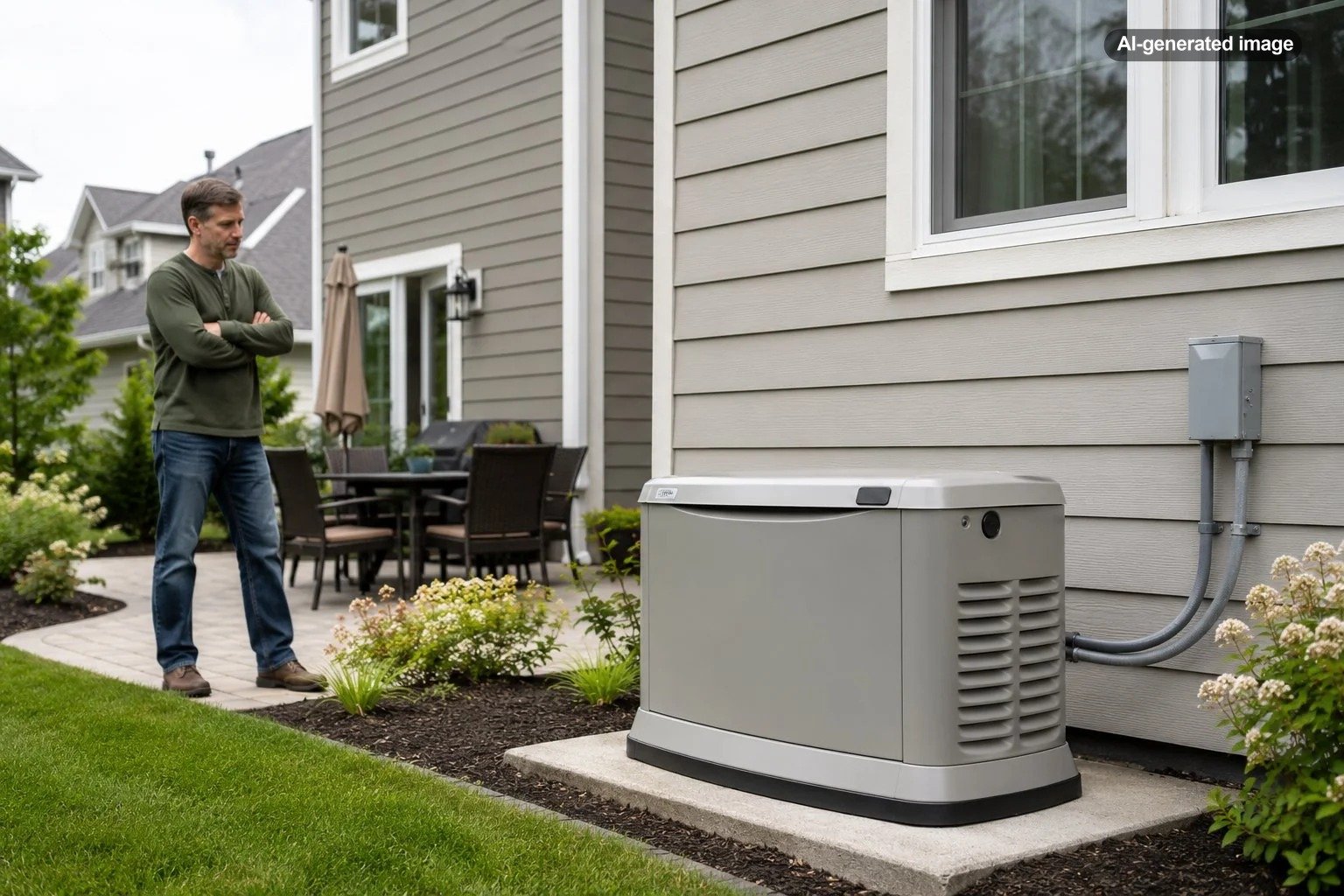
A standby system deserves serious consideration when you need automatic operation. Unlike a portable unit that must be moved, fueled, connected, and started, a properly designed standby system can detect an outage and supply approved circuits through installed transfer equipment.
That convenience may matter when:
- The home is sometimes occupied by someone who cannot safely set up portable equipment.
- You travel frequently and want refrigeration, security, pumps, or other systems protected while the house is unattended.
- An outage could disable medical or accessibility equipment.
- The property has a history of long restoration times despite infrequent failures.
- You live in an area exposed to hurricanes, ice storms, wildfires, flooding, or other events that can disrupt a larger region.
- You cannot easily relocate during an outage because of pets, mobility needs, work obligations, or limited nearby lodging.
A permanent generator may also reduce the scramble that occurs before a major storm. However, it should not be treated as effortless insurance. It still requires professional design, an appropriate fuel supply, periodic exercise, inspection, maintenance, and a safe installation location.
When a Generator May Be More Than You Need
A generator is less compelling when outages are both rare and brief, essential services remain available, and your household can comfortably adjust for a few hours. It may also be difficult to justify when you are likely to move soon, have strict neighborhood or condominium restrictions, lack an appropriate installation area, or do not want another engine and fuel system to maintain.
There are also households whose needs are mostly electronic. If your priority is keeping phones, laptops, lamps, and a router operating, a battery-based solution may be quieter and simpler. Likewise, a modest portable system may be sufficient when you only need to preserve food and run a few carefully selected loads.
The right backup system is sized around the consequences you cannot accept, not every appliance you happen to own.
Do Not Ignore Installation, Fuel, and Maintenance
A standby generator is a home system, not merely an appliance placed beside the house. Planning may involve electrical load calculations, transfer equipment, fuel availability, exhaust clearance, noise, drainage, access for service, and local requirements. Installation conditions vary, so permitting, placement, and code questions should be verified with qualified local professionals and the authority having jurisdiction.
Fuel deserves particular attention. Natural gas, propane, gasoline, and diesel each involve different storage, delivery, runtime, and maintenance considerations. A generator that technically works but cannot obtain fuel during a regional emergency is not a complete resilience plan.
Maintenance matters even when the equipment is rarely needed. Engines, batteries, fluids, filters, connections, and automatic controls can deteriorate while sitting. Follow the manufacturer’s instructions for testing and service rather than assuming an unused generator will remain ready indefinitely.
Before you decide
- List the devices and systems that are truly essential.
- Determine whether they must start automatically.
- Ask an electrician which loads can be supported safely.
- Confirm fuel availability during a prolonged regional outage.
- Evaluate placement, sound, exhaust, and service access.
- Check local permit, code, utility, HOA, and condominium requirements.
- Plan for inspection, testing, and routine maintenance.
- Keep a non-generator outage kit in case the backup system fails.
Portable Generator Safety Is Nonnegotiable
Portable fuel-powered generators create carbon monoxide, an odorless and colorless poison. The U.S. Consumer Product Safety Commission advises operating portable generators outdoors only, at least 20 feet from homes and other buildings, with exhaust directed away from windows, doors, and vents. A garage, basement, crawlspace, shed, porch, or carport is not a safe operating location, even when doors or windows are open.
Working carbon monoxide alarms should be installed on every level and outside sleeping areas. Follow the generator manufacturer’s instructions for operation in wet conditions and for electrical connections. Never improvise a connection to household wiring or attempt to energize a home through a receptacle. A qualified electrician should install any transfer equipment used to connect a generator to home circuits.
A Practical Way to Make the Decision
Begin by reviewing the longest outage you could reasonably experience, not just the average interruption. Then divide your electrical needs into three groups: essential for safety or property protection, important for comfort and work, and optional convenience.
What to do
- Inventory essential loads. Include pumps, medical equipment, refrigeration, communications, heating controls, and necessary accessibility devices.
- Estimate your tolerance. Decide whether you can manage for several hours, overnight, or multiple days without those loads.
- Compare scaled solutions. Consider an outage kit, portable battery, portable generator, home battery, essential-circuit standby system, and broader whole-home backup.
- Request a professional assessment. Ask a qualified electrician or generator professional to evaluate loads, transfer equipment, placement, fuel, and local requirements.
- Count ongoing ownership duties. Include maintenance, testing, fuel planning, battery replacement, and eventual repairs.
- Keep a secondary plan. Know where you could go and how you would protect the home if the backup equipment did not start.
For many homes with reliable utility service, a permanently installed generator is a convenience rather than a necessity. That does not make it frivolous; it simply means the decision depends heavily on budget and the value you place on uninterrupted comfort.
For a household with critical electrical needs, pumps, vulnerable occupants, or no realistic way to relocate, even one serious outage may be enough to justify automatic backup. The strongest decision is the one based on specific loads, realistic outage scenarios, safe installation, and a willingness to maintain the system after the novelty has worn off.
Frequently Asked Questions
Does a whole-house generator power everything?
Not necessarily. The supported loads depend on the generator, transfer equipment, fuel supply, electrical design, and household demand. Some systems serve selected essential circuits, while others are designed for broader use. A qualified professional should calculate the expected loads.
Can a portable generator connect directly to a home’s wiring?
Only through properly installed equipment intended for that purpose. Improvised connections can create electrocution, fire, and utility-line hazards. Have a qualified electrician specify and install the appropriate transfer equipment.
Is a battery backup better than a generator?
It can be better for quiet operation, automatic response, electronics, and households that want to avoid onsite engine exhaust. A fuel-powered generator may offer longer operation when fuel is available. The better choice depends on load size, outage duration, recharging options, and budget.
Will a generator increase a home’s value?
Some buyers may view backup power favorably, especially in outage-prone areas, but the effect on resale value varies by market, installation quality, equipment condition, and buyer priorities. It should not be purchased on the assumption that its full cost will be recovered.
Should I buy a generator solely for hurricane season?
That may be reasonable in a hurricane-exposed area, particularly when evacuation or relocation is difficult. The decision should still account for safe placement, fuel access, regional supply disruptions, maintenance, and the possibility that the generator itself could be damaged or unavailable.