
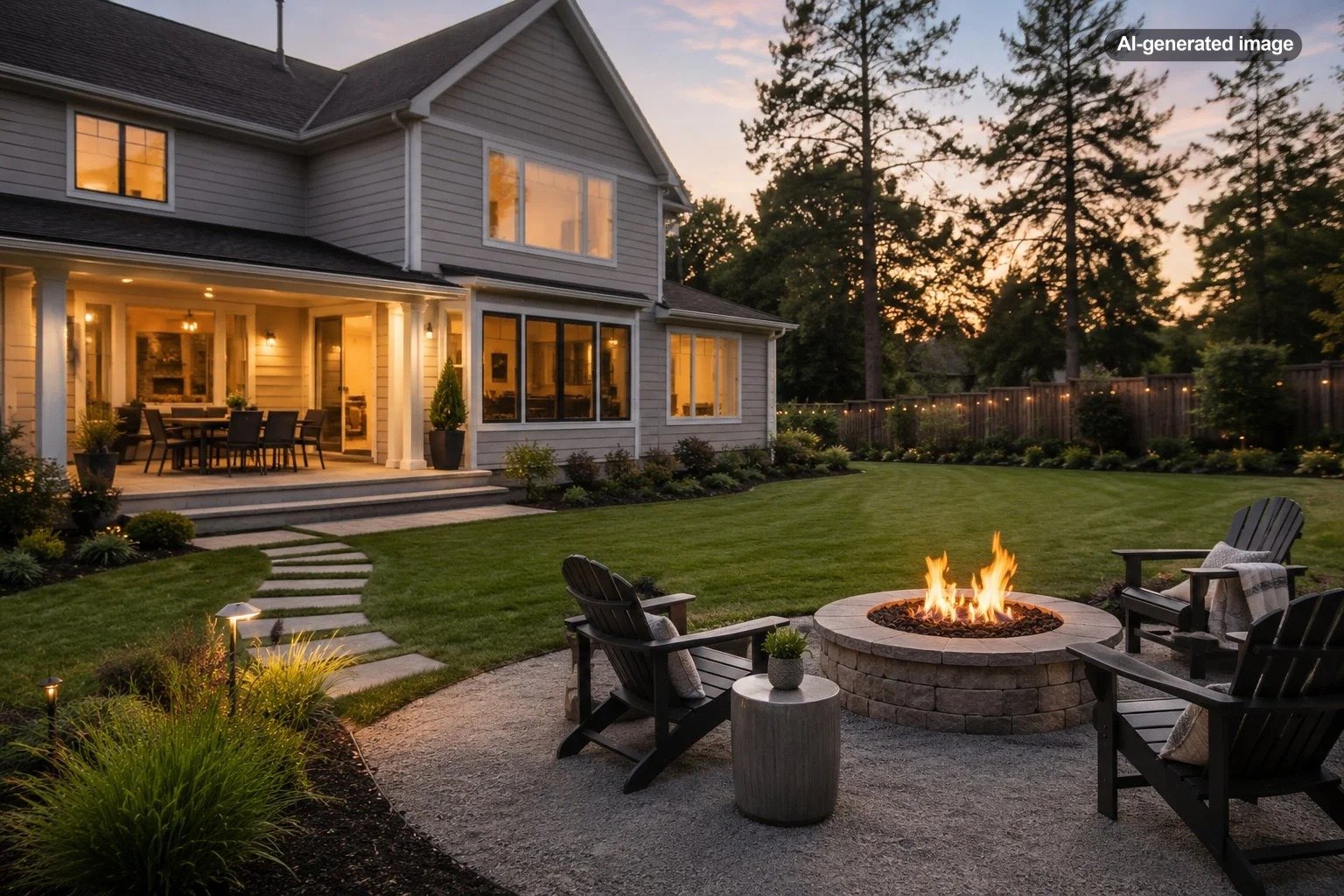
How Far Should a Fire Pit Be From the House?
For most backyard fire pits, 10 feet from the house and anything else that can burn is a useful minimum starting point. The U.S. Fire Administration recommends using fire pits, chimineas, and outdoor fireplaces outdoors at least 10 feet from a home or combustible materials, and the National Fire Protection Association gives the same 10-foot guidance for fire pits.
That does not make 10 feet a universal rule for every property. Local fire codes, the size and type of fire, manufacturer instructions, dry vegetation, wind, overhead branches, nearby fences, decks, sheds, and wildfire conditions can all call for more distance. Some regulated outdoor fires may be subject to substantially larger setbacks, so homeowners should confirm local requirements before settling on a permanent location.
Why 10 Feet Is a Starting Point, Not a Magic Number
A fire pit creates more than a circle of visible flame. Heat radiates outward, sparks and embers can rise above a wood fire, and wind can carry those embers toward siding, rooflines, dry leaves, furniture, or landscaping. A seemingly comfortable gap can therefore become inadequate when the fire grows or conditions change.
The National Fire Protection Association advises using fire pits at least 10 feet from anything that can burn and keeping them away from siding, deck railings, tents, grass, vegetation, eaves, overhanging branches, and rooflines. It also notes that larger fires require greater separation because radiant heat reaches farther.
There is an important distinction between general fire-pit safety guidance and enforceable fire-code provisions. NFPA explains that jurisdictions enforcing certain provisions of NFPA 1 may require outdoor fires to be at least 50 feet from structures, while smaller recreational fire pits may fall under different provisions or local interpretations. In practical terms, a homeowner should not assume that a nationally published 10-foot safety recommendation automatically satisfies a city, county, fire district, HOA, condo rule, or manufacturer requirement.
| Situation | What to consider |
|---|---|
| Small backyard fire pit | Use 10 feet as a minimum safety starting point, then check local and manufacturer requirements. |
| Wood-burning fire pit | Allow extra room for sparks, embers, smoke, and changing wind. |
| Large recreational fire | Greater separation may be necessary; local fire rules can classify it differently from a small fire pit. |
| Dry or wildfire-prone property | Increase separation from vegetation and combustible landscaping and observe all burn restrictions. |
| Small patio or tight yard | Do not force a fire pit into a location that lacks safe clearance; another type of outdoor feature may be more appropriate. |
Measure From More Than the Nearest Wall
When choosing a location, it is easy to measure 10 feet from the foundation and consider the job finished. The house wall is only one possible ignition point. Look upward and outward as well.
Check the distance to wood or vinyl siding, deck boards and railings, fences, pergolas, outdoor kitchens, sheds, patio umbrellas, cushions, furniture, firewood, dry grass, mulch, shrubs, and trees. Eaves and branches deserve particular attention because sparks and hot gases rise.
A spot can also be far enough from the house but still poorly chosen because a wooden fence sits just behind it. Likewise, a fire pit centered beneath a tree canopy may have generous horizontal clearance from the building while placing combustible branches directly above the flames.
Before you decide
- Measure the clearance to the house, fence, shed, deck, and other structures.
- Look above the pit for eaves, branches, pergolas, awnings, and umbrellas.
- Move firewood, cushions, dry leaves, and other combustible items farther away.
- Confirm that the surface beneath the pit is level and noncombustible.
- Check manufacturer instructions for required clearances.
- Check local fire restrictions before lighting the fire.
The Surface Under the Fire Pit Matters Too
Distance protects nearby objects, but the ground beneath the pit also needs attention. NFPA recommends placing a fire pit on level ground or a surface that will not catch fire, such as patio blocks, brick, or concrete.
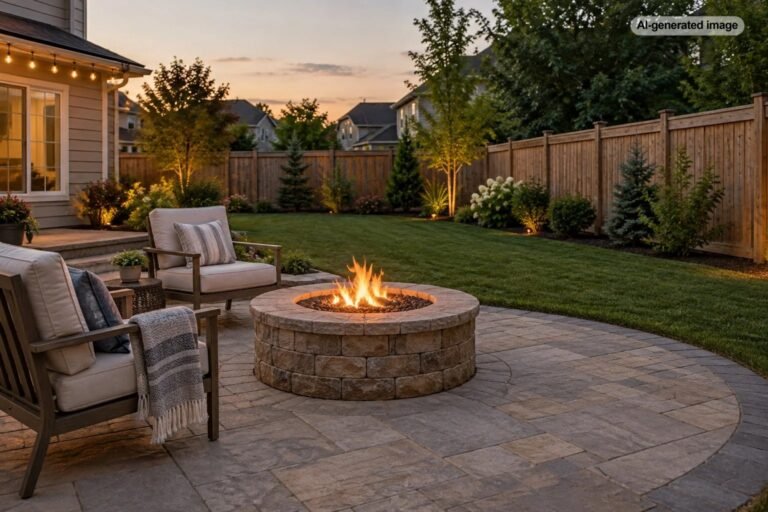
That makes an open paved patio a more straightforward setting than dry grass, combustible mulch, or a wood deck. Even when a manufacturer permits a particular installation method, follow its instructions about heat barriers, bases, clearances, and approved surfaces rather than improvising protection beneath a hot fire pit.
Portable fire pits deserve the same planning as permanent ones. Their mobility can make it tempting to place them wherever chairs happen to fit that evening. Before lighting one, reassess the entire area rather than assuming yesterday’s location is still suitable.
Wood-Burning Fire Pits Need Extra Attention to Embers
Wood fires introduce sparks and drifting embers that can travel beyond the edge of the pit. NFPA recommends a fire-pit screen to help contain sparks, embers, and ash and advises burning clean, dry, seasoned hardwood in wood-burning pits.
Keep the fire manageable rather than building flames simply because the pit can physically hold more wood. The larger the fire becomes, the farther its radiant heat can affect nearby materials. A modest fire with generous open space around it is generally easier to supervise than a tall, heavily fueled fire squeezed into a compact patio.
The U.S. Fire Administration distinguishes fire pits from campfires in its public guidance: it recommends at least 10 feet for fire pits, chimineas, and outdoor fireplaces, while campfires should be built at least 25 feet from tents, shrubs, and anything that can burn. That is another reason not to turn a small backyard fire pit into a much larger open fire.
What About Gas and Other Fuel-Burning Fire Pits?
Gas-burning fire pits may produce fewer flying embers than wood fires, but they still create flame and radiant heat. Clearance requirements can vary by model and installation, so the manufacturer’s instructions are especially important for built-in gas features, tables, and appliances installed near structures or furniture.
Fuel handling is another safety issue. The U.S. Consumer Product Safety Commission advises never using gasoline to start or restart a fire and never adding liquid fuel after attempting to ignite a fire. Use only fuel and ignition methods specifically appropriate for the appliance.
Tabletop or alcohol-burning fire products should not be treated as harmless simply because they are small. CPSC has issued warnings involving some liquid-burning tabletop fire pits because of flame-jetting and uncontrolled-fire hazards. Follow current product safety notices and the exact instructions for the product you own.
Small Yards Require Better Decisions, Not Smaller Clearances
A 10-foot minimum can be difficult on a narrow patio, townhouse yard, balcony, or compact urban lot. The answer is not to shave a few feet from every side until the pit fits. If the available location places flames close to siding, fencing, an overhang, vegetation, or a traffic path, the space may simply be unsuitable for that fire pit.
Renters and condo residents should also verify property rules before buying or using a fire feature. Building management, leases, association rules, insurance conditions, and local fire regulations can restrict open flames or particular fuel types even when the physical patio appears large enough.
Leave Room for People as Well as Fire
Placement is also about preventing burns and falls. NFPA advises keeping children and pets at least 3 feet from a fire pit and arranging chairs a safe distance from the flames. Walkways should remain clear so guests are not forced to squeeze between hot surfaces and furniture.
A fire pit should not become an obstacle between the house and the normal route across a patio. Keep hoses, tools, toys, cords, loose stones, and other trip hazards away from the immediate area. Good lighting around the seating zone also makes it easier to approach and leave the fire safely after dark.
Keep a practical way to extinguish the fire nearby. Depending on the fire-pit type and manufacturer instructions, that may include a garden hose, suitable fire extinguisher, water, sand, or another approved method. Never leave the fire unattended, and put it out completely before leaving the backyard.
How to Pick a Safer Fire-Pit Location
What to do
- Start with the house. Identify locations that provide at least 10 feet of separation.
- Check every other combustible exposure. Measure to fences, decks, sheds, vegetation, furniture, and stored materials.
- Look overhead. Eliminate locations beneath eaves, rooflines, branches, awnings, and other combustible coverings.
- Inspect the base. Favor a stable, level, noncombustible surface appropriate for the specific fire pit.
- Consider wind and vegetation. Choose an open location where drifting embers are less likely to reach dry fuels.
- Read the manual. Follow any model-specific clearance, fuel, installation, and operating requirements.
- Check local rules. Fire codes and seasonal burn restrictions can require more than general national guidance.
Frequently Asked Questions
Is 10 feet far enough for every fire pit?
No. Ten feet is widely used as a general minimum guideline for fire pits, but the correct distance can be greater depending on the appliance, fire size, nearby combustible materials, weather, vegetation, and local requirements.
Can I put a fire pit under a covered patio?
Do not assume a covered patio is suitable. Overhead combustible materials can be exposed to heat, flame, and smoke, and individual fire pits have specific clearance and installation requirements. Follow the manufacturer’s instructions and applicable local rules.
Can a fire pit go on a wood deck?
Do not place a fire pit on a combustible deck unless the specific product and installation are expressly permitted for that use and all manufacturer requirements are followed. A level noncombustible location away from the house and other combustible materials is the more straightforward arrangement.
Should a fire pit be farther away on windy days?
Distance alone cannot make a windy day safe. Wind can carry sparks and embers beyond the normal fire-pit area. If conditions create an unsafe fire or wildfire risk, do not light the pit, and follow any local burn restrictions or warnings.
What is the best distance if I have plenty of room?
There is little reason to crowd a fire pit against the minimum when a yard provides more space. Start by satisfying the manufacturer’s instructions and local rules, then choose additional separation from the house, vegetation, and other combustible materials when the layout allows it. Comfortable seating and a clear path around the fire should fit without compromising those clearances.
The Bottom Line
For a typical backyard fire pit, think of 10 feet from the house and anything combustible as the beginning of the placement decision, not permission to ignore everything beyond that measurement. The safest spot also needs appropriate overhead clearance, a stable noncombustible base, manageable vegetation, room for people to circulate, and compliance with the manufacturer’s instructions and local fire rules.
If your yard cannot provide those conditions, moving the pit closer is not the right compromise. A different location or a different outdoor feature is the more sensible choice. Fire-pit placement works best when generous space, careful supervision, and good housekeeping all support the same goal: keeping the fire exactly where it belongs.