
Why Does My Deadbolt Become Hard to Turn?
A deadbolt usually becomes hard to turn because the bolt is rubbing against the strike plate or the inside of the bolt pocket. Door sag, seasonal swelling, shifting weather stripping, loose hinges, and a slightly misplaced strike can all create that pressure. Dirt or wear inside the lock can also cause stiffness, but alignment is the more likely culprit when the deadbolt works smoothly with the door open and resists only when the door is closed.
The useful first step is not to force the key or thumb turn. Instead, compare how the lock behaves with the door open and closed. That simple test separates a door-fit problem from a problem inside the deadbolt and can spare the key from becoming the weakest link in the investigation.
Start with the open-door test
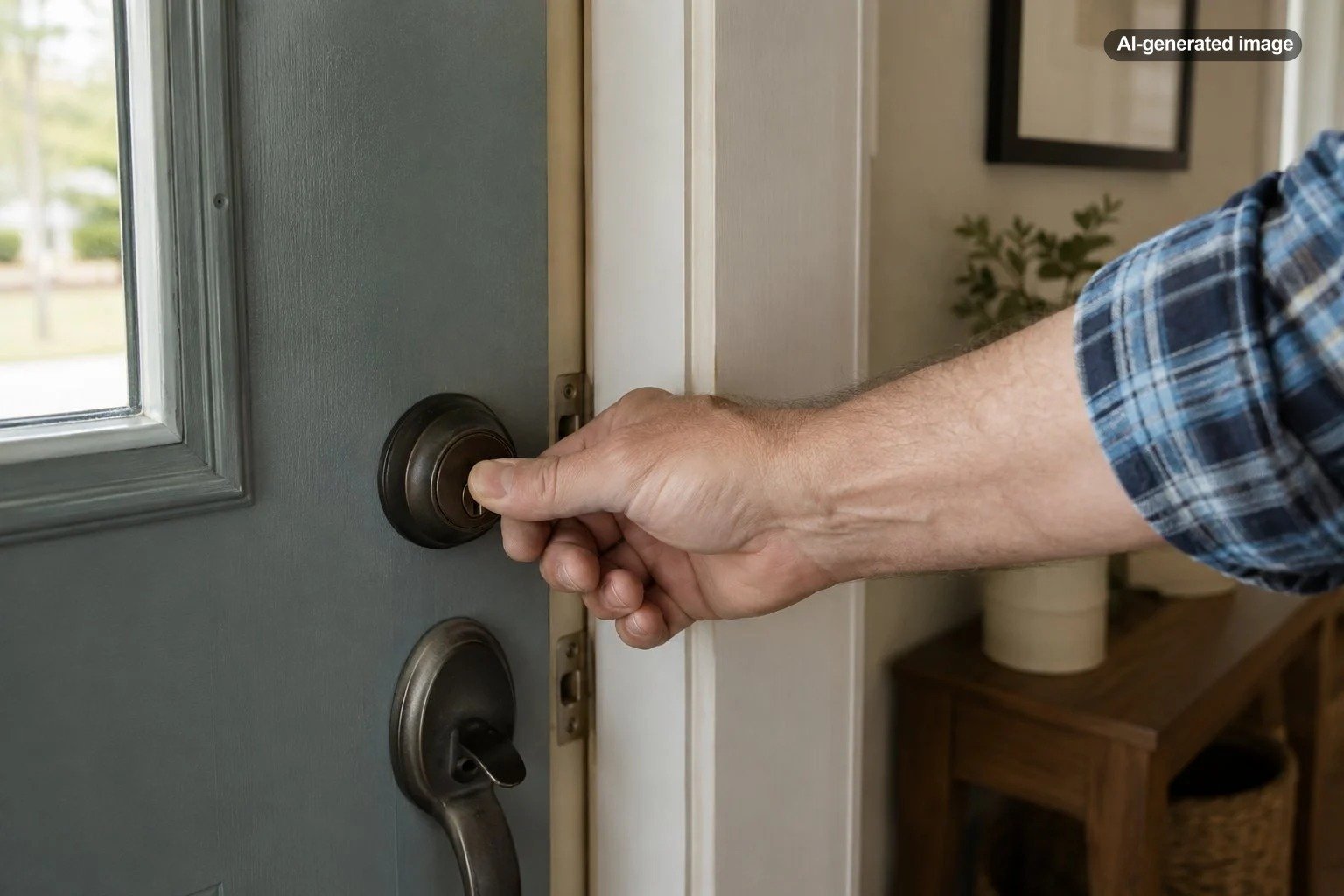
Open the door and operate the deadbolt several times using both the interior thumb turn and the key from outside. The bolt should extend and retract without scraping, hesitation, or an unusual amount of pressure. Keep fingers clear of the door edge while moving the bolt.
If the action is smooth while the door is open, the deadbolt mechanism can move freely and the resistance is being introduced when the door meets the frame. Close the door gently and try again without pushing, pulling, or lifting it. Then repeat while applying light pressure in each direction. A lock that becomes easier when the door is pulled toward you, pushed inward, or lifted is giving a useful clue about where the bolt is binding.
If the deadbolt is stiff in both positions, inspect the hardware and key before changing the strike. Try a spare key that is not bent or badly worn. On a newly installed lock, mounting screws that are unevenly tightened can distort or bind the assembly. Follow the lock manufacturer’s installation instructions rather than loosening parts at random.
A sensible diagnostic order
- Test the deadbolt several times with the door open.
- Close the door and note whether pushing, pulling, or lifting changes the resistance.
- Check hinge screws and look for uneven gaps around the door.
- Inspect the strike for fresh rub marks and confirm that the bolt pocket is clear.
- Check the key, mounting screws, and lock operation again with the door open.
- Stop if the key twists, the cylinder moves, or the mechanism grinds.
Why the door and strike fall out of alignment
A door is a moving object attached to a frame by a few hinges, so small changes matter. Loose hinge screws can allow the latch side to drop. Wood doors and frames may expand or contract as temperature and moisture change. A house can settle, and thick replacement weather stripping can hold the door in a slightly different position. None of these changes needs to be dramatic to make a precisely fitted bolt rub.
Inspect the reveal, the narrow gap around the door. A visibly tighter gap at one corner, a door that brushes the jamb, or a latch that no longer meets its strike cleanly may point to sag or movement. Tightening a loose hinge screw of the correct size may restore alignment, but a stripped hole, split wood, bent hinge, or shifting frame calls for a more deliberate repair.
How to locate the exact point of contact
Look at the deadbolt and strike plate under good light. Fresh shiny marks, scratched finish, or fine metal dust can reveal where the bolt is touching. You can also apply a small amount of removable chalk to the end and edges of the bolt, close the door, operate the lock gently, and inspect the strike for a transfer mark. Wipe the chalk away afterward and avoid products that could stain a porous or delicate finish.
The direction of the mark matters. Contact at the bottom of the strike often accompanies a sagging door; contact at the side may reflect a door that is not closing deeply enough or is being pushed out by weather stripping. Resistance at the back of the pocket can mean the opening is not deep enough or contains debris. Manufacturer guidance for common residential deadbolts often calls for a bolt pocket at least 1 inch deep, but the instructions for the installed lock should control.
Do not enlarge a strike opening until you understand why the alignment changed. Filing or chiseling away material may hide a loose-hinge problem, reduce the strike’s support, damage the frame, or leave an untidy opening that still binds in another season. A minor strike adjustment may be appropriate when the door is sound and the misalignment is small; significant sag, frame damage, or recurring movement deserves professional evaluation.
When the stiffness is inside the deadbolt
A lock that remains hard to turn with the door open shifts attention to the hardware itself. A dirty keyway, worn key, corroded components, misaligned exterior and interior assemblies, or internal wear can all add friction. On electronic deadbolts, binding may also drain batteries quickly because the motor has to work against resistance; correct the mechanical bind rather than treating frequent battery replacement as the whole repair.
First, clean the key and try an undamaged spare. Check whether the exterior cylinder or interior trim moves when the key turns. Loose movement can indicate failed fasteners or damaged parts, while stiffness that appeared immediately after installation can suggest that the assembly is not centered or its screws are too tight. Consult the exact manual before adjusting the lock because designs and approved maintenance methods vary.
If the manufacturer permits lubrication, use only the type and application method specified for that model. A lock lubricant formulated for door hardware may leave less residue than a general-purpose oily spray. More is not better: excess product can collect debris, migrate onto the door finish, or complicate later service. Never mix products in the keyway without knowing they are compatible.
What not to do
- Do not use the key as a lever. Forcing it can bend or break the key and may damage the cylinder.
- Do not repeatedly slam the door. Impact does not correct alignment and can worsen loose hardware or frame damage.
- Do not assume lubricant will fix rubbing. A bolt striking metal or wood needs an alignment correction.
- Do not remove large amounts of frame material casually. The strike and surrounding frame are part of the entry’s physical security.
- Do not ignore a sudden change after an impact. Damage following a forced-entry attempt or a hard blow merits prompt professional inspection.
Simple ways to prevent a repeat
Operate the deadbolt occasionally from both sides and notice changes before it becomes difficult to secure. Keep the bolt and strike pocket free of paint buildup and debris. Check for loose hinge or trim screws during routine door care, and replace worn weather stripping with a profile that seals without pushing the door out of position.
Seasonal trouble deserves seasonal observation. If a wood door swells only during humid weather, a door professional can assess clearances and finish condition without removing more material than necessary. If the frame shifts repeatedly, the door will not stay square, or cracks appear nearby, seek an appropriate building professional rather than treating each new rub mark as an isolated lock problem.
A properly operating deadbolt should not require a special push, lift, or practiced wrist motion. The open-door test, followed by a careful look at hinges and contact marks, usually reveals whether the correction belongs at the door, the strike, or the lock itself.
Frequently asked questions
Why is my deadbolt hard to turn only when it is cold or humid?
Temperature and moisture can change the fit of a wood door and frame, while weather stripping may stiffen or press differently. Test the lock with the door open and inspect where the bolt meets the strike before adjusting anything.
Can I move the strike plate myself?
A small adjustment may be manageable when the door and frame are sound and the contact point is clear. Stop if screw holes are stripped, the frame is split, the door sags significantly, or the strike reinforcement would be compromised.
Why does pulling the door make the deadbolt turn?
Pulling changes the bolt’s position relative to the strike. If that releases the bind, weather-stripping pressure, hinge movement, or strike alignment is likely involved.
Should I replace a stiff deadbolt?
Not automatically. Correct door alignment or installation tension first when those are the cause. Replacement becomes more sensible when the lock has damaged, loose, corroded, or persistently rough internal parts, or when a locksmith determines it is no longer dependable.