Why Are My Towels Developing Small Holes?
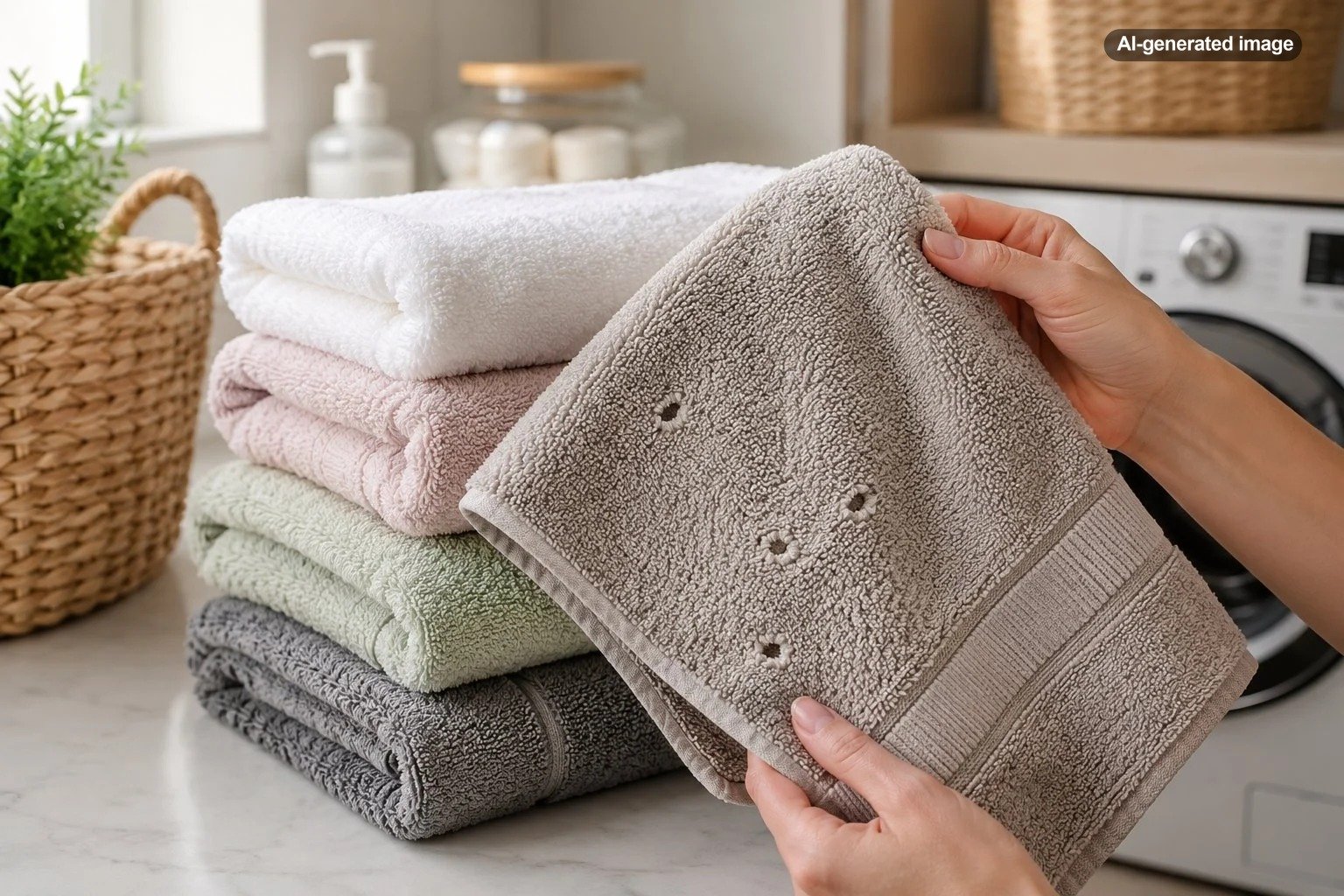
Small holes in towels usually develop because individual loops and fibers have been snagged, abraded, weakened, or repeatedly stressed. The culprit may be as ordinary as a zipper in the wash, an overly aggressive laundry routine, a rough edge inside the washer or dryer, or simply a towel that has reached the point where worn fibers can no longer withstand regular use.
The pattern matters. One isolated hole often points to a snag or localized damage, while similar holes appearing across several towels can suggest something in the laundry process is repeatedly catching or weakening the fabric.
Why towels are especially prone to small holes
Most bath towels have a looped pile designed to increase surface area and absorb water. Those loops are useful, but they also give small hooks, rough edges, fasteners, and damaged machine parts something to catch.
A snag does not always become a visible hole immediately. A pulled loop can weaken neighboring threads, and repeated washing and drying may gradually enlarge the damaged spot. This is one reason a towel can appear perfectly serviceable one week and suddenly show a small opening the next.
The location of the damage offers clues. Holes concentrated near hems and edges may reflect normal wear or weakened stitching. Random holes in the middle of several towels deserve a closer look at what is sharing the laundry load and what the towels contact inside the machines.
Check for zippers, hooks, and other snagging hazards
One of the simplest explanations is mechanical snagging. Towels washed with clothing that has exposed zippers, metal hooks, rough fasteners, decorative hardware, or damaged closures can catch on the towel pile. Even a small sharp edge can pull a loop far enough to weaken the surrounding weave.
For routine towel loads, separating heavily textured or hardware-covered garments is a practical first step. Close zippers and fasteners before washing, and avoid mixing towels with items that have obvious hooks or protruding hardware.
Inspect the washer for rough spots
If holes keep appearing, run your hand carefully over accessible surfaces inside the empty washer drum or basket. You are looking for an unusual rough edge, damaged opening, burr, or protruding area that could catch fabric. Do not reach into areas that require disassembly, and do not attempt to repair internal components unless the machine’s instructions specifically describe a homeowner-serviceable procedure.
Also pay attention to when the problem started. Damage that begins suddenly across multiple loads, especially after years without trouble, can point toward a change in the appliance, a new laundry item, or a change in your washing routine.
Front-loading and top-loading machines handle fabrics differently, so there is no single snag point that applies to every washer. The useful question is whether you can identify a repeatable source of abrasion or catching where the towels contact the machine.
Do the same inspection inside the dryer
The dryer can be another source of repeated abrasion. Look for visibly damaged areas or surfaces where fabric might catch as the drum turns. A problem is more suspicious when towels leave the washer intact but emerge from the dryer with new pulls or holes.
Overdrying can also contribute to general fiber wear. Towels spend a great deal of time tumbling against one another and the drum, and repeatedly extending drying cycles well beyond the point when the load is dry adds unnecessary mechanical stress.
Consider whether your laundry routine is weakening the fibers
Not every hole begins with a sharp object. Towels gradually lose strength as fibers endure washing, drying, body oils, cleaning products, and ordinary friction. A harsh routine can accelerate that aging process.
Using more detergent than needed does not necessarily make towels cleaner, and heavy product buildup can make laundry harder to rinse thoroughly. Bleaching more frequently or aggressively than the towel’s care label allows can also shorten the useful life of some fibers. The safest baseline is to follow the towel’s care label and the detergent manufacturer’s dosing directions rather than assuming that hotter water or more product will produce a better result.
High heat is another variable worth examining. Drying instructions vary by fabric and construction, so the care label should take priority. If your towels can be dried satisfactorily at a less aggressive setting that complies with their care instructions, there may be little benefit in exposing them to more heat than necessary.
Look at how old and worn the towels are
Towels are working textiles. They are repeatedly soaked, wrung, rubbed, washed, spun, heated, folded, and used again. Eventually, even a towel that has been cared for reasonably well will develop thin areas, loose loops, frayed edges, or small holes.
Before blaming the washing machine, hold the towel up to a bright light and examine the fabric around the hole. If a broad area looks noticeably thinner than the rest of the towel, the opening may simply be the first visible failure in already worn fabric. If the surrounding material still looks dense and healthy, a localized snag becomes more plausible.
The most useful clue is not the hole itself, but the pattern of damage around it and across the rest of your laundry.
Do not cut pulled loops carelessly
A single pulled loop can be tempting to tug or trim immediately. Avoid pulling it farther, since that can enlarge the damaged area. If the care instructions or manufacturer guidance for the towel provide a method for dealing with pulled loops, follow that method rather than trying to unravel or resew the pile blindly.
Minor cosmetic damage does not always mean the towel needs to be discarded. A towel with a small stable flaw may remain perfectly useful for ordinary household tasks, although continued unraveling or rapidly expanding holes suggest the fabric is deteriorating.
What to do
- Set aside the damaged towels so you can compare where the holes appear.
- Check recent laundry loads for exposed zippers, hooks, hardware, or rough items.
- Inspect accessible washer and dryer surfaces for obvious rough or damaged areas.
- Review the towel care labels and make sure your wash temperature, bleach use, and drying settings are appropriate.
- Look for thinning fabric, worn hems, and loose loops that indicate general age rather than a single snag.
- Wash one or two unaffected towels separately from snag-prone items and watch for new damage over the next several cycles.
When the washing machine or dryer deserves professional attention
If several otherwise sound towels, sheets, or garments begin developing unexplained tears or holes, and you cannot identify a snagging item in the laundry, stop treating the damage as random. An appliance with a damaged component may need inspection.
How to reduce the chance of future towel holes
Prevention is mostly about reducing unnecessary friction and snagging. Wash towels with compatible laundry, secure zippers and fasteners, avoid overloading the machine, and follow the care instructions for detergent, bleach, water temperature, and drying.
It also helps to notice damage early. A pulled loop, frayed hem, or unusually thin area is easier to manage before it becomes a larger opening. When several towels begin failing in the same unusual way, compare the location and shape of the damage rather than assuming they all happened to wear out simultaneously.
Frequently asked questions
Why do my towels get holes after washing?
The washing process may reveal damage that began with a snag, weakened fibers, or normal wear. If holes repeatedly appear after laundering, check other items in the load and inspect accessible washer surfaces for anything that might catch fabric.
Can too much bleach cause holes in towels?
Improper bleach use can damage some fabrics. Whether bleach is appropriate, and how much should be used, depends on the towel’s care instructions and the bleach product directions. More is not better.
Why are several towels developing holes in the same place?
A repeated pattern makes a shared cause more likely. Compare how the towels are folded, stored, washed, and dried, and inspect the washer and dryer for a consistent contact point that could be causing abrasion or snagging.
Should I replace a towel with a small hole?
Not necessarily. A small stable hole may be mostly cosmetic, but widespread thinning, unraveling, or rapidly growing damage indicates that the towel is nearing the end of its useful life. For household use, an older towel can often be reassigned to cleaning or other less appearance-sensitive tasks.
What if only my newest towels are getting holes?
Compare their construction, care labels, and wash history with your older towels. Different towel fabrics and weaves can respond differently to the same laundry routine, so the fact that older towels survived a particular routine does not automatically mean that routine is suitable for every new towel.