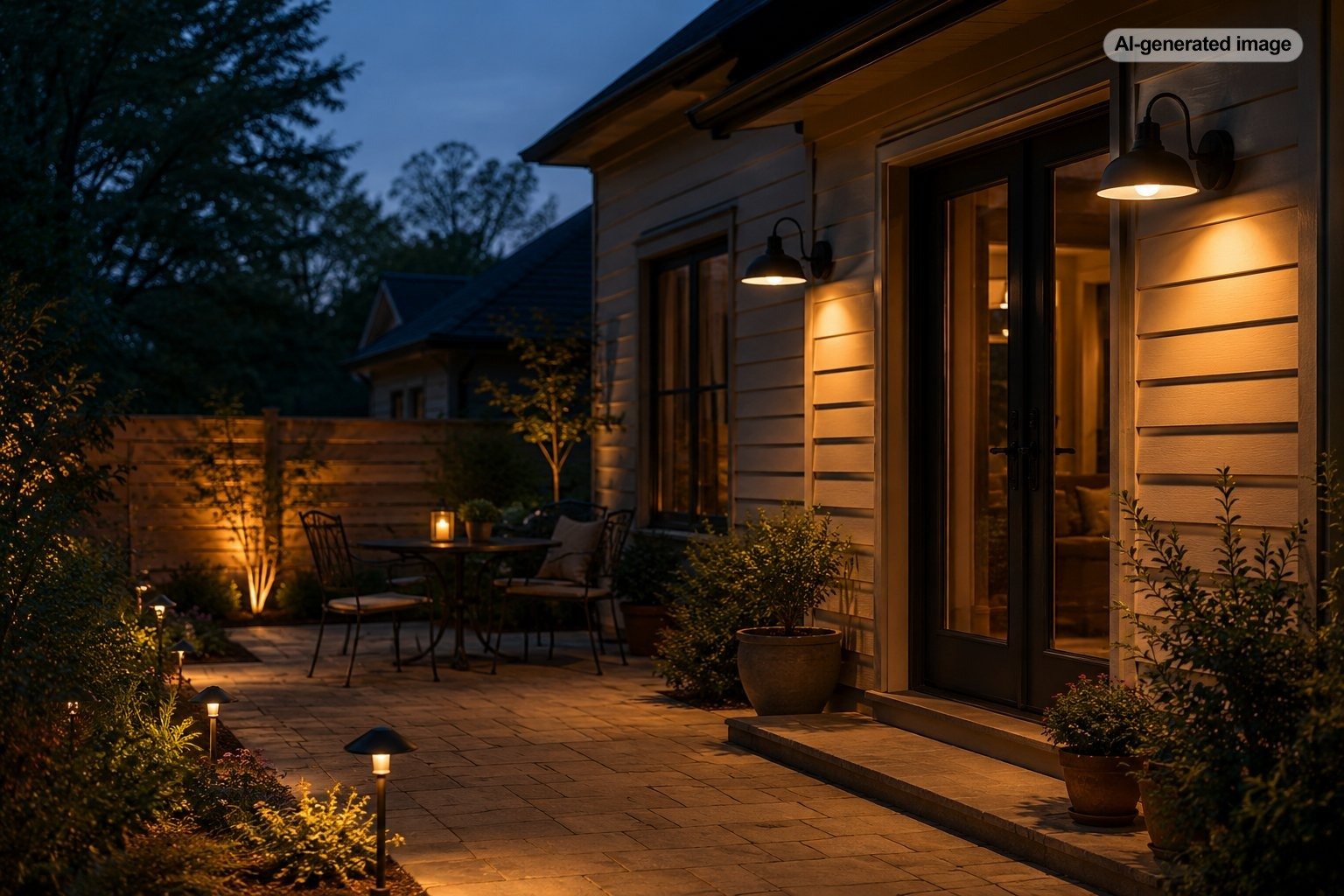
How to Choose Outdoor Lighting That Does Not Attract Bugs
No outdoor light can guarantee a completely bug-free evening. However, you can make a porch, patio, balcony, or entryway considerably less appealing to flying insects by choosing warmer light, limiting brightness, directing the beam carefully, and turning the fixture off when it is not needed.
The most practical starting point is a warm or amber LED rather than a cool white, daylight, blue, or ultraviolet-rich source. Then look beyond the bulb: a dim, shielded fixture used for a few hours will usually create less insect activity than an exposed, glaring light left on all night.
Start with warmer light, not cool daylight
Many flying insects respond strongly to shorter wavelengths of light, including ultraviolet, violet, and blue portions of the spectrum. That is one reason cool white and daylight-style lamps often become lively gathering places after sunset.
Warmer light contains less of that blue-heavy appearance. On retail packaging, look for terms such as warm white, soft white, amber, or yellow. When a correlated color temperature is listed, a lower Kelvin number indicates warmer-looking light.
A conventional warm white LED around 2700K is a versatile choice for doors, pathways, and dining areas. For locations where insect reduction matters more than accurate color rendering, an amber or yellow LED may be more effective. The tradeoff is that food, flowers, upholstery, and painted surfaces can look more golden and less true to color.
| Light appearance | Likely insect attraction | Best use | Main tradeoff |
|---|---|---|---|
| Amber or yellow | Generally lowest | Porches, utility doors, bug-prone corners | Noticeable color shift |
| Warm white | Generally lower | Patio dining, entries, everyday exterior lighting | May attract more insects than amber |
| Neutral white | Moderate | Tasks needing clearer color distinction | Less restful and potentially more attractive to bugs |
| Cool white or daylight | Generally higher | Limited task use when necessary | Can feel harsh and draw more insect activity |
| Ultraviolet or black light | Very attractive to many insects | Specialized applications, not casual patio lighting | Actively draws insects toward the area |
Use less brightness than you think you need
Color matters, but intensity matters too. A very bright warm light can still create a glowing beacon, especially in an otherwise dark yard. The goal is not to make the exterior look like an indoor room without walls. It is to provide enough illumination for steps, locks, pathways, cooking, or conversation.
Choose the lowest useful lumen output for the location. A front door may need a modest pool of light around the handle and threshold, while a grill or outdoor counter may need stronger task lighting aimed directly at the work surface. Flooding the entire yard with one powerful fixture often creates glare, deep shadows, and a larger insect-attracting zone.
The most bug-friendly outdoor light is the one that illuminates the task without illuminating the entire night.
Choose fixtures that direct light downward
An exposed bulb sends light in nearly every direction, making it visible from farther away. A shielded fixture contains the source and directs illumination where people actually need it. Look for sconces, step lights, path lights, and overhead fixtures with solid tops, opaque sides, recessed bulbs, or downward-facing shades.
For a patio, several low-output fixtures usually work better than one bare, high-output bulb. Downlights can define the edge of a seating area, while a focused task light can serve the grill or serving station. This layered arrangement improves visibility without creating a single brilliant target over the table.
Move the brightest light away from where people sit
Fixture placement can be just as important as bulb selection. A light directly above a dining table concentrates insects exactly where no one wants them. When possible, place brighter illumination a short distance away and use softer, shielded light near seating.
For example, a warm downlight near the edge of a patio can provide orientation, while subtle step lights handle circulation around chairs and doors. The brighter fixture may still attract some insects, but it draws activity away from faces, food, and open doorways.
Add timers, motion sensors, or smart controls
The longer a light remains on, the longer it can attract and disrupt insects. Controls reduce unnecessary operating time without asking the household to remember every switch.
- Motion sensors work well at side doors, driveways, and utility areas where continuous light is unnecessary.
- Timers can switch decorative and pathway lighting off after guests leave or household activity ends.
- Dimmers let you use brighter light for cleanup and softer light during conversation.
- Smart controls can group outdoor fixtures into practical scenes, provided the devices and installation are appropriate for exterior use.
Check that bulbs, fixtures, controls, and enclosures are rated for their actual location. A covered porch and an exposed garden wall do not present the same moisture conditions. Follow the fixture and control manufacturers’ compatibility and installation instructions, and use a qualified electrician when wiring, mounting, or circuit conditions are uncertain.
Do not expect a yellow bulb to solve every bug problem
Yellow and amber lights are often marketed as bug lights, but the name can sound more absolute than the result. These bulbs do not repel insects or create an invisible barrier. They are simply less attractive to many insects than blue-rich or ultraviolet light.
Different insect species respond differently, and lighting is only one influence. Standing water, flowering plants, damp organic material, open trash containers, clogged gutters, and nearby vegetation can all affect activity around a home. Mosquitoes, in particular, may be responding more to people, moisture, and breeding habitat than to a porch bulb alone.
Match the lighting strategy to the space
Front porch and entry door
Use a warm, shielded sconce that lights the lock, threshold, and steps without shining directly outward. A motion control can reduce the time insects gather near the door and may also limit the number that slip inside when it opens.
Patio dining area
Favor multiple dim, warm fixtures instead of a bright central bulb. Keep the brightest task light near the grill, buffet, or perimeter rather than directly above diners. Amber accent lighting can work well in especially buggy locations, but test the appearance before committing to it throughout the space.
Pathways and garden beds
Select low, shielded fixtures that illuminate walking surfaces. Avoid aiming uplights through foliage unless the visual effect is important enough to justify the additional light. Garden lighting near flowers can interfere with nocturnal insects, so use it selectively and turn it off after the area is no longer occupied.
Garage, driveway, and side yard
These areas may need broader illumination for short periods. Motion-activated, downward-facing fixtures can provide useful visibility without operating continuously. Adjust the sensor and aim so passing traffic, branches, or small animals do not trigger the light all night.
Before you decide
- Choose warm white, amber, or yellow rather than cool white or daylight.
- Prefer approximately 2700K or lower when the color temperature is listed.
- Use the lowest brightness that safely serves the task.
- Select shielded fixtures that direct light downward.
- Keep bright sources away from seating, food, and frequently opened doors.
- Add a timer, dimmer, or motion sensor when practical.
- Confirm that every component is rated for the intended outdoor exposure.
Common mistakes that keep attracting insects
- Buying by wattage alone: Modern bulbs vary widely, so compare light output and color temperature rather than assuming a familiar wattage label predicts the result.
- Choosing the brightest fixture available: More light is not automatically safer or more attractive. Excessive brightness can create glare and make darker areas harder to see.
- Installing clear fixtures with visible bulbs: The bare source can be seen from more directions and may produce uncomfortable glare.
- Leaving decorative lights on until morning: Timers make it easy to preserve the evening atmosphere without lighting an empty patio for hours.
- Placing light directly over food: Move illumination to the perimeter or aim it toward the tabletop from a shielded position.
- Ignoring the rest of the yard: Reducing standing water, cleaning gutters, managing waste, and maintaining screens may matter as much as changing a bulb.
Frequently asked questions
What color porch light attracts the fewest bugs?
Amber and yellow light are generally among the least attractive options for many flying insects. Warm white light is often a better compromise when you want a comfortable appearance and more natural-looking colors.
Are LED lights better than incandescent bulbs for avoiding insects?
The light spectrum, brightness, shielding, and operating time matter more than the LED label by itself. A warm or amber LED can be a good choice, while a bright, cool white LED may still attract substantial insect activity.
Will a red outdoor light attract fewer insects?
Longer-wavelength red light may be less visible to many insects, but it can distort colors and provide poor general-purpose visibility. Amber or very warm white is usually easier to live with around a home.
Should outdoor lights stay on all night for security?
Continuous brightness is not the only approach. Well-placed, shielded lighting combined with motion activation or scheduled controls can provide illumination when it is useful while reducing glare, energy use, and insect attraction. Security needs vary, so lighting should be considered alongside locks, sightlines, cameras, and other measures.
Can outdoor lighting eliminate mosquitoes?
No. Changing the light may reduce some insect activity near a fixture, but mosquitoes are influenced by several other cues and nearby breeding conditions. Remove standing water and use appropriate screens, fans, clothing, or locally recommended pest-management measures when mosquitoes remain a problem.
The best outdoor lighting plan is not a single magic bulb. It is a combination of warm color, modest brightness, careful placement, downward shielding, and limited operating time. That approach creates a calmer evening setting for people while making the porch far less interesting to the winged evening crowd.