How Long Will a Refrigerator Stay Cold Without Power?
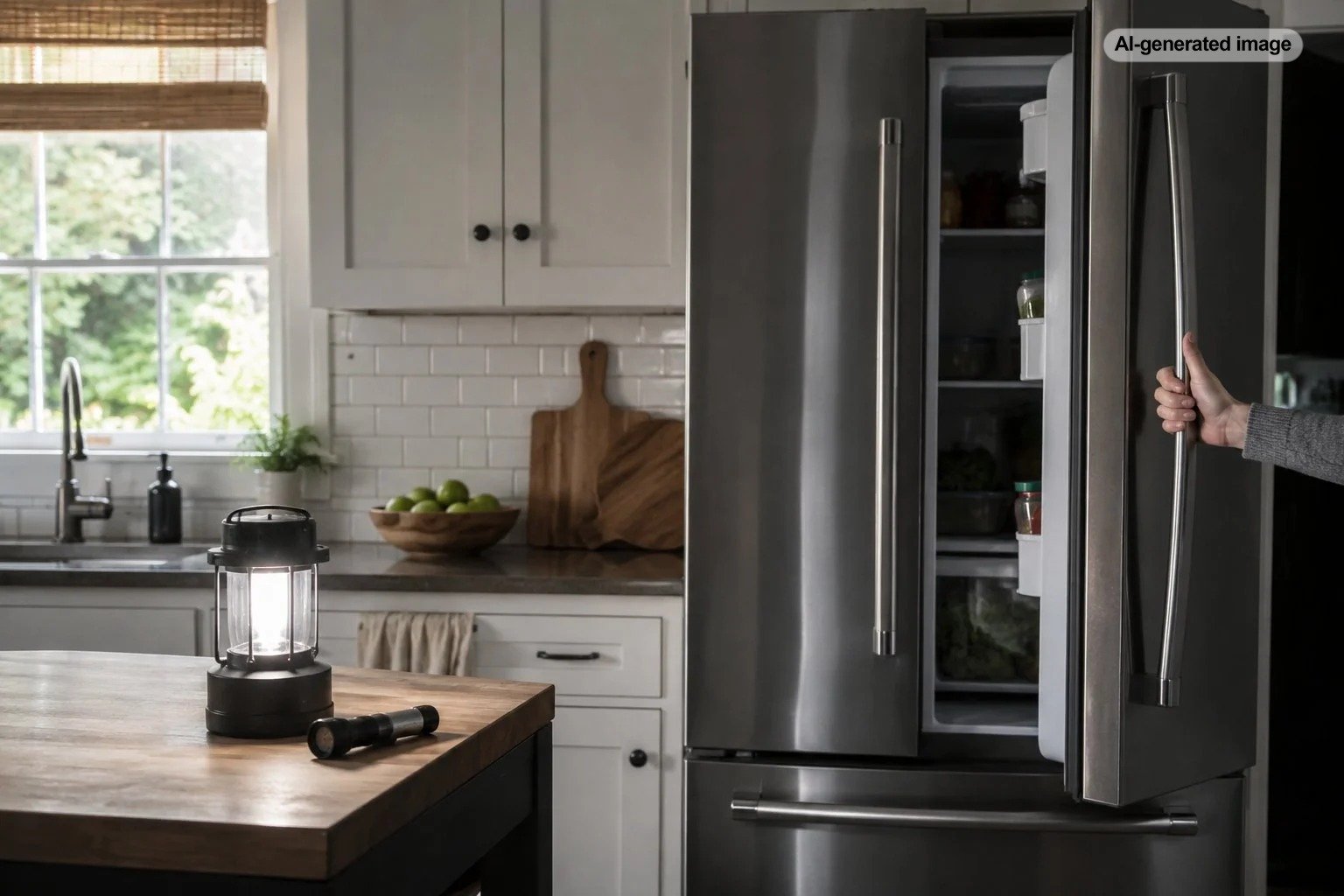
A refrigerator will generally keep food safely cold for about four hours during a power outage, provided the door stays closed. That four-hour window is the key number to remember, but it does not mean every item automatically becomes unsafe at exactly four hours. What matters most is how warm the food becomes, how long it remains above a safe temperature, and whether you can verify its temperature after power returns.
The best strategy is wonderfully unexciting: keep the refrigerator closed. Every unnecessary peek lets cold air escape and shortens the time your food has before temperatures begin climbing.
Why the four-hour rule matters
Refrigerators are designed to keep food at 40 F or below. Once the electricity stops, the insulated cabinet slows the warming process, but it cannot stop it indefinitely. According to the U.S. Food and Drug Administration and FoodSafety.gov, an unopened refrigerator can generally maintain safe temperatures for approximately four hours.
That estimate assumes you are not repeatedly opening the door. Opening the refrigerator to check whether things still feel cold can work against you because the cold air that escapes is replaced by warmer room air.
During an outage, a closed refrigerator door is one of the most useful food-safety tools you have.
What should you do as soon as the power goes out?
Start by noting the approximate time the outage began. Then leave both the refrigerator and freezer closed unless you genuinely need something. If you already have appliance thermometers inside, resist the temptation to keep checking them through an open door.
What to do
- Write down when the power went out.
- Keep the refrigerator and freezer doors closed.
- If an extended outage appears likely, prepare a cooler with ice or frozen gel packs.
- Move vulnerable refrigerated foods to the cooler before they become too warm if you can keep the cooler at 40 F or below.
- Check temperatures when power returns before deciding what to keep.
If you know in advance that a storm or planned utility interruption is possible, freezing containers of water and gel packs can give you extra cold storage. A refrigerator thermometer and freezer thermometer also make post-outage decisions much less dependent on guesswork.
Which foods need the most attention?
Perishable foods deserve priority because they require consistent refrigeration. These include meat, poultry, seafood, milk, eggs, leftovers, cooked foods, and many opened dairy products. Precut produce and prepared salads can also require refrigeration.
Other foods are more forgiving. Whole uncut fruits and vegetables, many condiments, unopened shelf-stable products, and foods that do not normally require refrigeration may remain usable. The exact answer depends on the food, which is why FoodSafety.gov publishes item-by-item guidance for deciding what to save and what to discard after an outage.
What happens after the four-hour mark?
If the outage exceeds four hours, do not assume everything in the refrigerator is automatically ruined, but do become much more careful with perishables. FDA guidance says refrigerated perishable foods that have been above 40 F for four hours or more should be discarded.
A food thermometer is helpful here. If you can establish that food remained properly chilled, you have more information than someone who simply knows that the electricity was off for a certain number of hours. If you cannot establish a safe temperature history, be conservative with meat, poultry, seafood, eggs, milk, leftovers, and similar foods.
Do not assume thoroughly cooking questionable food later will necessarily make it appropriate to keep. Food that has spent too much time at unsafe temperatures may present risks that ordinary reheating does not erase.
How long does a freezer stay cold without power?
The freezer gives you substantially more time. If its door stays shut, a full freezer can maintain its temperature for approximately 48 hours. A freezer that is only half full generally maintains temperature for approximately 24 hours.
A fuller freezer performs better because the mass of frozen food helps keep neighboring items cold. If power has returned and frozen food still contains ice crystals or measures 40 F or below, federal guidance says it can generally be refrozen, although its texture or quality may decline.
| Appliance | Approximate cold-holding time | Important condition |
|---|---|---|
| Refrigerator | About 4 hours | Door remains closed |
| Full freezer | About 48 hours | Door remains closed |
| Half-full freezer | About 24 hours | Door remains closed |
Should you move food into a cooler?
If you expect the outage to last longer than four hours, a properly chilled cooler can extend your options. Use ice, block ice, or frozen gel packs and keep the cooler at 40 F or below. Pack frequently needed items together so you can avoid repeatedly opening your main refrigerator.
Timing matters. Moving food into a warm cooler after it has already spent hours warming does not reset the clock. The objective is to maintain a safe temperature continuously.
What should you check when the power comes back?
First, check the refrigerator thermometer if you have one. Then evaluate perishable foods based on their temperature and how long the outage lasted. If there is uncertainty about whether a highly perishable food stayed safely cold, do not rely on tasting it.
For the freezer, look for ice crystals and use a food thermometer when possible. Frozen foods that still contain ice crystals or remain at 40 F or below can generally be refrozen or cooked, though refreezing may affect quality.
It is also worth checking that the refrigerator actually resumes cooling. After a major outage or electrical event, confirm that interior temperatures are moving back toward 40 F or below rather than assuming that lights inside the appliance mean normal refrigeration has returned.
How can you prepare your refrigerator for future outages?
A small amount of preparation makes the next outage easier to manage. Keep appliance thermometers in both the refrigerator and freezer, maintain frozen gel packs or containers of ice, and have a clean cooler available. If severe weather is expected, freezing refrigerated foods you will not need immediately can also help preserve them longer.
Keeping the freezer reasonably full is useful as well. If it has large empty areas, frozen water containers can add cold mass, provided you leave enough room for water to expand as it freezes.
Frequently asked questions
Is food safe after a 2-hour power outage?
Usually, yes, if the refrigerator remained closed and was properly cold when the outage began. Federal guidance gives an unopened refrigerator an approximate four-hour cold-holding window.
Is food safe after a 6-hour power outage?
Some foods may still be usable, but refrigerated perishables require careful evaluation. If perishable foods have been above 40 F for four hours or more, FDA guidance recommends discarding them.
Can I smell food to see whether it is safe?
No. Smell and appearance cannot reliably tell you whether harmful bacteria have grown. Never taste questionable food as a safety test.
Does opening the refrigerator really make a difference?
Yes. Opening the door allows cold air to escape and warmer room air to enter. During an outage, keep the door shut as much as possible.
How long will frozen food last without electricity?
With the door kept closed, expect approximately 48 hours for a full freezer and about 24 hours for a half-full freezer. Food that still contains ice crystals or remains at 40 F or below may generally be refrozen.