
How to Choose Between a Firm and Plush Mattress
The choice between a firm and plush mattress is not about finding the objectively better bed. It is about finding the surface that lets your body settle comfortably while keeping you well supported through the night.
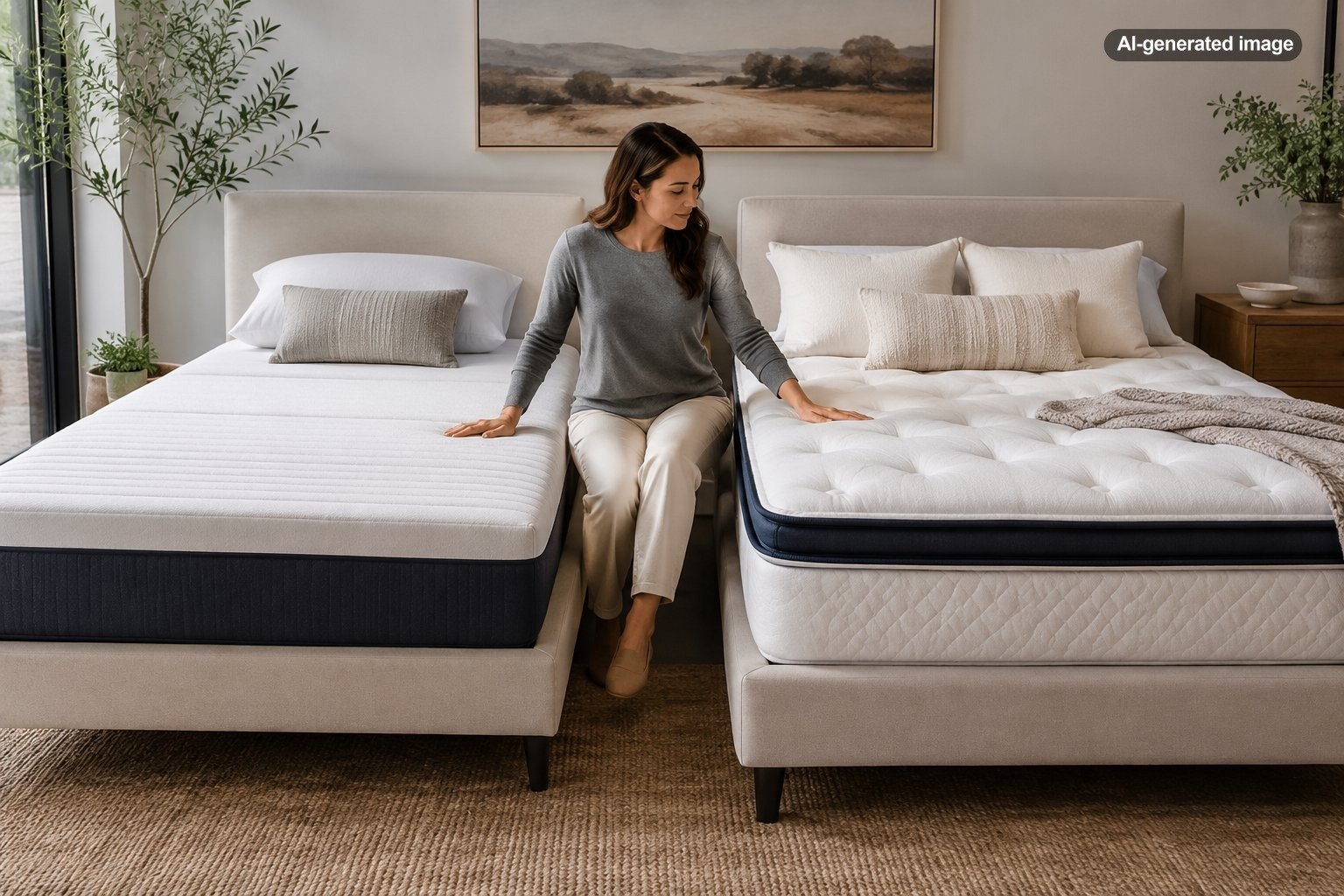
A firm mattress usually feels flatter, more resistant, and easier to move across. A plush mattress allows more noticeable cushioning around the shoulders, hips, and other pressure-prone areas. Neither description tells you everything about support, however: a plush mattress can have a strong support core, while a poorly constructed firm mattress can still sag or feel uneven.
What firm and plush actually mean
Firmness describes how hard or soft the sleep surface feels when you lie down. It is different from support, which refers to how effectively the mattress resists excessive sinking and holds the body in a comfortable position.
A firm mattress has less immediate give in its upper layers. You may notice only modest contouring beneath your hips and shoulders. A plush mattress has thicker, softer, or more conforming comfort layers, creating a deeper cradle around the body.
Mattress labels are not standardized across the industry. One company’s medium-firm may feel similar to another company’s firm, and a showroom model may feel different from a newly delivered mattress. Use labels as a starting point rather than a universal measurement.
| Consideration | Firm mattress | Plush mattress |
|---|---|---|
| Surface feel | Flat, resistant, lifted | Cushioned, conforming, enveloping |
| Pressure relief | Less contouring at shoulders and hips | More cushioning at pressure points |
| Movement | Usually easier to turn and get up | Deeper sink may require more effort |
| Typical fit | Back, stomach, and some combination sleepers | Side sleepers and people who enjoy a softer feel |
| Common drawback | May feel unforgiving | May feel too enveloping or unstable |
Start with your usual sleep position
Your primary sleep position is one of the most useful clues because it determines where your weight presses into the bed.
Side sleepers
Side sleepers generally need enough surface cushioning for the shoulder and hip to settle into the mattress. A bed that is too firm can create concentrated pressure in those areas and may leave the waist feeling unsupported.
Plush or medium mattresses often suit side sleepers, but very soft is not automatically better. If the hips sink much farther than the ribs and legs, the bed may feel unstable. A plush surface over a resilient support core can provide cushioning without an excessively deep dip.
Back sleepers
Back sleepers often prefer a balanced mattress that allows modest contouring beneath the hips while supporting the lower torso. Medium-firm and firm models are common choices because they create a more lifted sensation than deeply plush beds.
A back sleeper who likes gentle cradling may still enjoy a plush mattress, provided the midsection does not settle noticeably lower than the rest of the body.
Stomach sleepers
Stomach sleepers frequently lean toward firmer mattresses. A highly compressible surface can let the pelvis sink deeply, making the sleeper feel folded into the bed rather than resting evenly across it.
Look for a surface that cushions the front of the body without allowing a pronounced hollow beneath the hips. A thin comfort layer over a sturdy support system is often more suitable than a deep pillow top.
Combination sleepers
If you change positions regularly, consider both comfort and mobility. A mattress with moderate cushioning and a responsive surface is usually easier to turn on than a deeply conforming plush bed. Medium and medium-firm options tend to accommodate the widest range of positions.
Account for body weight and how deeply you sink
The same mattress can feel very different to two people. A lighter sleeper may barely compress a firm comfort layer and experience the surface as unusually hard. A heavier sleeper may engage more of the mattress and perceive that same model as less firm.
Lighter side sleepers commonly benefit from a softer surface that responds without requiring substantial pressure. Sleepers who sink more deeply may prefer a firmer model or a plush model with a more substantial support core.
This does not mean body weight dictates one correct firmness. It simply changes how fully the comfort and support layers are compressed. Personal preference, proportions, and sleep position still matter.
The right mattress should cushion the parts that need relief without making the rest of your body feel stranded in a hollow.
Decide whether you prefer a lifted or cradled feel
Firm and plush mattresses create noticeably different experiences even when both provide adequate support.
A firm mattress may appeal to you when you dislike sinking, want a stable surface beneath your torso, or prefer the crisp feel associated with many traditional hotel beds. It can also make repositioning and sitting at the edge feel easier, although edge performance depends on the mattress construction.
A plush mattress may be more inviting when you enjoy noticeable contouring, sleep primarily on your side, or want a cushioned buffer between your body and the support core. Foam-heavy plush models may create a close hug, while plush hybrids often combine surface softness with a springier response.
Consider movement, temperature, and bedroom habits
Firmness is only one part of everyday mattress comfort. Think about what happens when you turn, sit, share the bed, or sleep in a warm room.
- Ease of movement: Firmer and more responsive surfaces generally make position changes easier. Deep, slow-moving foam can feel restrictive to people who move frequently.
- Temperature: A deeply conforming mattress places more material in close contact with the body. Construction, airflow, covers, and bedding also affect warmth, so do not judge temperature by firmness alone.
- Edge use: People who sit on the edge to dress or sleep close to the perimeter should evaluate edge stability separately. A mattress can be plush on top and still have a reinforced edge.
- Partner preferences: Couples may need a compromise firmness, a split configuration, or an adjustable design when their comfort needs differ substantially.
- Bed height: Thick plush models can raise the finished bed considerably. Include the foundation, frame, mattress, and topper when judging whether the bed will be easy to enter.
Test the mattress more carefully
A quick sit on the corner reveals little about overnight comfort. When testing in a store, lie in your usual position long enough for your body to relax. Bring your partner when the mattress will be shared, and try changing positions rather than remaining perfectly still.
What to do
- Lie in your normal sleep position and notice pressure at the shoulders, hips, ribs, and knees.
- Check whether your midsection feels supported rather than suspended or deeply sunken.
- Roll into another position and assess how much effort the movement requires.
- Sit near the edge and stand up as you normally would at home.
- Confirm the return, exchange, foundation, and break-in requirements before purchasing.
When buying online, the home trial becomes particularly important. Read the actual policy rather than assuming every trial works the same way. Check the required break-in period, return process, pickup arrangements, fees, condition requirements, and whether an exchange ends the trial.
Do not confuse temporary softness with long-term fit
A new mattress may feel firmer than a floor model that has already been used by many shoppers. Some materials also relax with use. This adjustment does not guarantee that an unsuitable mattress will become comfortable, but it is one reason to follow the manufacturer’s stated break-in guidance before making a final decision.
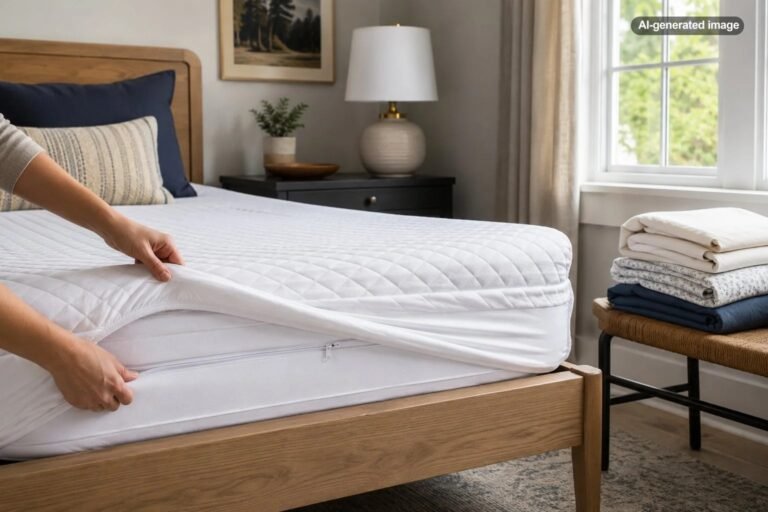
A topper can soften a mattress that is slightly too firm. It is less effective when the underlying mattress is sagging, uneven, or fundamentally unsupportive. Likewise, placing a firmer topper on a deeply sagging plush bed rarely corrects the underlying problem.
The foundation matters as well. An incompatible, damaged, or insufficiently supported base can change how a mattress feels and performs. Confirm the required spacing and support directly with the mattress manufacturer before reusing an existing frame or foundation.
Which mattress should you choose?
Choose a firm mattress when you prefer a lifted surface, sleep mainly on your back or stomach, change positions often, or find deep cushioning difficult to move through.
Choose a plush mattress when you prioritize cushioning at the shoulders and hips, sleep mainly on your side, or enjoy a more enveloping bed.
Choose a medium or medium-firm mattress when you alternate positions, share the bed with someone who has different preferences, or remain uncertain after comparing the extremes. You can make a slightly firm surface softer with a carefully chosen topper, while making an overly soft mattress meaningfully firmer is usually more difficult.
Before you decide
- Identify the position in which you spend most of the night.
- Choose between a lifted and cradled surface feel.
- Allow for how deeply your body compresses the mattress.
- Test turning, edge sitting, and getting out of bed.
- Check the required foundation and finished bed height.
- Read the complete trial and return policy.
Frequently asked questions
Is a firm mattress always more supportive?
No. Firmness describes surface feel, while support depends on the complete mattress construction. A plush mattress can have a robust support core, and a firm mattress can still perform poorly if its materials or foundation are unsuitable.
Can a mattress be both plush and supportive?
Yes. Many mattresses pair soft comfort layers with denser foam, coils, latex, or another resilient support system below. The goal is cushioning at the surface without uncontrolled sinking.
Should couples choose the firmer preference?
Not automatically. A middle-ground firmness may work, but a split or adjustable design can be more practical when one partner wants a distinctly firm bed and the other needs substantial cushioning.
Can a topper fix the wrong firmness?
A topper can make a slightly firm mattress feel softer. It cannot reliably repair sagging or provide the deep structural support missing from an overly soft mattress.
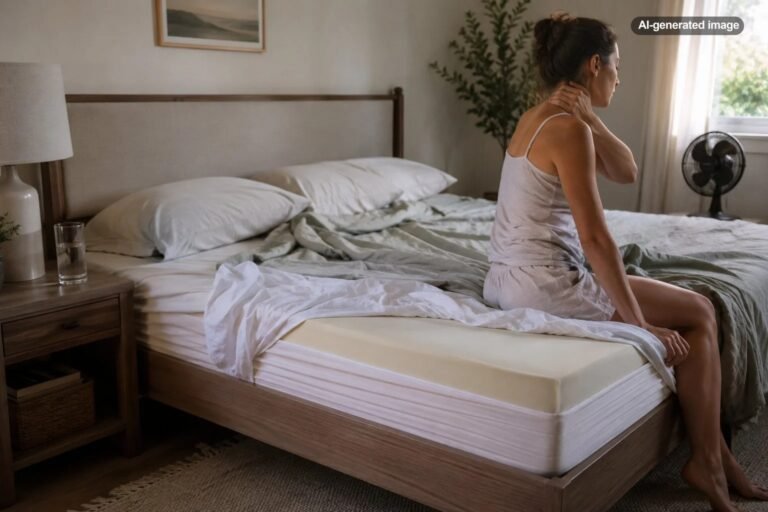
What should I do if every mattress feels uncomfortable?
Recheck your pillow, foundation, sleep position, and the amount of time spent testing each bed. Persistent or worsening discomfort should be discussed with an appropriate health care professional rather than addressed solely by repeatedly changing mattress firmness.