
How Do You Dry Out a House Safely After Storm Water Enters?
To dry out a house safely after storm water enters, begin by confirming that the building is safe to enter, shutting off electrical and gas hazards without stepping into water, documenting the damage, and removing standing water only when conditions allow. Then remove contaminated porous materials, clean hard surfaces, and create steady airflow with fans and dehumidifiers once the electrical system has been declared safe.
Speed matters, but rushing past the safety checks can turn property damage into an electrical shock, structural injury, or exposure problem. Storm water may contain sewage, fuel, chemicals, sharp debris, and microorganisms, so it should not be treated like clean water from a small plumbing leak.
Make sure the house is safe to enter
If the home was evacuated, return only after local authorities say the area is safe. Before going inside, look for downed utility lines, a shifted foundation, exterior cracks, leaning walls, damaged stairs, sagging rooflines, or doors that suddenly bind. These can indicate movement or structural damage that requires professional evaluation.
Use a battery-powered flashlight rather than a candle, torch, or fuel-burning lantern. If you smell gas, hear hissing, see a damaged gas line, or feel unsure about the building’s stability, leave immediately and contact emergency services or the appropriate utility.
Address electricity before touching the water
Never touch a breaker panel, switch, outlet, appliance, extension cord, or electrical tool while standing in water. Do not wade through water to reach the main panel. If the electrical shutoff is in a dry, safely accessible location, it may be possible to turn off the main breaker, but a licensed electrician or the utility should handle the situation whenever water is near the panel or electrical components.
Flooded electrical equipment should not be plugged in merely because its exterior looks dry. Wiring, motors, outlets, panels, HVAC components, and appliances may retain moisture, contamination, or hidden damage. Have the system inspected before restoring power to affected areas.
If a portable generator is needed, operate it outdoors at least 20 feet from doors, windows, and vents. Never run a generator, grill, pressure washer, or other fuel-burning engine in a house, garage, basement, carport, or partially enclosed area because carbon monoxide can accumulate without warning.
Document the damage before major cleanup
Once immediate hazards are controlled, take wide photographs and close-up images of each affected room before moving or discarding items. Record the approximate water line, damaged finishes, wet furniture, appliances, and visible structural changes. Make a written inventory and save cleanup, equipment-rental, repair, and temporary-lodging receipts.
Contact the appropriate insurance provider as soon as practical, but do not postpone reasonable emergency measures needed to prevent additional damage. Coverage, documentation requirements, and claim procedures vary, so follow the instructions given for the specific policy rather than assuming a universal process.
Wear protection and control the work area
Keep children, pets, and anyone with significant respiratory or immune concerns away from the affected space. During cleanup, wear waterproof boots, durable waterproof gloves, and eye protection. Depending on the contamination and the materials being removed, additional protective clothing and respiratory protection may be appropriate.
Cover cuts with waterproof dressings and wash exposed skin with soap and clean water. Take care around broken glass, protruding fasteners, displaced animals, unstable furniture, and debris hidden below murky water. Stop if the work exceeds the protection, equipment, or physical ability available.
Remove standing water cautiously
Remove water only after electrical hazards have been controlled and the structure is considered safe. A wet-dry vacuum can help with shallow water when it is connected to a safe electrical source outside the affected area. Pumps may be useful for deeper water, but their cords, fuel sources, exhaust, and discharge routes must be managed safely.
Basements require particular caution. When the ground outside remains saturated, removing all basement water too quickly may create an imbalance between outside soil pressure and pressure inside the foundation. Significant basement flooding is a sensible reason to consult a qualified restoration contractor, structural professional, or local building authority before aggressive pumping.
What to do
- Confirm that officials have cleared the area and check the exterior for obvious hazards.
- Keep away from water that may be in contact with electricity.
- Photograph and inventory damage before moving major items.
- Wear appropriate boots, gloves, eye protection, and protective clothing.
- Remove standing water with suitable equipment and safe power sources.
- Move saturated belongings and damaged porous materials out of the living area.
- Clean hard surfaces, then use controlled ventilation and dehumidification.
- Continue checking materials until hidden dampness is resolved.
Decide what can be cleaned and what should be discarded
Porous materials absorb contaminated water deeply and can be difficult to clean completely. Saturated drywall, fiberglass insulation, ceiling tiles, particleboard, many upholstered items, and carpet padding commonly require removal. Mattresses, heavily soaked soft furnishings, and paper products may also be impractical to save after contact with storm water.
Hard, nonporous materials such as metal, glass, and some sealed surfaces are generally more workable because they can be washed and dried. Solid wood may sometimes be salvageable, although swelling, delamination, staining, finish damage, and trapped moisture can affect the decision. Valuable artwork, photographs, documents, antiques, and textiles may warrant advice from a professional conservator rather than ordinary household cleaning.
Open wet assemblies so hidden moisture can escape
Remove wet baseboards and other trim carefully so the lower portion of the wall can be inspected. Drywall that has absorbed contaminated water may need to be cut out above the visible water line because moisture can wick upward. Wet insulation behind the wall should not be left sealed inside a cavity.
Flooring also deserves a layered inspection. Water may pass through carpet, laminate, engineered wood, or tile joints and remain in underlayment or the subfloor. Cabinets and built-ins can trap water against walls and floors, particularly behind toe kicks and end panels.
Demolition can expose electrical wiring, plumbing, sharp fasteners, lead-based paint, asbestos-containing materials, or structural components. Older homes and extensive damage call for extra restraint. A qualified contractor should handle work when hazardous materials may be present or when removal could affect the building’s stability.
Clean before beginning the final drying process
Remove mud and debris with shovels, buckets, squeegees, and wet-cleaning equipment suited to the task. Wash salvageable hard surfaces using clean water and an appropriate detergent. Follow product labels closely, maintain ventilation, and never combine cleaning chemicals.
Bleach should not be treated as a substitute for removing wet, contaminated materials or correcting the moisture source. Never mix bleach with ammonia, acids, or other cleaners, because dangerous gases can result. When disinfecting is appropriate, follow current public-health guidance and the labeled directions for the product and surface.
Use airflow, dehumidification, and moderate heat
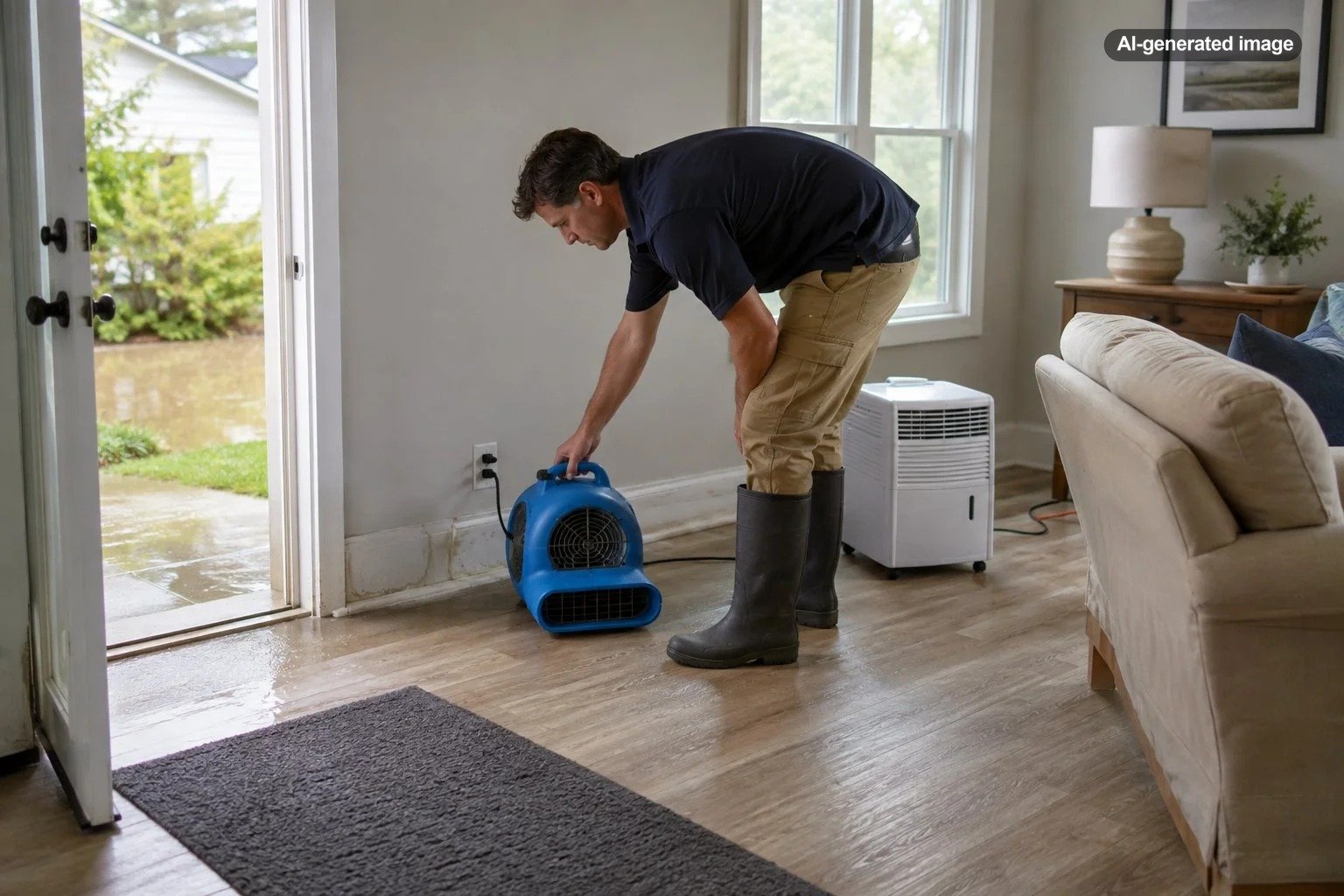
After contaminated water and unsalvageable materials have been removed, begin active drying. Open windows and doors when outdoor conditions are drier than the indoor air and doing so will not introduce more rain or humid air. Run dehumidifiers continuously in enclosed zones and empty or drain them as directed.
Fans can move dry air across damp surfaces and help moisture evaporate, but they should be used only after electrical safety has been established. Avoid blowing air directly across visible mold or heavily contaminated material, which may spread particles into cleaner parts of the home. In those conditions, containment and professional remediation may be necessary.
Moderate heat may assist drying when it is paired with dehumidification and ventilation. Heat alone can drive moisture into hidden spaces or increase humidity if the water vapor is not removed. Keep interior doors, cabinet doors, and drawers open where appropriate so air can circulate through enclosed spaces.
A dry-looking room is not finished until its hidden layers are dry too.
Measure progress instead of relying on appearance
A moisture meter can help compare damp building materials with similar materials in an unaffected area. It is more useful as a comparative tool than as a universal pass-or-fail device because acceptable readings vary by material, meter type, construction, and local conditions.
Check lower wall sections, framing, subfloors, cabinet bases, closets, and corners with limited airflow. Continue drying until readings stabilize near those of comparable dry materials and there are no remaining signs of condensation, softness, swelling, or musty odor. Extensive assemblies may require professional thermal imaging or invasive inspection.
Act quickly to limit mold growth
The U.S. Environmental Protection Agency advises drying water-damaged materials and items within 24 to 48 hours when possible. That window is a practical target, not a guarantee that mold will or will not appear. Temperature, contamination, ventilation, material type, and the amount of water all influence what happens next.
Do not paint, caulk, panel, or install new flooring over damp or moldy materials. Covering the area can hide the symptom while moisture remains available behind the finish. Correct the water source, remove contaminated materials, clean salvageable surfaces, and confirm dryness before rebuilding.
Know when professional help is the safer choice
Professional assessment is appropriate when water reached the electrical system, sewage or chemical contamination is suspected, the structure has shifted, ceilings or floors are sagging, a large area of wall or flooring must be opened, or water remains trapped in complex assemblies. It is also prudent when HVAC ducts or equipment were flooded, extensive mold is visible, or the home cannot be dried promptly with available equipment.
Restoration work should not proceed as though every contractor provides the same service. Ask how the company evaluates electrical and structural hazards, controls contaminated areas, measures moisture, documents drying progress, and determines when materials are ready to rebuild. Separate specialists may be needed for electrical, structural, HVAC, environmental, or conservation work.
Reduce the risk of another unnoticed water problem
After repairs are complete, place simple water alarms near leak-prone areas such as washing machines, water heaters, toilets, sinks, and mechanical equipment. These devices will not prevent storm flooding, but they can provide an audible warning when a smaller leak begins in an occupied home.
Affiliate disclosure: CraneManor.com may earn a commission when you purchase through links on this page. This does not affect the price you pay. Learn more.
One practical option is a five-pack of leak detectors that sounds a local alarm when water reaches a sensor. This type of product is intended for nearby audible alerts; it should not be mistaken for a Wi-Fi system or a device that sends phone notifications.
Before you rebuild
- The source of water entry has been identified and addressed.
- The electrical system and affected equipment have been evaluated where needed.
- Contaminated porous materials have been removed rather than concealed.
- Wall cavities, subfloors, and enclosed areas have been checked for dampness.
- Salvageable surfaces have been cleaned and fully dried.
- No sagging, movement, persistent odor, or visible mold remains unexplained.
Frequently asked questions
How long does a flooded house take to dry?
Drying may take several days or longer depending on the depth and duration of flooding, the materials involved, outdoor humidity, access to hidden cavities, and the capacity of the drying equipment. The process should be guided by moisture checks rather than a fixed number of days.
Should windows be opened after a flood?
Open them when outdoor air is drier than indoor air and weather conditions are safe. During very humid or rainy conditions, closing the building and using properly sized dehumidifiers may remove moisture more effectively.
Can household fans be used immediately?
Only after the electrical supply and affected circuits are considered safe. Do not operate fans in standing water or aim them across visible mold or heavily contaminated material.
Can wet drywall dry in place?
Minor exposure from clean water may sometimes be handled differently, but drywall saturated by storm or flood water often needs removal because it is porous, difficult to clean internally, and capable of trapping contamination and moisture.
When is it safe to start replacing floors and walls?
Rebuilding should begin only after the water source is controlled, damaged materials are removed, the remaining assembly is clean, and moisture levels are comparable to unaffected materials. Closing damp cavities too early can create a concealed mold and deterioration problem.
Sources & further reading
- Centers for Disease Control and Prevention: Safety Guidelines for Reentering Your Flooded Home
- U.S. Environmental Protection Agency: Homeowner’s and Renter’s Guide to Mold Cleanup After Disasters
- Federal Emergency Management Agency: Tips for Returning Home Safely After a Disaster
- Ready.gov: Recovering From Disaster
- Centers for Disease Control and Prevention: Returning Home After a Flood