
How Do You Prepare a Condo Balcony for a Hurricane?
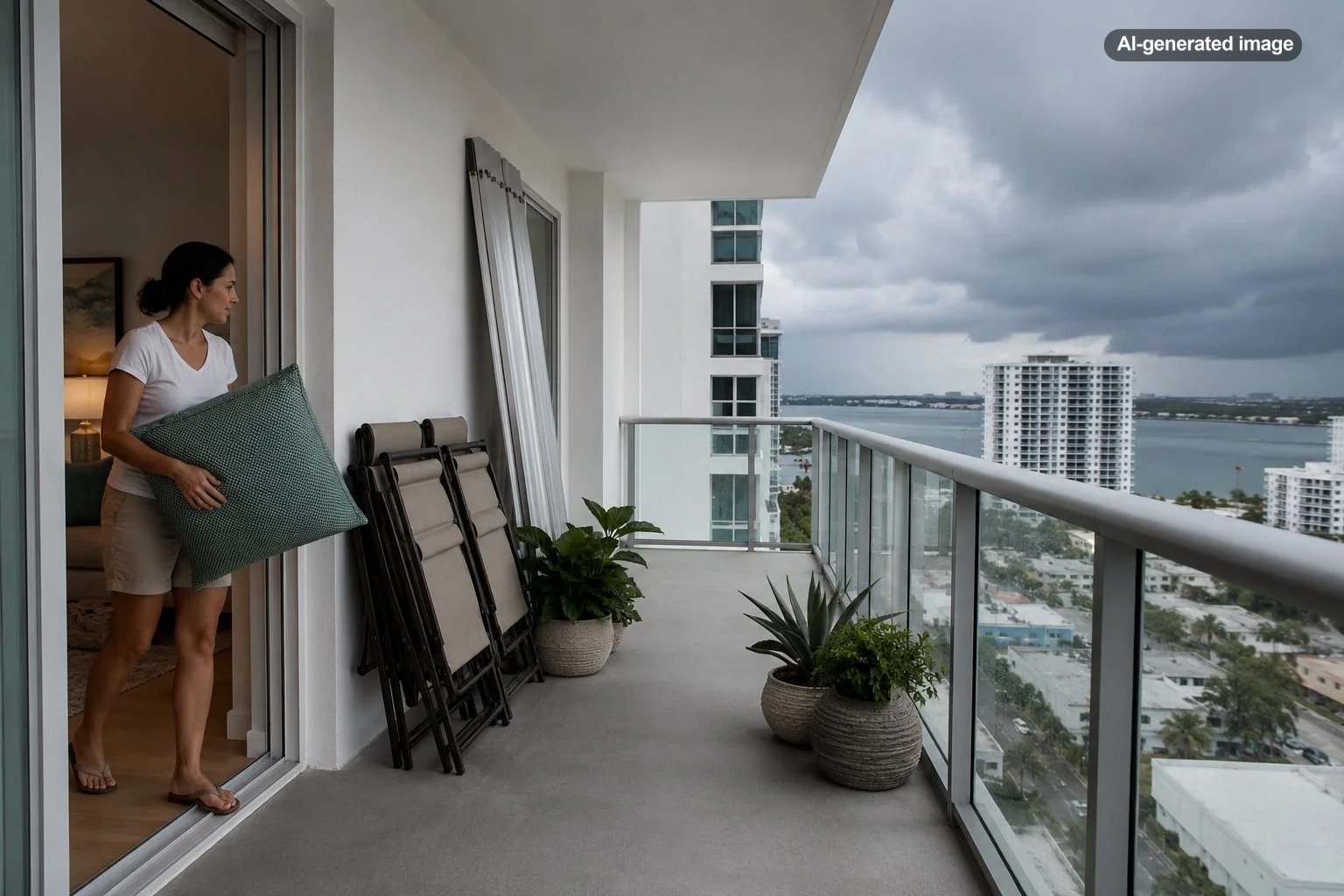
A condo balcony should be nearly empty before hurricane-force winds arrive. Bring furniture, planters, rugs, grills, decor, tools, and other movable objects indoors rather than assuming their weight or ordinary tie-downs will hold them in place. Then clear drainage points, close and lock approved doors or shutters, document the area, and follow your condominium association’s storm instructions.
The central concern is not simply whether your belongings might be damaged. A loose chair, planter, or decorative object can become windborne debris that threatens windows, neighboring units, pedestrians, and the building itself. Preparation should therefore begin well before the weather deteriorates, while elevators are operating normally and there is still time to move awkward items safely.
Start With Your Condo Association’s Hurricane Plan
Condominium rules matter because balconies, railings, exterior walls, shutters, and doors may be classified partly or entirely as common elements. Your association may specify when balconies must be cleared, which protective systems may be used, when elevators will be taken out of service, and whether staff will inspect exterior areas.
Review recent emails, resident portals, posted notices, and the building’s emergency plan. Confirm which responsibilities belong to the unit owner and which belong to management. Do not drill into walls, railings, slabs, or window assemblies or install improvised anchors unless the association has expressly approved the work and any required professional review has been completed.
High-rise residents should also know the location of stairwells and designated exits. Elevators may be restricted before or during severe weather, so do not plan to move heavy balcony furniture at the last possible moment.
Remove Loose Items Rather Than Merely Rearranging Them
The safest goal is a bare balcony. Miami-Dade County advises residents to bring indoors or properly secure objects that hurricane winds could blow about, including patio furniture, garbage cans, tools, and toys. On an elevated balcony, even relatively small items can pose a serious hazard once lifted by turbulent wind.
Move the following into the enclosed portion of the condo:
- Chairs, tables, loungers, benches, and stools
- Outdoor rugs, mats, cushions, pillows, and furniture covers
- Planters, plant stands, hanging baskets, and watering cans
- Lanterns, candles, sculptures, signs, and seasonal decorations
- Grills, cooking tools, portable fire features, and propane cylinders, subject to building rules
- Bicycles, scooters, exercise equipment, coolers, and storage bins
- Cleaning tools, hoses, brooms, buckets, and gardening supplies
- Pet accessories, children’s toys, and collapsible drying racks
Do not stack items against the balcony door and consider the job finished. Wind pressure, water intrusion, or a damaged door could shift the pile, while blocked access can create an avoidable problem inside the unit. Place belongings farther into the home where they do not obstruct exits, electrical panels, hallways, or interior doors.
Do Not Rely on Ordinary Tie-Downs
A bungee cord, light rope, furniture cover, or decorative railing hook is not a hurricane-rated restraint system. It may deteriorate in sun and salt air, loosen under repeated loading, or transfer force to a railing that was not designed as an anchor point.
If a large object cannot be moved, contact building management early. Ask whether it is permitted to remain, whether an approved anchoring method already exists, and who is qualified to evaluate it. Avoid attaching anything to fire sprinklers, pipes, conduit, drains, guardrails, or neighboring property.
If an object can be moved on an ordinary day, hurricane preparation should assume the wind may move it too.
Handle Plants and Planters Carefully
Large planters are frequently treated as permanent because they feel heavy. That is not a reliable safety test. Soil can become saturated, branches can catch the wind, pots can crack, and rolling plant stands can move across tile with surprisingly little resistance.
Move manageable plants indoors before conditions worsen. Use a hand truck only when it is safe, permitted, and appropriate for the floor and elevator. Protect interior surfaces with waterproof trays, but do not wrap wet plants so tightly that trapped moisture creates a mess indoors.
For exceptionally large built-in or professionally installed planters, ask management whether they are part of the building’s approved exterior design. Do not attempt to dismantle, drain, or relocate a structural installation without authorization.
Clear Balcony Drains Without Altering Them
Leaves, soil, mulch, pet hair, and fragments of outdoor rugs can obstruct balcony drainage. Before the storm, remove visible debris from the floor and around drain openings. Dispose of it properly rather than pushing it through the drain.
Do not cover, plug, modify, or pour chemicals into a drain. A slow, damaged, or backing-up drain should be reported to building management because balcony drainage may connect to shared building systems. Photograph existing cracks, stains, standing water, damaged sealant, or loose tile so the condition is documented before the storm.
Protect Doors and Windows Only With Approved Systems
Close and lock balcony doors and windows according to their normal operating instructions. If your unit has approved accordion shutters, roll-down shutters, removable panels, or another protective system, deploy it according to the manufacturer’s directions and the association’s schedule.
Do not tape glass as a substitute for impact protection. Do not lean plywood, furniture, mattresses, or other improvised barriers against glass doors. These measures are not equivalent to an approved opening-protection system and may create additional debris or damage.
Some shutter systems can be operated from inside, while others require exterior access. Test permitted systems well before hurricane season so jammed tracks, missing hardware, corrosion, or inaccessible controls can be addressed before a storm approaches. Repairs, replacements, and alterations should follow association rules and applicable local requirements.
Store Grills, Fuel, and Chemicals According to Building Rules
Many condominium buildings restrict grills, propane cylinders, gasoline, and other combustible materials even in ordinary weather. Hurricane preparation is not a reason to carry prohibited fuel through hallways or store it inside a living area.
Check association rules and local fire-safety guidance before moving any grill or cylinder. Turn off permitted equipment, allow hot surfaces to cool fully, and use the building’s approved procedure. Never use a grill, generator, or fuel-burning appliance inside the condo, on an enclosed balcony, in a hallway, or near doors and windows.
Paint, pesticides, pool chemicals, cleaners, and other hazardous materials should not be left where wind or water could scatter them. Follow label instructions and building policies, and use a designated community collection program when disposal is necessary.
Inspect the Balcony Door Area From Inside
Once the balcony is clear, examine the interior side of the door or window assembly. Remove furniture and electronics from the immediate area, close nearby window treatments, and place valuable items away from exterior glass. Curtains and blinds are not storm protection, but closing them may help limit scattered fragments if glass is damaged.
Do not create a dam with towels, plastic, or tape that conceals active leakage or redirects water into walls. A small amount of wind-driven rain at an aging threshold is different from substantial water entry, movement of the frame, cracking sounds, or visible deformation. Report concerning conditions to management and avoid standing close to exterior openings during the storm.
Photograph the Balcony and Your Belongings
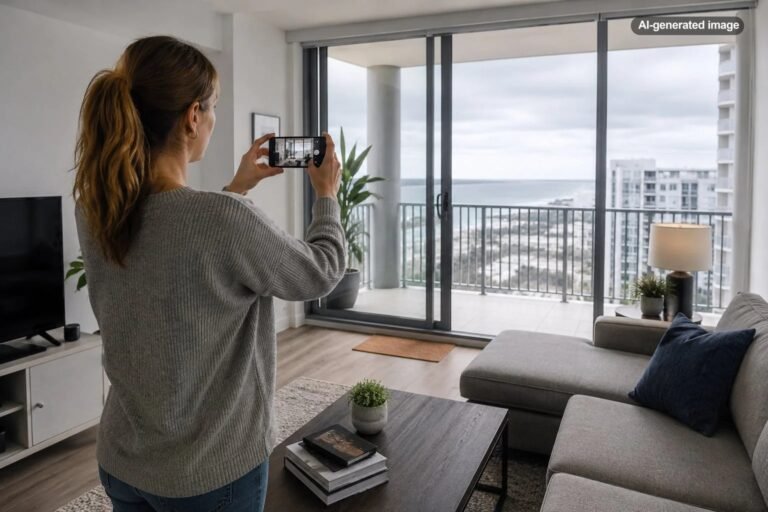
Take clear photos or video after the balcony has been emptied. Include the floor, railing, walls, ceiling, drains, door assembly, shutters, and any preexisting damage. Photograph the items moved indoors as well, especially valuable outdoor furnishings.
Save the files somewhere accessible even if your phone is lost or damaged. Review your own insurance policy and the association’s coverage documents rather than assuming one policy covers every part of the balcony or every personal belonging. Coverage varies by policy, ownership documents, the cause of damage, and where property was stored.
What to do
- Read the association’s hurricane notices and confirm deadlines.
- Move loose objects indoors while elevators and loading areas remain available.
- Clear visible debris from drains and photograph existing conditions.
- Close and lock openings and deploy only approved storm protection.
- Store belongings without blocking exits, hallways, or electrical equipment.
- Monitor official alerts and follow evacuation orders promptly.
Do a Final Check Before Leaving or Sheltering
From inside the unit, confirm that no fabric, cord, planter saucer, tool, or small decorative object remains outside. Check corners, spaces behind air-conditioning equipment where access is permitted, and the underside of furniture that was moved indoors. Close the balcony door securely and do not reopen it once dangerous winds begin.
Charge phones, keep flashlights and essential supplies accessible, and monitor verified information from local emergency management and building staff. If officials issue an evacuation order, leave according to the stated timeline. Balcony preparation protects property and neighbors, but it does not make a unit safe from every hurricane hazard, including storm surge, flooding, fire, prolonged power loss, and severe structural damage.
Common Condo Balcony Hurricane Questions
Can heavy patio furniture stay outside?
It should generally be moved indoors unless building management confirms that a specific permanent installation may remain. Weight alone does not establish that an object can withstand hurricane winds.
Should balcony furniture be placed in the pool?
No. Condo residents should follow building instructions and store belongings in an approved enclosed location. Putting furniture in a pool can damage furniture, finishes, drains, and pool systems and may violate association rules.
Can I tie furniture to the balcony railing?
Do not use a railing as an improvised anchor. Railings are safety barriers, and added hurricane loads may damage them or the structure supporting them. Ask management about approved procedures for anything that cannot be removed.
When should I begin clearing the balcony?
Begin early enough to finish before tropical-storm-force winds, elevator shutdowns, disposal cutoffs, or building deadlines. Preparing at the start of hurricane season and reducing everyday balcony clutter makes the final process faster.
Should I open a balcony door to reduce pressure?
No. Keep exterior doors and windows closed and secured. Opening them can admit wind and rain and may increase internal pressure and damage.