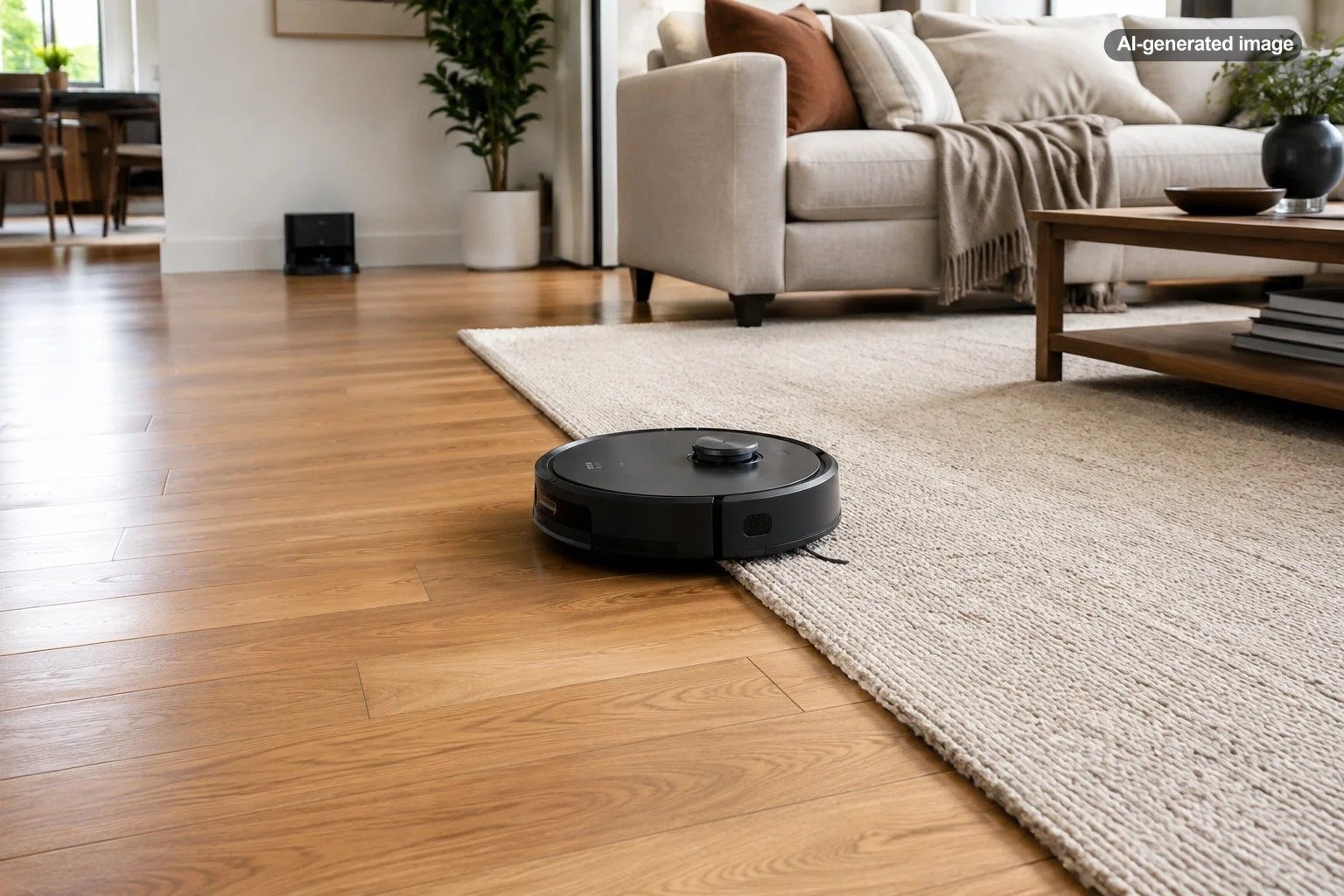
What to Look for in a Robot Vacuum for Hard Floors and Rugs
A robot vacuum for hard floors and rugs needs to do more than collect visible crumbs. It must move cleanly across flooring transitions, loosen debris from rug fibers without scattering it across wood or tile, avoid tangling itself in fringe, and navigate the actual obstacles in your home.
The best choice is not necessarily the model with the largest suction number or the most elaborate docking station. Look first at how the machine handles your flooring mix, rug construction, thresholds, furniture, clutter, hair, and preferred level of maintenance.
Start with your actual flooring mix
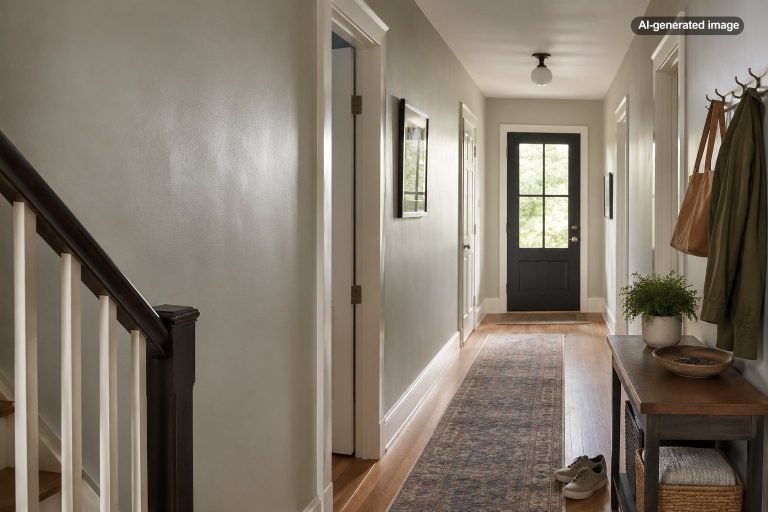
A home with mostly hardwood and two flat-weave rugs presents a different challenge from one with tile, several plush rugs, and a carpeted bedroom. Before comparing machines, estimate where the robot will spend most of its time and identify the surfaces most likely to cause trouble.
For predominantly hard flooring, look for controlled airflow and a brush system that can collect fine dust, grit, and larger crumbs without sending them skittering away. For homes with more rugs, prioritize agitation, automatic suction adjustment, and enough traction to climb onto the rug without bunching its edge.
Low-pile and tightly woven rugs are generally easier for robot vacuums to manage. Thick pile, shag, uneven handmade rugs, lightweight washable rugs, and long fringe require more caution. A capable robot may still need no-go zones around vulnerable textiles.
| Home condition | Feature to prioritize | Common concern |
|---|---|---|
| Mostly wood, laminate, or tile | Strong hard-floor pickup and controlled brush action | Scattered crumbs and missed edge dust |
| Hard floors with low-pile rugs | Carpet detection and smooth transitions | Getting stuck at rug edges |
| Several medium-pile rugs | Good traction, agitation, and carpet boost | Hair or fine debris left in fibers |
| Pets throughout the home | Tangle-resistant rollers and easy bin care | Hair wrapping around brushes and axles |
| Cluttered or furnished rooms | Reliable object detection and mapping | Cords, socks, toys, and narrow passages |
Look beyond headline suction figures
Suction matters, but a single advertised number does not reveal how well a robot will clean your particular floors. Pickup also depends on the intake shape, brush contact, roller design, airflow path, cleaning pattern, and how the robot responds when it reaches a rug.
On hard floors, excessive brush speed can scatter lightweight debris before the intake reaches it. On rugs, suction without sufficient agitation may leave hair and fine particles behind. A well-balanced cleaning system is therefore more useful than an impressive specification viewed in isolation.
The most useful robot is the one that cleans your difficult surfaces consistently, not the one with the longest feature list.
Examine the main brush and side brush design
The main roller does much of the work on rugs. Bristled rollers can agitate fibers effectively, but long hair may wrap around them. Rubber or mixed-material rollers are often easier to clear, although performance varies with rug texture and debris type.
Check whether the roller can be removed without tools and whether its end caps detach for cleaning. Hair frequently collects at the roller ends and around wheel axles, where it is less visible than a large tangle around the center.
The side brush should guide dust out of corners and along baseboards without flinging crumbs across smooth floors. One well-controlled side brush can be more effective than multiple fast-spinning brushes. Edge-cleaning claims are useful only when the robot can approach walls and furniture legs accurately.
Make sure it can recognize and manage rugs
Automatic carpet detection allows some robots to increase suction, change their cleaning pattern, lift a mop, stop water flow, or avoid a rug altogether. These responses are especially valuable in mixed-floor homes, but they are not identical across models.
For a vacuum-only machine, look for automatic power adjustment and dependable transitions. For a vacuum-mop combination, determine exactly what happens when the robot encounters a rug. Some lift the mopping hardware, some avoid mapped carpet zones, and others require the mop attachment to be removed before rugs can be vacuumed.
Measure thresholds and inspect rug edges
A robot cannot clean a room it cannot enter. Measure raised transitions between rooms and note curled rug corners, thick binding, floor vents, sliding-door tracks, and uneven tile edges. Compare those obstacles with the manufacturer’s stated clearance capability for the model you are considering.
Lightweight rugs may shift when the robot climbs onto them. Thin corners can fold under the wheels, while long fringe can wind around a roller. Rug tape, an appropriate nonslip pad, or a mapped exclusion zone may solve the problem, but avoid adhesive products that are unsuitable for the rug or flooring finish.
Choose navigation for the complexity of your rooms
Basic robots may move through a room using simpler patterns, while mapping models build a floor plan and clean in more orderly paths. Mapping becomes particularly useful when you want room-by-room cleaning, scheduled routines, no-go zones, or different settings for hard floors and rugs.
Obstacle detection deserves attention in homes with charging cords, pet bowls, toys, floor lamps, or lightweight objects. No system recognizes every hazard, so some floor preparation remains sensible. However, better detection can reduce interruptions and make frequent automated cleaning more realistic.
Also consider the robot’s height. A slim model may fit under sofas, cabinets, and beds that a taller unit with a raised navigation turret cannot reach. Measure the lowest important furniture clearance rather than relying on appearance alone.
Check for dark-rug and stair complications
Robot vacuums use downward-facing sensors to help prevent falls. On some machines, very dark flooring or black rug patterns can resemble a drop, causing the robot to stop, reverse, or avoid the area. This behavior varies by model and should be investigated before buying when dark rugs cover a meaningful part of the home.
Do not cover or disable fall-prevention sensors as an improvised fix, particularly in a home with stairs. Look instead for manufacturer-supported carpet mapping controls, confirm the model’s documented behavior, or choose a machine known to work with your flooring.
Think realistically about pet hair
For pet households, brush access and cleaning frequency matter as much as suction. Hair can wrap around the main roller, side brush, caster wheel, and drive wheels. A tangle-resistant design reduces maintenance, but it rarely eliminates it.
Choose a bin and filter arrangement that is easy to empty without sending dust back into the room. A self-emptying dock can reduce daily handling, especially in a shedding household, but the robot itself still needs periodic inspection. Rollers, sensors, filters, wheels, and intake passages do not clean themselves merely because the bin empties automatically.
Decide how much dock automation you value
A compact charging base takes less floor space and may be perfectly adequate for a small home. A larger dock may empty debris, refill clean water, collect dirty water, wash mop pads, or dry them. These features reduce routine intervention, but they add size, consumables, components, and cleaning tasks of their own.
Measure the proposed dock location, including overhead clearance for lids and enough open space for the robot to approach. Consider access to an electrical outlet, the visibility of the dock, and how far you will carry water tanks when servicing a combination vacuum and mop.
Study the app without making it the main event
A useful app should make ordinary tasks simple: naming rooms, setting schedules, drawing no-go areas, selecting suction levels, adjusting carpet behavior, and reviewing where the robot cleaned. Advanced options are valuable only when their labels and controls are understandable enough to use regularly.
Multi-floor mapping may help in a two-story home, although someone must still move the robot unless there is a unit on each level. Check whether essential cleaning can start from a physical button, too. Guests, children, or household members should not need the account holder’s phone for every basic command.
Plan for maintenance and replacement parts
Every robot vacuum requires upkeep. Typical tasks include emptying the bin, cleaning or replacing filters, removing hair from rollers and wheels, wiping sensors, clearing the intake, and caring for mop components when present. Follow the schedule and cleaning methods in the manufacturer’s manual because washable parts, replacement intervals, and approved procedures vary.
Before buying, confirm that filters, side brushes, main rollers, dust bags, mop pads, and other consumables are readily available. A lower purchase price is less appealing when ordinary replacement parts are difficult to find.
Before you decide
- List every hard-floor material and rug type the robot must cross.
- Measure important thresholds and furniture clearances.
- Check rugs for fringe, curled corners, thick binding, and dark patterns.
- Confirm how carpet detection and mop avoidance actually work.
- Choose a roller that is practical for the household’s hair and debris.
- Evaluate mapping, no-go zones, and obstacle detection against the room layout.
- Make sure the dock fits its intended location.
- Verify that routine replacement parts are available.
Frequently asked questions
Can one robot vacuum clean both hardwood and area rugs?
Yes, many can, particularly when the rugs are low pile, securely anchored, and free of long fringe. Performance depends on brush design, traction, carpet detection, and the height of the transition from floor to rug.
Is a vacuum-mop combination suitable for homes with rugs?
It can be, provided its carpet strategy matches your rugs. Look for dependable mop lifting, carpet avoidance, vacuum-only zones, or the ability to run separate vacuuming and mopping routines.
Will a robot vacuum replace a full-size vacuum?
It may handle much of the routine floor cleaning, but many households still need another vacuum for stairs, upholstery, deep rug cleaning, tight crevices, and occasional thorough cleaning.
Do self-emptying docks eliminate maintenance?
No. They reduce how often you handle collected debris, but brushes, filters, wheels, sensors, bags, bins, and mopping components still require attention.
What is the most important feature for a mixed-floor home?
Reliable movement between surfaces is the foundation. Carpet detection, suitable brush action, mapping, and easy maintenance matter little if the robot repeatedly catches a rug edge or cannot cross a threshold.