What Is the Best Outdoor Cushion Filling for Rainy Climates?
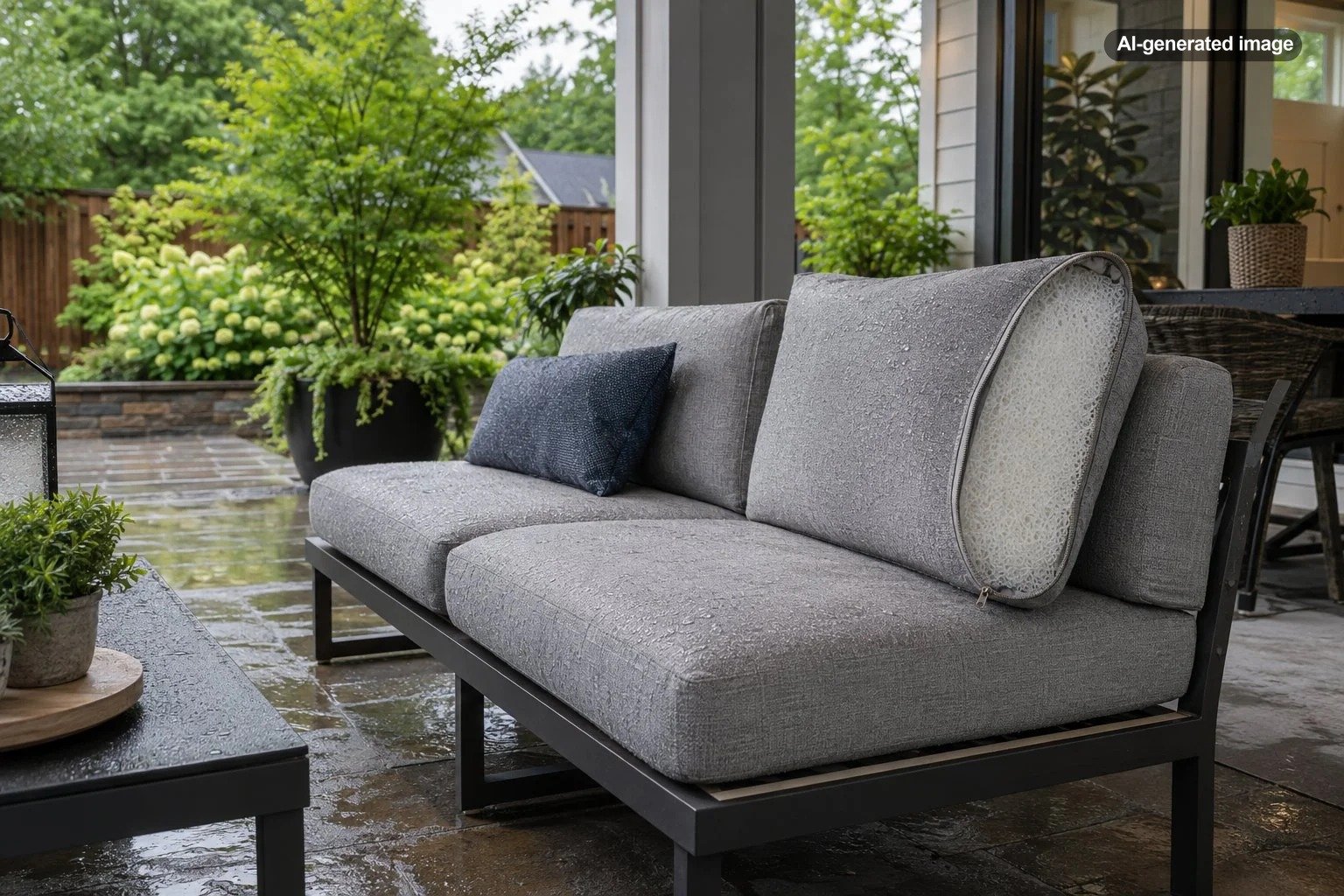
For outdoor seating exposed to frequent rain, reticulated quick-dry foam is generally the best cushion filling. Its open structure allows water to move through the cushion instead of remaining trapped in a dense foam core. That drainage, combined with good airflow, helps the cushion return to usable condition sooner after a storm.
The filling is only part of the answer, however. A quick-draining core can still stay damp when it is enclosed in the wrong fabric, placed on a solid surface, or left flat in a shaded corner. The most reliable rainy-climate cushion is a complete system: drainable filling, breathable upholstery, an escape route for water, and furniture that does not hold moisture against the cushion.
Why reticulated foam handles rain better
Reticulated foam is a type of polyurethane foam with a highly open, connected cell structure. Water and air can pass through those openings, which is why the material is often described as quick-dry or dry-fast foam. It is designed to drain rather than act like a household sponge.
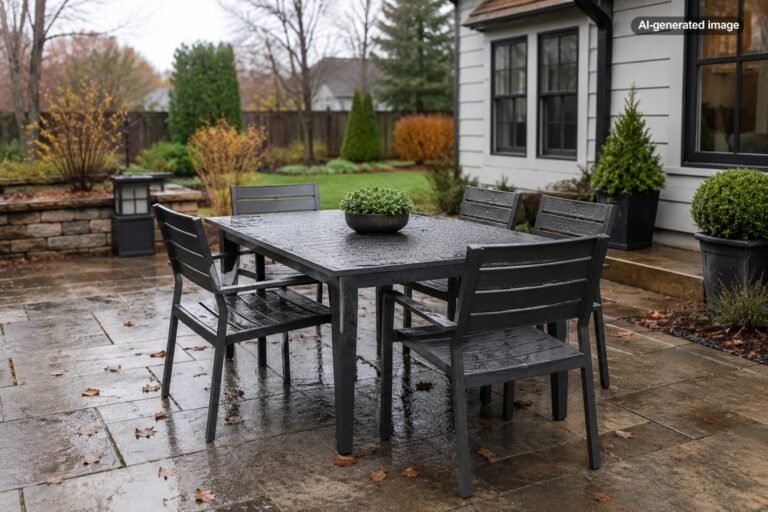
This makes it particularly useful for poolside seating, uncovered patios, balconies, outdoor dining areas, and coastal homes where brief showers and persistent humidity are ordinary conditions. It does not make a cushion waterproof, nor does it eliminate the need for drying. It simply gives water a much easier route out.
For a seat cushion, select a firmness that provides support without feeling rigid. Density and firmness are different measurements: density relates more closely to the amount of material in the foam, while firmness describes how resistant it feels when compressed. A dense foam is not automatically firm, and an extremely firm cushion is not necessarily more durable.
How the main filling options compare
| Filling | Rain performance | Comfort and shape | Best setting |
|---|---|---|---|
| Reticulated quick-dry foam | Drains readily when paired with a breathable cover | Supportive and available in different firmness levels | Uncovered patios, pool areas, and wet climates |
| Conventional outdoor polyurethane foam | May absorb water and dry slowly after saturation | Familiar upholstered feel with broad comfort options | Covered porches or cushions stored before storms |
| Polyester fiberfill | Can dry unevenly when densely packed | Soft and plush but prone to shifting or flattening | Back cushions and decorative pillows |
| Closed-cell foam | Resists absorbing water but does not drain through its core | Firm, buoyant, and sometimes less furniture-like | Specialty marine or flotation-oriented applications |
Conventional polyurethane foam is not automatically unsuitable outdoors. It can be a sensible choice for a deep covered porch where wind-driven rain is unusual, especially if the cushions are brought inside during severe weather. It often offers an appealing balance of comfort and cost. Its weakness becomes obvious only after water passes through the cover and saturates the core.
Polyester fiberfill works better in loose back cushions than in hardworking seat cushions. It creates a relaxed, pillowy look and can be fluffed, but repeated wetting may cause clumping, compression, or slow drying in the center. For a structured seat, a foam core with a thin comfort wrap generally maintains its shape better than a cushion filled entirely with loose fiber.
Closed-cell foam presents the opposite tradeoff. Because its cells are sealed, the core resists taking in water. Yet it can feel firmer, and water that gets inside the cushion cover still needs somewhere to go. It is often more appropriate for specialized marine uses than for a soft residential sofa.
The cover and cushion construction matter just as much
A fabric labeled for outdoor use may resist fading and surface moisture without being fully waterproof. That is often beneficial: an airtight cushion can trap condensation or water that enters through seams and zippers. In rainy conditions, breathability and drainage are usually more useful than attempting to seal every surface.
Look for covers with durable outdoor upholstery fabric, strong seams, and removable access where practical. A mesh or breathable panel on the underside can help water leave the cushion. Vents may also improve airflow. The openings should face downward or remain protected so they function as exits rather than convenient entrances for more rain.
Furniture design affects drying as well. Slatted or mesh seat decks permit airflow beneath a cushion, while a solid pan can create a damp pocket. If a chair has a solid base, lift or stand the cushion on edge after rain so the underside is exposed.
The best rainy-climate cushion is not the one that never gets wet; it is the one designed to release water and dry completely.
Choose according to actual exposure
Before paying more for specialized foam, consider where the furniture sits and how the household uses it. An uncovered sectional in a humid climate faces a very different moisture load from a dining chair beneath a deep roof.
Before you decide
- Direct exposure: Will rain fall on the cushions, or is occasional wind-driven moisture the main concern?
- Drying conditions: Does the area receive sun and moving air, or does it remain shaded and humid?
- Furniture base: Can water drain beneath the cushion?
- Storage habits: Will someone reliably move the cushions before storms?
- Use: Does the seat need firm dining support, deep lounging comfort, or a soft pillow-like back?
- Replaceability: Can the covers be removed and the filling replaced without discarding the entire cushion?
For furniture that remains outside in repeated rain, reticulated foam usually justifies its higher cost position through better moisture management. For a screened porch or roofed balcony, conventional outdoor foam may be entirely adequate. Where storage space is available and moving cushions is realistic, the least complicated solution may be to keep comfortable cushions dry rather than expect them to endure every storm.
Common mistakes in wet climates
One common mistake is placing a waterproof liner around absorbent foam and assuming the problem is solved. A liner may protect the core when it remains intact, but seams, punctures, zipper openings, or condensation can introduce moisture. Once water gets behind the barrier, it may take longer to escape.
Another is covering furniture immediately after rain. A cover protects against additional exposure, but putting it over damp cushions can restrict airflow. Allow the cushions and furniture to dry first whenever conditions permit. If using a furniture cover between uses, choose the correct size, secure it against wind, and preserve ventilation rather than cinching it tightly around wet upholstery.
Do not store damp cushions in a deck box, closet, or garage. Stand them on edge in a ventilated area until the surfaces, seams, and inner core are dry. A surface that feels dry does not always mean the center has finished releasing moisture.
A simple after-rain routine
What to do
- Brush away leaves and debris that could block drainage or stain the fabric.
- Unzip removable covers slightly if the design permits and doing so will improve airflow.
- Stand cushions on edge with the zipper or drainage panel facing downward.
- Separate cushions so air can circulate around every side.
- Wait until the core and seams are fully dry before stacking, covering, or storing them.
- Clean visible soil according to the fabric maker’s care directions, since dirt can support odor and staining.
Frequently asked questions
Is quick-dry foam waterproof?
No. Its advantage is drainage, not waterproofing. Water can enter the foam, move through its open structure, and exit when the cover and furniture base allow it.
Can memory foam be used in outdoor cushions?
Memory foam is generally a poor choice for frequently wet outdoor seating. It can absorb and retain moisture, and its slow response may be affected by temperature. Reserve it for protected applications only if the foam supplier approves the intended use.
Should outdoor seat and back cushions use the same filling?
Not necessarily. Seats usually benefit from a supportive foam core, while backs can use softer foam or polyester fiber for a more relaxed feel. Using different fillings can improve both comfort and drying performance.
Do outdoor cushions still need to be brought inside?
Quick-draining construction reduces the burden of ordinary rain, but storage still helps during prolonged storms, severe weather, and off-season periods. Moving cushions is especially worthwhile when the patio is shaded or humidity prevents prompt drying.
What is the practical verdict?
For an uncovered patio in a genuinely rainy climate, choose reticulated quick-dry foam inside a breathable, drainable outdoor cover. For protected furniture, conventional outdoor foam may provide equal comfort at a lower cost position. Match the filling to the exposure rather than relying on the outdoor label alone.