
The Best Ways to Organize a Small Kitchen Without Remodeling
You do not need new cabinets, a larger footprint, or a construction crew to make a small kitchen work better. The most effective improvements usually come from reducing unnecessary inventory, assigning every frequently used item a logical home, and making awkward storage easier to reach.
Begin with function rather than appearance. A kitchen can look beautifully minimal and still be frustrating if the colander is buried behind the slow cooker or the coffee filters live across the room from the coffee maker. The goal is to reduce searching, reaching, stacking, and reshuffling during ordinary meals.
Start by identifying what is actually making the kitchen feel small
Limited square footage is only part of the problem. Small kitchens often feel crowded because counters have become permanent storage, cabinets contain duplicate or rarely used items, and deep spaces hide more than they hold.
Before buying organizers, empty one storage area at a time. Group similar items together and look for duplicates, damaged tools, expired food, unmatched lids, and appliances that have not been used in the past year. You do not need to become a ruthless minimalist, but every object should justify the space it occupies.
What to do
- Choose one cabinet, drawer, or section of counter rather than emptying the entire kitchen.
- Sort the contents into daily use, weekly use, occasional use, and no longer needed.
- Return daily items to the easiest positions.
- Move occasional equipment to upper shelves, a nearby closet, or another appropriate storage area.
- Measure the remaining space before purchasing an organizer.
Create work zones around the way you cook
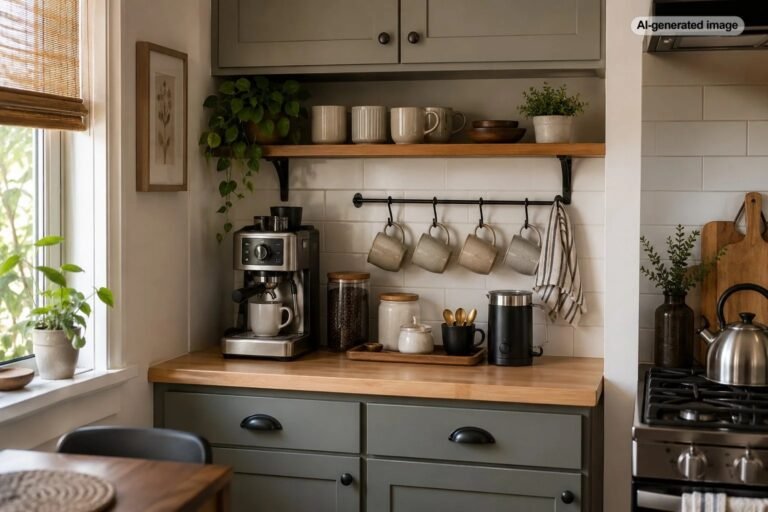
Organizing by category is useful, but organizing by activity is often better. Place cooking oils, salt, frequently used spices, and utensils near the range. Keep knives, cutting boards, and mixing bowls near the main preparation surface. Store mugs, coffee, filters, and sweeteners together.
This approach prevents a small kitchen from becoming a daily obstacle course. It also helps household members return items to the correct location because the arrangement feels intuitive rather than arbitrary.
Reserve prime storage for high-frequency items
The most valuable kitchen space is generally between knee and eye level. Use it for the cookware, dishes, ingredients, and tools you reach for constantly. Heavy items should remain low enough to lift safely, while lightweight and occasional pieces can occupy higher shelves.
Do not let an oversized appliance claim an entire lower cabinet simply because it arrived first. A holiday roasting pan, specialty cake stand, or party-size beverage dispenser may be better stored outside the kitchen if it is used only a few times a year.
In a small kitchen, convenient storage should be earned by frequency of use.
Use vertical space without creating unstable stacks
Many cabinets waste several inches above short dishes, cups, cans, or food packages. Shelf risers can create a second usable level, while vertical dividers can keep sheet pans, cutting boards, and trays from collapsing into a difficult pile.
Hooks beneath upper cabinets or inside suitable cabinet doors may hold lightweight tools, measuring spoons, or potholders. Magnetic storage can be helpful on an appropriate refrigerator side panel, but avoid crowding appliance vents or attaching heavy items where they may fall.
Stack only items that can be removed without dismantling the entire arrangement. A tall tower of mismatched cookware may technically fit, but it creates friction every time the bottom pan is needed.
Make deep cabinets easier to access
Deep lower cabinets often create the illusion of abundant storage while allowing items at the back to disappear. Pull-out trays, turntables, and handled bins can convert that depth into usable space. The right solution depends on what the cabinet contains and whether plumbing, hinges, or shelf supports limit movement.
Affiliate disclosure: CraneManor.com may earn a commission when you purchase through links on this page. This does not affect the price you pay. Learn more.
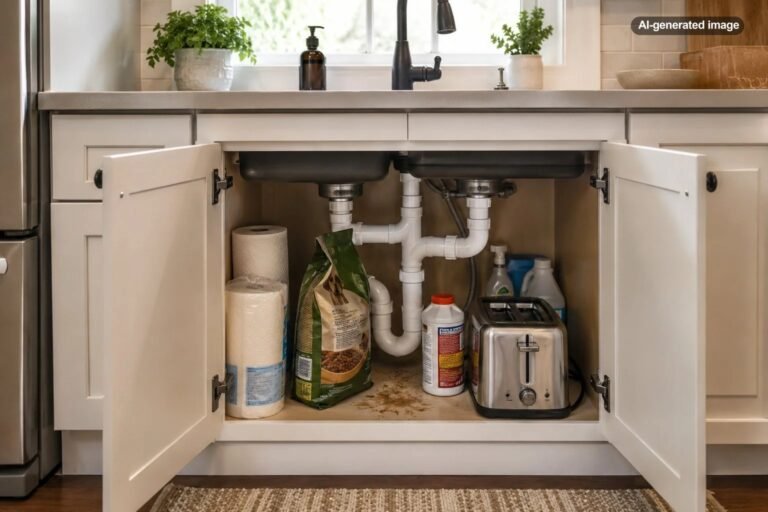
Under the sink, work around pipes rather than forcing symmetrical bins into an irregular space. A properly measured pull-out under-sink organizer can improve access to cleaning supplies when its dimensions suit the cabinet and plumbing layout.
Measure the cabinet opening as well as the interior. An organizer that fits between the side walls may still be unusable if it cannot pass the hinges or clear a disposal unit. Leave room to inspect for leaks rather than packing products tightly around plumbing.
Clear the counters strategically
A completely bare counter is not necessary. The better standard is to keep only items that are used frequently and do not interfere with preparation. A coffee maker used every morning may deserve permanent space; a blender used monthly probably does not.
Corral small essentials on a tray so they read as one group and can be moved quickly. Store paper towels, mail, reusable bags, and household paperwork elsewhere when possible. These items often occupy kitchen space without supporting kitchen work.
Give drawers narrow, specific jobs
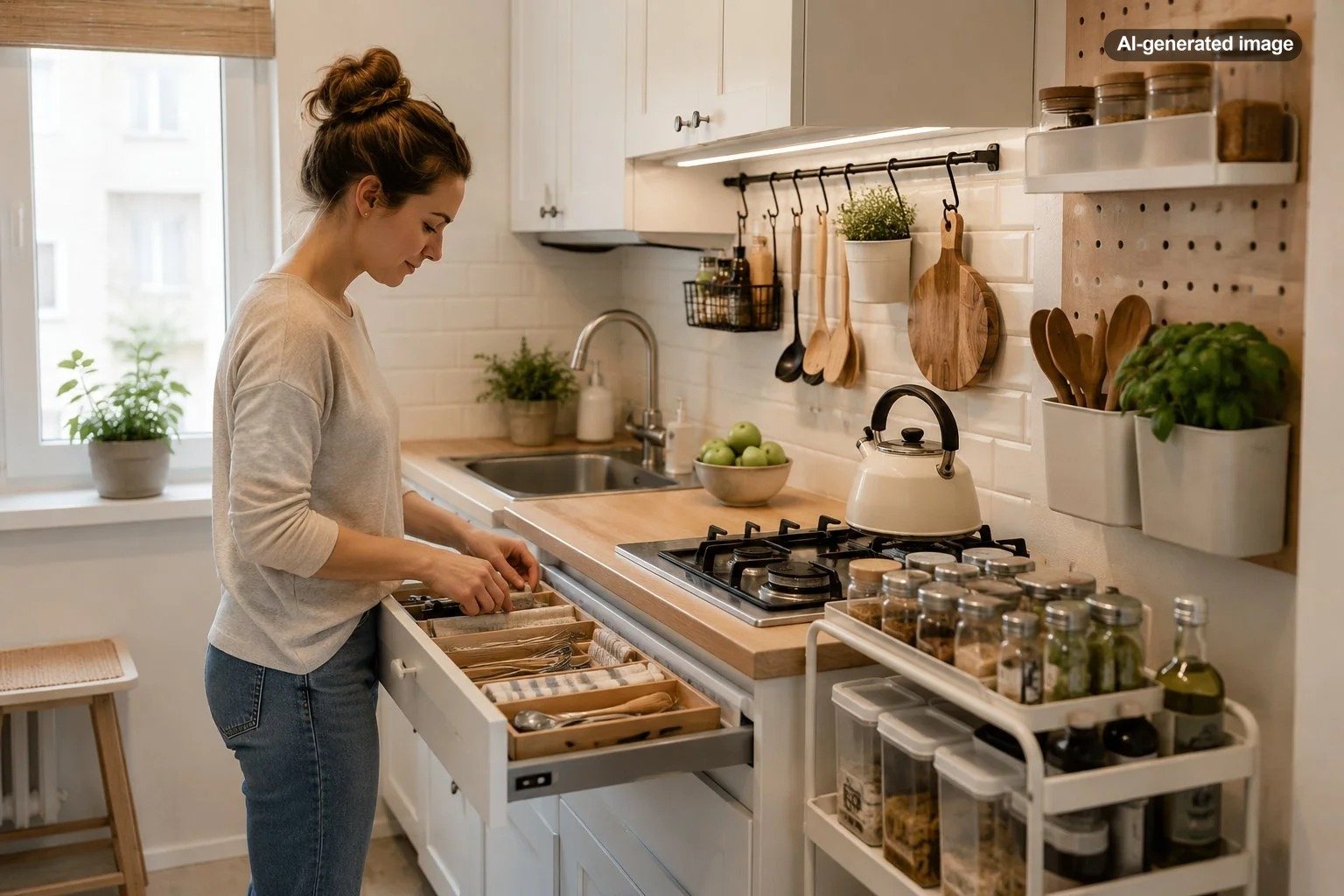
Broad categories such as miscellaneous tend to become permanent clutter. Assign each drawer a limited purpose: everyday flatware, cooking tools, food-storage supplies, towels, or baking equipment. Adjustable dividers are often more useful than rigid trays because they can accommodate the actual dimensions of your utensils.
Store utensils in a single layer when possible. If a drawer is deep enough for two levels, reserve the lower layer for infrequently used pieces rather than stacking daily tools on top of one another.
Decant pantry food selectively
Matching containers can make shelves easier to scan, but transferring every grocery item creates extra work and may waste space. Decant ingredients that benefit from visibility, tidy stacking, or a more secure closure, such as flour, sugar, rice, cereal, or frequently used snacks.
Keep original packaging or label containers with the product name and relevant preparation information. Do not combine a new package with old contents unless you are certain they are the same product and the older supply is still suitable to use.
For households that regularly store dry staples, Rubbermaid Brilliance pantry containers are a clear, stackable option. Buy only the sizes that correspond to foods you consistently keep, rather than purchasing a large set and searching for ingredients to fill it.
Use walls and doors carefully
An unused wall can hold a shallow rail, pegboard, or narrow shelf, provided the installation suits the wall material and does not obstruct a walkway. Inside cabinet doors, slim racks may hold wraps, lids, measuring tools, or lightweight cleaning items.
Check door clearance before mounting anything. A rack may prevent the cabinet from closing if it collides with shelves, plumbing, or contents. Renters should also verify lease restrictions before drilling and choose removable solutions that are rated for the intended surface and load.
Avoid organization products that consume more space than they save
Not every organizer improves a small kitchen. Large bins can create unusable gaps. Tiered shelves may hide labels. Turntables can waste corners in rectangular cabinets. Decorative baskets may make food harder to inventory.
Before you decide
- Measure width, depth, height, door clearance, hinges, and plumbing.
- Identify the exact objects the organizer must hold.
- Confirm that the contents can be removed without moving several other items.
- Choose washable materials for areas exposed to spills or cleaning products.
- Leave enough visibility to notice low supplies, leaks, or expired food.
Maintain the system with a brief weekly reset
A small kitchen can become disorganized quickly because there is little spare capacity. Spend a few minutes each week returning tools, combining duplicate open packages when appropriate, wiping shelves, and moving items that have drifted onto the counters.
When a storage area repeatedly becomes messy, reconsider the system instead of blaming the household. The assigned location may be inconvenient, the category may be too broad, or the cabinet may contain more than it can reasonably support.
Frequently asked questions
How can I organize a small kitchen on a tight budget?
Declutter first, reuse containers you already own, move seldom-used items elsewhere, and improve zones before purchasing products. Simple changes in placement often produce a larger benefit than a matching set of organizers.
Where should appliances go in a small kitchen?
Keep daily appliances on the counter only when they do not eliminate necessary preparation space. Store weekly appliances in accessible lower cabinets and relocate rarely used equipment to less valuable storage.
Are open shelves a good solution?
Open shelves can add accessible storage, but they also expose items to cooking residue and visual clutter. They work best for attractive objects that are used and cleaned frequently, not as overflow for everything that does not fit elsewhere.
How do I add storage in a rental kitchen?
Use freestanding shelf risers, tension-based dividers, removable hooks suited to the surface, magnetic organizers where appropriate, and rolling carts that do not block circulation. Follow the lease and product instructions before attaching anything.