Should a Coffee Table Be Two-Thirds the Length of the Sofa?
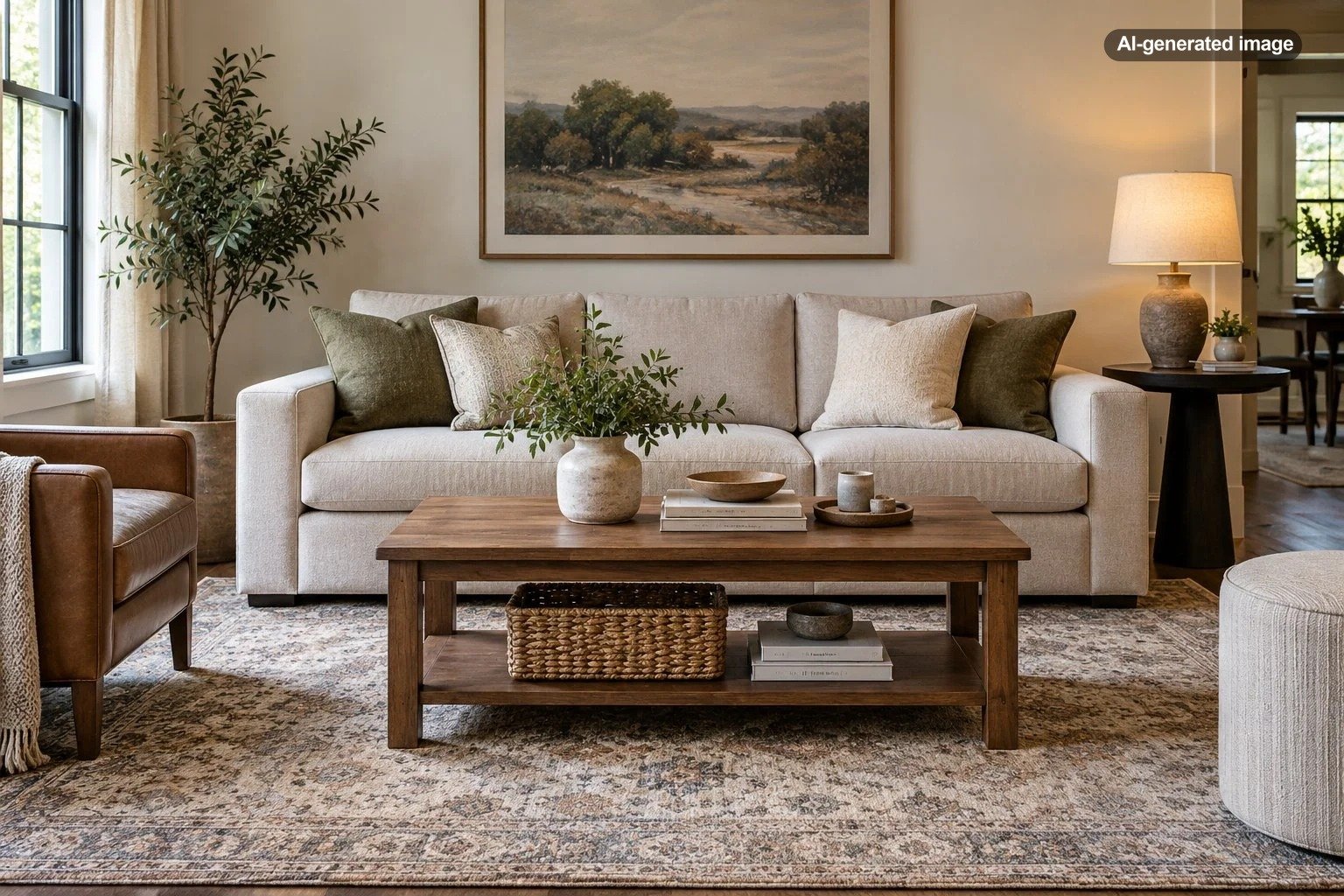
Yes, a coffee table that is roughly two-thirds the length of the sofa is a dependable starting point, but it is not a design law. The better goal is to choose a table that looks substantial enough for the seating arrangement while leaving comfortable space to move around it.
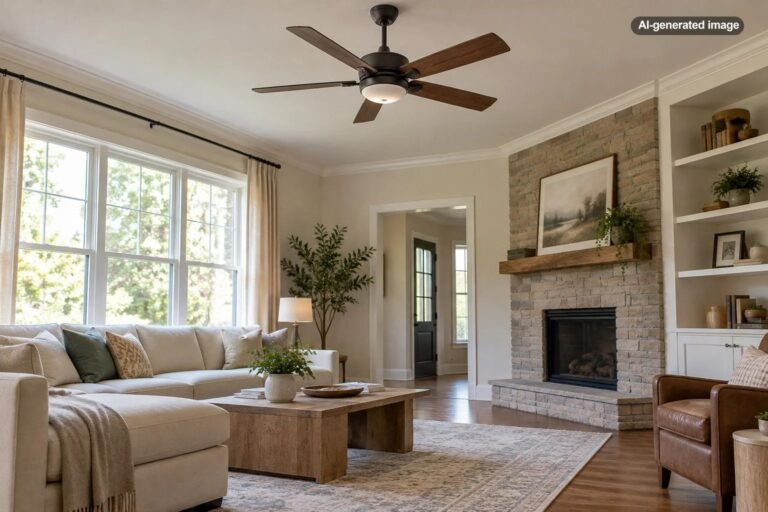
In a straightforward living room with one standard sofa and a rectangular coffee table, the two-thirds guideline often produces pleasing proportions. Sectionals, small rooms, unusually deep sofas, sculptural tables, and multi-piece arrangements can all justify something shorter or configured differently.
Why the two-thirds rule works
The rule is really about visual weight. A tiny coffee table in front of a long sofa can look disconnected, while an exceptionally long table may make the seating area feel congested. A table around two-thirds of the sofa’s length generally occupies enough horizontal space to feel intentional without visually duplicating the sofa.
For example, a sofa measuring 84 inches from end to end would suggest a coffee table somewhere around 56 inches long if you followed the guideline precisely. That number should be treated as a reference point, not an automatic shopping specification.
Architectural Digest similarly notes that the two-thirds approach is a common retailer guideline while emphasizing that coffee-table selection also involves shape, surrounding clearance, and height. The broader design principle is proportion: furniture pieces need to make sense in relation to one another rather than simply satisfy an isolated measurement.
A useful furniture rule should narrow your choices, not override the realities of the room.
Measure the sofa that visually relates to the table
The most important measurement is not always the sofa’s advertised overall width. Large rolled arms, oversized end panels, attached consoles, and sectional extensions can change the portion of the sofa that visually faces the coffee table.
If a sofa has very wide arms, measuring only the seating area can sometimes provide a better sense of the table scale. Conversely, a slim-armed contemporary sofa may visually support a table based on nearly its entire width.
What to do
- Measure the overall sofa length.
- Note the width of the usable seating area between the arms.
- Multiply the most visually relevant measurement by about 0.67 to establish a starting point.
- Mark the proposed coffee-table footprint on the floor with painter’s tape.
- Walk around the arrangement and sit in each primary seat before deciding.
That last step matters. Architectural Digest has recommended using painter’s tape to map furniture footprints before ordering because a piece can technically fit while still overwhelming the surrounding furniture or circulation space.
Leave enough room between the sofa and coffee table
Length is only part of the equation. A beautifully proportioned coffee table becomes irritating if people must squeeze around it or lean awkwardly forward to reach it.
A practical arrangement should provide enough separation for knees and legs while keeping the tabletop conveniently within reach. The exact amount depends on sofa depth, table depth, traffic patterns, and how the room is used. Rather than forcing a single spacing measurement into every living room, tape out the footprint and test the path people actually take.
Match the table height to the sofa, too
A coffee table can have the right length and still look wrong if its height is disconnected from the seating. Low-profile sofas generally pair more naturally with lower tables, while taller seating can support a somewhat taller tabletop.
The practical test is simple: sit on the sofa and imagine reaching for a drink, book, remote, or serving tray. The table should feel like part of the seating zone rather than a platform towering over it or disappearing near the floor. Architectural Digest has also highlighted the relationship between coffee-table height and sofa height as an important part of keeping a room visually balanced.
Shape can matter more than the exact ratio
The two-thirds guideline is easiest to apply to a rectangular table in front of a traditional sofa. Other shapes require a more flexible approach.
| Table shape | Where it often works well | What to watch |
|---|---|---|
| Rectangular | Long sofas and narrow seating zones | Can feel bulky if the room lacks depth |
| Round | Compact rooms, curved seating, and conversational layouts | Diameter matters more than sofa-length ratio |
| Square | Deep seating groups and some sectional arrangements | May consume too much floor area in a narrow room |
| Oval | Rooms that need the length of a rectangle with softer edges | Usable surface area can be smaller near the ends |
| Nesting or modular | Flexible rooms and irregular seating layouts | Judge the combined footprint rather than one piece alone |
A round table, for instance, does not need to reach two-thirds of a sofa’s length to look appropriate. Its diameter and central position create a different relationship with the surrounding seats. Architectural Digest has specifically noted that round tables can work well among boxier seating and that coffee-table shape should respond to the furniture arrangement around it.
Sectionals need a different approach
With a sectional, measuring the entire piece and multiplying by two-thirds can produce an absurdly large table. Focus instead on the open area defined by the primary seating sections.
An L-shaped sectional may pair naturally with a square, round, oval, or compact rectangular table centered in the interior opening. A large U-shaped sectional may need a larger table, paired tables, or a modular arrangement that serves multiple seats without blocking access.
The shape of the sectional can be more informative than its total length. Curved seating often works especially well with rounded or organic tables, while long linear sectionals can support rectangular or paired tables.
Consider visual weight, not just physical dimensions
Two coffee tables with identical dimensions can feel dramatically different. A thick stone or solid-wood table has more visual mass than a slender glass table on fine legs. Dark finishes can read as heavier than transparent materials, and chunky bases can make a modest table feel larger.
This means a substantial table may look appropriately scaled even when it is somewhat shorter than two-thirds of the sofa. Conversely, a visually delicate table can sometimes be longer without overwhelming the arrangement.
When a statement coffee table makes sense
The two-thirds guideline is particularly useful when comparing conventional rectangular tables, but a statement piece may function more like a composition than a simple rectangle. Multi-part tables, sculptural bases, trays, and asymmetrical forms should be judged by their entire footprint.
Affiliate disclosure: CraneManor.com may earn a commission when you purchase through links on this page. This does not affect the price you pay. Learn more.
For example, the Eichholtz Nio Coffee Table is a four-piece design rather than a single conventional slab. Bloomingdale’s describes it as two L-shaped tables with two movable square trays. With that type of arrangement, assessing the overall footprint, placement flexibility, and surrounding circulation is more useful than applying the two-thirds calculation to one component.
Common sizing mistakes
- Buying from the sofa measurement alone: The room’s width and circulation paths still matter.
- Ignoring table depth: A table can have an ideal length yet extend too far into the room.
- Forgetting the sofa arms: Thick arms can make the usable relationship between sofa and table shorter than expected.
- Measuring a sectional end to end: The relevant dimension is usually the central seating zone, not every sectional component.
- Ignoring height: Length cannot compensate for a tabletop that feels awkwardly high or low next to the sofa.
- Skipping a floor mock-up: Painter’s tape can reveal crowding before a large piece arrives.
So, should you follow the two-thirds rule?
Use it as a strong starting point. For a conventional sofa and rectangular coffee table, approximately two-thirds of the sofa length often creates a balanced relationship. Then adjust for the room’s dimensions, traffic flow, sofa arms, table depth, table height, visual weight, and shape.
If the mathematically correct table makes the room harder to use, choose the table that fits the room. Good proportion is not about obeying one fraction; it is about making the sofa, table, surrounding furniture, and open space feel as though they belong together.
FAQ
Can a coffee table be shorter than two-thirds of the sofa?
Yes. A shorter table can work particularly well in a narrow room, with bulky furniture, or when the table has strong visual weight. The table should still feel connected to the sofa rather than undersized and isolated.
Can a coffee table be longer than two-thirds of the sofa?
It can, especially if the table is visually light and the room has generous circulation space. Check that the ends do not interfere with seating access or nearby chairs.
Does the two-thirds rule apply to sectionals?
Not reliably. For sectionals, size the table to the usable opening created by the seating arrangement rather than calculating from the sectional’s entire length.
Should a coffee table be centered on the sofa?
Usually it should relate to the main seating zone, but strict geometric centering is not always necessary. In an asymmetrical layout, centering the table within the conversation area may look and function better.