Can You Pressure Wash Outdoor Furniture?
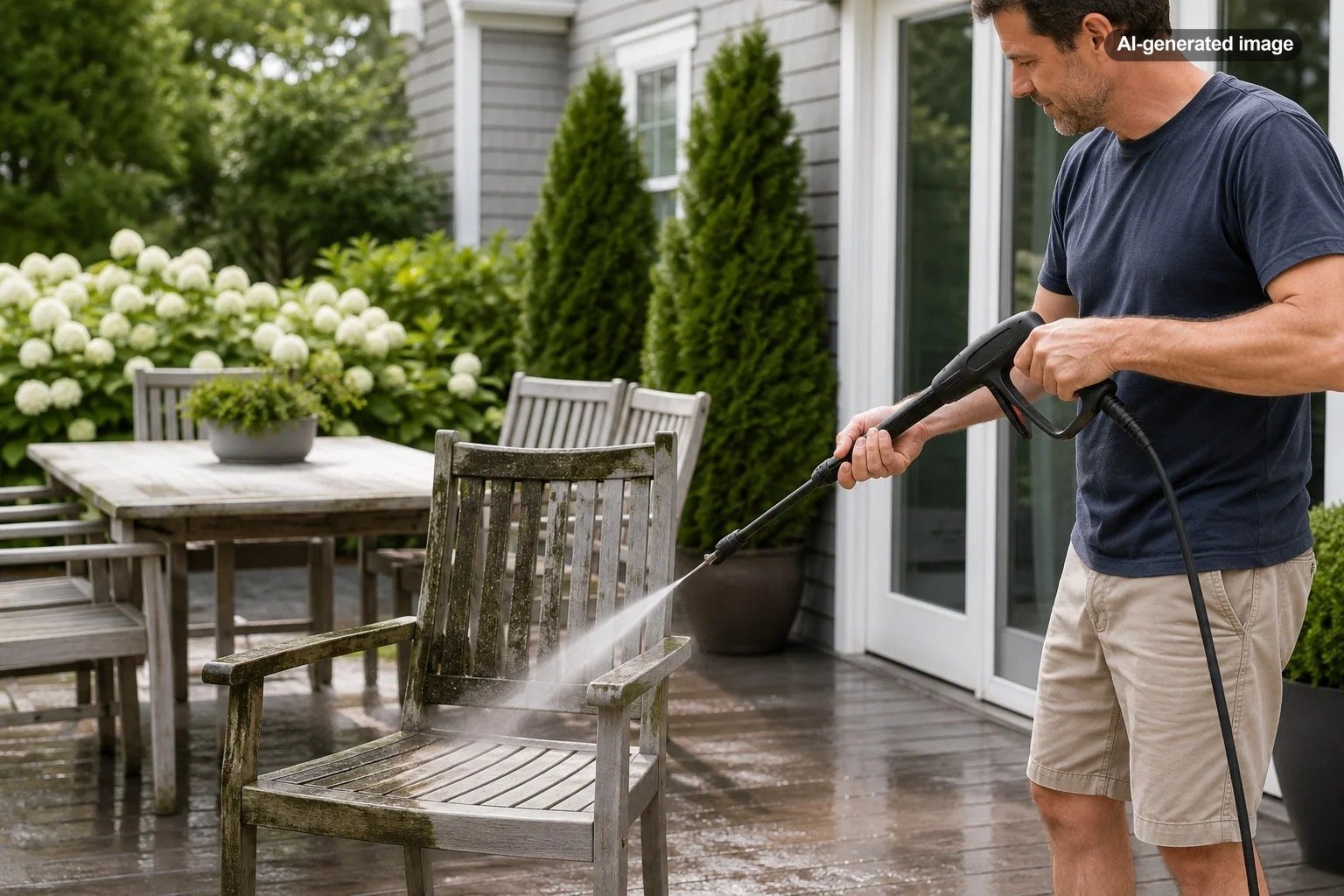
You can pressure wash some outdoor furniture, but the safest answer depends less on where the furniture lives and more on what it is made of. Sturdy molded plastic, durable synthetic resin, and some sound metal frames may tolerate a carefully controlled rinse. Wood, natural wicker, aging paint, delicate finishes, loose joints, cushions, umbrellas, and woven fabrics are generally better cleaned by hand.
The main risk is not simply using water. It is concentrating that water into a forceful jet that can lift paint, scar plastic, drive moisture into joints, unravel woven material, or turn a minor chip into a much larger repair.
Which outdoor furniture can sometimes be pressure washed?
The best candidates are simple, nonporous pieces with no fragile finish, woven textile, exposed hardware, or questionable joints. Even then, pressure washing should be treated as an occasional deep-cleaning method rather than the default response to every dusty chair.
Molded plastic furniture
One-piece plastic chairs and tables are among the more forgiving options, particularly when the plastic is thick, intact, and unpainted. A broad, low-pressure spray may remove embedded dirt from textured surfaces more quickly than hand wiping.
Inspect the piece first. Sun-brittled plastic, hairline cracks, chalky surfaces, decorative inserts, and thin edges may be damaged by a concentrated stream. A soft brush and soapy water remain the lower-risk choice.
Synthetic resin wicker
Modern resin wicker is different from natural rattan, reed, willow, or vintage wicker. Synthetic strands may tolerate gentle rinsing, but the weave can still split, loosen, or separate from the frame when struck at close range.
Use a wide fan pattern rather than a pinpoint jet, and spray across the surface rather than directly into seams and attachment points. Check the hidden frame as well. Water trapped around steel hardware or a damaged coating may contribute to corrosion.
Sound metal frames
Powder-coated aluminum and other intact metal frames can often be cleaned efficiently with soap, a soft brush, and a regular hose. Limited pressure washing may be possible when the coating is in excellent condition, but it offers little advantage if the furniture is only dusty or lightly soiled.
Skip the pressure washer when you see rust, bubbling paint, chipped powder coating, cracked welds, loose hardware, or water-sensitive components. High-pressure water can enlarge weak areas and force moisture into hollow tubing.
| Furniture material | Pressure-washing outlook | Safer default |
|---|---|---|
| Thick, unpainted molded plastic | Sometimes suitable at low pressure | Mild soap and a soft brush |
| Synthetic resin wicker | Use caution and avoid seams | Vacuum, hand wash, and hose rinse |
| Intact powder-coated metal | Sometimes suitable with a wide spray | Soapy water and a nonabrasive cloth |
| Wood or teak | Usually not recommended | Gentle scrubbing with the grain |
| Natural or vintage wicker | Avoid | Vacuum and wipe with a damp cloth |
| Cushions, slings, and umbrellas | Avoid unless explicitly approved | Follow the fabric care label |
Which materials should not be pressure washed?
Wood furniture
Wood may look substantial, but its surface fibers and protective finish can be surprisingly vulnerable. A strong stream can raise the grain, carve visible lines, strip stain, and create uneven patches that become obvious after the furniture dries.
Water may also enter end grain, joints, screw holes, cracks, and mortises. That does not mean every splash causes damage, but forcing water into those areas adds unnecessary risk. Clean wood with a soft-bristled brush, mild cleaner appropriate for the finish, and controlled moisture. Scrub with the grain and allow the piece to dry fully before applying oil, stain, or sealer.
Natural and vintage wicker
Natural wicker should not be confused with synthetic resin weave. Rattan, reed, rush, and willow can soften when wet, warp as they dry, and break where strands are already brittle. Pressure can loosen the weave or weaken joints that are difficult to repair invisibly.
Begin with a vacuum and brush attachment to remove debris from the crevices. Follow with a lightly damp cloth and a small amount of mild soap. The cloth should be damp, not dripping, and the furniture should dry completely before anyone sits on it.
Painted, stained, or weathered surfaces
Pressure washing can remove more than grime. Peeling paint, distressed finishes, aged coatings, decals, decorative transfers, and thin surface treatments may lift under the spray. Furniture that already has chips or flaking areas is especially vulnerable.
Hand cleaning also gives you a chance to distinguish dirt from deterioration. A gray film may wash away, while a faded finish, oxidation, rust, or sun damage will require restoration rather than more aggressive cleaning.
Cushions, fabric slings, umbrellas, and rugs
Outdoor fabric is designed to handle weather, but that does not make it immune to concentrated pressure. A forceful jet may stretch seams, fray edges, disturb protective coatings, deform filling, or push dirt deeper into foam.
Remove loose debris first, check the care label, and use the cleaning method approved for the fabric. Many covers respond well to a diluted mild-soap solution and a soft brush, followed by a thorough low-pressure rinse. Cushions must dry completely, including the filling, before storage or use.
How to pressure wash suitable furniture more safely
If the manufacturer permits pressure washing and the furniture passes a careful inspection, restraint matters more than raw cleaning power. The goal is to loosen dirt without testing the structural limits of the chair.
Affiliate disclosure: CraneManor.com may earn a commission when you purchase through links on this page. This does not affect the price you pay. Learn more.
Homeowners who want one compact electric machine for broader outdoor cleaning may consider the Westinghouse ePX3500 electric pressure washer. Its onboard soap tank, pro-style steel wand, anti-tipping design, and five-nozzle set make it useful for jobs such as patios, driveways, fences, and vehicles. For outdoor furniture, however, the extra nozzle choices are helpful only when they make it easier to select the widest, gentlest appropriate spray. They are not permission to use maximum pressure on delicate finishes, woven materials, wood, cushions, or aging furniture.
What to do
- Remove loose items. Take off cushions, pillows, covers, glass tops, and accessories. Tighten removable hardware when appropriate.
- Brush away debris. Remove leaves, grit, cobwebs, and dried mud so the spray does not propel them across the surface.
- Wash with mild soap first. A soft brush often does most of the work, reducing the pressure needed for rinsing.
- Select the gentlest setup. Use the lowest effective pressure and a broad fan spray. Avoid narrow, concentrated nozzles.
- Test a hidden area. Stop if the finish changes, fibers lift, strands move, paint flakes, or the surface becomes rough.
- Work at a generous distance. Move closer only when necessary, keeping the nozzle in motion rather than dwelling on one spot.
- Avoid weak points. Do not spray directly into joints, seams, bearings, hollow tubes, fastener holes, woven attachment points, or chipped coatings.
- Dry thoroughly. Tip furniture when practical so trapped water can drain, then let every component dry before replacing cushions or covers.
The correct pressure is the least pressure that removes the dirt without changing the furniture.
Common pressure-washing mistakes
Starting too close is the classic error. Damage can happen before there is time to react, particularly on plastic, wood, wicker, and painted finishes. Begin farther away and approach gradually.
Using a concentrated jet may produce satisfying clean lines, but those lines can also be etched into the surface. A wide spray distributes force more evenly.
Cleaning every component the same way ignores the fact that one chair may combine metal, resin weave, plastic feet, fabric straps, painted details, and steel hardware. Each component may require a different method.
Adding harsh cleaner for extra power can discolor material, damage coatings, harm nearby plants, and leave residue where skin or clothing will touch. Use only cleaners suitable for the furniture and the pressure-washing equipment.
Putting cushions back too soon traps moisture between the cushion and frame. Let both surfaces dry fully, particularly around seams, crevices, and the underside of woven seats.
A gentler cleaning method that works for most sets
For routine care, the humble bucket-and-brush method is usually enough. Remove cushions, vacuum or brush off loose debris, then wash the frame with warm water, a small amount of mild dish soap, and a soft cloth or brush. Rinse with a garden hose and dry or drain the piece thoroughly.
Work from the least aggressive method upward. Spot-treat stubborn areas rather than subjecting the entire set to stronger chemicals or higher pressure. This approach is slower by a few minutes but far less likely to create a refinishing project.
Frequently asked questions
Can you pressure wash plastic patio chairs?
Some thick, unpainted molded plastic chairs can tolerate a gentle, wide spray. Avoid pressure washing brittle, cracked, faded, thin, or painted plastic, and always test a hidden spot first.
Can you pressure wash resin wicker furniture?
Synthetic resin wicker may tolerate cautious low-pressure rinsing when the manufacturer allows it. Keep the nozzle away from seams, strand ends, joints, and damaged sections. Do not use the same method on natural wicker.
Can you pressure wash teak furniture?
Hand cleaning is generally the safer approach. Concentrated spray can raise the grain and create uneven marks. Use a soft brush, an appropriate cleaner, and gentle rinsing instead.
Can outdoor cushions be pressure washed?
Usually not. Pressure may damage seams, fabric coatings, and filling. Follow the care label, spot clean with an approved solution, rinse gently, and allow the cushion to dry completely.
How often should outdoor furniture be deep cleaned?
Clean when dirt, pollen, spills, algae, or bird droppings begin to accumulate rather than relying on a rigid schedule. Light, frequent maintenance is easier on finishes than occasional aggressive cleaning. Covers and dry storage can reduce how often a deep clean is needed.