Are Expensive Air Filters Worth It?
Expensive air filters can be worth it, but the price tag itself is not what makes a filter better. What matters is whether the filter captures the particles you care about, fits the system correctly, allows adequate airflow, and is replaced often enough to keep doing its job.
A premium filter with a useful efficiency rating and a well-designed pleated surface can be a sensible upgrade. An expensive filter that is unnecessarily restrictive, poorly fitted, or incompatible with your HVAC system can be a worse choice than a less costly one.
What are you actually paying for in a more expensive filter?
The price difference between basic and premium HVAC filters can reflect several things: filtration efficiency, filter depth, the amount and arrangement of filter media, frame construction, brand positioning, specialty features, or some combination of them. Not every extra dollar produces a meaningful improvement in your home.
The most useful place to start is the filter’s efficiency rating. MERV, short for Minimum Efficiency Reporting Value, describes how effectively a filter captures particles in specified size ranges. The EPA notes that higher MERV ratings indicate better capture of the particle sizes covered by the test.
That means a higher-priced MERV 13 filter may offer a meaningful filtration advantage over a very basic low-MERV filter. But two filters carrying the same MERV rating can still differ in depth, construction, pressure drop, and how well they fit a particular system.
A good HVAC filter is not the most expensive one on the shelf. It is the most effective one your system can use properly.
When a higher-efficiency filter can be worth the extra cost
Paying more can make sense when the upgrade buys genuinely better particle filtration without creating an airflow problem. This may be especially appealing in homes where occupants want to reduce airborne dust and fine particles circulating through a central forced-air system.
The EPA advises homeowners seeking greater filtration to choose at least MERV 13, or as high a rating as the system can accommodate. MERV 13 filters are required to demonstrate greater removal efficiency for smaller particles than lower-rated filters.
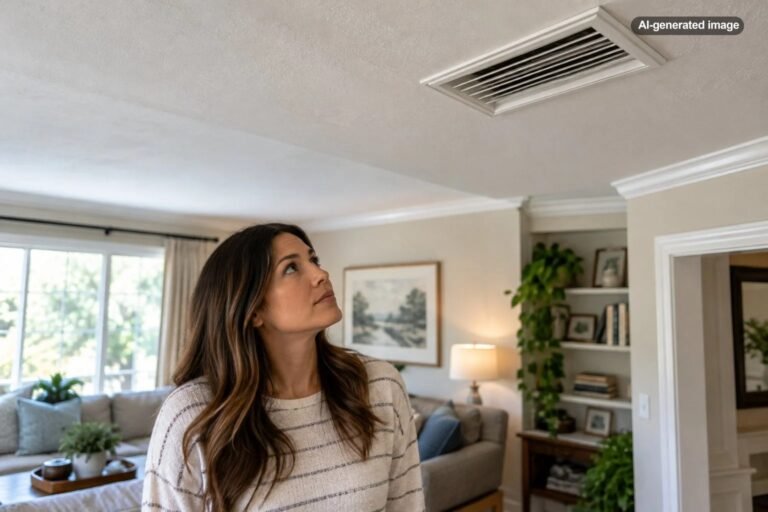
There is an important limitation: a central HVAC filter only cleans air while air is actually moving through the system. A costly filter cannot compensate for very limited system runtime, major air leakage around the filter, or a filter that does not fit its rack correctly.
Why the highest MERV number is not automatically the best choice
Higher filtration efficiency can come with increased resistance to airflow. ASHRAE guidance notes that higher-efficiency filters may create more pressure drop, depending on the filter design and the HVAC system. If the system is not designed for the additional resistance, airflow can be reduced.
This is why simply buying the highest-MERV filter available is not a reliable strategy. The appropriate filter depends partly on the blower, duct system, filter rack, filter dimensions, and the resistance the equipment can handle.
ASHRAE also notes that many conventional residential HVAC systems are not designed to overcome the pressure drop associated with true HEPA filtration. A portable HEPA air cleaner is a different product from a standard furnace or central-air filter and should not be treated as a drop-in substitute.
Filter thickness can matter as much as the price
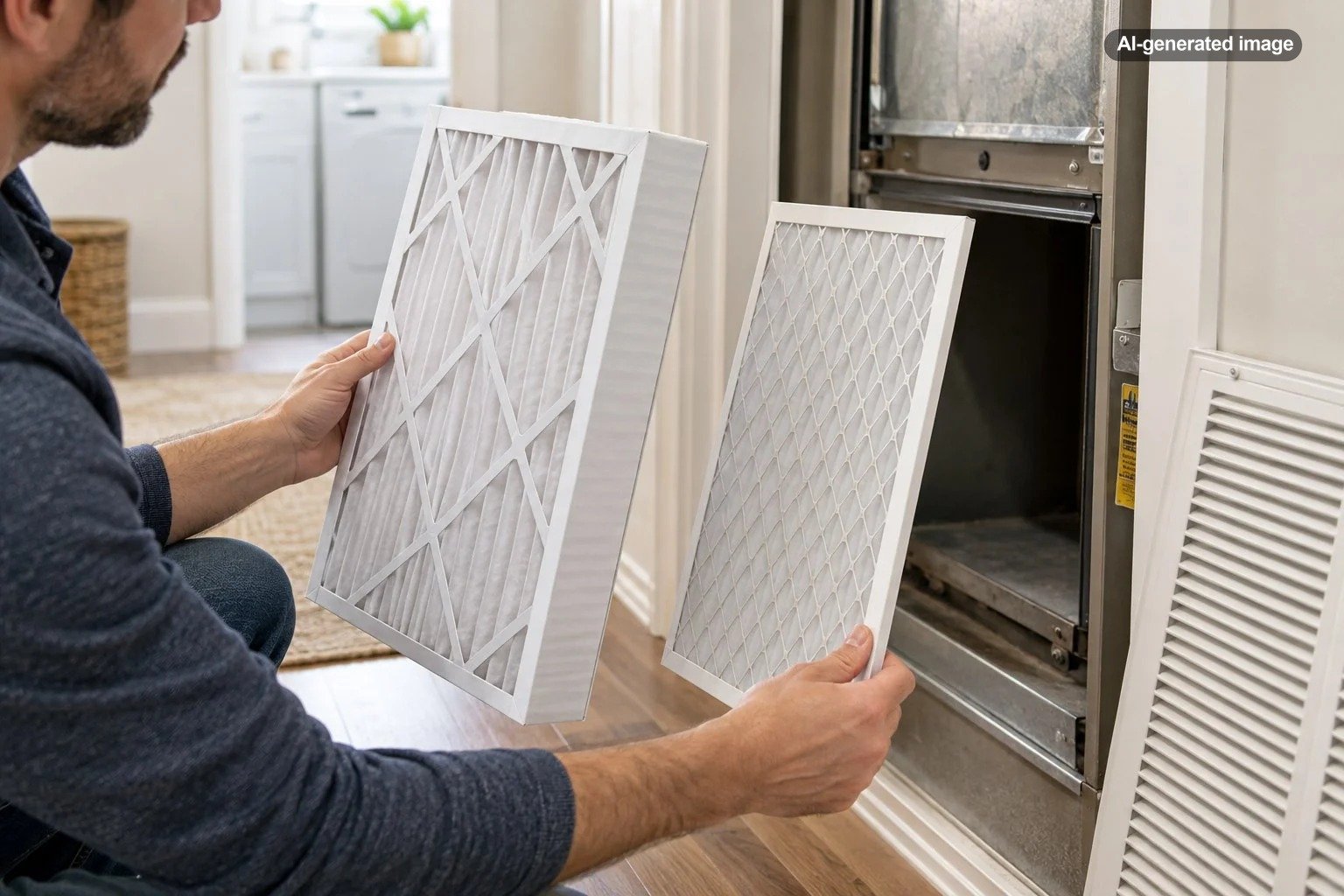
One-inch filters are common, but some residential systems are designed with deeper filter cabinets that accept filters several inches thick. A deeper pleated filter can provide more media surface area, which may allow higher filtration efficiency without relying on an extremely restrictive small surface.
ASHRAE notes that deeper filters can help reduce pressure drop while providing higher filtration efficiency when the system is designed to accept them. This is one reason two filters with similar efficiency ratings may behave differently in actual HVAC systems.
Do not force a thicker filter into a slot designed for something else. Filter dimensions are not merely a packaging detail. The filter needs to sit correctly in its rack without being crushed or leaving large gaps around its edges.
Cheap, midrange, and premium filters serve different priorities
| Filter approach | Potential advantage | Main tradeoff | Often makes sense when |
|---|---|---|---|
| Basic low-efficiency filter | Low resistance and simple equipment protection | Less effective capture of smaller particles | The system has limited filtration requirements or manufacturer guidance calls for it |
| Midrange pleated filter | Balance of particle capture, availability, and airflow | Performance varies considerably by construction | You want better everyday filtration without automatically choosing the highest rating |
| Higher-efficiency filter | Improved capture of smaller airborne particles | May add airflow resistance and usually costs more | Your system is compatible and improved particulate filtration is a priority |
| Deep-media filter | Large media area can support strong filtration with manageable resistance | Requires a compatible filter cabinet | Your HVAC system was built or modified to accept deeper filters |
Do premium features justify paying more?
Sometimes, but read past the marketing language. Features such as additional pleats, sturdier frames, thicker media, electrostatically charged fibers, or deeper construction can affect performance. Others may have little relevance to your particular home.
The useful questions are practical: What is the efficiency rating? Does the filter fit correctly? Is its airflow resistance appropriate for the system? Does the manufacturer provide useful performance information? Can you afford to replace it when needed rather than leaving an overloaded filter in place because each replacement feels painfully expensive?
Replacement habits can erase the advantage of an expensive filter
Even a very capable filter needs periodic replacement. The EPA recommends following the filter manufacturer’s replacement guidance and changing filters more often when they become heavily soiled.
How quickly a filter loads depends on the household and operating conditions. Pets, renovation dust, wildfire smoke, frequent HVAC operation, open windows, and other factors can change how quickly a filter accumulates debris. A calendar reminder is useful, but looking at the filter condition matters too.
Buying an expensive filter and stretching it far beyond its intended service interval is not necessarily economical. A reasonably priced, compatible filter that you replace appropriately can be the better ownership choice.
How to decide what an air filter is worth to you
Before you decide
- Confirm the exact filter length, width, and thickness your system accepts.
- Check equipment documentation for filtration or airflow limitations.
- Decide whether your goal is mainly protecting HVAC equipment or improving particle filtration as well.
- Compare MERV ratings rather than assuming a higher price means better filtration.
- Consider filter depth and construction, not only the rating printed on the package.
- Choose a replacement cost you can maintain consistently.
- For a substantial efficiency upgrade, verify that the HVAC system can accommodate the added resistance.
For many households, the sensible answer lies in the middle: use the highest useful filtration efficiency the system can comfortably support rather than automatically choosing either the cheapest disposable filter or the most elaborate option available.
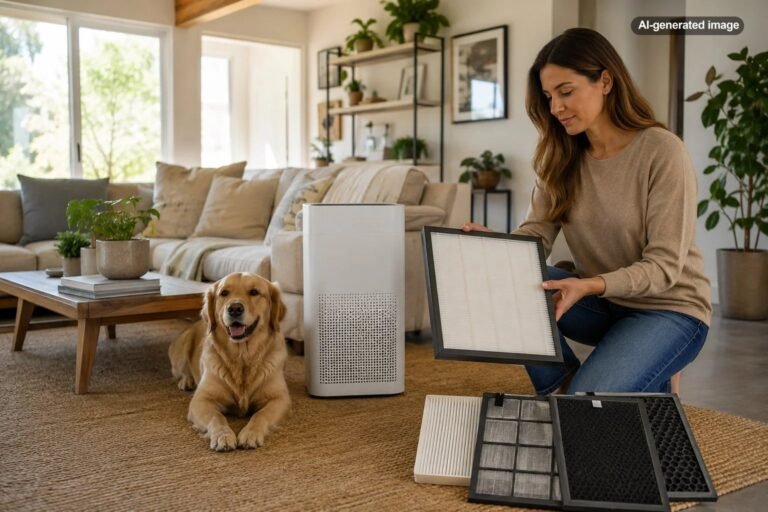
If your primary concern is cleaning the air in one bedroom, office, or living area, a central HVAC filter may also be only part of the solution. The EPA distinguishes between whole-system HVAC filtration and portable room air cleaners, which can be selected for the size of a specific room.
Frequently asked questions
Is MERV 13 always better than MERV 8?
MERV 13 provides greater capture efficiency for smaller particles under the MERV test, but it is only the better choice when the HVAC system can accommodate the filter’s resistance and the filter fits correctly. System compatibility matters.
Can an expensive filter damage an HVAC system?
Price itself cannot damage the system, but an unsuitable filter can contribute to excessive airflow restriction. Higher efficiency may increase pressure drop depending on filter design. If compatibility is uncertain, consult the equipment documentation or a qualified HVAC professional.
Are thicker HVAC filters better?
Deeper filters can offer more media surface area and may combine high filtration efficiency with lower resistance than a shallower filter of comparable efficiency. However, they are useful only when the HVAC system has a cabinet designed for that thickness.
Should I buy a HEPA filter for my furnace?
Do not assume a true HEPA filter can be installed in a standard residential HVAC filter slot. ASHRAE notes that most ordinary HVAC systems are not designed for the pressure drop of HEPA filtration. Use only filtration that is appropriate for the equipment.
So, are expensive air filters worth it?
They can be. Paying more is worthwhile when it buys a meaningful improvement in filtration, construction, or filter design that suits your HVAC system. Paying more simply for branding, unnecessary features, or filtration your system cannot properly support offers much less value.