Can an Oversized Air Conditioner Make a House Feel Humid?
Yes. An oversized air conditioner can make a house feel surprisingly humid even while the thermostat shows a perfectly comfortable temperature. The problem is not that a large system cannot cool the house. It may cool it too quickly, shutting off before it has run long enough to remove much moisture from the indoor air.
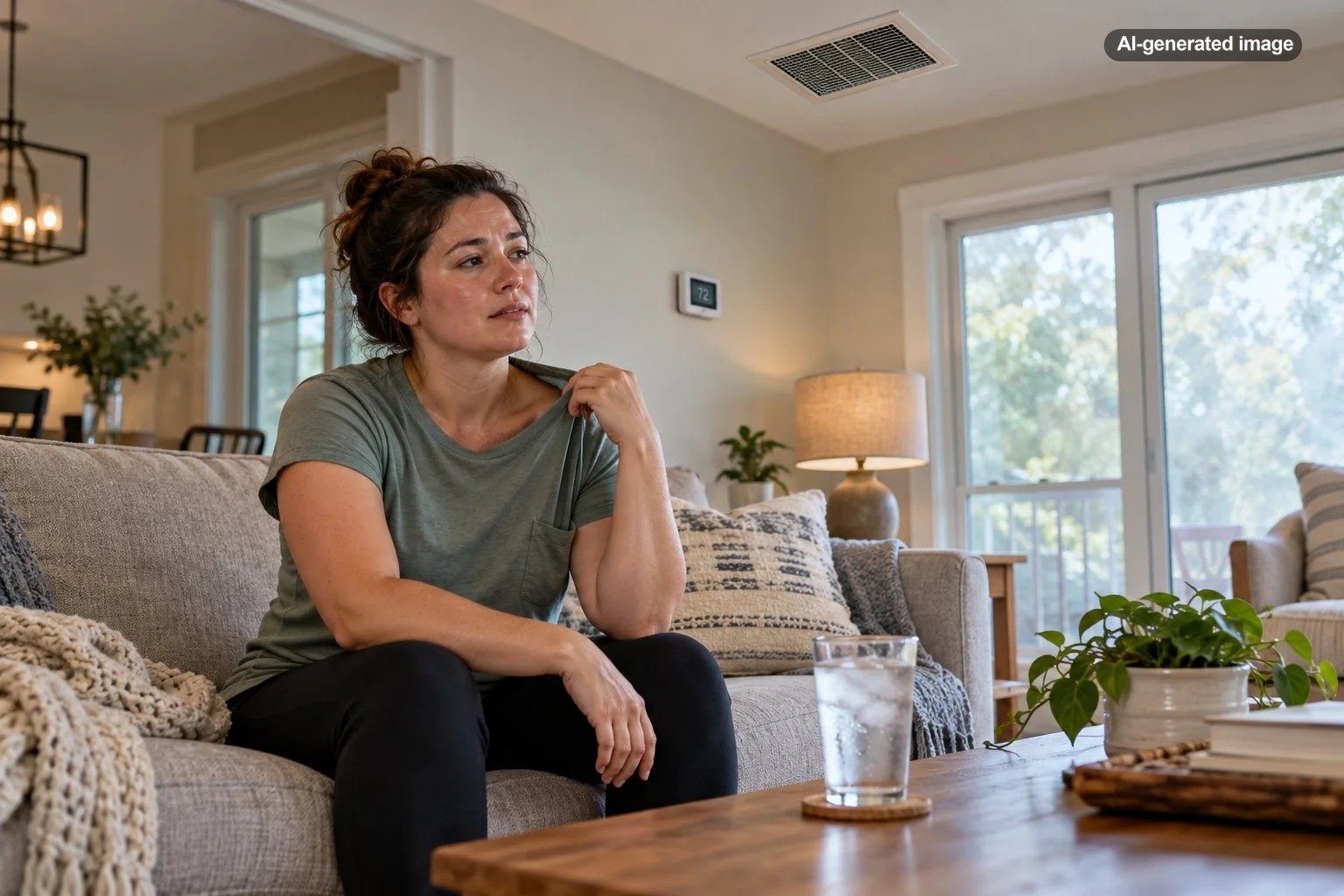
That can create one of the stranger summer comfort problems: rooms that feel cool but clammy, bedding that seems slightly damp, or indoor air that never develops the crisp feeling you expect from air conditioning.
Why air conditioning normally lowers humidity
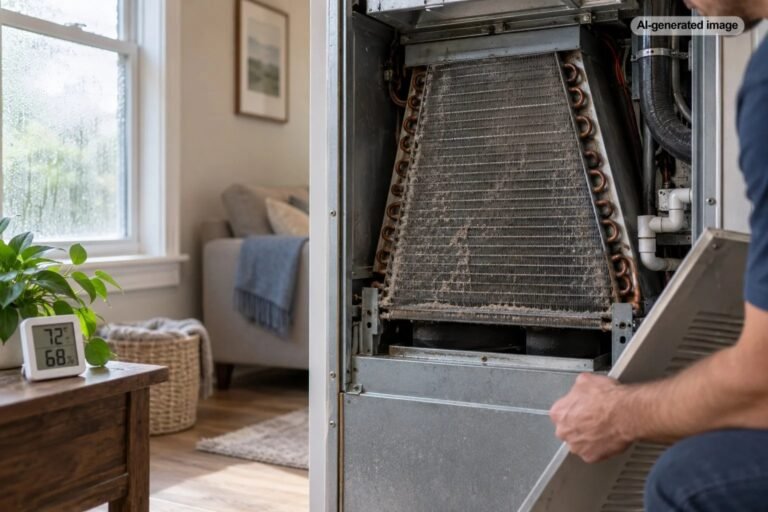
An air conditioner does more than blow cold air. As warm indoor air passes across the cold evaporator coil, water vapor can condense on the coil. That moisture collects and drains away from the house.
This moisture-removal process needs operating time. ENERGY STAR notes that oversized equipment can cycle too frequently, creating humidity-control problems as well as inefficient operation. The U.S. Department of Energy similarly warns that oversizing can lead to poor humidity removal because of excessive on-and-off cycling.
A correctly sized system generally runs for longer, steadier periods during demanding weather. That gives it more opportunity to cool the house and remove moisture at the same time.
A house can reach the right temperature without reaching the right comfort level.
How an oversized system creates a cool but damp house
Imagine a cooling system with considerably more capacity than the house requires at a particular moment. It starts, delivers a large amount of cooling quickly, and causes the thermostat to reach its set temperature. The thermostat then ends the cooling call.
The cycle may have been long enough to cool the air but too short for strong, sustained moisture removal. Soon the indoor temperature rises slightly, the system starts again, and another brief cycle begins. This repeated starting and stopping is commonly called short cycling, although short cycling can have causes other than oversizing.
ENERGY STAR specifically advises that an oversized room air conditioner may cool a space before it has enough time to remove humidity, leaving the air feeling damp or clammy.
Measure humidity instead of judging by temperature alone
A thermostat reading cannot tell you the whole comfort story. Relative humidity provides another useful piece of information.
The U.S. Environmental Protection Agency recommends keeping indoor relative humidity below 60 percent and generally identifies 30 to 50 percent as an ideal range for many homes. Actual comfort can vary with season, climate, temperature, construction, and individual preference.
Affiliate disclosure: CraneManor.com may earn a commission when you purchase through links on this page. This does not affect the price you pay. Learn more.
If you are troubleshooting a house that feels damp, a digital hygrometer can provide a simple room-level humidity reading. Check several locations rather than assuming one room represents the entire house, and compare readings over several cooling cycles.
What to do
- Measure indoor relative humidity in the rooms that feel uncomfortable.
- Notice how long the air conditioner typically runs before shutting off.
- Check whether the damp feeling affects the entire house or only particular rooms.
- Confirm that obvious moisture sources, such as long showers, indoor clothes drying, or an unresolved water leak, are not contributing.
- If high humidity persists, have a qualified HVAC professional evaluate system sizing, airflow, drainage, controls, and overall equipment operation.
Oversizing is not the only reason an air-conditioned home feels humid
Brief cooling cycles are a useful clue, not a diagnosis. Several other conditions can leave a house humid even when the air conditioner is running.
Outdoor air is entering the house
Humid outdoor air can enter through air leaks, frequently opened doors, poorly sealed penetrations, or certain ventilation arrangements. In a humid climate, that can create a considerable moisture load for the cooling system.
Airflow is not correct
ENERGY STAR notes that improper system airflow can contribute to overly damp air and reduced comfort. Airflow problems can involve filters, ductwork, blower settings, equipment configuration, or other system conditions that deserve proper evaluation rather than guesswork.
The condensate system has a problem
Moisture condensed by the air conditioner needs somewhere to go. The EPA recommends keeping air-conditioning drip pans clean and drain lines unobstructed. Visible leakage, standing water where it should not be, or recurring drain problems justify attention.
The house is producing a lot of moisture
Showers, cooking, drying laundry indoors, water intrusion, and other everyday or abnormal moisture sources can raise indoor humidity. A cooling system should not be expected to compensate indefinitely for an unresolved leak or significant moisture problem.
How professionals determine whether an air conditioner is too large
Air-conditioner sizing should be based on the characteristics of the home rather than a simple bigger-is-better rule. ENERGY STAR recommends that contractors use the actual characteristics of the home when determining equipment size rather than relying solely on a rule of thumb.
Useful considerations can include the home’s size and layout, insulation, windows, orientation, air leakage, local design conditions, duct system, and other factors affecting heat gain. A qualified contractor can perform an appropriate cooling-load calculation and compare the calculated requirement with the installed equipment.
Runtime observations alone cannot establish whether a system is oversized. Modern variable-capacity and multi-stage systems operate differently from traditional single-stage equipment, and mild weather naturally creates shorter cooling demand. Controls, airflow, thermostat location, and equipment faults can also alter cycling behavior.
Can thermostat changes solve the problem?
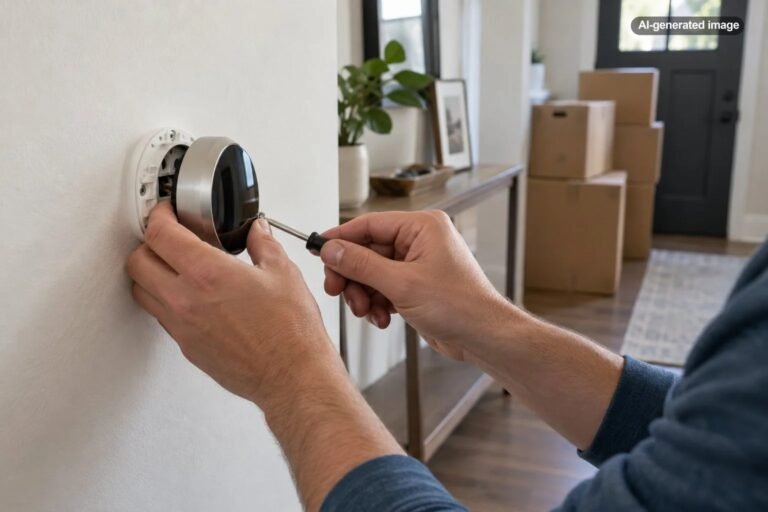
Sometimes controls can improve how a properly designed system operates, but thermostat adjustments cannot physically resize an air conditioner. Features vary widely among HVAC systems, so avoid changing specialized installer settings without understanding the equipment.
A compatible smart thermostat may make it easier to review and adjust temperature settings remotely, but compatibility should be confirmed before purchase or installation. A thermostat should not be treated as a cure for incorrectly sized equipment.
Similarly, repeatedly lowering the temperature is not a dependable solution for high humidity. It may make the house colder without addressing the underlying reason moisture is remaining indoors.
Would a dehumidifier help?
A dehumidifier can be useful when a particular space has a persistent moisture load or when supplemental dehumidification makes sense for the home. It should not automatically become the substitute for diagnosing an HVAC system that is operating poorly.
For a humidity-prone area, a portable dehumidifier with a continuous-drain option is one possible supplemental approach when appropriate drainage is available. Capacity, placement, drainage, maintenance, and suitability should be considered for the actual space rather than assuming one portable unit will control an entire house.
If excess humidity affects most of the home whenever the air conditioner operates, investigate the HVAC system and moisture sources before simply adding more equipment.
When the problem deserves professional evaluation
Consider having the system evaluated if indoor humidity remains persistently elevated during normal cooling weather, the air conditioner starts and stops unusually often, rooms feel clammy despite reaching the set temperature, or comfort problems began after new HVAC equipment was installed.
Professional evaluation is also appropriate when you notice water around HVAC equipment, recurring condensate-drain trouble, ice, abnormal noises, weak airflow, unexplained temperature differences, or other signs that suggest more than a sizing question.
The bottom line
An oversized air conditioner absolutely can contribute to a humid-feeling house. When equipment cools the home very quickly and shuts off, it may spend too little time operating to remove moisture effectively. The result can be technically cool air that still feels damp.
The sensible response is to measure humidity, observe system behavior, rule out obvious moisture sources, and have persistent problems evaluated rather than assuming the solution is a colder thermostat setting or an even larger air conditioner. Proper sizing, proper airflow, effective drainage, and control of indoor moisture all work together to produce comfortable air.
FAQ
Does a bigger air conditioner remove more humidity?
Not necessarily. A larger system has more cooling capacity, but if it satisfies the thermostat too quickly, its shorter operating cycles can reduce moisture removal. Proper sizing matters more than simply choosing more capacity.
Why does my house feel humid when the thermostat says 72 F?
Temperature and humidity are separate parts of comfort. The house can reach 72 F while relative humidity remains elevated. Oversizing is one possibility, along with outdoor-air infiltration, moisture sources, airflow problems, controls, or equipment issues.
What indoor humidity should I look for?
The EPA advises keeping indoor relative humidity below 60 percent and generally identifies 30 to 50 percent as an ideal range. Conditions and practical targets can vary by climate and season.
Should I replace an oversized air conditioner immediately?
Not based on symptoms alone. First confirm that sizing is actually the problem. A qualified HVAC professional can evaluate cooling load, equipment capacity, airflow, controls, ducts, drainage, and other possible causes before recommending major changes.