Why Does Water Keep Collecting in My AC Drain Pan?
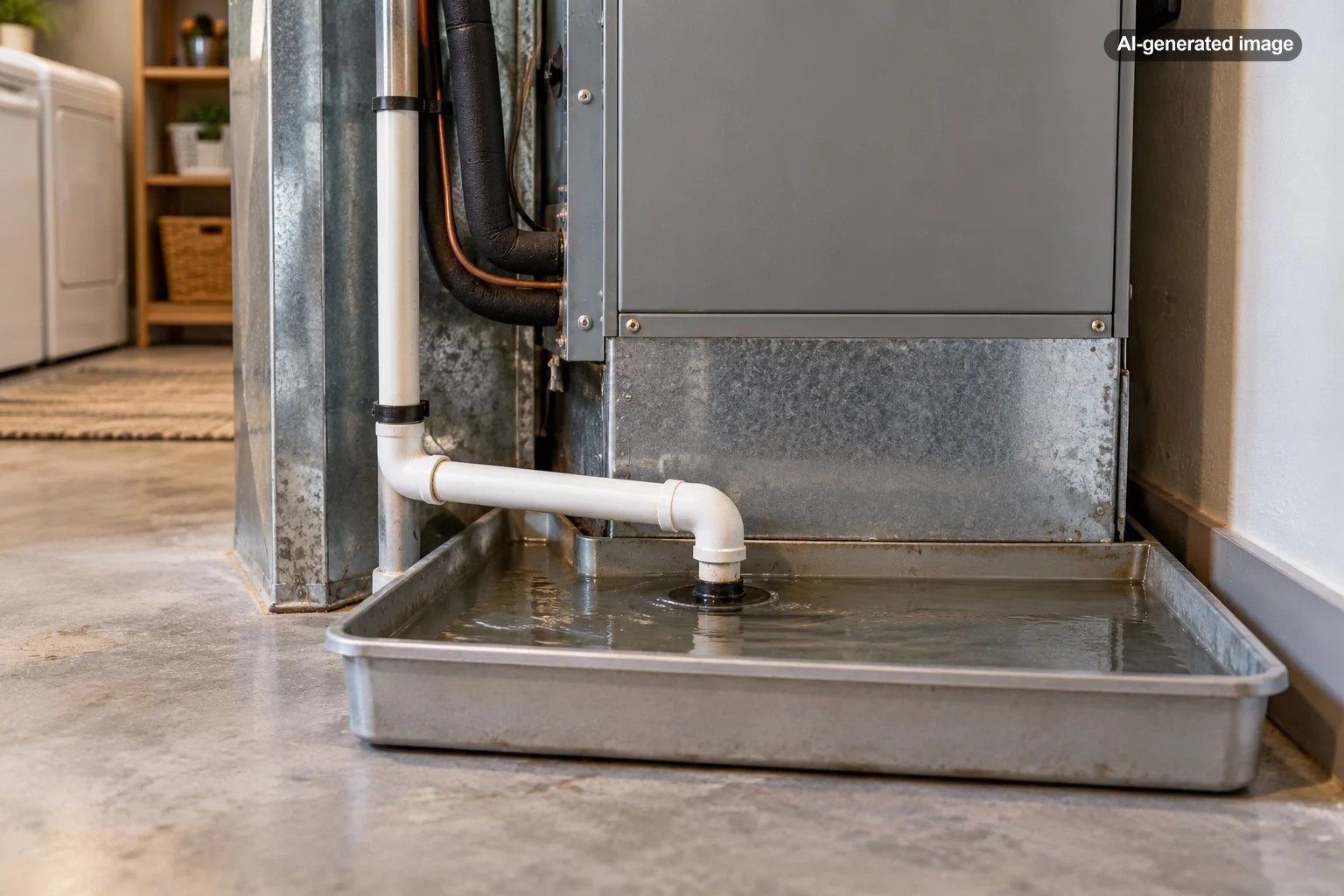
A small amount of water moving through an air conditioner’s condensate system is normal. Water repeatedly standing in the drain pan is not something to ignore, especially if the level is rising, the secondary pan is getting wet, or water is appearing around the air handler.
Air conditioning removes moisture from indoor air as humid air passes over the cold evaporator coil. That moisture condenses, falls into a drain pan, and should leave through the condensate drain. When water keeps collecting instead, the usual explanation is that the system is producing condensate normally but the water is not draining normally. Other possibilities include a frozen coil thawing, an improperly pitched or restricted drain, a damaged pan, or an installation problem that needs professional evaluation.
Why an air conditioner produces water in the first place
Condensation is part of normal cooling. The evaporator coil inside an air-conditioning system becomes cold enough that moisture in the passing air condenses on it. The U.S. Department of Energy notes that water forms on cooling coils when humid air contacts those cool surfaces and that this condensate must be drained to prevent water buildup and damage.
The important distinction is between water being produced and water remaining where it should not. A functioning condensate system continuously moves the collected water away. Depending on the equipment and installation, you may have a primary drain pan built into or beneath the coil assembly and a secondary or auxiliary pan positioned beneath the air handler as backup protection.
The most common reason: a restricted condensate drain
Condensate drains operate in a damp environment, so accumulated debris, biological growth, sediment, or other material can gradually restrict the line. When water cannot leave as quickly as it enters the pan, the level begins to rise.
A partial restriction can be especially confusing because the drain may still move some water. The pan may empty slowly after the air conditioner shuts off, then fill again during a long cooling cycle. That pattern can make the problem seem intermittent even though the restriction remains.
The U.S. Environmental Protection Agency specifically recommends keeping air-conditioning drip pans clean and drain lines unobstructed and flowing properly. The EPA also states that substantial standing water or debris in a condensate pan indicates a problem that deserves prompt attention.
What to check
- Turn off the cooling system if the pan is close to overflowing or water is escaping into the building.
- Determine whether the water is in the unit’s primary condensate pan or in a separate secondary pan below the equipment.
- Look for obvious standing water, debris, staining, corrosion, or a wet area around the air handler.
- Check whether the accessible condensate outlet or drain appears obstructed, but do not dismantle equipment or reach near electrical components.
- If water returns after the obvious problem is cleared, have the drainage system and air-conditioning equipment inspected rather than repeatedly removing the water.
A frozen evaporator coil can produce a sudden surge of water
Not every full drain pan begins with the drain itself. If an evaporator coil freezes, accumulated ice can produce more water than usual when it melts. The condensate system then has to handle that water, and an existing partial drain restriction can become much more obvious.
A frozen coil has several possible causes, including airflow or refrigeration-system problems, so the presence of ice should not be treated as a diagnosis by itself. If you see ice on accessible refrigerant tubing or the coil area, notice unusually weak airflow, or repeatedly experience freezing, turn off cooling and arrange for HVAC service.
Simply removing water from the pan does not address whatever caused the freeze. Likewise, repeatedly resetting a system that shuts itself down because of a condensate safety device can allow the underlying problem to continue.
The drain line may have a slope or installation problem
Condensate normally relies on a correctly designed drainage path. Depending on the system, that can involve properly pitched piping, traps, vents, pumps, or other components. If the drain was installed incorrectly, shifted, sagged, or altered during other work, water may drain poorly even when there is no dramatic clog.
This possibility is worth considering when standing water has been present since the equipment was installed or since nearby HVAC work was performed. An HVAC technician can evaluate the configuration against the equipment manufacturer’s requirements and the conditions of the installation.
A damaged, corroded, or poorly positioned pan can also cause trouble
Drain pans can deteriorate, become damaged, or fail to direct water toward the outlet correctly. Water stains around the equipment, corrosion, or moisture appearing beneath a pan are clues that the problem may involve the pan itself rather than only the drain pipe.
Do not assume that a pan that looks mostly dry is necessarily sound. A small leak may allow condensate to escape before much standing water accumulates. Conversely, a pan full of water may be intact but receiving water faster than the drain can remove it.
Humidity and long cooling cycles can expose a marginal drainage problem
Hot, humid weather can increase the amount of condensate generated by an air-conditioning system. The Department of Energy notes that substantial condensate can form in locations with hot, humid summers. That does not mean a repeatedly full pan is normal; it means humid conditions can make a marginal drain problem show itself more quickly.
The EPA recommends controlling indoor moisture and generally keeping indoor relative humidity below 60 percent, ideally in the 30 to 50 percent range when practical. Excessive indoor humidity can increase moisture-related concerns, but changing the thermostat or adding a dehumidifier is not a substitute for repairing a condensate system that does not drain correctly.
When standing water becomes more urgent
Water and HVAC equipment are not a combination to dismiss. Condensate that escapes the intended drainage system can wet insulation, ceilings, walls, flooring, framing, or other building materials. The EPA emphasizes prompt correction of water and moisture problems and proper condensate-pan drainage as part of moisture control.
If the air handler is above a finished ceiling, in an attic, or in another location where a leak could cause significant damage, early warning can be useful in addition to the HVAC system’s own properly installed condensate safeguards.
Affiliate disclosure: CraneManor.com may earn a commission when you purchase through links on this page. This does not affect the price you pay. Learn more.
For accessible leak-prone locations, a set of water leak detectors can provide a local audible alarm if water reaches the sensor. This type of detector is an additional warning device, not a replacement for a properly functioning condensate drain, auxiliary pan, float switch, or other HVAC safety control, and it does not provide remote phone notifications.
What not to do with a recurring drain-pan problem
- Do not keep emptying the pan and assume the issue is solved. Water returning to the pan means the cause remains.
- Do not repeatedly bypass or reset a condensate safety switch. A shutdown may be preventing additional water damage.
- Do not pour unapproved chemicals into the drain. Follow the equipment manufacturer’s maintenance instructions or your HVAC professional’s guidance.
- Do not work around energized electrical components. HVAC equipment combines electricity, moving components, refrigerant systems, and water.
- Do not assume every moisture problem is condensate. Plumbing leaks, roof leaks, or other water sources can sometimes appear near HVAC equipment.
How to reduce the chance of another overflow
Regular HVAC maintenance should include attention to condensate management, not just filters and temperatures. Ask that the technician confirm that the pan is clean, the drain flows properly, and any applicable condensate safety devices operate as intended for your installation.
Homeowners can also periodically look at accessible equipment for water stains, standing water, deteriorated insulation, or other changes. Catching a slow drainage problem while the water is still contained is preferable to discovering it from a ceiling stain downstairs.
The drain pan is supposed to manage condensation, not become a permanent reservoir for it.
Frequently asked questions
Is a little water in an AC drain pan normal?
Condensate reaching the primary pan while the system is operating is normal, but it should drain away. Persistent standing water, a rising water level, or water in a secondary pan deserves investigation.
Why does my AC drain pan fill only on very hot days?
Longer cooling cycles and humid weather can produce more condensate, which may expose a partial blockage or drainage problem that is less noticeable during lighter use. The weather can explain the increased water production, but not a drainage system that repeatedly backs up.
Can I keep running the AC if the secondary pan has water in it?
Water in an auxiliary pan indicates that condensate is not staying within its normal primary drainage path. If the cause is not immediately obvious and corrected, shutting the system down and arranging service is the safer approach, particularly when overflow could damage finished areas.
Can a clogged air filter cause water in the drain pan?
Airflow problems can contribute to evaporator-coil freezing in some situations, and thawing ice can create extra water. A dirty filter may be one factor, but replacing a filter should not be treated as a complete diagnosis when freezing or recurring water continues.
When should I call an HVAC professional?
Call when the pan repeatedly refills, the drain will not flow, the coil appears frozen, a safety switch keeps shutting the system down, water is leaking into the building, or the cause is uncertain. Recurring condensate problems are often easier to address before surrounding materials become wet.