Should You Disconnect a Propane Tank Before a Hurricane?
For most residential propane systems, preparing for a hurricane does not mean disconnecting the tank yourself. The safer approach is generally to leave the tank and its piping intact, make sure the installation is properly secured, and shut off the main gas supply valve when hurricane guidance calls for it and it is safe to reach the tank. Physically disconnecting propane lines introduces a separate leak hazard and is work that should be handled by a propane retailer or qualified professional.
The distinction matters. Closing a tank valve stops the flow of propane without dismantling the system. Disconnecting a regulator, hose, service line, or other permanently installed component is a different task entirely. Before a storm arrives, homeowners should know which type of propane equipment they have and how their propane supplier wants it handled.
Shutting off propane is different from disconnecting the tank
A residential propane installation may include a large above-ground or underground tank connected to the home through regulators and fixed piping. That installation is intended to remain connected. Hurricane preparation generally focuses on shutting off the flow of gas, protecting the tank and exposed components, and having the system inspected if it is damaged.
The Propane Education & Research Council advises that when a hurricane threatens, the main gas supply valve on the propane tank can be turned off if it is safe to do so. Its hurricane guidance also advises contacting a service technician before turning the propane back on after it has been shut off.
By contrast, PERC’s general safety guidance says that when a gas line is going to be disconnected, the unconnected line must be properly plugged or capped and the valve to the line closed. It recommends having a propane retailer or qualified professional perform that work. In other words, physically separating a fixed propane tank from the home’s gas system is not an ordinary hurricane-preparation chore.
For hurricane preparation, think shutoff and securement, not do-it-yourself disconnection.
When should you shut off the propane?
PERC’s hurricane-specific guidance says that whether residents stay or evacuate when a hurricane approaches, they should shut off the gas, provided the main tank valve can be reached safely. The valve should never become a reason to delay an evacuation or enter an already dangerous area.
If flooding is predicted, PERC also advises turning off the gas valve at the cylinder or tank before the water rises. This should be done while conditions are still safe, not after floodwater has reached the tank or surrounding electrical equipment.
What to do before the storm
- Know where the propane tank’s main shutoff valve is before hurricane conditions begin.
- Keep the contact information for your propane retailer with your emergency information.
- Follow evacuation instructions and other directions from local emergency officials.
- If hurricane or flood conditions warrant shutting off the propane and the tank is safely accessible, close the main supply valve according to your propane supplier’s instructions.
- Leave regulators, service piping, fittings, and other fixed propane components connected unless a qualified professional is performing the work.
What about a large tank in a flood-prone area?
Flooding changes the concern from simply keeping the gas off to keeping the entire tank installation stable. A tank exposed to rising water can be subjected to buoyant forces, and storm damage can also affect piping and regulators. PERC advises that large propane tanks in flood zones be securely anchored and recommends having the propane supplier determine how anchoring should be done.
Anchoring is something to address well before hurricane watches and warnings begin. Trying to improvise straps, chains, anchors, or modifications as a storm approaches can damage the tank or interfere with components that need to function correctly.
Portable grill cylinders need different preparation
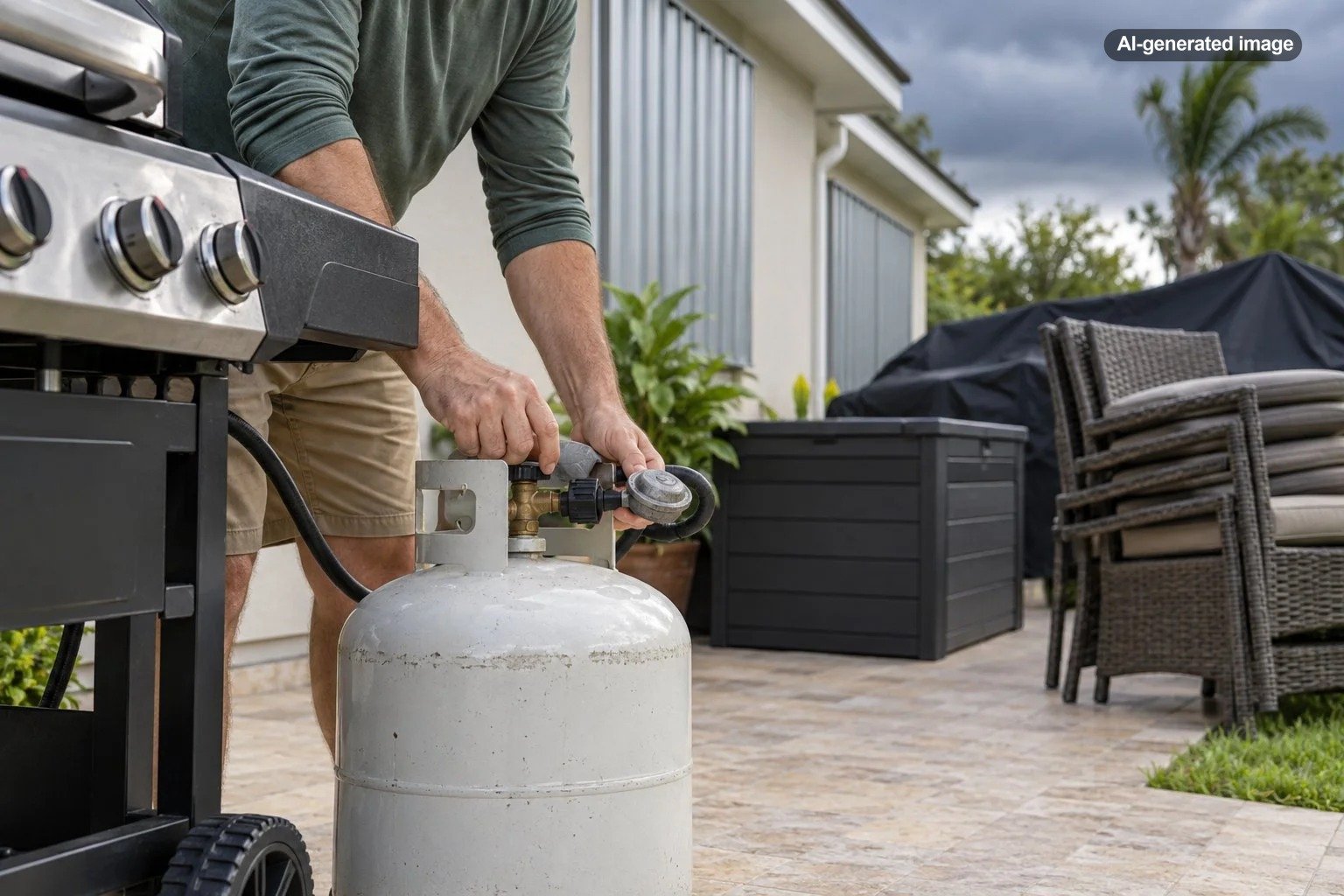
A small removable cylinder used with a grill or other portable outdoor appliance is not the same as a permanently installed residential tank. You may normally separate a portable cylinder from an appliance according to the appliance and cylinder manufacturer’s instructions, but that does not make an enclosed garage, house, basement, tent, or shed an appropriate place to store it.
PERC specifically warns against storing propane cylinders indoors or in enclosed areas. A portable cylinder should remain upright and be handled and stored according to applicable safety instructions. Hurricane winds also make loose outdoor objects a concern, so dealing with a grill and its cylinder should be part of advance storm preparation rather than a last-minute task in worsening conditions.
Do not treat a large stationary residential tank like a barbecue cylinder. Removing regulators or breaking into permanent gas piping should be left to the propane supplier or another qualified professional.
Do not turn the gas back on immediately after the hurricane
This is one of the easiest steps to overlook. Once a home’s propane supply has been shut off, restoring it may require more than simply reopening the valve. PERC’s current safety guidance says a qualified professional must check the propane system for leaks when the gas is turned back on and advises homeowners not to turn the gas back on at the tank themselves.
An inspection becomes particularly important if a tank shifted, floodwater reached propane equipment, a tree or debris struck the installation, piping appears bent, or appliances were submerged or damaged. Regulators, valves, connections, appliance controls, venting, and other components may have suffered damage that is not obvious from across the yard.
What if you smell propane after the storm?
Treat a suspected gas leak as an emergency. PERC advises extinguishing flames and smoking materials, avoiding switches, appliances, phones, and other possible ignition sources in the affected area, and leaving immediately. Once safely away, contact the propane retailer, 911, or the fire department.
Do not return until the propane supplier, emergency responder, or qualified professional says the area is safe. If the main valve can be shut off safely, follow the emergency guidance provided by your propane supplier. Do not approach a tank when you suspect the leak is at or immediately around the tank itself.
Should you prepare the propane system days before landfall?
Yes. The best time to learn where the valve is located, confirm the tank is properly installed, and understand your supplier’s storm procedure is before a hurricane is close enough to make outdoor work hazardous. Emergency preparation should not depend on figuring out unfamiliar fuel equipment during heavy rain or high winds.
Keep vegetation and stored objects from blocking reasonable access to the tank, but do not make unapproved alterations to the installation. If you live in a flood-prone location and are unsure whether the tank is adequately protected against flotation or storm damage, discuss that with your propane supplier before hurricane season or well ahead of an approaching storm.
Before you decide
- Permanent tank: Do not disconnect fixed piping as routine storm preparation.
- Storm approaching: Follow local emergency instructions and your propane supplier’s hurricane guidance.
- Flooding expected: Address the gas shutoff while the tank is still safely accessible.
- Tank securement: Have flood-zone anchoring evaluated by the propane supplier rather than improvising a solution.
- Gas already shut off: Arrange professional inspection and restoration of service.
- Visible damage or suspected leak: Stay away and contact professionals from a safe location.
Frequently asked questions
Should I remove a propane tank from my property before a hurricane?
Not if it is a permanently installed residential tank. A fixed tank should normally remain installed and properly secured. Contact your propane supplier if you are concerned about its location, anchoring, or exposure to flooding.
Can I disconnect the propane line myself before evacuating?
That is not recommended as routine hurricane preparation. Disconnecting a gas line requires proper closure of the disconnected line, and PERC recommends having a propane retailer or qualified professional perform this work. Shutting the main tank valve is different from dismantling the gas system.
Can I turn the propane back on when I come home?
PERC advises having a propane retailer or qualified professional check the system for leaks when restoring service after the gas has been shut off. This is especially important after flooding or visible storm damage.
What if the propane tank moved during the hurricane?
Do not attempt to push, pull, reconnect, straighten, or reposition it. A shifted tank can have damaged piping or connections even if the tank itself appears intact. Stay clear and contact the propane supplier or fire department.
Is shutting off propane more important than evacuating quickly?
No. Never delay an evacuation ordered by authorities or expose yourself to dangerous wind, floodwater, debris, electrical hazards, or a suspected gas leak simply to reach the propane valve. Storm preparation should be completed before conditions become dangerous whenever possible.
The bottom line
A hurricane is generally a reason to shut off and protect a residential propane system, not to dismantle it. Keep a permanently installed tank connected, make sure appropriate storm and flood protections are addressed ahead of time, and close the main gas valve when recommended and safe to do so. Leave actual gas-line disconnection, repairs, and restoration of service to a propane retailer or qualified professional.
For portable cylinders, follow the cylinder and appliance instructions and never move propane indoors simply to protect it from the weather. After the storm, treat displaced equipment, flood exposure, visible damage, or the smell of gas as reasons to stay clear and get professional help.