How Do You Arrange Furniture Around a Large Sliding Glass Door?
A large sliding glass door should usually be treated as both a focal point and a traffic route. Arrange the room so the door remains easy to approach and operate, then build the main seating group beside or facing the glass rather than placing bulky furniture directly across the active opening. The best layout preserves daylight, outdoor views, and a comfortable path between the room and the patio, balcony, or yard.
The trick is recognizing that a sliding door does several jobs at once. It is a window, an entrance, a source of natural light, and often one of the strongest architectural features in the room. Furniture that looks perfectly reasonable on a floor plan can become irritating if everyone has to squeeze around it whenever someone goes outside.
Start With the Door That Actually Moves
Before deciding where the sofa goes, identify which glass panel slides and where people naturally stand when opening it. That operational side deserves more breathing room than the fixed panel.
A sofa arm, accent chair, floor lamp, planter, or side table beside the fixed portion may work beautifully. The same object beside the opening can become an obstacle. Remember that people approaching the door may be carrying food, laundry, a pet leash, gardening supplies, or a tray of drinks, so a route that technically exists can still feel too tight in everyday use.
Rather than measuring only whether furniture physically fits, walk the proposed route yourself. Imagine someone sitting in every nearby chair and ask whether another person could comfortably pass behind or beside them.
What to do
- Mark the sliding panel and the direction in which it opens.
- Identify the most natural route from the room entrance to the door.
- Keep major furniture outside that route.
- Place the largest seating piece where it defines the room without becoming a barrier.
- Add smaller chairs and tables only after the circulation pattern works.
Give the Room a Clear Traffic Lane
A useful arrangement makes the route to the glass door visually obvious. People should not have to zigzag between the coffee table, sofa, and chair to reach the outdoors.
In a generously sized room, a walkway around 36 inches wide often feels comfortable for routine circulation. Smaller rooms may require tighter spacing, but the principle matters more than chasing one universal measurement: the primary path should feel like a path, not leftover space between furniture.
There is another reason to protect that route. A large glass door tends to visually pull the eye toward the exterior. Aligning circulation with that natural direction makes the entire room feel calmer and more intentional.
The strongest layout makes getting to the sliding door feel effortless without making the furniture look as though it has been pushed aside for traffic.
Decide Whether the View or an Interior Feature Is the Focal Point
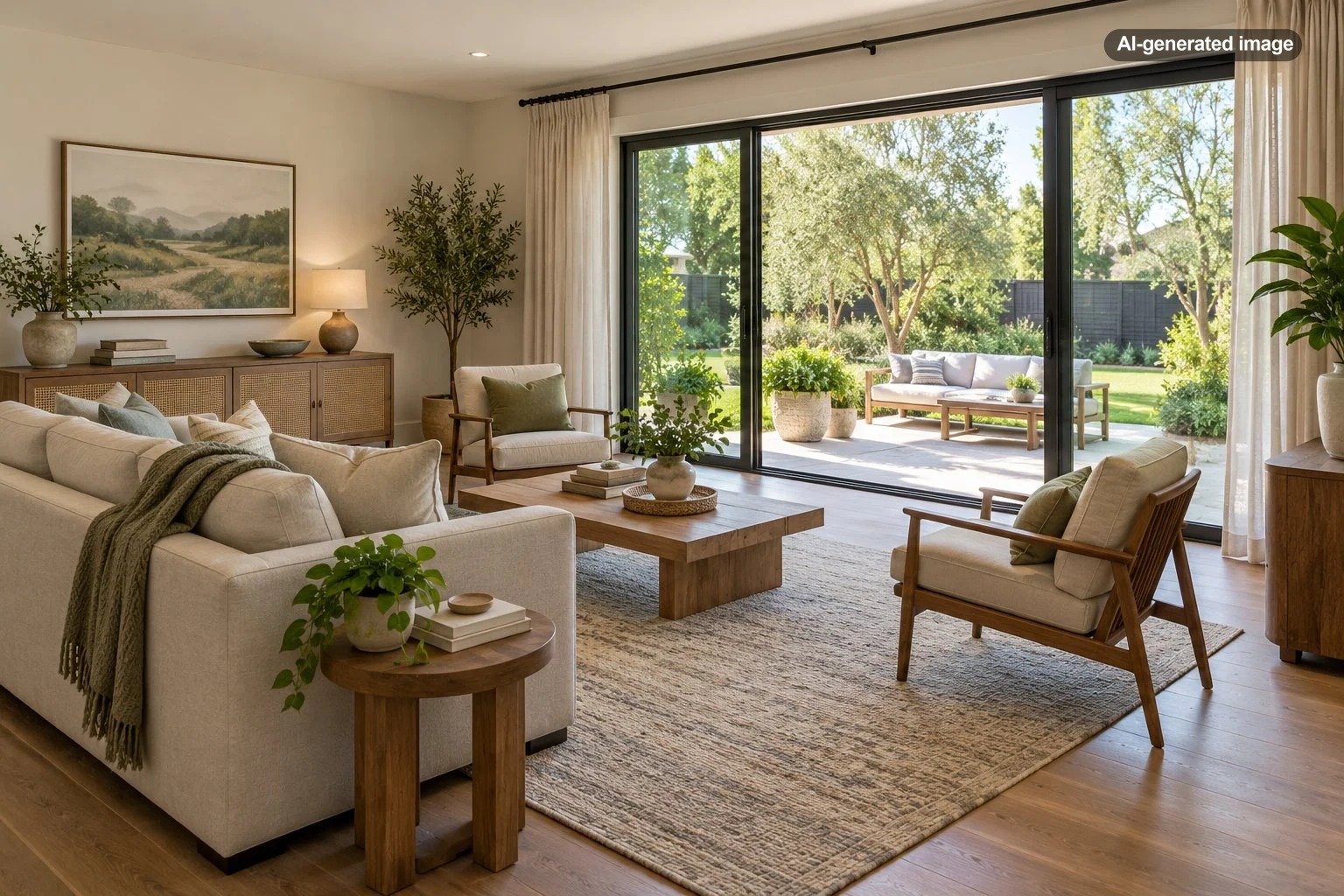
If the sliding glass door overlooks a garden, pool, terrace, skyline, or attractive landscape, orienting seating toward the glass can make sense. A pair of chairs angled toward the view, or a sofa positioned perpendicular to the door, can acknowledge the outdoors without blocking access.
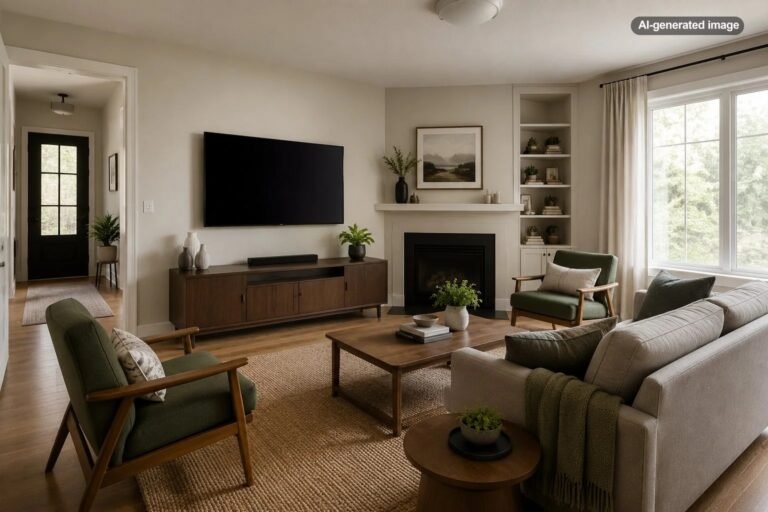
If the room also has a fireplace, television, or prominent artwork, you do not necessarily have to choose one focal point exclusively. An L-shaped arrangement can often address two directions. For example, a sofa might face the fireplace while two movable chairs turn partly toward the glass.
Swivel chairs can be particularly practical in rooms with competing focal points because they allow the arrangement to change without dragging furniture across the floor. Smaller occasional chairs offer similar flexibility.
Use the Fixed Glass Panel More Freely
The fixed side of a large slider gives you considerably more flexibility. Depending on the room, it may accommodate a slim chair, low bench, plant, narrow console, or side table without interfering with the doorway.
Low-profile furniture is especially useful because it preserves sightlines. A tall cabinet pressed against the glass can make an otherwise expansive opening feel oddly blocked, while a lower piece tends to maintain the visual connection between indoors and outdoors.
Be mindful of window treatments as well. Curtains need somewhere to stack when open, and vertical or panel-style treatments require operating room. A chair positioned neatly beside the glass can become inconvenient if fabric piles behind it every morning.
Try a Perpendicular Sofa Before Putting It Parallel to the Glass
One of the most versatile arrangements places the sofa perpendicular to the sliding door. This creates a defined seating zone while preserving the door as a separate architectural element. It also allows people sitting on the sofa to see outdoors without turning the entire room toward the glass.
A sofa parallel to the door can also work, particularly in a long room, but distance matters. If it floats in front of the glass, make sure the space behind it functions as a genuine walkway rather than an awkward strip that nobody wants to use.
A sofa directly against the sliding door is usually the least flexible option. It can reduce daylight, interfere with access or window treatments, and create a visually heavy wall of upholstery against what should feel like an open element.
Let the Rug Define the Seating Area, Not the Doorway
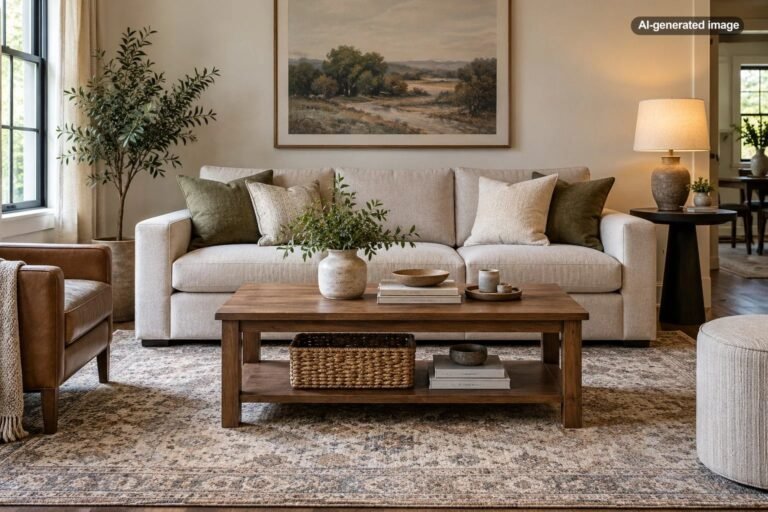
An area rug can clarify where the conversational zone ends and circulation begins. Ideally, it should visually gather the sofa, chairs, and coffee table without projecting awkwardly into the main route to the slider.
In an open-plan room, this distinction is particularly helpful. The rug says, in effect, that one portion of the floor belongs to sitting while the uncovered circulation area belongs to movement. A rug that is too small can fragment the furniture, while one extending too far toward the door can blur the path and collect more dirt from indoor-outdoor traffic.
Adjust the Layout for Small Rooms
A small living room with a large sliding glass door can seem frustrating because the glass occupies wall space that might otherwise hold furniture. The solution is usually to reduce furniture depth and quantity rather than covering the door.
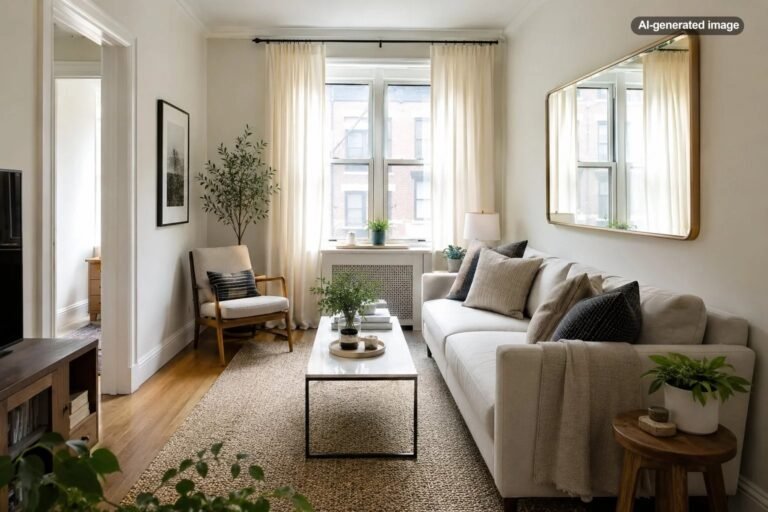
Consider an apartment-scale sofa, armless chair, compact round coffee table, nesting tables, or ottoman that can move when needed. Furniture with visible legs may also keep the room feeling visually lighter near such a large expanse of glass.
Be Careful With Sectionals Near Sliding Doors
Sectionals are comfortable but less forgiving because their chaise or return section can accidentally point straight into the traffic path. Before buying or repositioning one, check whether the projecting section lands near the fixed panel or the operating side of the door.
If you already own a sectional, placing the chaise toward the fixed glass panel is often easier than directing it toward the opening. In another room, reversing the sectional or floating it farther into the space may produce a cleaner route.
Do not be afraid of leaving some floor area empty. An unobstructed patch near a frequently used patio door is functional space, not failed decorating.
Common Furniture-Placement Mistakes
- Blocking part of the active doorway: Even a small table can become irritating when the door is used repeatedly.
- Creating a narrow corridor behind the sofa: If that is the main outdoor route, give it deliberate breathing room.
- Using too many accent pieces near the glass: Plants, baskets, stools, and lamps can collectively create clutter even when each object seems small.
- Ignoring curtain clearance: Furniture may interfere with fabric, tracks, handles, or opening panels.
- Making every piece face the view: The resulting arrangement can look more like a waiting room than a comfortable conversation area.
- Choosing furniture before mapping circulation: A beautiful oversized chair is not particularly beautiful when everyone has to sidestep it to reach the patio.
Before you decide
- Can the sliding panel open completely?
- Can someone walk to the door without weaving through the seating group?
- Does the arrangement preserve useful daylight and outdoor views?
- Can curtains or other window treatments operate freely?
- Does the seating still encourage conversation?
- Can chairs be occupied without blocking the main route?
Should Furniture Ever Sit in Front of a Sliding Glass Door?
Yes, but generally only in front of the fixed portion and only when the furniture does not compromise circulation, daylight, or operation. A lightweight chair or low bench can work particularly well. Large sofas, deep cabinets, and tall storage pieces usually demand more caution.
The goal is not to create an empty perimeter around every sliding door. It is to distinguish between usable floor space and the floor space required for movement. Once that distinction is clear, the room becomes much easier to furnish.
FAQ
Can a sofa face a sliding glass door?
Absolutely. It can be an attractive arrangement when the outdoor view deserves attention. Just maintain a usable route to the operating side of the door.
Can you put a sofa perpendicular to a sliding glass door?
Yes. In many rooms this is one of the most practical layouts because it defines the seating area while keeping the glass visually open.
What furniture works best beside a sliding glass door?
Compact chairs, narrow side tables, low benches, and other visually light pieces are usually easier to place than tall cabinets or deep upholstered furniture.
How do you arrange a room when the sliding door takes up most of a wall?
Use the remaining solid walls for the largest furniture, keep the door-side pieces smaller, and favor a simple seating arrangement over filling every available corner. Preserving one clear route to the outdoors usually makes the entire room feel larger and more composed.
Ultimately, arranging furniture around a large sliding glass door is less about obeying a rigid formula than establishing priorities. Protect the working doorway first, create comfortable circulation second, and then shape the seating group around the best views and interior focal points. When those functions are resolved, the glass door stops feeling like a furniture-placement obstacle and starts doing what it does best: bringing light, openness, and a strong connection to the outdoors into the room.