How Far Should a Fire Pit Be From a Fence?
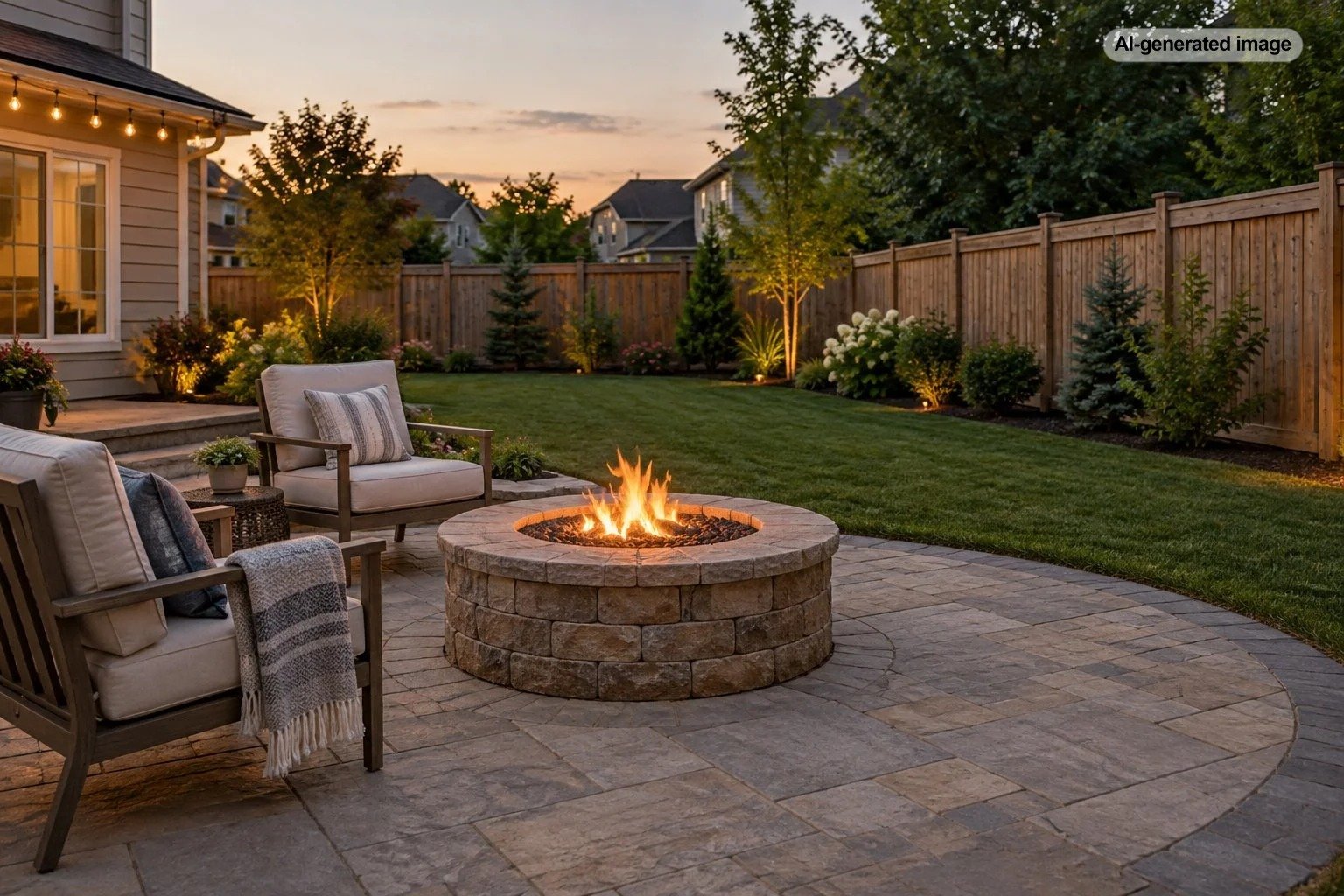
A fire pit should be far enough from a fence that heat, sparks, and embers cannot readily ignite or damage it. There is no single distance that applies to every fire pit and every property, but a useful planning rule is to allow at least 15 feet between a portable solid-fuel fire pit and combustible materials when possible. An open recreational fire may require substantially more clearance, with 25 feet appearing in widely used fire-code provisions. A wood, composite, or vinyl fence should be treated as something that needs protection from heat and fire, not as a harmless property-line marker.
The correct distance ultimately depends on the type of fire feature, its manufacturer’s instructions, the material surrounding it, and the fire rules adopted where you live. If the manual or local fire authority requires more space than a general guideline, follow the greater distance.
Why the answer is not simply 10 feet, 15 feet, or 25 feet
The phrase fire pit covers several very different things. A metal bowl sold as a portable outdoor fireplace, a masonry pit built into a patio, an open campfire-style ring, and a permanently installed gas fire feature may all be described casually as fire pits, yet they can fall under different instructions and fire-code provisions.
The 2024 International Fire Code distinguishes between recreational fires and portable outdoor fireplaces. Its provisions state that recreational fires are not to be conducted within 25 feet of a structure or combustible material. Portable outdoor fireplaces are addressed separately and generally carry a 15-foot separation from structures or combustible material, along with a requirement to follow the manufacturer’s instructions. The code also contains an exception affecting portable outdoor fireplaces at one- and two-family dwellings, which is one reason homeowners should not treat the 15-foot figure as a universal legal requirement.
Local governments can adopt, amend, or supplement model-code language. For example, the City of Moorhead, Minnesota, specifically tells residents that combustibles include wooden fences and lists 15 feet for portable fire pits and 25 feet for permanent fire pits. That is useful evidence of how fire authorities may treat a fence, but it is not a rule for every city.
| Fire setup | Useful planning reference | Important qualification |
|---|---|---|
| Portable solid-fuel outdoor fireplace or fire pit | 15 feet is a commonly cited separation from combustible materials | Check the manufacturer’s instructions and local residential rules |
| Open recreational fire | 25 feet appears in the International Fire Code and many local regulations | Definition, fire size, and local adoption matter |
| Permanent fire pit | Requirements vary by jurisdiction and construction | Local placement, construction, and permit rules may apply |
| Permanent gas fire feature | Follow listed appliance instructions and applicable local requirements | Fuel type, installation, and required clearances differ by appliance |
Measure to the fence itself, not merely the property line
If a wooden privacy fence is 12 feet from the center of the patio, placing a fire pit in the middle of that patio does not magically create 15 or 25 feet of clearance. Measure from the fire feature to the nearest combustible surface that could be exposed to radiant heat, flame, or embers.
For a typical backyard, that may include more than the fence. Look for a shed, deck railing, pergola, outdoor curtains, stacked firewood, dry shrubs, low tree branches, furniture cushions, umbrellas, play equipment, and the siding or eaves of the house. A location that looks spacious on a patio plan can become surprisingly crowded once these objects are considered.
Wood, vinyl, and composite fences deserve different kinds of caution
Wood fences can ignite
A wood fence is a straightforward combustible exposure. Dry boards, accumulated leaves at the base, and vegetation growing against the fence can make the area more vulnerable to sparks and embers. More distance also reduces prolonged radiant heating of the boards.
Vinyl can be damaged without catching fire
Vinyl fencing may soften, distort, discolor, or otherwise suffer heat damage even when there is no direct flame contact. That makes a visually intact but closely spaced installation a poor planning choice. Do not assume that a material’s resistance to ignition means it is unaffected by heat.
Composite fencing varies
Composite products contain different blends of materials and have product-specific limitations. Avoid guessing at a safe heat exposure based on appearance. If the fire feature will be anywhere near a composite fence, check the fencing documentation as well as the fire-pit instructions.
Wind can make an otherwise reasonable location a bad one
Distance is only one part of safe placement. A breeze can carry sparks toward a wooden fence, dry landscaping, a neighbor’s yard, or the house. Gusts can also change direction quickly around buildings and fence corners.
The U.S. Consumer Product Safety Commission advises keeping a hose or fire extinguisher nearby when using a backyard fire pit and warns against burning when wildfire risk is high. It also advises never using gasoline to start or restart a fire and never adding liquid fuel after attempting ignition.
Before lighting a wood fire, look at the actual conditions rather than relying on how calm the yard felt earlier in the day. If sparks or smoke are repeatedly being pushed toward the fence, moving the pit farther away may not solve a genuinely windy situation. Waiting for better conditions is the more sensible choice.
The surface underneath the fire pit matters too
A generous fence clearance does not compensate for a poor base. Follow the fire-pit manufacturer’s requirements for the surface beneath the unit. Depending on the appliance, that may mean a noncombustible patio or another specifically permitted surface rather than grass, a combustible deck, or an improvised heat barrier.
Fairfax County Fire and Rescue, for example, strongly encourages more than 15 feet between portable outdoor fireplaces and detached homes, townhouses, and attached decks. Its guidance also discourages use on or beneath combustible decks and balconies and emphasizes following manufacturer instructions.
Think vertically as well as horizontally. An open area beside a fence may still sit beneath tree limbs, a pergola roof, an awning, or an overhang. A fire feature needs appropriate overhead clearance in addition to space around its sides.
How to choose a safer fire-pit location
What to do
- Identify the exact type of fire feature: portable wood-burning unit, open recreational pit, permanent masonry pit, propane appliance, or natural-gas installation.
- Read the manufacturer’s placement and clearance instructions before choosing a permanent location.
- Check the fire department, municipal code, HOA, condo, or property rules that apply to the address.
- Measure from the fire feature to the fence, house, shed, deck, vegetation, and every other nearby combustible exposure.
- Check overhead clearance for branches, roofs, umbrellas, pergolas, and awnings.
- Choose a stable surface that complies with the appliance instructions.
- Keep an appropriate extinguishing method immediately available and supervise the fire continuously.
What if your yard cannot provide 15 or 25 feet?
Do not solve a small-yard problem by simply ignoring the larger clearance. A townhouse patio, narrow side yard, compact urban lot, or courtyard may not have a suitable location for a wood-burning fire pit.
That does not necessarily mean every outdoor fire feature is impossible, but it does mean the choice should start with the available space and applicable rules rather than with a particular product. A listed gas appliance may have different manufacturer-specified clearances from a wood-burning recreational fire, although it still requires proper installation and compliance with local restrictions.
Should a fire pit ever sit directly against a fence?
No. A fire pit should not be positioned directly against a fence. Even if the fence is masonry or metal, close placement can concentrate heat, leave no useful buffer for sparks and furnishings, and place the fire near whatever combustible materials are attached to or growing around the fence.
Placing the pit several feet away but still inside the manufacturer’s or local minimum clearance is not enough either. Treat required clearance as a minimum boundary, not as an aesthetic suggestion.
Frequently asked questions
Is 10 feet from a fence enough for a fire pit?
Sometimes a local authority or manufacturer may permit a distance around that range for a particular residential appliance, but 10 feet should not be assumed to be universally sufficient. Many official fire-safety references use 15 feet for portable outdoor fireplaces and 25 feet for recreational fires. Verify the rules and instructions that apply to your setup.
Does a wood fence count as combustible material?
Yes. Wood is combustible, and some fire departments explicitly list wooden fences among the combustible materials that require separation from fire pits.
Can I put a fire pit near a vinyl fence?
It still needs generous separation. Vinyl can be damaged by heat even without direct ignition, and the area around the fence may contain combustible vegetation, furniture, or structures. Follow the fire-pit manufacturer’s clearances and local fire rules.
Do propane fire pits need the same clearance as wood fire pits?
Not necessarily. Gas appliances have model-specific installation and clearance requirements, so use the listed manufacturer’s instructions and any applicable local requirements rather than automatically borrowing the spacing for a wood-burning fire.
What distance should I use if several rules are different?
For planning purposes, use the most restrictive applicable requirement. If the appliance manual calls for more separation than a local minimum, give it the extra space. If a local rule requires more than the appliance’s minimum, follow the local requirement.