What Toiletries Should You Leave for Overnight Guests?
The best toiletries to leave for overnight guests are the basics people are most likely to forget: soap, shampoo, conditioner, body wash, toothpaste, a spare toothbrush, and a few simple personal-care backups. You do not need to recreate a hotel amenity cart. A small, clearly organized selection is usually more welcoming than a bathroom crowded with products.
The goal is to remove small inconveniences without making guests wonder what they are allowed to use. Keep everyday essentials visible, reserve more personal items for a drawer or basket, and make sure anything offered is clean, fresh, and easy to identify.
Start with the toiletries a guest is most likely to forget
Most overnight visitors arrive with their own daily routine already packed. What causes trouble is the one item left on the bathroom counter at home. Your guest supplies should therefore focus on common omissions rather than trying to anticipate every grooming preference.
A useful basic assortment includes:
- Liquid or bar hand soap
- Shampoo
- Conditioner
- Body wash or a fresh bar of soap
- Toothpaste
- At least one unopened toothbrush
- Facial tissues
- Toilet paper with an extra roll easy to find
If the guest bathroom already contains the same shampoo and soap your household regularly uses, there is no need to buy miniature versions simply for presentation. Full-size bottles are perfectly hospitable when it is obvious they are available to guests.
A thoughtful guest bathroom is less about having everything and more about making the useful things unmistakably available.
Add a few backups for awkward-to-ask-for items
The most appreciated guest supplies are often the ones someone would rather not request late at night. A small reserve of personal-care items can quietly solve those problems.
Depending on your household and the guests you usually host, consider keeping menstrual products, cotton swabs, cotton pads, dental floss, an unopened disposable razor, shaving cream, and unscented lotion available. A couple of adhesive bandages can also live nearby, although a fuller first-aid kit is better stored separately where household members know to find it.
There is no reason to provide specialized skin care, hair treatments, cosmetics, contact-lens supplies, medications, or other highly personal products unless you know a particular guest needs them. Those items are preference-driven, and guests who rely on them will generally bring their own.
Do not overlook the non-toiletry bathroom basics
A beautifully arranged basket of shampoo is not much help if a guest cannot find a clean washcloth. The surrounding bathroom setup matters just as much as the toiletries themselves.
Provide a clean bath towel and hand towel for each guest, plus washcloths if your household uses them. Make sure there is somewhere sensible to hang damp towels. A wastebasket should be visible or easy to locate, ideally with a liner, and a toilet plunger should be accessible without requiring a household summit meeting.
Extra toilet paper deserves particular attention. Store at least one spare roll where a seated guest can reasonably discover it, rather than in a distant linen closet. If you prefer to keep the bathroom visually minimal, a closed basket, small cabinet, or lidded container can keep backups nearby without making the room feel stocked like a supply closet.
Keep shared products separate from personal products
Guests should not have to inspect half-used bottles and wonder which ones are communal. Separate the things you are offering from personal prescriptions, cosmetics, razors, toothbrushes, and everyday grooming tools.
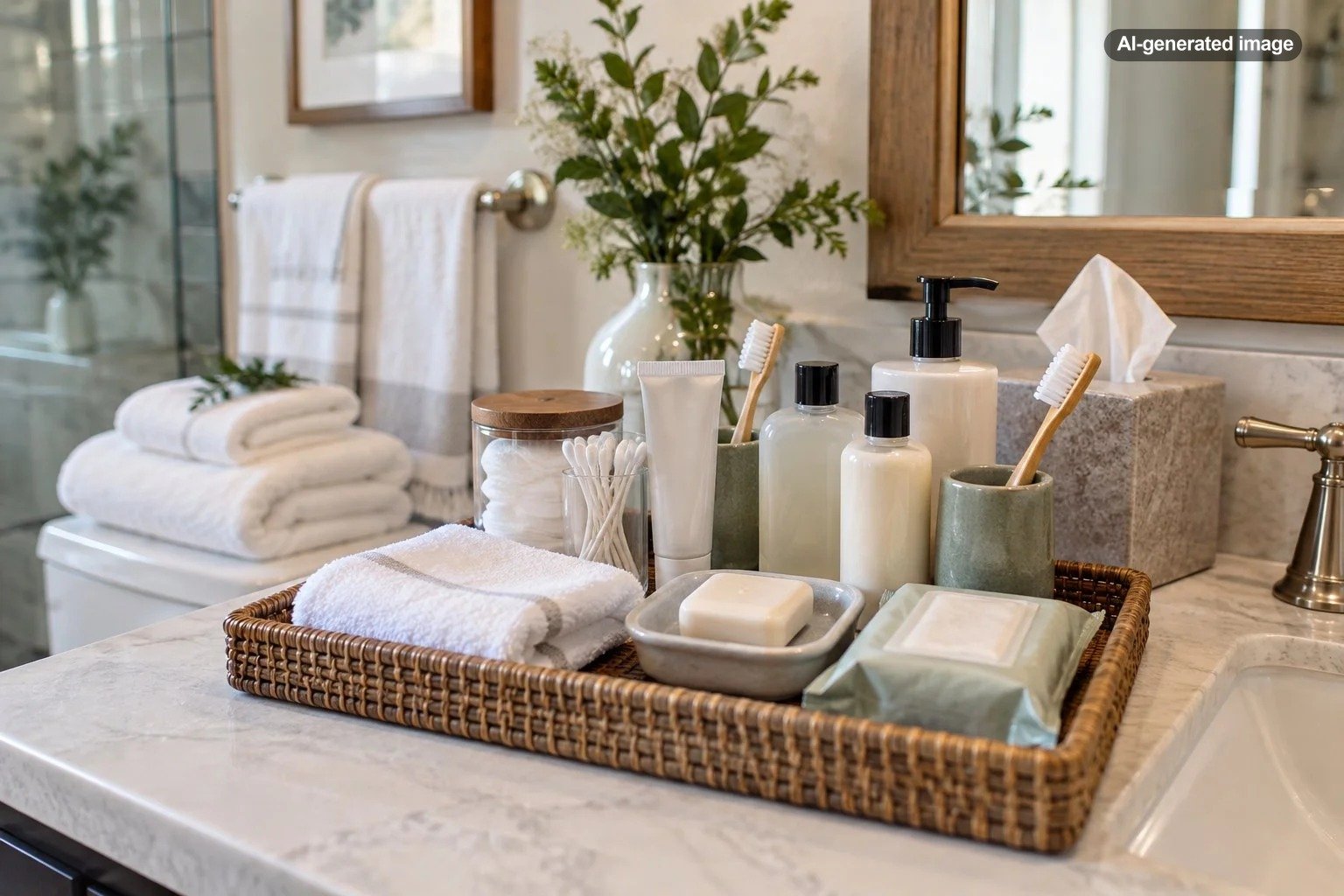
A dedicated drawer, shelf, basket, or tray works well. Items placed there should have an obvious purpose and enough room around them that a guest can see what is available. Avoid filling the container merely because space remains; clutter makes useful supplies harder to spot.
Before your guests arrive
- Check that shower bottles contain enough product for the stay.
- Replace empty or questionable toiletries.
- Put out clean towels and washcloths.
- Confirm that spare toilet paper is visible.
- Remove highly personal items from shared counter space.
- Place backup toiletries together in one easy-to-find location.
- Empty the bathroom wastebasket.
Choose sizes based on how often you host
Travel-size toiletries make sense when you host infrequently, have a very small guest bathroom, or want to keep unopened backups available for occasional visitors. They take little space and can be replaced individually.
Full-size bottles are usually more practical for households that entertain overnight guests regularly. They create less fuss, are easier to use during longer visits, and do not require you to replenish a collection of tiny containers after every stay. Refillable bottles can also create a visually tidy shower setup, provided the contents are clearly identified and you are willing to keep them consistently filled and clean.
A mixed approach often works best: full-size shower products for common use, with unopened toothbrushes and other personal items stored individually until needed.
Give longer-stay guests a little more room
A single overnight visitor and a relative staying for ten days have different needs. For a longer visit, empty storage space becomes almost as important as extra toiletries.
Clear a drawer, shelf, or section of the vanity so the guest can unpack a toiletry bag instead of balancing everything around the sink. Leave enough shower space for their own products. If several people will share one bathroom, a small tray or basket for each visitor can prevent bottles, toothbrushes, and grooming items from becoming mixed together.
What should stay out of the guest toiletry basket?
Skip anything expired, opened long ago, difficult to identify, or included solely because you want to use it up. Samples collected over several years can look generous while leaving guests unsure whether the products are still intended for use.
Medications should generally remain outside the communal guest assortment. The same is true for prescription products and anything that belongs specifically to another household member.
It is also sensible to avoid an enormous selection. Five different shampoos, several skin treatments, and a dozen hotel minis create decisions where none are needed. Guests usually benefit more from one reliable option in each basic category.
How to make guest toiletries feel intentional
Presentation should clarify, not complicate. Group related items, keep labels facing forward when practical, and store unopened personal items separately from shared shower products. A small basket under the sink or a shallow vanity drawer can hold backups without dominating the room.
You can also tell arriving guests, simply and casually, that the toiletries in the basket or drawer are there for them. That sentence removes the ambiguity that sometimes comes with an immaculate guest bathroom: people no longer have to decide whether the beautiful bottle on the counter is hospitality or decoration.
Before each visit, take two minutes to check the setup rather than automatically buying more. Refill what is low, replace what is no longer suitable, wash the towels, and leave some breathing room. The result feels considered because it works well, not because every available surface has been styled.
Frequently asked questions
Should you provide a toothbrush for overnight guests?
Yes. An individually packaged spare toothbrush is one of the most useful backups because it is easy to forget and inconvenient to share. Keep one or two unopened brushes with the guest toiletries rather than leaving loose brushes on the counter.
Do guests need their own shampoo and conditioner?
No. Shared shampoo and conditioner are fine when they are clearly available for guest use. Separate guest-size products can be convenient, but they are not necessary for good hosting.
Should guest toiletries be travel size?
Either size works. Travel-size products suit small bathrooms and occasional hosting, while full-size shared products are often simpler for households that have overnight visitors frequently.
Where should you put guest toiletries?
Keep commonly used items visible in the shower or near the sink. Place backup and more personal supplies together in an obvious drawer, basket, or cabinet. Avoid making guests search through private household storage.
How much should you provide?
Enough to cover the basics plus a few forgotten-item backups is sufficient. A thoughtful guest bathroom should feel useful and calm, not like a miniature drugstore.