Can a TV Be Wider Than the Console Under It?
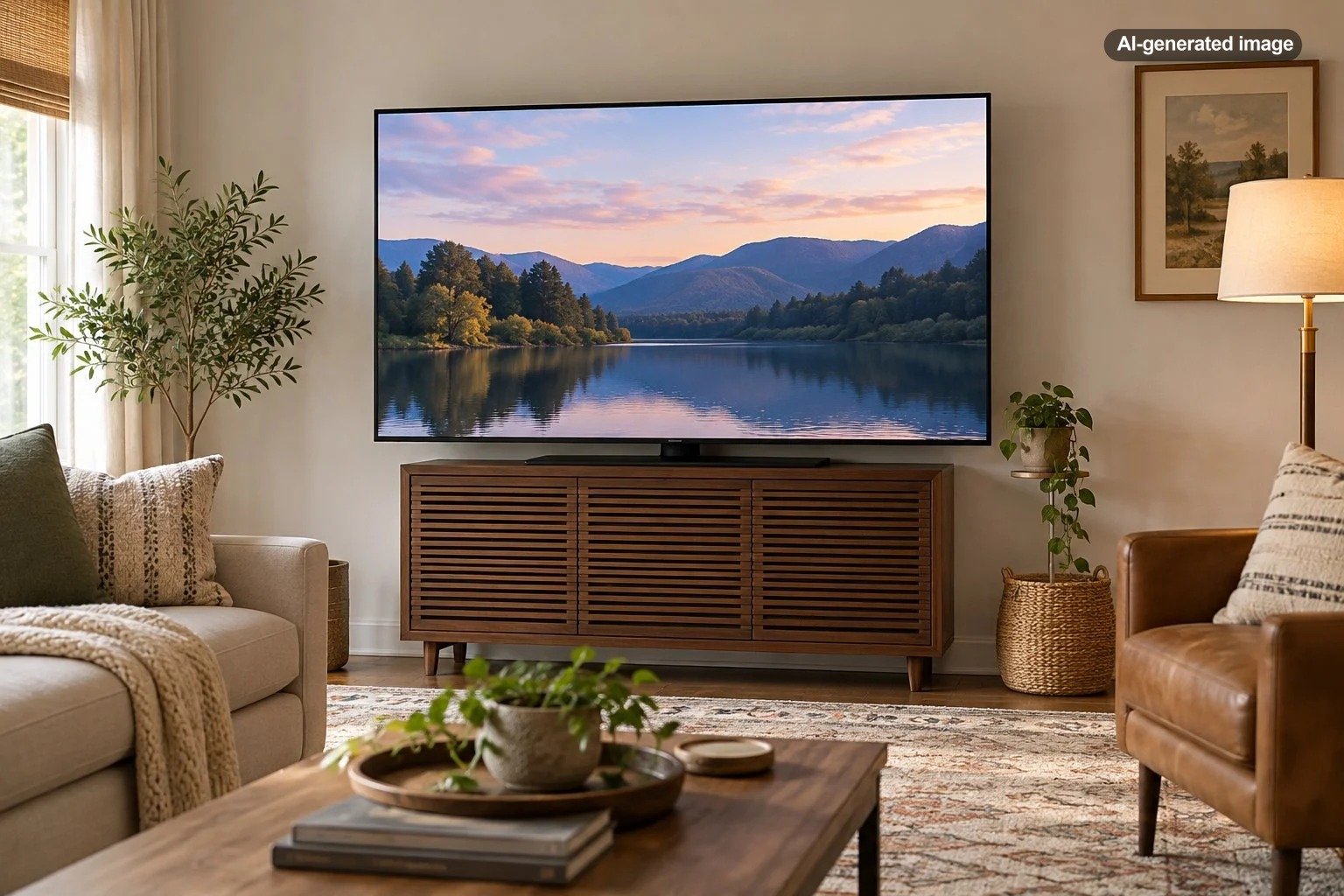
Yes, a TV can be wider than the console underneath it, and the arrangement can look surprisingly intentional. The important distinction is whether the television is mounted on the wall or physically resting on the furniture. A wall-mounted screen has considerably more freedom in terms of visual proportions, while a television supported by a console must meet the furniture and television manufacturers’ requirements for stability, dimensions, and weight.
From a decorating perspective, a console that is wider than the television usually creates a balanced, grounded appearance. But a narrower console is not automatically a design mistake. With the right placement, surrounding furniture, and attention to scale, it can work in a compact apartment, contemporary living room, or minimalist media wall.
Why TV Consoles Are Usually Wider Than Televisions
A media console does more than hold electronics. Visually, it establishes a horizontal foundation beneath the screen, making the television feel connected to the rest of the room rather than suspended in isolation.
When a console extends beyond both sides of the television, the additional width gives the arrangement visual breathing room. It also creates space for practical accessories, such as a small lamp, storage basket, or media equipment, without crowding the screen.
A wider console can be particularly effective when the television is the primary focal point of a living room. Its horizontal shape gives the eye somewhere to rest and helps a large black screen feel more integrated into the furniture arrangement.
That does not mean every television needs an oversized cabinet. The best width depends on the relationship between the screen, the wall, the room, and the furniture beneath it.
How Much Wider Should a Console Be Than a TV?
For a conventional, balanced look, consider a console approximately 6 to 12 inches wider than the television on each side. This is an optional decorating guideline, not a structural or manufacturer-approved clearance requirement.
For example, a television measuring 57 inches across could look comfortably proportioned above a console measuring approximately 69 to 81 inches wide. The extra width creates a distinct furniture foundation without necessarily dominating the wall.
In smaller spaces, less additional width may be preferable. A console that is only a few inches wider than the screen can still look coordinated, especially when the furniture has a low profile and the surrounding wall is relatively uncluttered.
When a TV Wider Than the Console Looks Good
A narrower console can work beautifully when the arrangement appears deliberate rather than accidental. Several room and furniture characteristics make this easier to achieve.
The TV Is Mounted on the Wall
Wall mounting allows the television and console to function as separate elements. The screen is supported by an appropriate wall-mounting system rather than the cabinet below, so the console’s width becomes primarily a visual decision.
A slim floating cabinet beneath a larger wall-mounted television can create a clean, architectural effect. This works especially well when the console has simple lines and the screen is centered above it.
Proper mounting remains essential. The wall structure, mounting hardware, and television must be compatible, and the installation must follow the applicable manufacturer’s instructions.
The Console Has a Minimalist Design
Low cabinets with simple fronts, discreet hardware, and visually lightweight legs tend to appear less awkward beneath an oversized screen than tall, ornate furniture.
The contrast can be especially attractive in contemporary rooms where the television is treated as a streamlined piece of technology rather than something that must be enclosed by traditional furniture.
The Room Is Small
In a narrow living room, a console wide enough to extend substantially beyond the television may interfere with walkways, doors, or nearby furniture.
Choosing a smaller cabinet can preserve circulation and keep the room from feeling overly furnished. The key is making the narrower cabinet feel intentional through symmetry, proportion, and a restrained collection of accessories.
The Surrounding Wall Balances the Arrangement
A television that extends beyond a narrow console may look more natural when the wall includes other elements that establish visual balance.
For example, tall shelving at one side of the media area, a nearby floor lamp, or a thoughtfully placed plant can help distribute visual weight. These additions should complement the television rather than make the wall feel crowded.
When a Wider TV Creates Problems
Although the arrangement can be attractive, there are situations where a television wider than its console is less successful.
| Situation | Likely concern | Better approach |
|---|---|---|
| Wall-mounted TV, slightly narrower console | Mostly visual proportion | Center both elements and keep accessories restrained |
| Wall-mounted TV, much narrower console | Screen may overwhelm the furniture | Use a visually substantial cabinet or a broader wall composition |
| Freestanding TV on an undersized console | Possible instability or unsupported placement | Use a manufacturer-compatible TV stand or properly mount the television |
| Large TV above a tall narrow cabinet | Top-heavy visual appearance and potentially unsuitable support | Consider a lower media console designed for the application |
The biggest concern is not always how far the screen extends beyond the furniture. Sometimes it is the relationship between the console’s height, the television’s position, and the furniture surrounding them.
A very large television mounted high above a small cabinet may feel disconnected from the room. Conversely, a substantial low cabinet can often balance a much larger television without requiring decorative objects on either side.
Can a TV Safely Overhang a Console?
This is where appearance and physical safety must be considered separately.
If a television is freestanding, the fact that its display extends beyond the edges of the console does not, by itself, establish whether the arrangement is safe. Some TVs have centrally positioned stands, while others use feet near the outer edges. Their support requirements differ.
Check the television manual for approved placement, base footprint, weight, and any specified furniture requirements. Also verify the console manufacturer’s television-size and weight limits. A cabinet that appears large enough may not be designed to support that television.
All feet or other support components must be positioned exactly as the manufacturer requires. Never allow a supporting foot to hang over an edge, improvise extensions, or assume that a cabinet is suitable simply because the television seems stable when untouched.
The U.S. Consumer Product Safety Commission advises placing televisions on furniture specifically intended to support them and securing televisions and furniture against tip-over hazards. These precautions are especially important in homes where children live or visit.
How to Measure Your TV and Console Correctly
Before replacing either piece, measure the arrangement rather than estimating its proportions from the television’s advertised size.
What to do
- Measure the actual TV width. Record the horizontal distance from the outer left edge to the outer right edge of the television.
- Measure the console. Record its full width, depth, height, and usable top surface.
- Check the TV’s support footprint. If it will stand on the furniture, measure the actual footprint of the feet or base and verify all manufacturer requirements.
- Compare the widths. Subtract the console width from the TV width. A positive result means the television is wider.
- Mark the layout. Use removable painter’s tape to visualize both widths on the wall, taking care with delicate finishes.
- Check the viewing position. Sit where you normally watch television and evaluate whether the screen height feels comfortable.
Consider a hypothetical room with a television measuring 57 inches wide and a wall-mounted installation above a 48-inch console. The TV extends 4.5 inches beyond the cabinet on each side when centered. That is a noticeable but potentially manageable difference in a compact room.
If the same 57-inch-wide screen sits above a 30-inch-wide cabinet, the difference becomes 13.5 inches on each side. The screen may appear to dominate the furniture, making the narrow cabinet feel visually disconnected.
These examples describe appearance, not acceptable support dimensions. A freestanding setup still requires the appropriate manufacturer-approved surface and anchoring.
How to Make a Narrow Console Look Intentional
If the television is already safely wall-mounted and the console is narrower, a few adjustments can improve the composition without buying new furniture.
Center the TV and Console on the Same Axis
Alignment matters more when the console is narrower. Centering both pieces creates a clear visual relationship, even when their widths differ considerably.
Use the television’s physical center rather than relying on the apparent center of its screen content or surrounding wall decorations.
Keep the Console Low
A relatively low console generally makes a large television appear less cramped. It also leaves room to position the screen at a comfortable viewing height.
Do not raise the television merely to accommodate tall decor underneath. Comfortable viewing should guide the final placement.
Choose Accessories That Do Not Compete With the Screen
Too many objects can exaggerate the difference between a large television and a narrow cabinet. A small grouping of accessories may be more effective than filling every inch of the furniture.
A low decorative bowl, a modest stack of books, or a single compact object can introduce texture while preserving the clean horizontal line of the console.
Avoid tall objects that obstruct the picture, block ventilation, interfere with equipment, or create tempting climbing targets for children.
Control the Visual Clutter From Cables
Exposed cords can make a narrow console look undersized because the entire media area appears less organized. Appropriate cable-management channels or concealed routing can help unify the composition.
Keep electrical cords accessible where required and follow the applicable instructions for safe routing. Ordinary power cords should not be concealed inside walls unless specifically approved for that use.
Should You Replace the Console or Keep It?
The answer depends on what is actually wrong with the current arrangement.
Keep the console when the television is safely wall-mounted, the proportions look acceptable from the primary seating area, storage is adequate, and the furniture fits the room comfortably.
Consider a wider console when the television visually overwhelms the cabinet, the wall appears unbalanced, or additional storage would genuinely improve the room.
Change the support arrangement when a freestanding television exceeds the console’s approved capacity or placement requirements. In this situation, the decision is about stability rather than decorating preference.
When shopping for a replacement, check the dimensions of the entire wall instead of selecting furniture based only on television width. Account for nearby doors, heating registers, outlets, speakers, and walking paths.
Before you decide
- Is the television wall-mounted or supported by the console?
- Does the existing setup meet the applicable manufacturer’s safety requirements?
- Does the screen look centered and balanced from the seating area?
- Would a wider cabinet interfere with circulation?
- Is additional storage actually needed?
- Could improved placement and cable management solve the visual problem?
Frequently Asked Questions
Can a 65-inch TV sit on a 55-inch console?
Possibly, but it depends on the specific television and console. A 65-inch television’s actual width varies by model, and its feet or base may have different dimensions. A freestanding arrangement is appropriate only when both manufacturers’ support, size, weight, and installation requirements are satisfied. A properly wall-mounted television avoids the question of whether the console physically supports it.
Is it better for the TV stand to be wider than the TV?
For traditional visual balance, generally yes. A wider console creates a stable-looking horizontal foundation and offers more space around the screen. However, a narrower console can work well beneath a wall-mounted television, particularly in contemporary or space-conscious rooms.
How much overhang is acceptable for a wall-mounted TV?
There is no universal decorative limit. A few inches on each side may be barely noticeable, while a much larger difference creates a more pronounced contrast. Evaluate the total composition rather than looking for a single required measurement.
Can a floating console be narrower than the TV?
Yes. Floating consoles are often chosen specifically for their minimal appearance. Their wall anchoring, load capacity, and installation requirements still matter, and a wall-mounted television should have its own appropriate support system unless a manufacturer-approved integrated installation specifies otherwise.
Does a wider console make a room look bigger?
Not necessarily. A wider cabinet can make a media wall look more cohesive, but oversized furniture may crowd a small room. A lower, appropriately scaled cabinet with clean lines can sometimes create a more spacious impression than a much wider piece.
The Bottom Line
A television does not have to be narrower than the console beneath it to look good. A larger wall-mounted screen above a smaller cabinet can be a practical and attractive solution, especially when space is limited.
The usual preference for a wider console is a matter of proportion, not an absolute decorating law. The nonnegotiable consideration is safe support: freestanding televisions must be used with suitable furniture and secured according to the applicable instructions.
Choose the arrangement that makes sense for the room, looks balanced from your usual seating position, and supports the television properly. Good proportions are useful, but they should never come at the expense of a safe installation.