Can Humidity Make an Air Purifier Less Effective?
Yes, high humidity can make an air purifier seem less effective, but usually not because the purifier suddenly stops filtering air. The bigger problem is that an air purifier and humidity control solve different parts of indoor air quality. A typical particle-filtering purifier can capture airborne particles, while it does not remove meaningful amounts of water vapor from the room.
When indoor humidity stays high, moisture can encourage conditions that contribute to mold growth, dust-mite activity, condensation, musty odors, and damp surfaces. The purifier may still be doing its assigned job while the room continues to feel stale or uncomfortable because excess moisture has not been addressed.
Why humidity changes the indoor-air equation
Relative humidity describes how much moisture the air contains compared with how much it could hold at that temperature. The U.S. Environmental Protection Agency recommends keeping indoor relative humidity below 60 percent and ideally between 30 and 50 percent when possible.
That range matters because excessive moisture can support biological contaminants and create condensation on cooler surfaces. Cooking, showering, damp basements, poorly vented dryers, outdoor humidity, plumbing leaks, and an HVAC system that is not removing enough moisture can all contribute.
An air purifier cannot correct those moisture sources. Even a capable HEPA purifier is fundamentally filtering particles suspended in moving air. If the room itself remains too damp, the underlying conditions affecting indoor air quality remain in place.
Does humidity actually hurt the filter?
For an ordinary home operating within reasonable indoor conditions, the more useful question is not whether humidity instantly damages a HEPA filter. It is whether moisture is creating additional problems that filtration alone cannot solve.
A purifier can capture some airborne dust, pollen, smoke particles, pet dander, and other particles when they pass through the filter. It cannot dry carpeting, prevent a plumbing leak, remove condensation from windows, or lower the room’s relative humidity. The EPA likewise treats filtration as a supplement to source control and ventilation rather than a replacement for them.
Why a humid room can still feel dirty with the purifier running
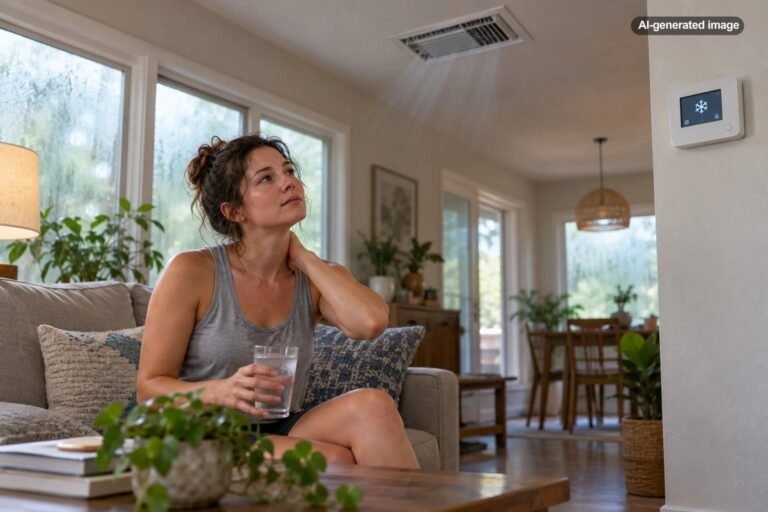
There are several reasons this happens. First, moisture itself can make a room feel heavy or clammy even when particle levels are being reduced. Second, persistent dampness can support conditions associated with mold and other biological contaminants. Third, condensation may collect on windows, walls, pipes, or other cool surfaces, creating a moisture problem that a portable purifier cannot resolve.
Odors can also complicate the picture. A standard particle filter is not designed to remove every gas or odor. Some purifiers include separate media intended for certain gaseous pollutants or odors, but even those do not substitute for finding and correcting a damp source.
This is why running the purifier harder is not always the right response. More fan speed can move more air through the filter, but it does not transform the appliance into a dehumidifier.
Air purifier or dehumidifier: which problem are you solving?
| Problem | Air purifier | Humidity control |
|---|---|---|
| Airborne dust and pollen | Often helpful with suitable particle filtration | Not the primary tool |
| Excess water vapor | Does not meaningfully remove it | Primary issue to address |
| Condensation | Does not correct the cause | Reducing excess moisture may help |
| Musty room caused by dampness | May filter some airborne particles | Moisture source still needs attention |
| Smoke or fine airborne particles | Can be useful when appropriately sized | Does not replace filtration |
In many homes, the answer is not choosing one appliance instead of the other. A humid room with an airborne-particle problem may benefit from both filtration and sensible moisture control. The appliances simply have different jobs.
Check the humidity before changing your purifier
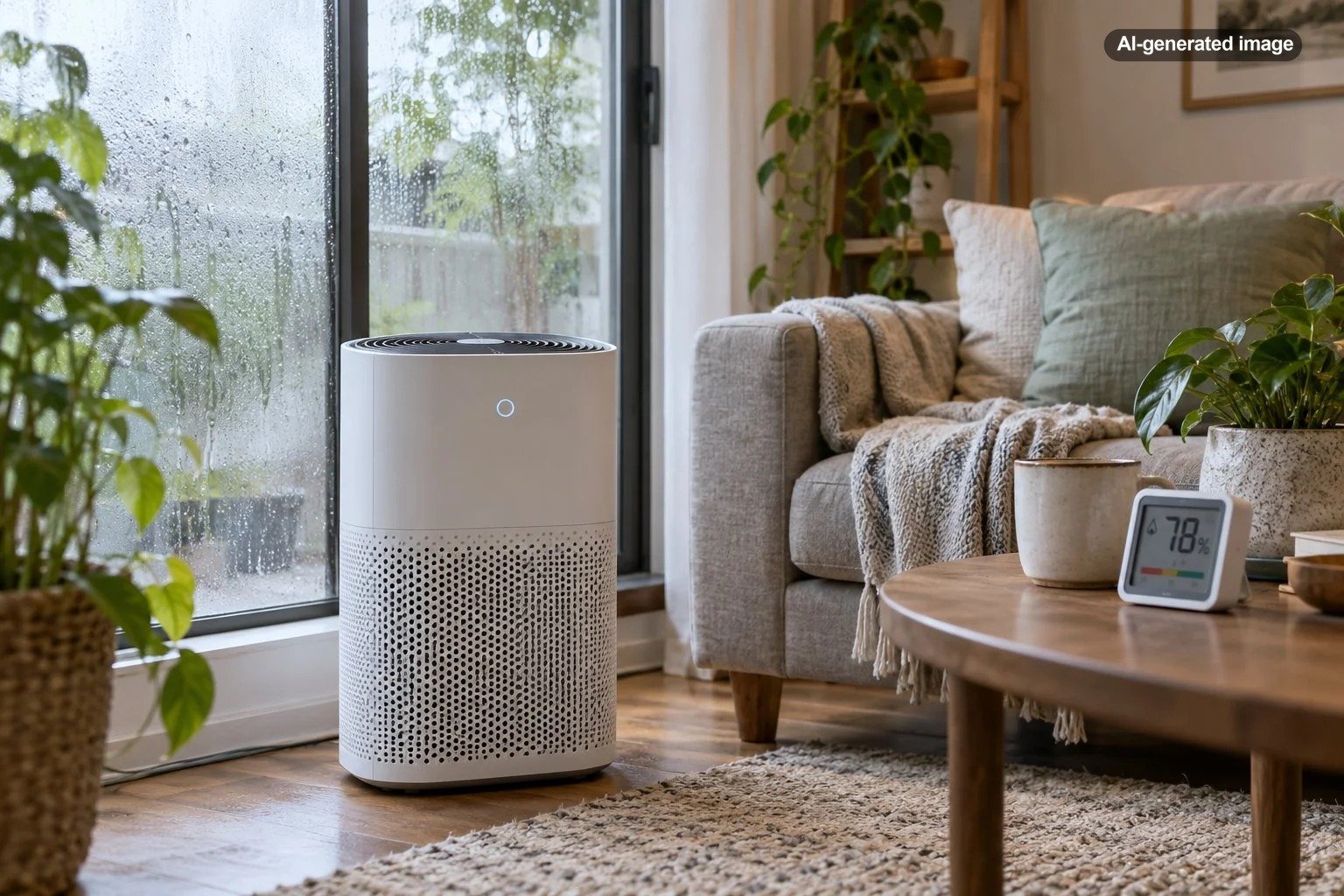
A basic humidity monitor can help you determine whether the room is actually damp rather than relying only on how the air feels. Compare readings at different times of day, especially after showers, cooking, rainy weather, or extended air-conditioning cycles.
What to do
- Check the indoor relative humidity and look for recurring readings above the recommended range.
- Inspect for obvious moisture sources such as condensation, damp materials, plumbing leaks, or poorly ventilated bathrooms.
- Confirm that the purifier has adequate airflow and that its filters are not overdue for cleaning or replacement according to the manufacturer’s instructions.
- Use bathroom and kitchen exhaust ventilation when appropriate and make sure moisture-producing appliances are vented correctly.
- If a particular room remains excessively humid, investigate humidity control rather than simply increasing purifier speed.
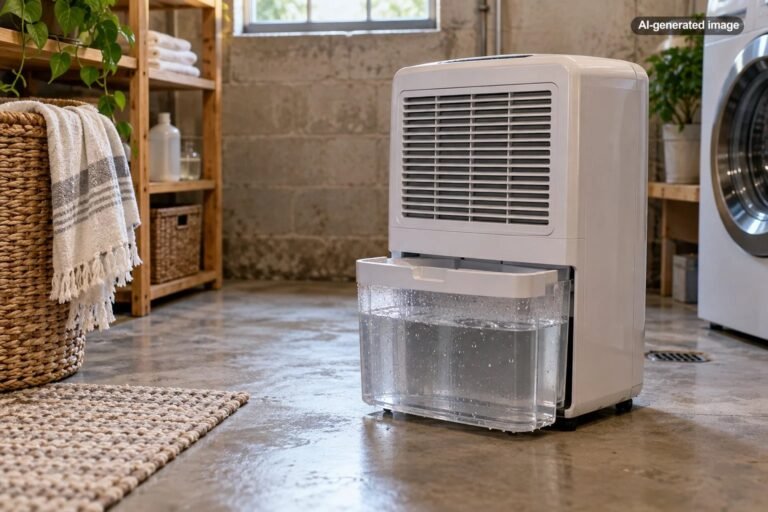
Air-conditioners can remove moisture while cooling, and a portable dehumidifier may be appropriate for certain persistently damp spaces. The right approach depends on the room, climate, source of moisture, and whether the issue affects one space or the entire house.
When an air purifier still makes sense in a humid home
Humidity does not make particle filtration pointless. If your concern includes airborne dust, pollen, pet dander, smoke particles, or similar pollutants, an appropriately selected purifier can still be useful. The important distinction is that it should be part of a broader indoor-air strategy rather than the only appliance doing all the work.
Affiliate disclosure: CraneManor.com may earn a commission when you purchase through links on this page. This does not affect the price you pay. Learn more.
For a straightforward room appliance, a Coway Airmega purifier is one example of a HEPA-based air cleaner with automatic operation and air-quality monitoring. As with any purifier, it should be selected for the room and used alongside source control and appropriate humidity management rather than as a substitute for them.
What people often overlook
Placement and maintenance matter. A purifier needs enough open space around its air intake and outlet to circulate room air effectively. A filter loaded with dust will also perform poorly, so follow the manufacturer’s maintenance guidance rather than waiting until airflow becomes noticeably weak.
It is also worth distinguishing high humidity from a hidden water problem. If you repeatedly see wet drywall, damp flooring, active leaks, persistent condensation, or visible suspected mold growth, focus on correcting the moisture source. An air purifier may supplement indoor-air management, but it is not a repair tool.
How to make an air purifier more useful in humid weather
Keep the strategy simple. Control moisture at the source, use exhaust ventilation where appropriate, maintain the purifier, and let each appliance handle the job it was designed to do. In warm, humid climates, it can also be useful to watch whether indoor humidity rises when the air conditioner runs less frequently during mild weather.
Do not assume a musty room automatically needs a stronger purifier. If humidity is the main driver, solving that issue may make a much larger difference in how the space feels.
The best air-quality setup is often less about finding one appliance that does everything and more about matching each problem with the right tool.
Frequently asked questions
Can an air purifier lower humidity?
No. Standard portable air purifiers are designed to filter pollutants from moving air, not remove significant amounts of water vapor. A dehumidifier, air-conditioning system, or correction of the moisture source is used for humidity control.
Should I run an air purifier and a dehumidifier together?
They can serve complementary purposes when a room has both excess humidity and airborne particles. The dehumidifier addresses moisture while the purifier addresses pollutants that its filters are designed to capture.
What indoor humidity level should I aim for?
The EPA recommends keeping indoor relative humidity below 60 percent and ideally between 30 and 50 percent when possible. Conditions vary by home and climate, so use that range as practical guidance rather than assuming one exact number fits every room.
Does a purifier prevent mold?
No. Moisture control is the key to preventing conditions that support mold growth. A purifier may capture some airborne particles, but it cannot dry wet building materials or correct leaks and condensation.