How to Keep Patio Cushions From Blowing Away
To keep patio cushions from blowing away, secure them to the furniture, add friction beneath them, and move them into protected storage when stronger winds are expected. Cushion ties, hook-and-loop straps, grippy underlays, and well-fitted covers can handle ordinary breezes, but no small fastener should be treated as storm protection.
The best solution depends on the furniture, the cushion design, and how often the space is used. A breezy balcony may need a different setup than a sheltered patio, while deep-seat cushions often require more restraint than thin dining-chair pads.
Start With the Cushion Fit
A cushion that closely matches the seat is less likely to lift, twist, or slide than one that overhangs the frame. Large gaps around a cushion allow wind to get underneath it, while excessive overhang creates an exposed edge that acts like a small sail.
Check whether each cushion sits fully inside the chair or sofa frame. If a replacement cushion is noticeably too small, securing it may require several straps and still look untidy. A better-fitting cushion is usually the cleaner long-term answer.
Back cushions deserve extra attention because they are often lighter and more vertical than seat cushions. They may need individual ties even when the seat cushions remain stable.
Use Built-In Ties Whenever Possible
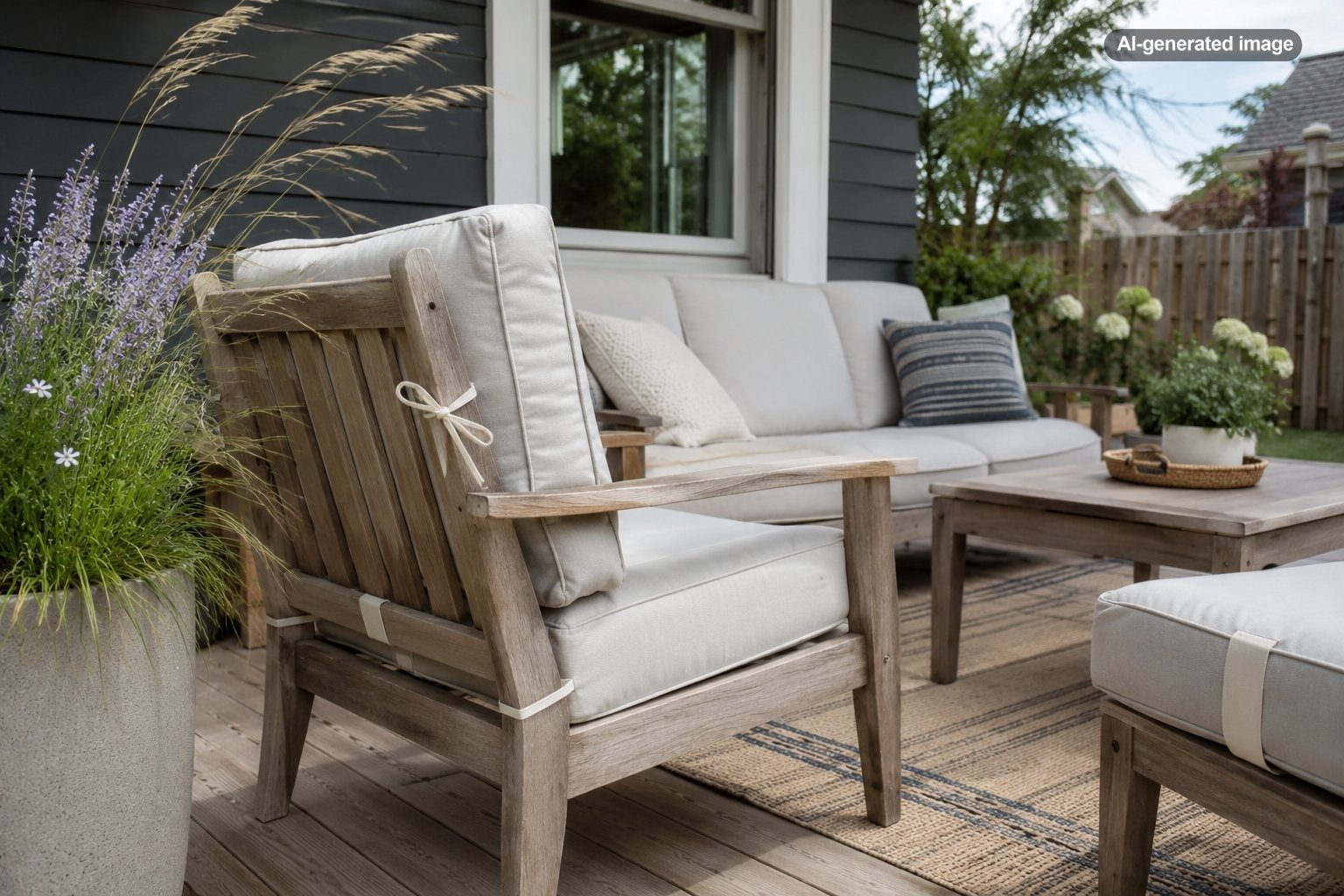
Cushion ties are among the simplest ways to secure outdoor chair pads and back cushions. Fasten them around a solid part of the furniture frame rather than a removable slat, decorative accent, or flexible wicker strand.
Tie a firm bow or a knot that can still be released without cutting the cord. Avoid pulling so tightly that the tie puckers the fabric or places constant stress on the seam. Inspect the attachment points occasionally because sun exposure, moisture, and repeated movement can weaken fabric ties over time.
When cushions do not have built-in ties, removable straps are often preferable to sewing permanent loops into weather-resistant fabric. Any alteration can create new needle holes or interfere with a removable cover, so check the cushion construction before making changes.
Add Removable Straps or Fasteners
Removable hook-and-loop straps, adjustable furniture straps, and discreet elastic loops can secure cushions without permanently altering them. These work especially well on metal, wood, and sturdy resin frames with an obvious place to wrap the strap.
Position straps where they will not press against a person’s back or legs. On a sofa, a strap can often pass behind the back cushion and around a rear support. On a dining chair, it may fit around the back rail or beneath the seat frame.
Choose fasteners intended for outdoor exposure, and inspect them after periods of rain or intense sun. Even weather-resistant materials eventually lose elasticity, grip, or strength. Replace a strap if it becomes brittle, stretched, or difficult to close securely.
Create More Friction Under the Cushions
If cushions slide before they lift, a nonslip layer can solve much of the problem. A thin outdoor-rated gripper mat placed between the cushion and seat can reduce movement without changing the appearance of the furniture.
Cut the material slightly smaller than the cushion so it remains hidden. Avoid thick pads that trap water or prevent the cushion from sitting flat. The layer should also be removable for cleaning because dust, pollen, and moisture can collect beneath it.
Test any gripper material on an inconspicuous section of the furniture first. Some rubbery materials may leave marks, transfer color, or react with certain painted, stained, vinyl, or composite surfaces, particularly in strong heat.
| Method | Best for | Main tradeoff |
|---|---|---|
| Built-in ties | Dining chairs and back cushions | Attachment seams can wear |
| Removable straps | Sofas, benches, and larger cushions | May be visible from some angles |
| Nonslip underlay | Cushions that slide on smooth seats | Needs regular cleaning and inspection |
| Furniture cover | Keeping a complete set contained | Must fit securely and allow drying |
| Indoor or deck-box storage | Strong winds and extended nonuse | Requires convenient storage space |
Use a Secure Furniture Cover for Short-Term Protection
A fitted furniture cover can keep cushions contained during a breezy night or a brief period of nonuse. The cover should reach below the cushion line and include straps, buckles, or a drawcord that attaches around the furniture rather than merely resting over it.
Do not cover damp cushions for long periods. Trapped moisture can encourage mildew, odors, and staining. Let the cushions dry before covering them, and choose a cover that fits closely enough to resist flapping without being stretched tightly over sharp corners.
A loose cover can become part of the wind problem. If the cover billows dramatically or pulls against its fasteners, remove it and store the cushions somewhere protected.
Arrange Furniture to Reduce Wind Exposure
Furniture placement can make a noticeable difference. Position seating near a solid wall, privacy panel, or other established windbreak when the layout allows. Avoid placing lightweight cushions directly along an exposed railing or at the outer edge of an open deck.
On a balcony, wind can accelerate around building corners and through narrow gaps. Observe which seats move first during ordinary breezes and reposition them before adding more hardware. Sometimes turning a chair slightly or shifting a sofa away from an exposed corner is enough to reduce repeated lifting.
Plants, screens, and outdoor curtains may soften mild airflow, but they must be suitable for the location and securely installed. A decorative screen or planter that can topple is not a sensible solution to a flying cushion.
The most reliable cushion system combines everyday restraint with a simple plan for fast storage.
Make Storage Easy Enough to Use
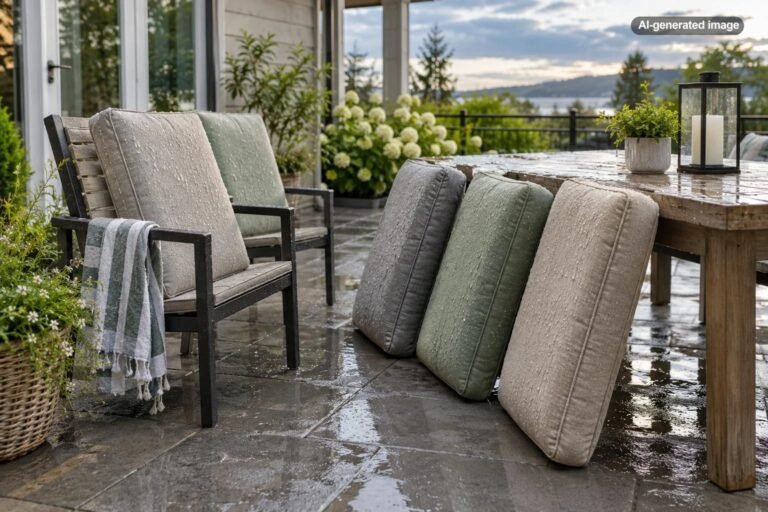
The best storage routine is the one that does not feel like a major chore. A nearby deck box, weather-protected cabinet, garage shelf, or indoor basket makes it easier to bring cushions in before weather changes.
Store cushions clean and dry, preferably on edge or with enough room for air circulation. Do not force them into an undersized container, which can compress the filling and bend piping or foam. Make sure the storage area itself stays dry and does not collect standing water.
Know When Fasteners Are Not Enough
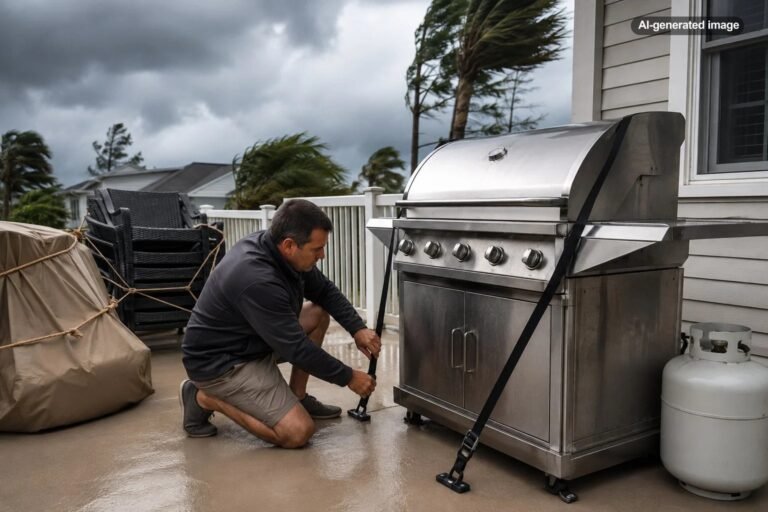
Ties, straps, grippers, and covers are intended for normal outdoor use, not severe weather. When strong winds, thunderstorms, tropical weather, or a hurricane may affect the area, move cushions indoors or into a secure enclosed structure.
Do not assume that placing cushions under a table or stacking them beneath a cover will keep them contained. Wind can shift furniture, loosen covers, and lift a complete stack. Loose outdoor items can damage property or create hazards beyond the patio.
A Practical Cushion-Securing Routine
What to do
- Check that each cushion fits the furniture without large gaps or excessive overhang.
- Fasten existing ties to solid frame members.
- Add removable straps to loose back cushions or wide seat cushions.
- Place a thin outdoor-rated nonslip layer beneath cushions that slide.
- Dry cushions before using a furniture cover or placing them in storage.
- Bring all cushions inside before severe weather or unusually strong wind.
Frequently Asked Questions
Can hook-and-loop tape hold patio cushions in place?
It can help with light movement, but adhesive-backed tape may struggle on dusty, textured, wet, or heat-exposed surfaces. Removable wraparound straps are usually easier to inspect and less likely to leave adhesive residue on the furniture.
Should patio cushions be stored every night?
Not necessarily. In a sheltered location with mild weather, secure cushions may remain outside. Store them when wind, heavy rain, extended nonuse, or severe weather is expected.
Will heavier cushions stay put without ties?
Weight helps, but it does not guarantee that a cushion will remain in place. Broad, lightweight back cushions and cushions with exposed edges can still catch wind. Fit, friction, orientation, and attachment all matter.
Can I leave cushions under a fitted furniture cover?
Yes, for ordinary protection, provided the cushions are dry and the cover is securely attached. A cover should not replace indoor storage during severe weather.