
Should You Remove Shoes at the Door for Better Indoor Air Quality?
Yes, removing shoes at the door is a sensible way to reduce some of the dust, soil, and outdoor contaminants that make their way into a home. It is not a complete indoor-air-quality strategy, however, and taking off your shoes will not address major indoor pollution sources such as cooking particles, smoke, excessive moisture, combustion problems, or inadequate ventilation.
The practical case for a shoe-free home is less about treating footwear as dirty and more about simple source control. The U.S. Environmental Protection Agency notes that outdoor soil and dust can be tracked indoors, where particles accumulate on floors and other surfaces. Walking, cleaning, and everyday activity can then stir settled dust back into the air.
Why shoes matter indoors
Shoes are efficient little transport systems. Soles encounter sidewalks, parking lots, lawns, garages, building corridors, soil, pollen, and whatever happens to be sitting on those surfaces. Some of that material can travel indoors and become part of household dust.
EPA guidance on indoor particulate matter identifies outdoor soil and dust that has been blown or tracked indoors as one component of indoor dust. Household dust can also contain biological material such as pollen, mold spores, pet dander, and dust mites, along with particles created inside the home.
EPA guidance on biological contaminants goes one step further and specifically recommends using doormats and leaving shoes at the door as ways to reduce tracked-in dust and dirt containing biological contaminants. The agency also notes that walking, sweeping, dusting, and vacuuming can stir settled material into the air.
A shoe-free entryway is best viewed as source control: prevent some outdoor material from entering rather than repeatedly cleaning it after it spreads.
What taking off your shoes may keep out
The contents of tracked-in dirt depend entirely on where the shoes have been. For an ordinary household, much of it may simply be soil, grit, pollen, and other outdoor debris. In certain situations, however, the distinction matters more.
Soil and general outdoor dust
Outdoor soil and particles can become part of indoor floor dust. Removing shoes creates a convenient boundary at the entrance and can help keep that material concentrated in a smaller, easier-to-clean area.
Pesticide residues
EPA identifies contaminated soil or dust tracked in from outdoors as a possible source of pesticides inside homes. This is particularly relevant after lawn or garden treatments or when household members regularly walk through treated outdoor areas. Shoe removal does not replace following pesticide labels, application precautions, or other exposure-reduction guidance.
Lead-contaminated soil in higher-risk situations
Lead requires more specific attention. The Centers for Disease Control and Prevention states that lead-contaminated soil particles can be brought indoors on shoes, clothing, or pets and recommends taking shoes off when entering a home to help prevent contaminated soil from being carried inside.
This recommendation should not be mistaken for a complete lead-control strategy. If there is reason to suspect lead hazards from soil, old paint, renovation work, or occupational exposure, shoe removal is only one precaution. Appropriate testing and official lead-safety guidance are more important than relying on an entryway routine alone.
Does floor dust really affect the air?
Not every particle sitting on a shoe sole immediately becomes airborne. Much of the material brought indoors settles on flooring and other surfaces. That distinction is why the connection between shoe removal and air quality should not be exaggerated.
Still, settled dust does not necessarily remain settled. EPA notes that activities including walking, sweeping, dusting, and vacuuming can resuspend floor dust. Reducing the amount of outdoor material entering in the first place can therefore complement regular cleaning.
The benefit is also broader than air alone. Young children spend more time close to floors and frequently put their hands and objects in their mouths, so reducing contaminated floor dust may matter for exposure pathways that have little to do with breathing.
When a no-shoes rule makes the most sense
Consider making shoe removal routine if…
- Young children regularly crawl or play on the floor.
- Someone in the household works around dust, lead, pesticides, construction materials, or other contaminants.
- Your property has a known or suspected issue with contaminated soil.
- You regularly walk through treated lawns, gardens, workshops, garages, or other dusty areas.
- Pollen, dirt, or visible outdoor debris quickly accumulates around interior floors.
- You simply want to reduce the amount of grit and cleaning required deeper inside the home.
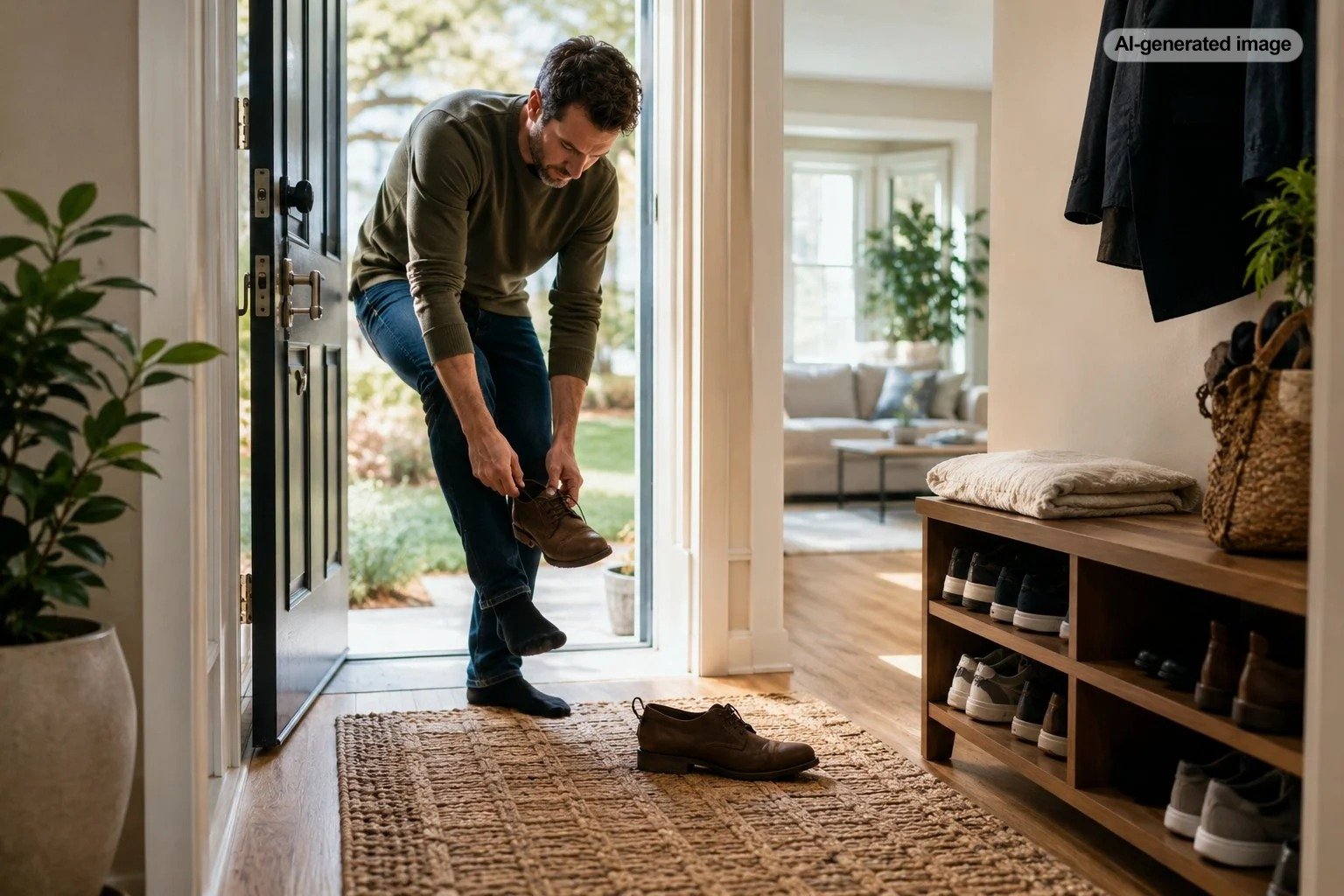
For many households, there is little downside beyond convenience. The policy does not have to become ceremonial. A bench, chair, shoe tray, washable mat, or dedicated pair of indoor shoes can make the habit considerably easier to maintain.
What matters more than removing shoes?
A shoe-free policy should not distract from larger indoor pollution sources. EPA describes source control, ventilation, and filtration as important approaches to improving indoor air quality. Depending on the home, controlling smoke, cooking emissions, moisture, mold conditions, or combustion sources may have far greater importance than footwear.
If indoor air feels stale, causes persistent irritation, or there is concern about mold, smoke, carbon monoxide, radon, or another specific pollutant, taking off shoes is not a diagnosis or remedy. The underlying source needs to be identified and addressed appropriately.
Build a practical entryway routine
What to do
- Place a durable mat outside the primary entrance to capture loose soil before it crosses the threshold.
- Create an obvious place just inside the door for outdoor footwear.
- Keep frequently used indoor shoes or slippers nearby if going barefoot is uncomfortable or impractical.
- Clean the entry zone regularly so accumulated dirt is removed rather than redistributed.
- Continue normal dust control throughout the home, paying particular attention to floors and areas where children spend time.
- Treat shoe removal as one part of a broader indoor-air-quality routine rather than a substitute for ventilation, moisture control, filtration, or correcting known pollutant sources.
What about guests?
This is partly an air-quality question and partly a hospitality question. If shoe removal is important in your household, making the setup obvious is usually more graceful than delivering instructions after someone has already walked across the room. A visible shoe area, bench, or row of household footwear communicates the routine naturally.
There are also reasonable exceptions. Some people require supportive footwear for balance, mobility, foot conditions, or medical reasons. In those cases, indoor-only shoes or clean shoe coverings may be more practical than insisting on bare or stocking feet.
The bottom line
Removing shoes at the door is a low-effort way to reduce tracked-in soil, dust, and some contaminants. EPA and CDC guidance supports the basic principle, particularly where biological contaminants, pesticides, lead-contaminated soil, or occupational take-home exposures are concerns.
But shoes are only one pathway into a much larger indoor environment. If your goal is healthier indoor air, think of the entryway as the first line of housekeeping rather than the entire defense. Keep outdoor debris near the door, clean accumulated dust regularly, manage moisture, ventilate appropriately, and pay closer attention to any known or significant pollutant source inside the home.
FAQ
Is wearing shoes indoors bad for indoor air quality?
Outdoor shoes can bring soil and dust into a home, and settled dust can later be stirred into the air. That does not mean footwear is the dominant air-quality problem in every house. Indoor sources such as smoke, cooking particles, moisture problems, and combustion can be more important.
Is wiping shoes on a mat enough?
A mat can help capture loose debris, but leaving outdoor shoes near the entrance adds another layer of source control. The two approaches work well together, especially when the mat and surrounding floor are cleaned regularly.
Should children always take their shoes off indoors?
Removing outdoor shoes can reduce tracked-in floor dust, which is particularly relevant because young children spend considerable time near floors. Families with specific lead or other contaminant concerns should follow guidance from public-health authorities rather than relying on shoe removal alone.
Do I need an air purifier if I remove my shoes?
The two measures address different issues. Shoe removal primarily limits material tracked onto floors, while air filtration can reduce certain airborne particles when appropriately selected and operated. Whether filtration is useful depends on the pollutants and conditions in the home.
Sources & further reading
- U.S. Environmental Protection Agency: Biological Contaminants and Indoor Air Quality
- U.S. Environmental Protection Agency: Sources of Indoor Particulate Matter
- U.S. Environmental Protection Agency: Pesticides’ Impact on Indoor Air Quality
- Centers for Disease Control and Prevention: About Lead in Soil
- Centers for Disease Control and Prevention: About Take-Home Exposures