
Why Does My Sliding Door Keep Coming Off Its Track?
A sliding door that keeps coming off its track usually has an underlying alignment, roller, or track problem. Simply lifting the panel back into position may get it moving again, but if it derails repeatedly, something is allowing the rollers to climb, bind, tilt, or lose proper contact with the track.
The most common possibilities are surprisingly ordinary: debris packed into the track, rollers that are worn or incorrectly adjusted, a damaged track, loose hardware, or a door panel that is no longer sitting squarely in its frame. The useful clue is how the door behaves immediately before it comes off.
Start with the track, because a small obstruction can create a big problem
Sliding doors carry considerable weight through relatively small rollers. A pebble, hardened dirt, pet hair, leaves, or other debris in the roller path can interrupt that otherwise smooth movement. Instead of rolling through the obstruction, a wheel may hesitate or rise slightly, allowing the panel to rock.
Vacuum the full length of the lower track and clean material from corners and grooves. Pay particular attention to the location where the door usually catches or derails. If the trouble occurs at almost exactly the same point each time, a localized obstruction or damaged section of track becomes particularly suspicious.
After cleaning, inspect the rail the rollers actually ride on. Look for dents, flattened areas, burrs, pronounced wear, or a section that appears bent. Cleaning can solve contamination; it cannot make a physically damaged running surface straight again.
Worn rollers can make the door wobble instead of glide
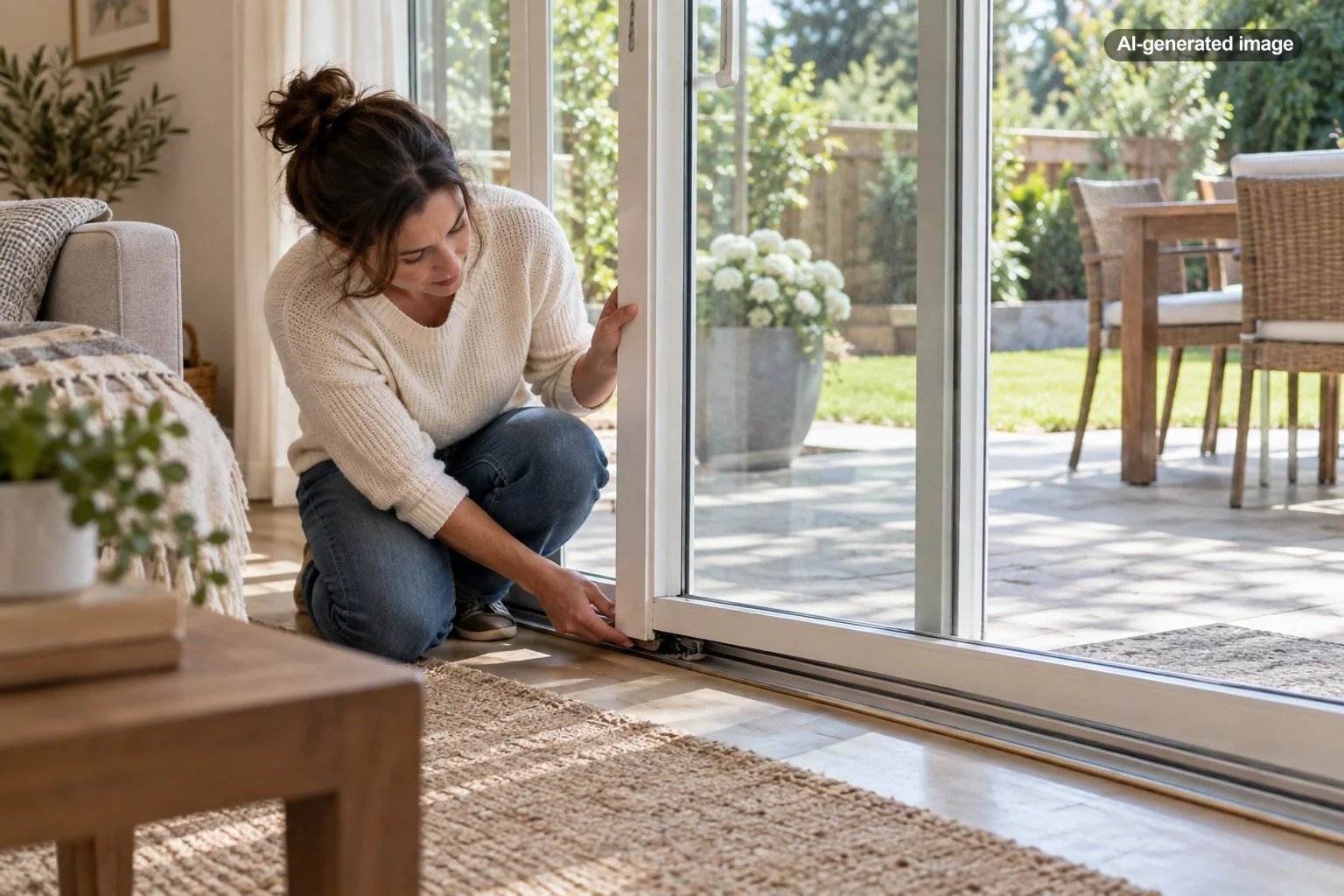
The rollers underneath a sliding patio door are wear components. As they deteriorate, they may stop rotating freely, develop uneven surfaces, loosen inside their housings, or fail to support the panel at the intended height.
A roller problem often announces itself before the door actually leaves the track. The door may become noticeably heavier to move, rumble, scrape, tilt slightly, or require a small lift or wiggle to get started. If one roller is behaving differently from the other, the panel can travel at an angle instead of remaining evenly supported.
The roller height may simply be out of adjustment
Many sliding patio doors provide a way to adjust the rollers near the bottom of the moving panel. Roller adjustment changes how the panel sits relative to the lower track and surrounding frame. When the two sides are not properly balanced, the door may lean, drag, or have insufficient engagement with its track.
Stand back and look at the vertical edge of the closed door compared with the jamb. A noticeably tapered gap can suggest that one side of the panel is sitting higher than the other. Also notice whether the lock has become difficult to engage. A panel that has shifted vertically can move the latch out of alignment as well.
Do not assume a particular screw direction or adjustment procedure applies to every door. Hardware varies by manufacturer and model. If you have the door manufacturer’s instructions, follow its specified procedure rather than turning adjustment screws aggressively and hoping for the best.
A sliding door should stay supported and aligned throughout its travel, not depend on momentum to make it past a troublesome spot.
A bent or worn track can push good rollers off course
Even new or properly adjusted rollers cannot compensate indefinitely for a badly damaged track. A dent may create a ramp-like interruption. Heavy wear can alter the shape of the surface the wheel is supposed to follow. Loose track components can also let the running surface move when the door passes over it.
Watch the lower edge of the panel while someone moves the door slowly, provided it can be operated without forcing it. If the panel rises, dips, or rocks at one repeatable location, inspect that section of track closely. The consistency of the symptom is useful diagnostic information.
Minor cleaning and straightforward adjustment are different from repairing a severely distorted sill or track. If the running surface is extensively damaged, the appropriate repair depends on the particular door system and should restore the intended geometry rather than merely disguising the rough spot.
Check whether the panel has too much room to lift or tilt
A sliding panel has to move freely, but it also needs to remain captured by its upper and lower guides. Depending on the design, worn guides, missing hardware, incorrect adjustment, or excessive clearance may allow enough vertical movement for the lower rollers to leave their intended path.
This possibility is especially worth investigating when the door seems to jump free during a sudden start, stop, or change in direction rather than at one damaged area of track. Loose screws or hardware around the panel and frame can contribute to unwanted movement as well.
Do not improvise additional screws, blocks, or restraints without understanding the door system. Hardware can affect operation, locking, drainage, and the ability to remove or service the panel correctly.
The opening itself may no longer be square
If cleaning, roller condition, track condition, and basic adjustment all look reasonable, consider the relationship between the entire door assembly and the opening around it. Building movement, installation problems, or changes to surrounding materials can leave a frame out of square.
Clues can include uneven gaps, a panel that will not align with the jamb at both the top and bottom, recurring lock misalignment, or a door that behaves differently depending on where it is in the opening. In this situation, repeatedly adjusting the rollers may temporarily change the symptom without correcting the cause.
Use the way the door fails to narrow down the cause
| What you notice | What to investigate first |
|---|---|
| Door catches at one particular spot | Debris, dent, or localized track damage |
| Door is difficult to move along most of the track | Dirty track, worn rollers, roller height, or dragging panel |
| One side of the door sits lower | Roller adjustment or damaged roller assembly |
| Door rocks while moving | Uneven rollers, track damage, excessive clearance, or alignment |
| Door moves better after being lifted slightly | Roller condition, roller height, or track interference |
| Lock no longer lines up correctly | Panel height, frame alignment, or roller adjustment |
A sensible troubleshooting order
What to do
- Stop forcing the door if it is binding badly or appears unstable.
- Vacuum and clean the entire lower track.
- Inspect the track for dents, wear, loose sections, and obvious distortion.
- Check whether the closed panel appears level and parallel with the jamb.
- Move the door slowly and note whether it catches in one location or throughout its travel.
- Consult the manufacturer’s instructions before changing roller height or removing hardware.
- If adjustment does not hold, investigate worn rollers, damaged guides, or frame alignment.
This sequence matters because it starts with the simplest visible causes before moving toward component replacement or more involved alignment work. It also keeps you from adjusting rollers to compensate for a track that merely needed cleaning.
When should you stop troubleshooting it yourself?
A large sliding glass panel can be heavy and awkward to control. If diagnosing the problem requires removing the glazed panel, dealing with broken glass, correcting a severely bent frame, or supporting a door that feels unstable, bringing in a qualified door or glass professional is the more sensible next step.
If the door repeatedly derails despite a clean, undamaged track and reasonable adjustment, that persistence is useful information. It points toward worn hardware, incorrect clearances, installation issues, or frame alignment that deserves a closer inspection.
How can you keep a sliding door from coming off the track again?
Once the underlying problem is corrected, keep the lower track reasonably free of grit and debris and pay attention when the door’s feel begins to change. A sliding door that gradually becomes harder to move is giving you an early warning that should be investigated before it progresses to jumping or derailment.
Also avoid using extra force as the normal way to operate a reluctant door. Smooth movement depends on the rollers, track, panel, and frame working together. When one of those pieces changes, correcting the cause early is usually simpler than repeatedly wrestling the door back into place.
Frequently asked questions
Can dirt really make a sliding door come off its track?
Yes. Debris can interfere with the roller path and make a wheel bind or climb rather than roll smoothly. Cleaning is therefore a sensible first diagnostic step, although repeated derailment after cleaning suggests another problem.
Does a sliding door that keeps derailing need new rollers?
Not automatically. Worn rollers are one possibility, but incorrect adjustment, track damage, loose guides, debris, and frame alignment can produce similar symptoms. Diagnose the behavior before replacing parts.
Why does my sliding door come off at the same spot every time?
A repeatable problem at one location makes a local obstruction, dent, worn section, or alignment issue particularly worth checking. Inspect that portion of the track carefully after cleaning it.
Can I just adjust the rollers higher?
Roller adjustment can correct some height and alignment problems, but more adjustment is not inherently better. Excessive or uneven adjustment can create different problems. Follow the instructions for your particular door system.